


What Good Finish Work Should Look Like
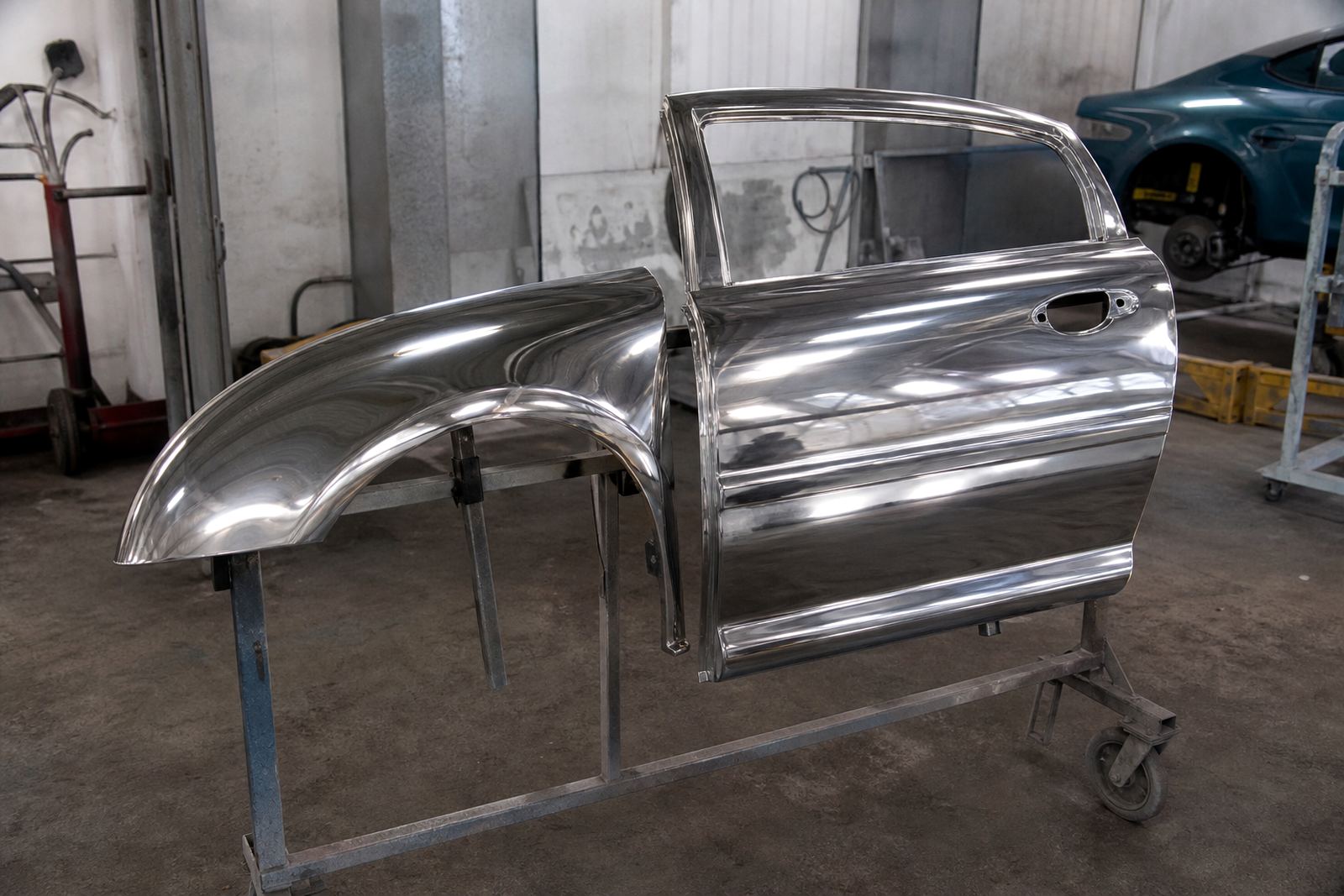
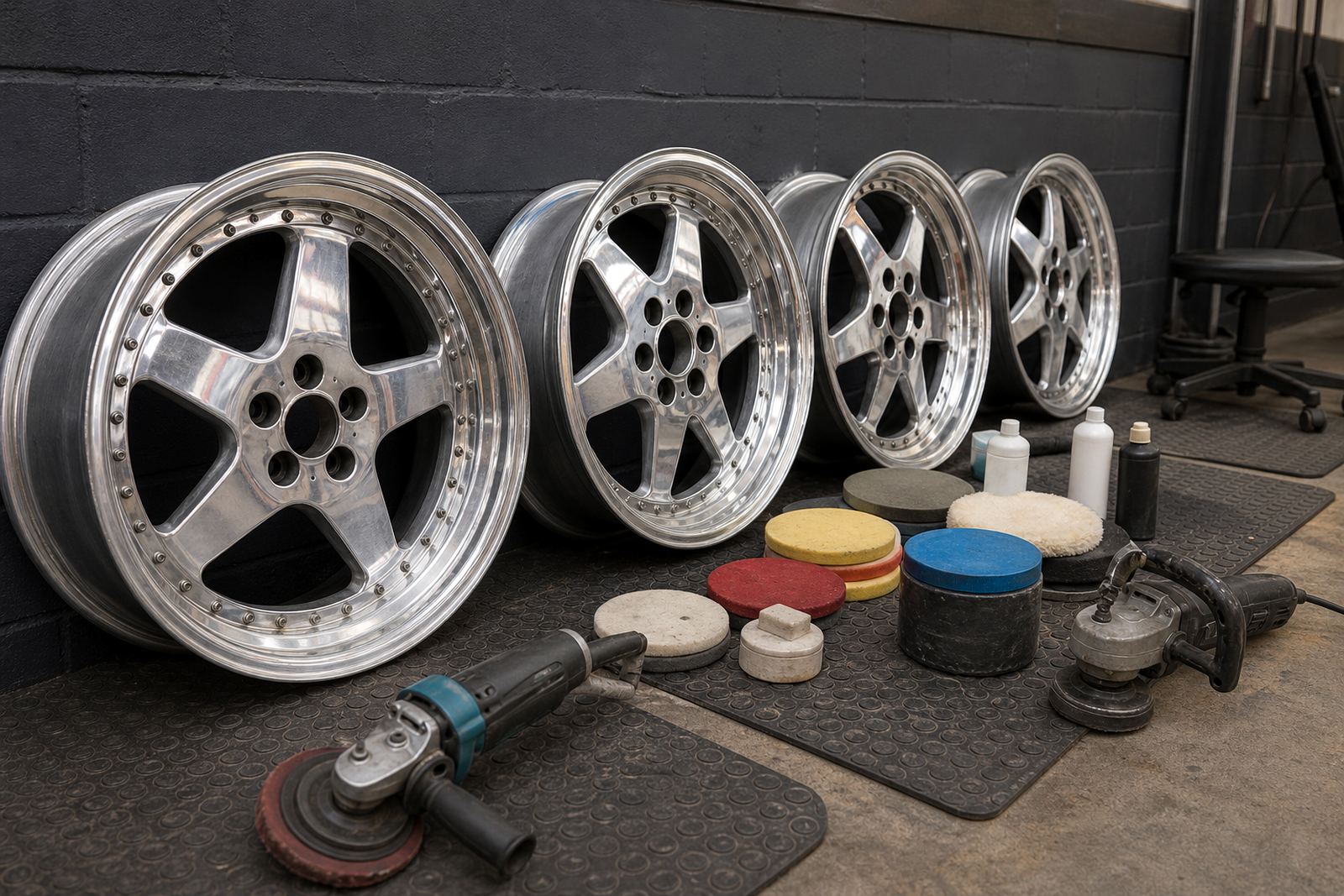
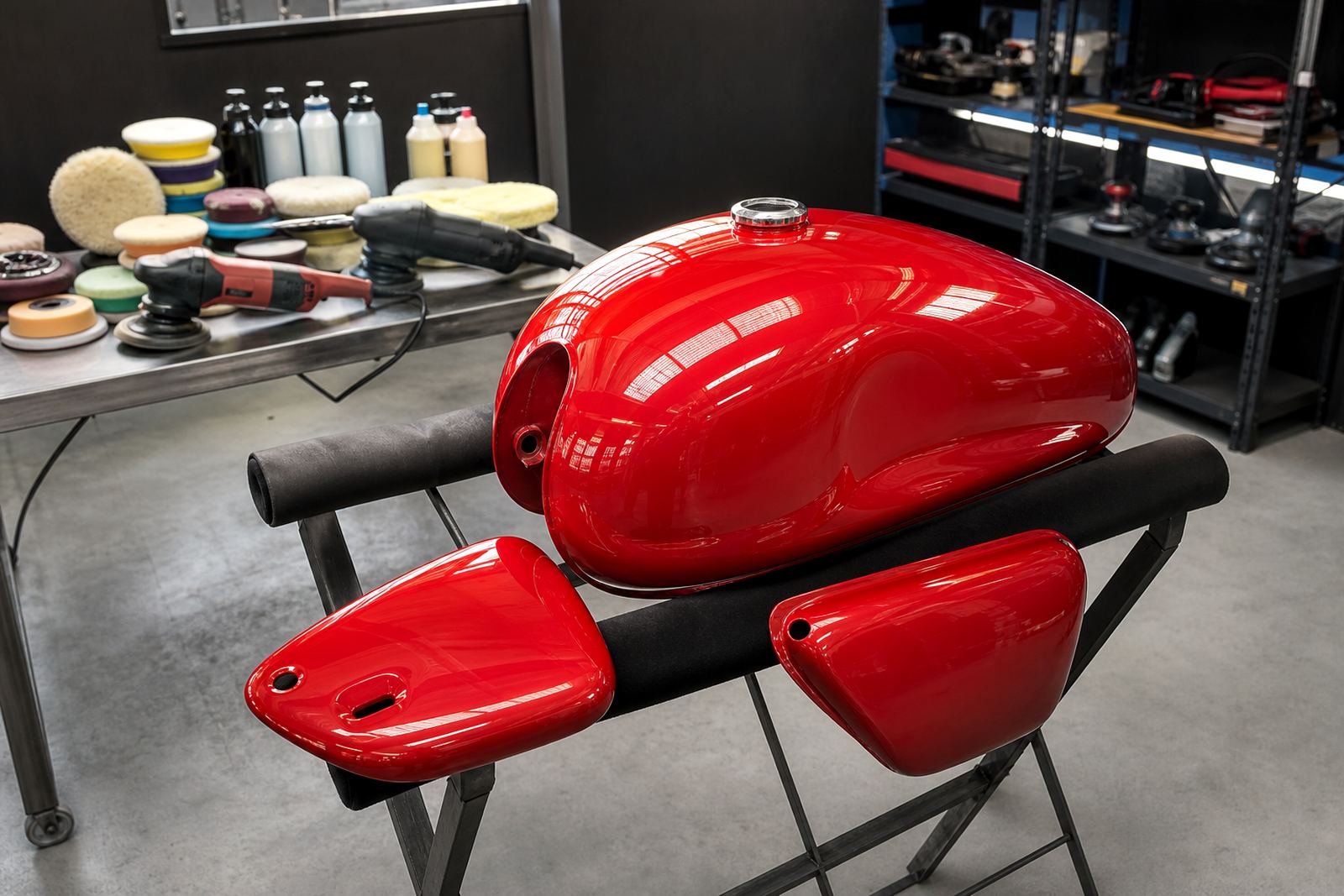
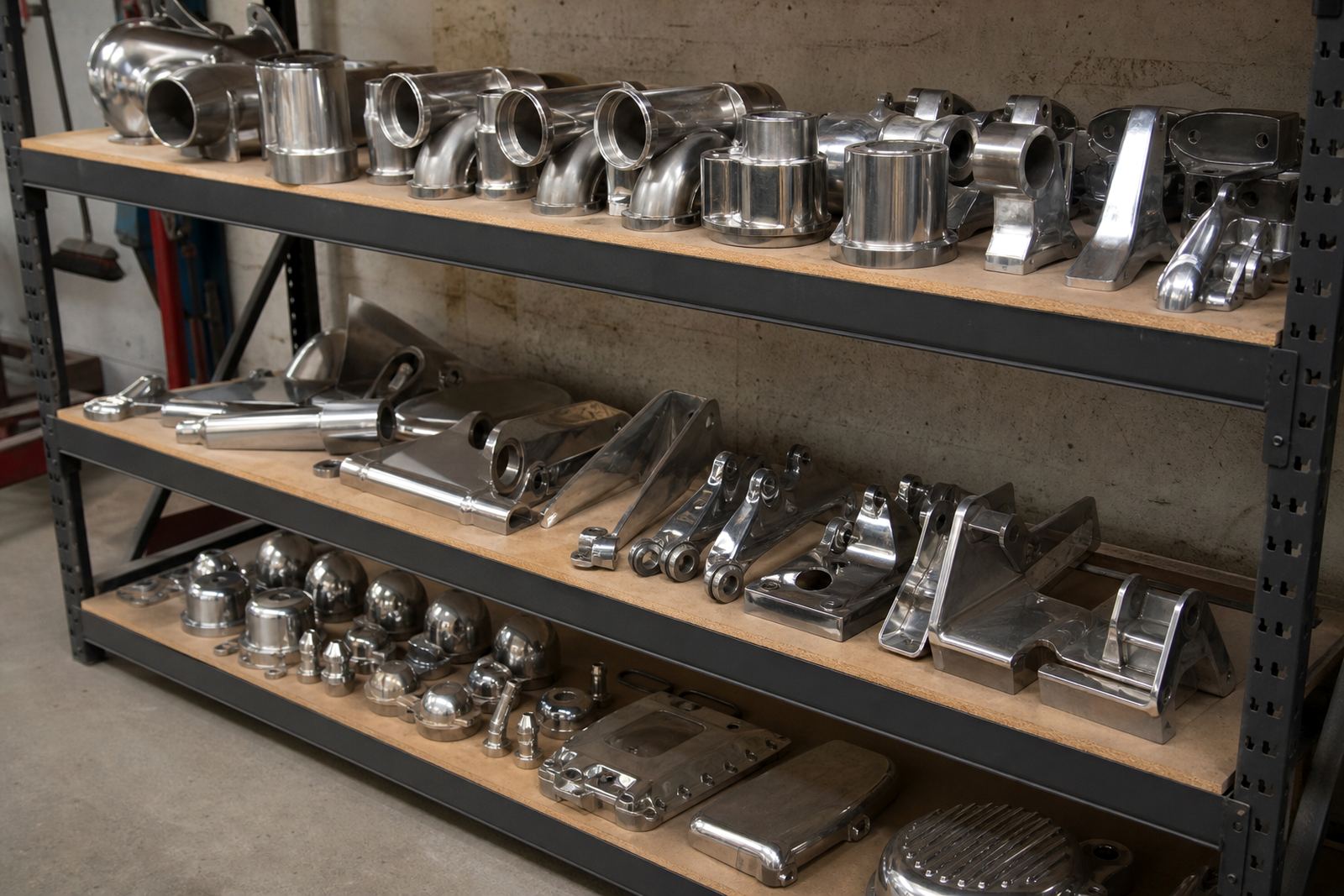
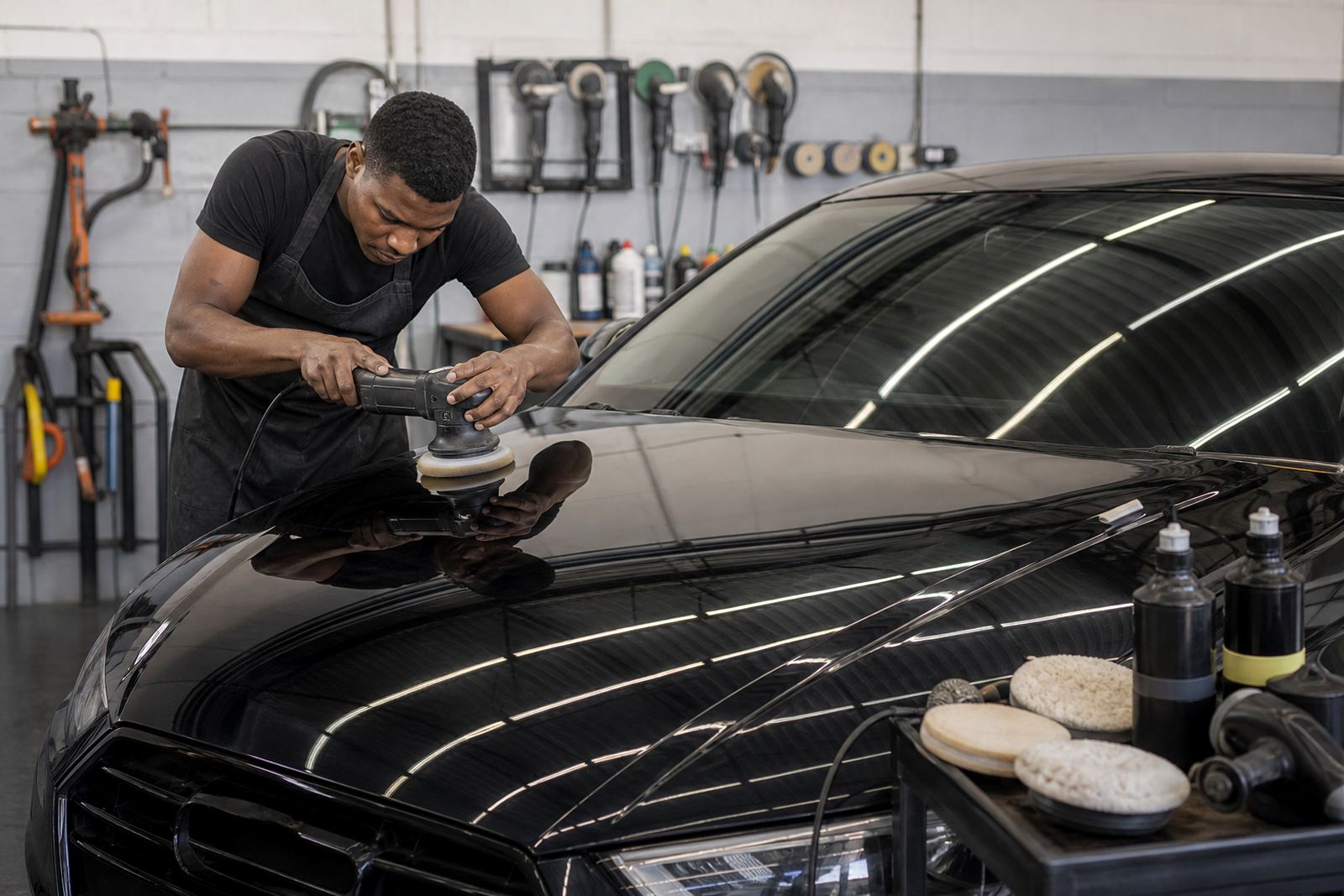
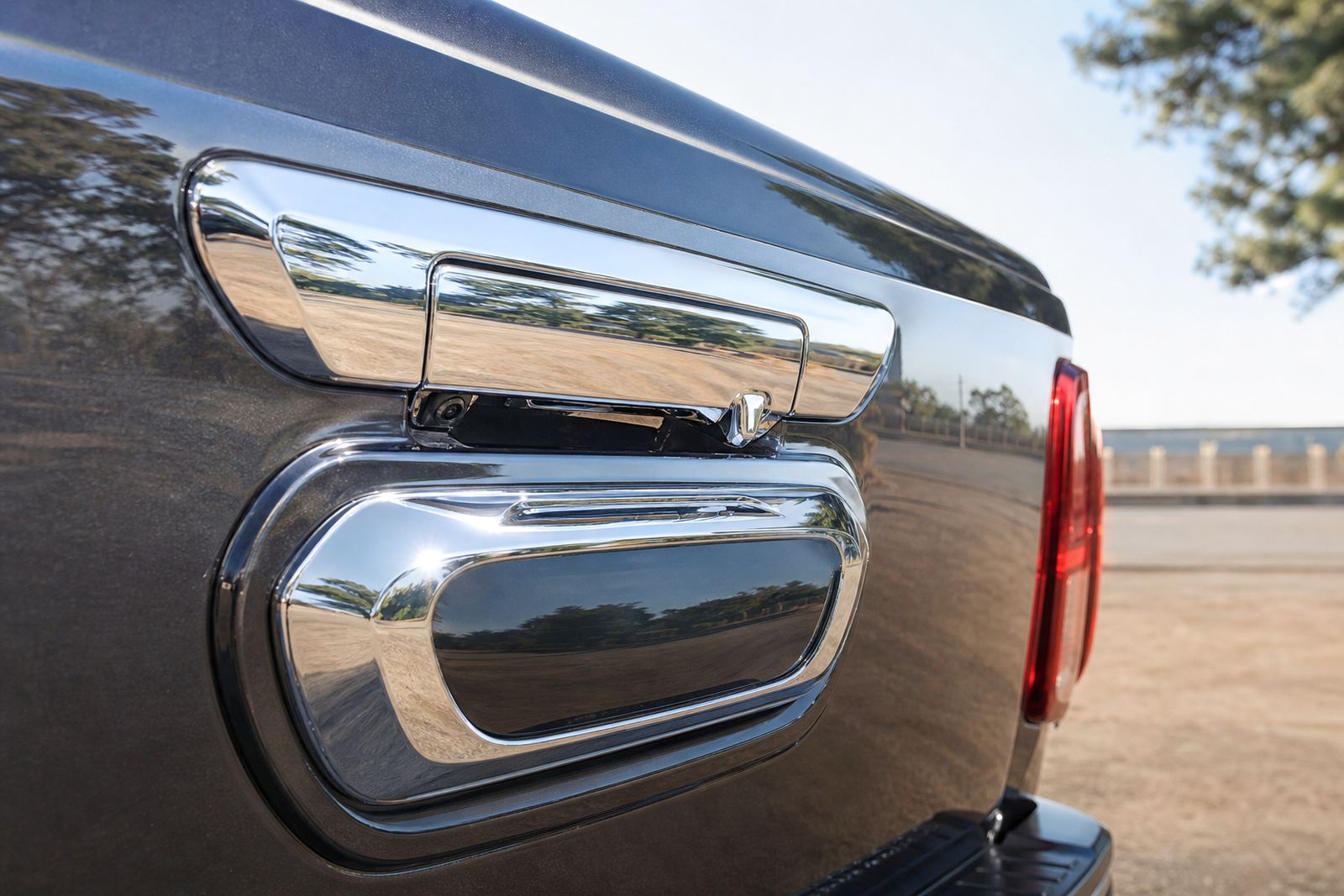
A proper finish is not just shine, it is the evenness of the surface, the clarity of reflection, and how well swirls, haze and oxidation have been reduced. On paint, that may mean cleaner gloss on a bonnet, doors and bumper edges. On metal, it may mean a brighter, more even sheen on stainless, aluminium or mild steel after the right cutting and buffing stages.
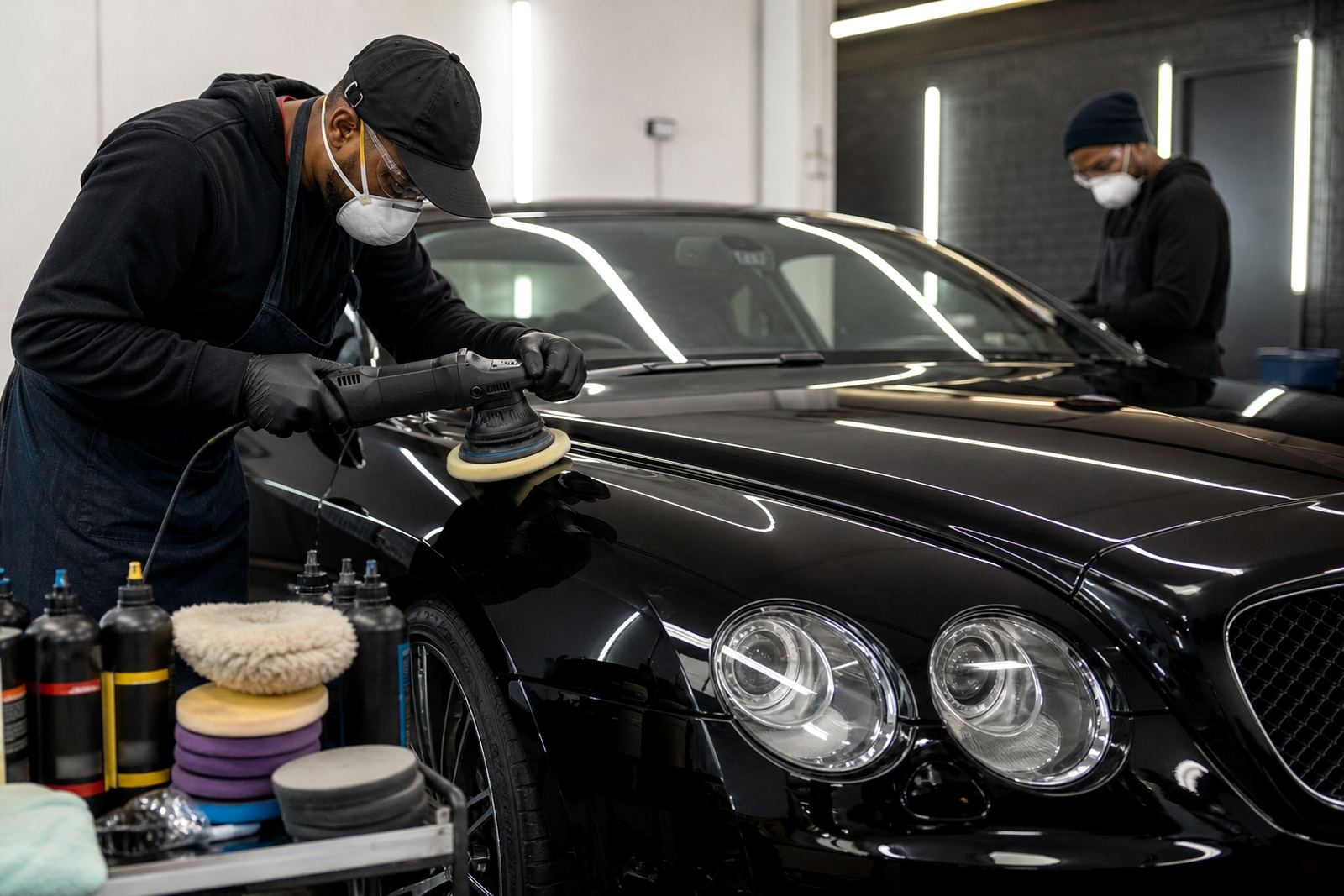
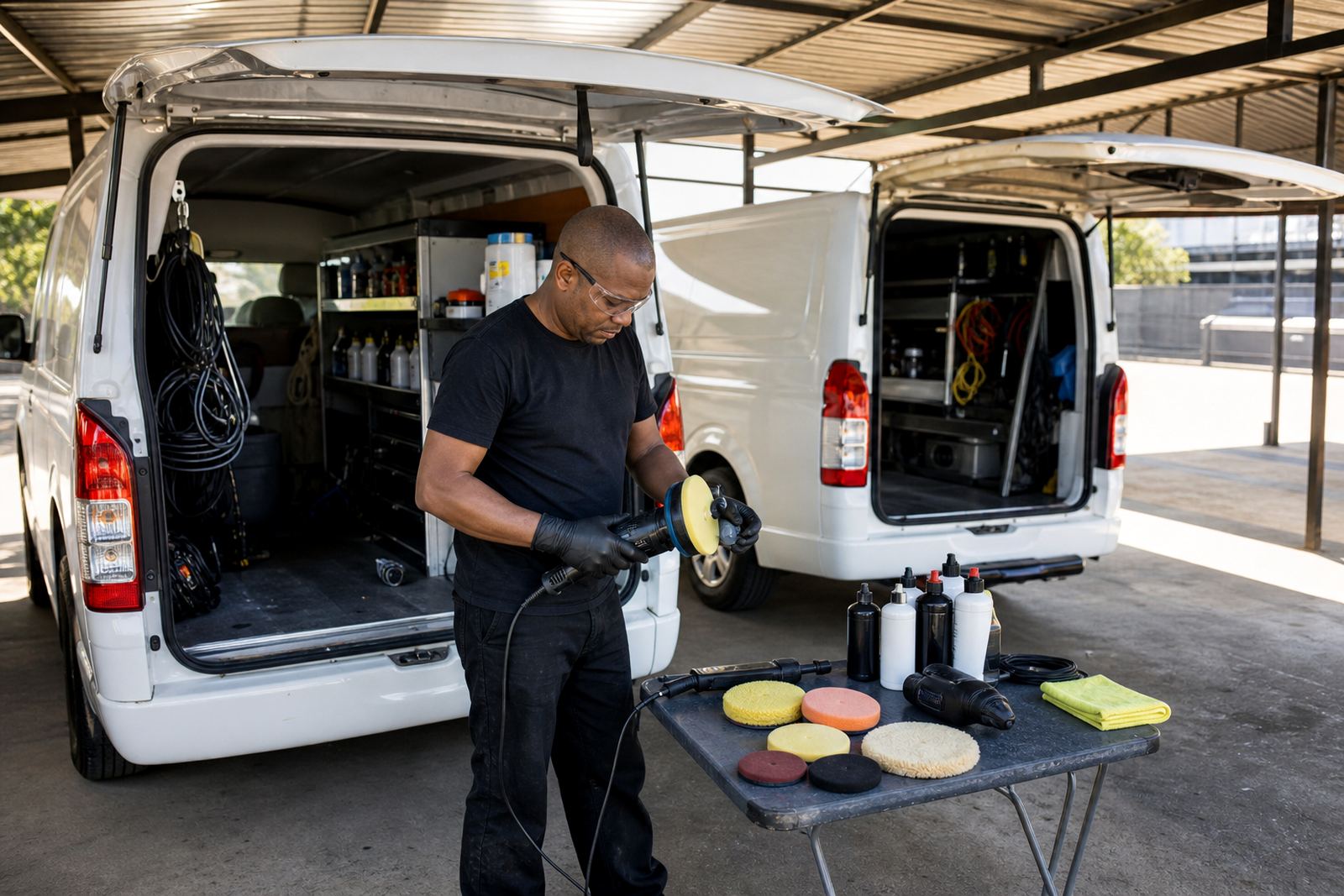
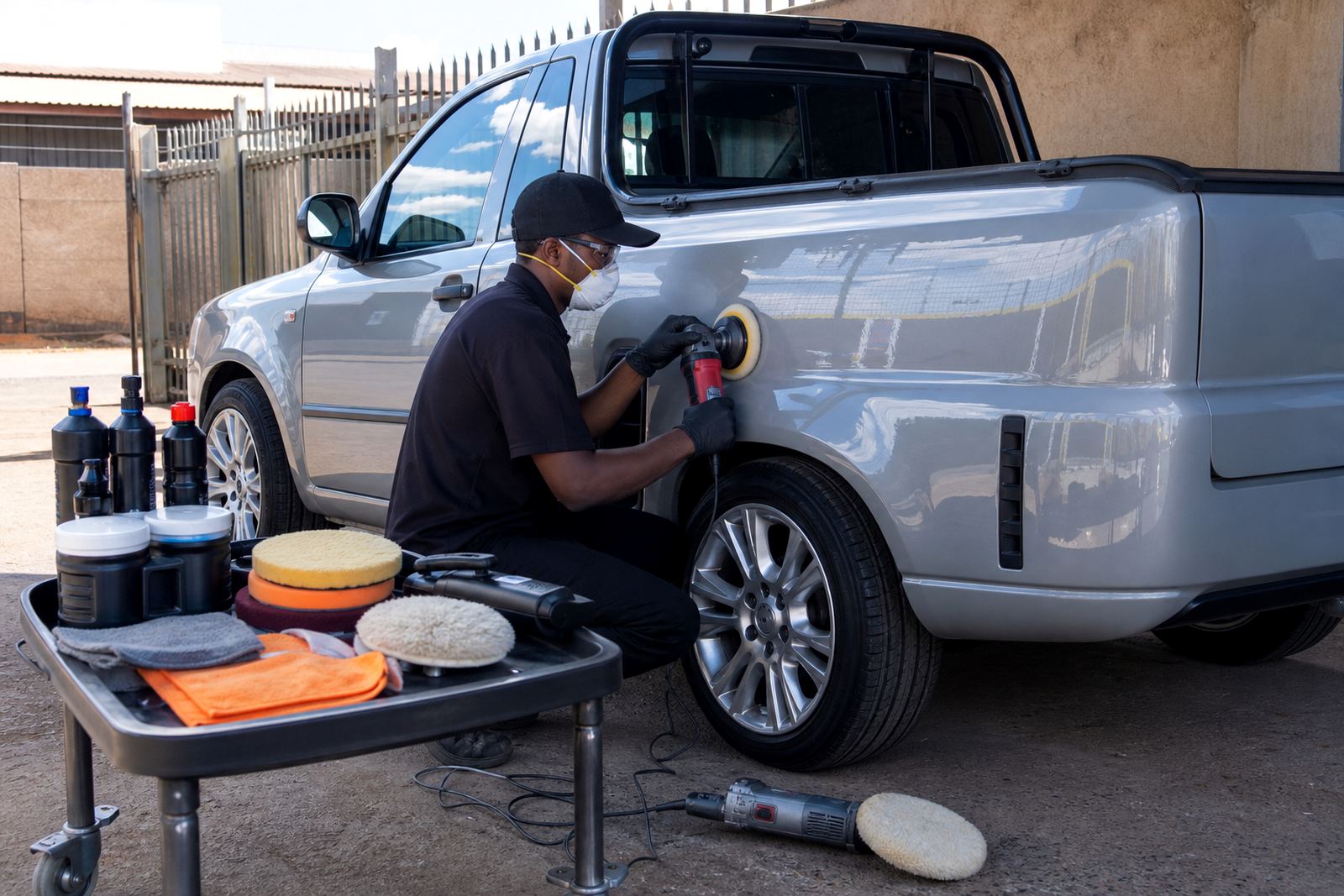
For customers in Germiston, Johannesburg and Pretoria, the aim is usually the same: remove defects without creating new marks. That means matching the machine, pad and compound to the job, then working methodically in small sections. On softer coatings, a dual-action polisher can be safer for first passes. On heavier oxidation or well controlled correction work, a rotary machine may suit better. Technique matters more than speed alone.
Paint Correction Examples For Daily Use Vehicles
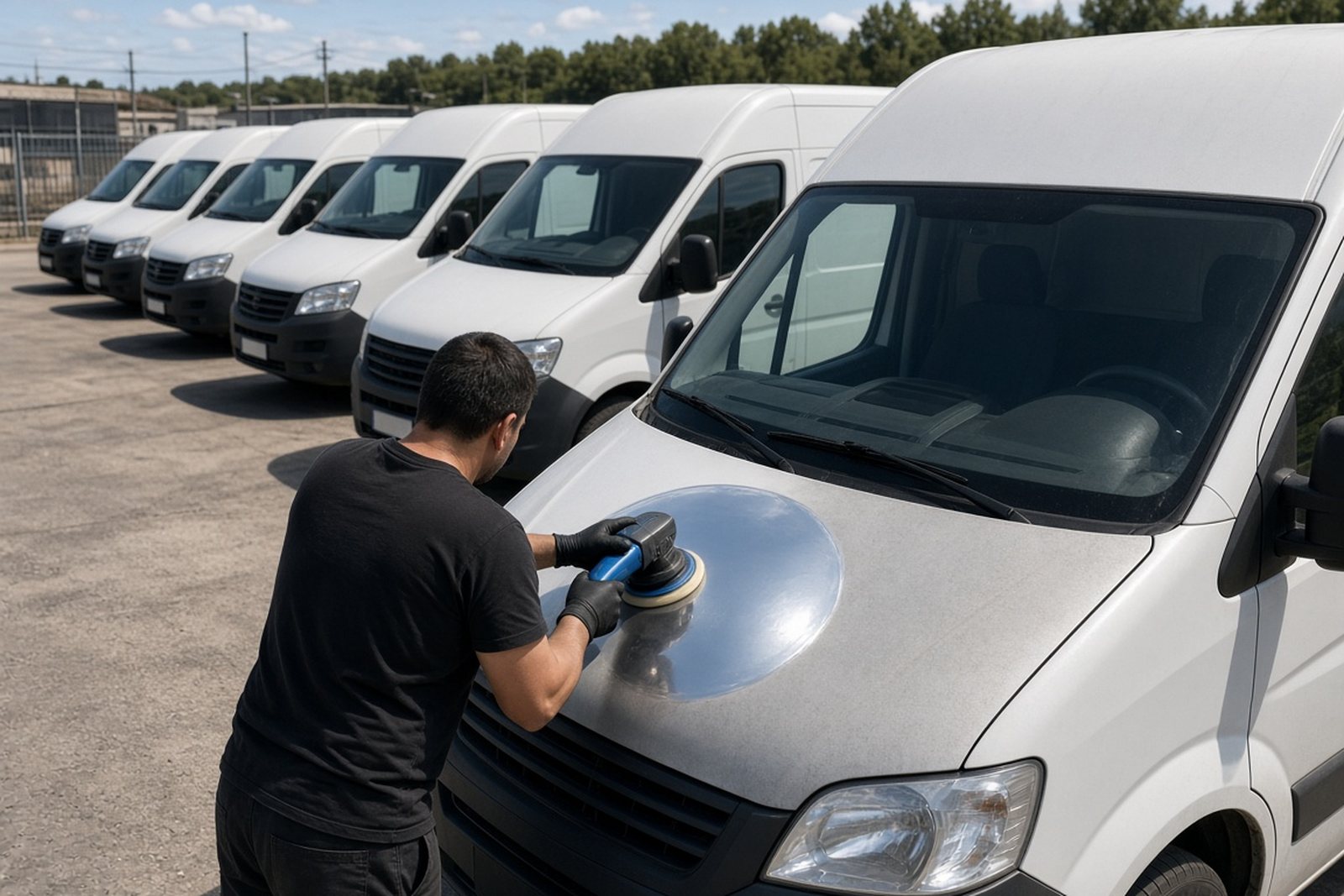
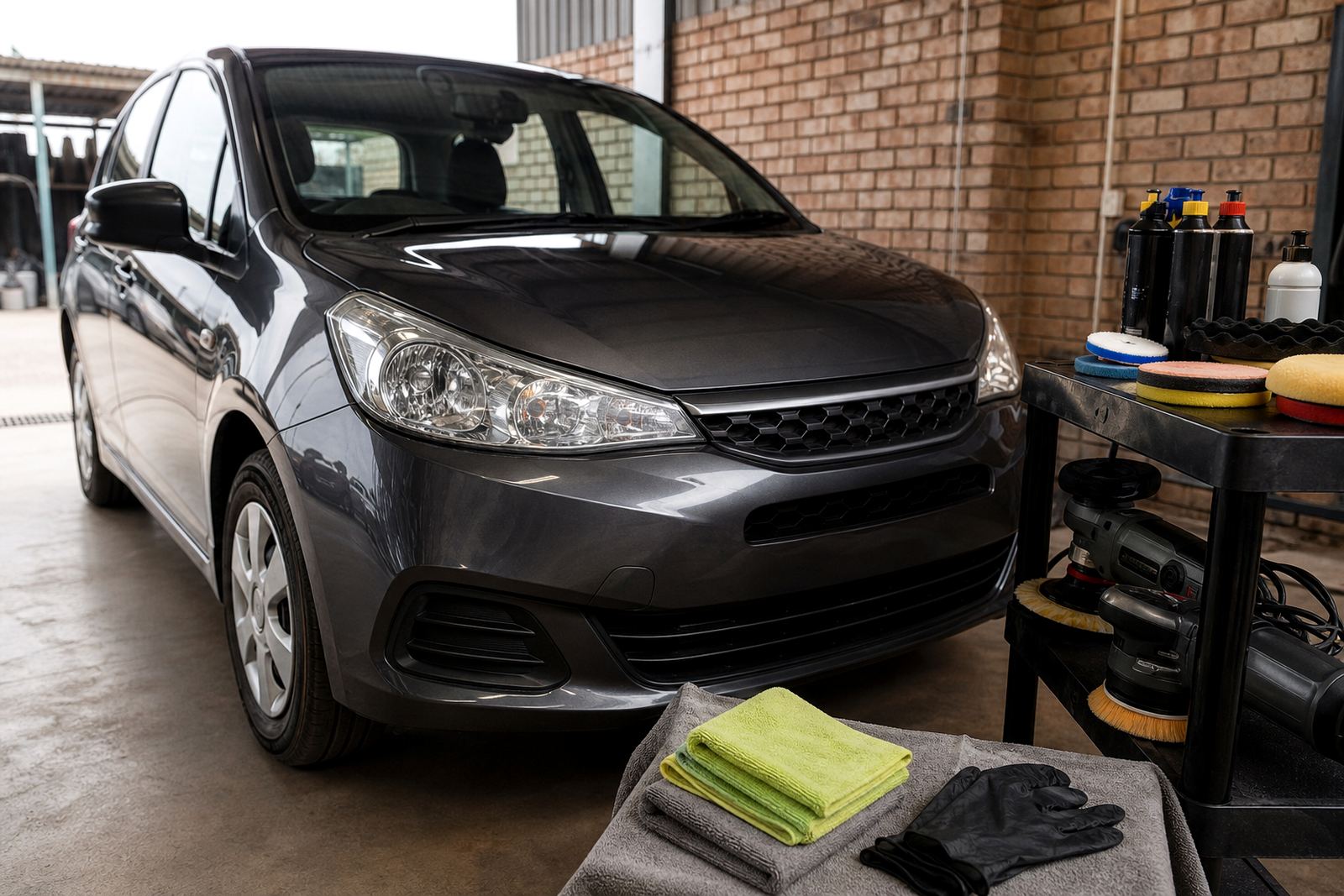
Many car owners want a cleaner finish on a family hatch, bakkie or fleet vehicle without chasing perfection that is not realistic on every panel. Typical work includes removing light wash swirls, fixing dull patches from sun exposure, and improving gloss before sale or after body repairs. In humid coastal areas like Durban and Cape Town, paint can show water spotting and residue if the surface prep is rushed.
- Initial wash and decontamination before machine work
- Test spot on a small area to confirm pad and compound choice
- Low to moderate pressure with controlled arm speed
- Final wipe down to check clarity under different light
Good results come from knowing when to stop. Over-polishing can thin the clear coat, so the goal is an even, safe finish not chasing every last mark.
Metal Buffing Results For Workshops And Fabricators
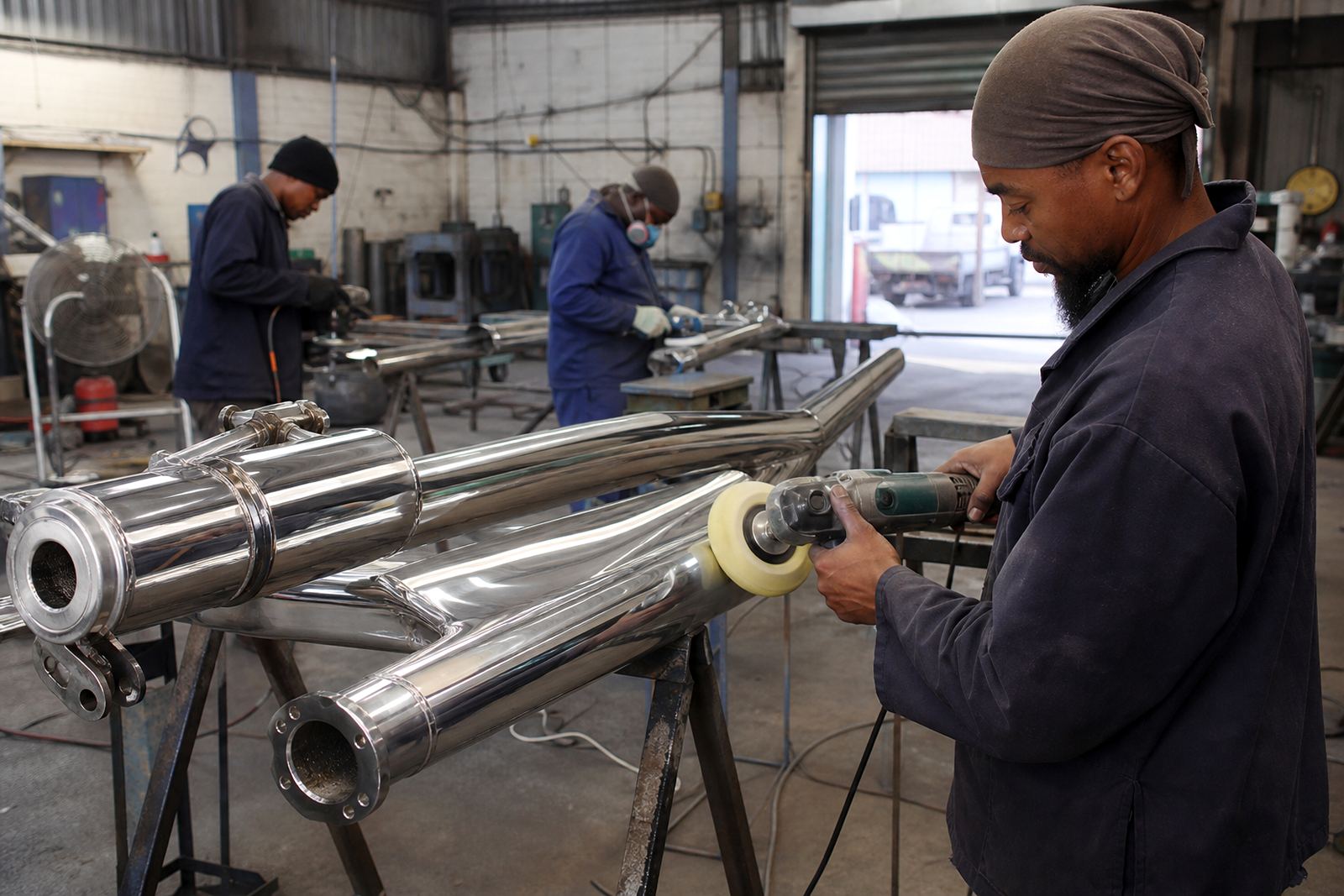
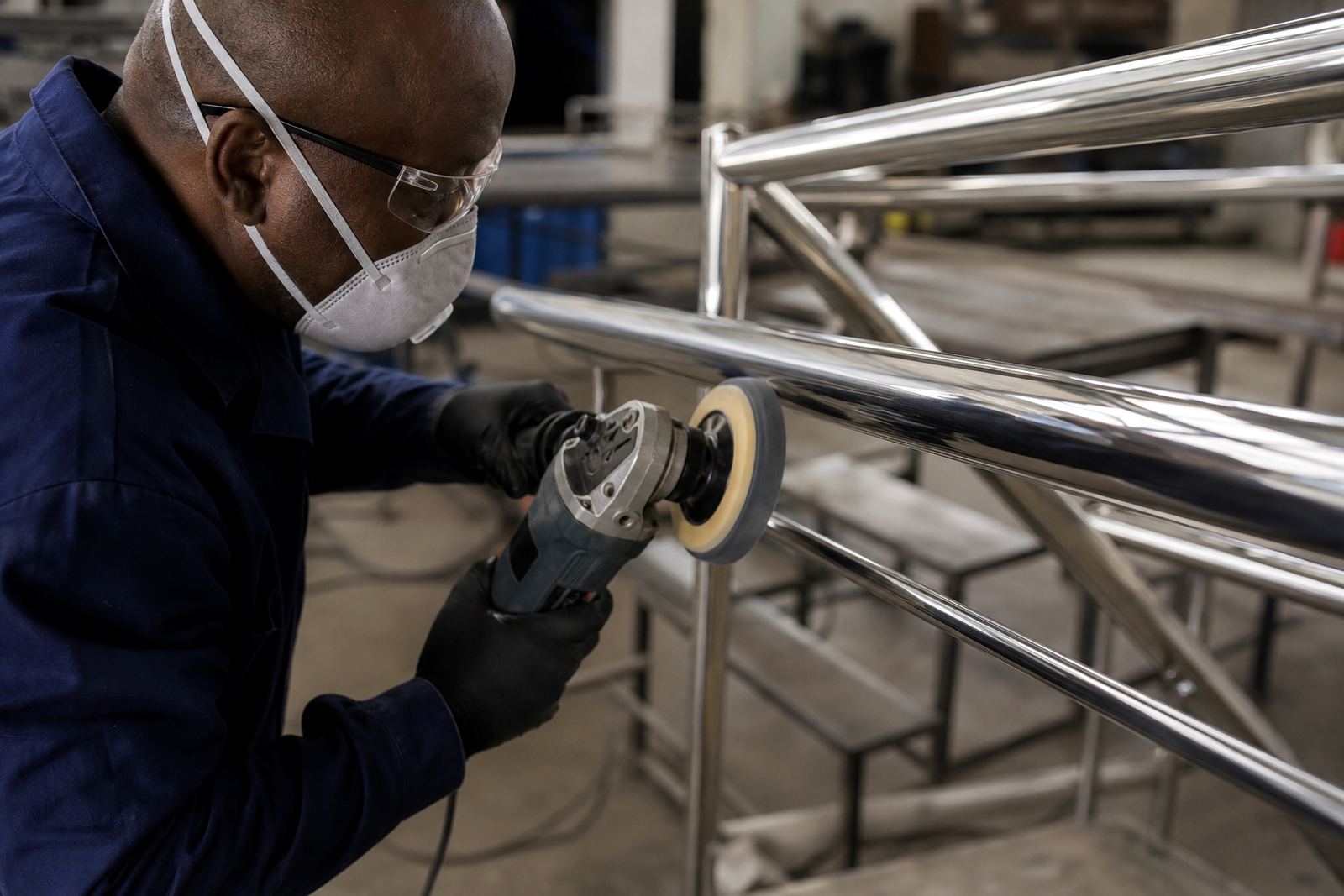
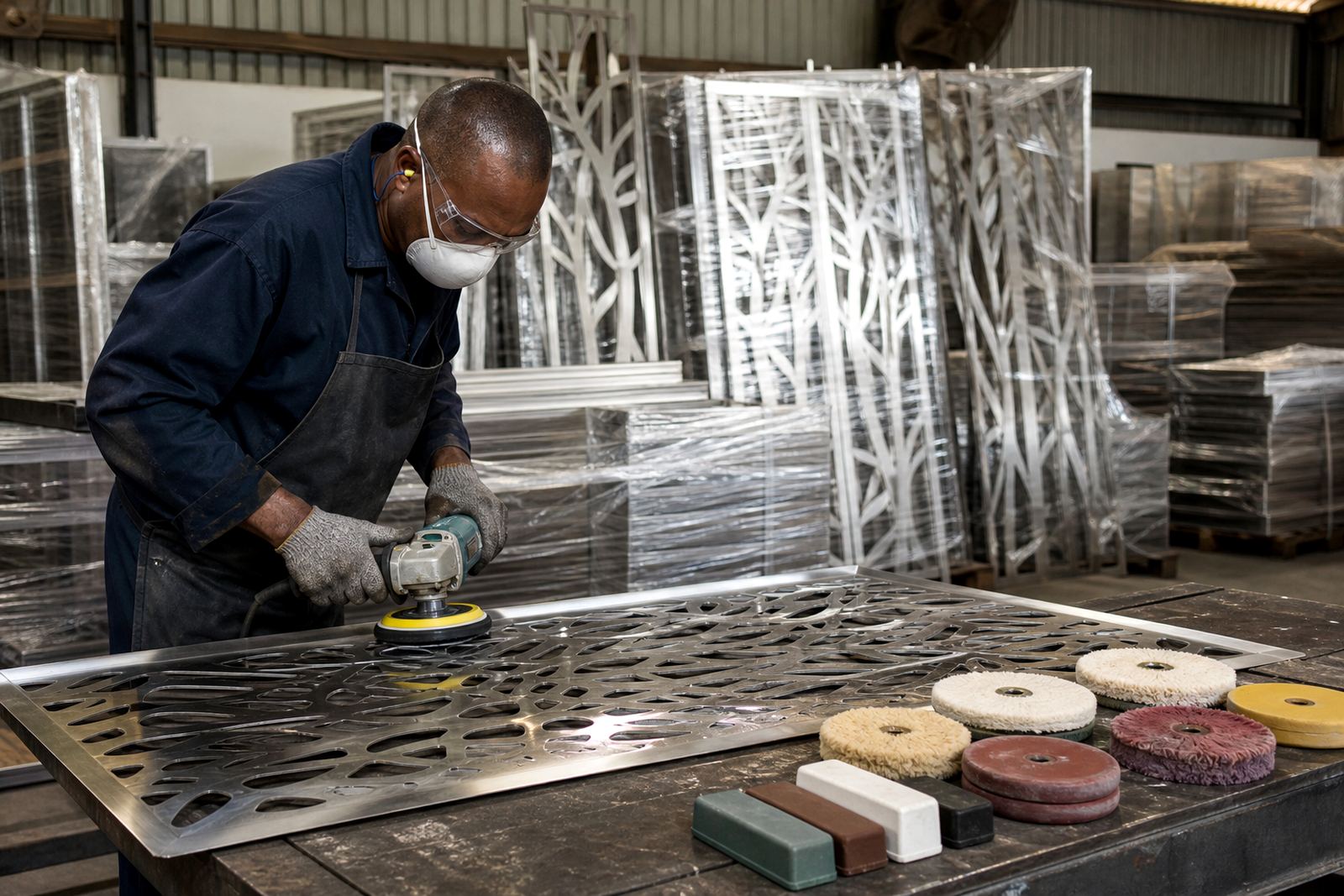
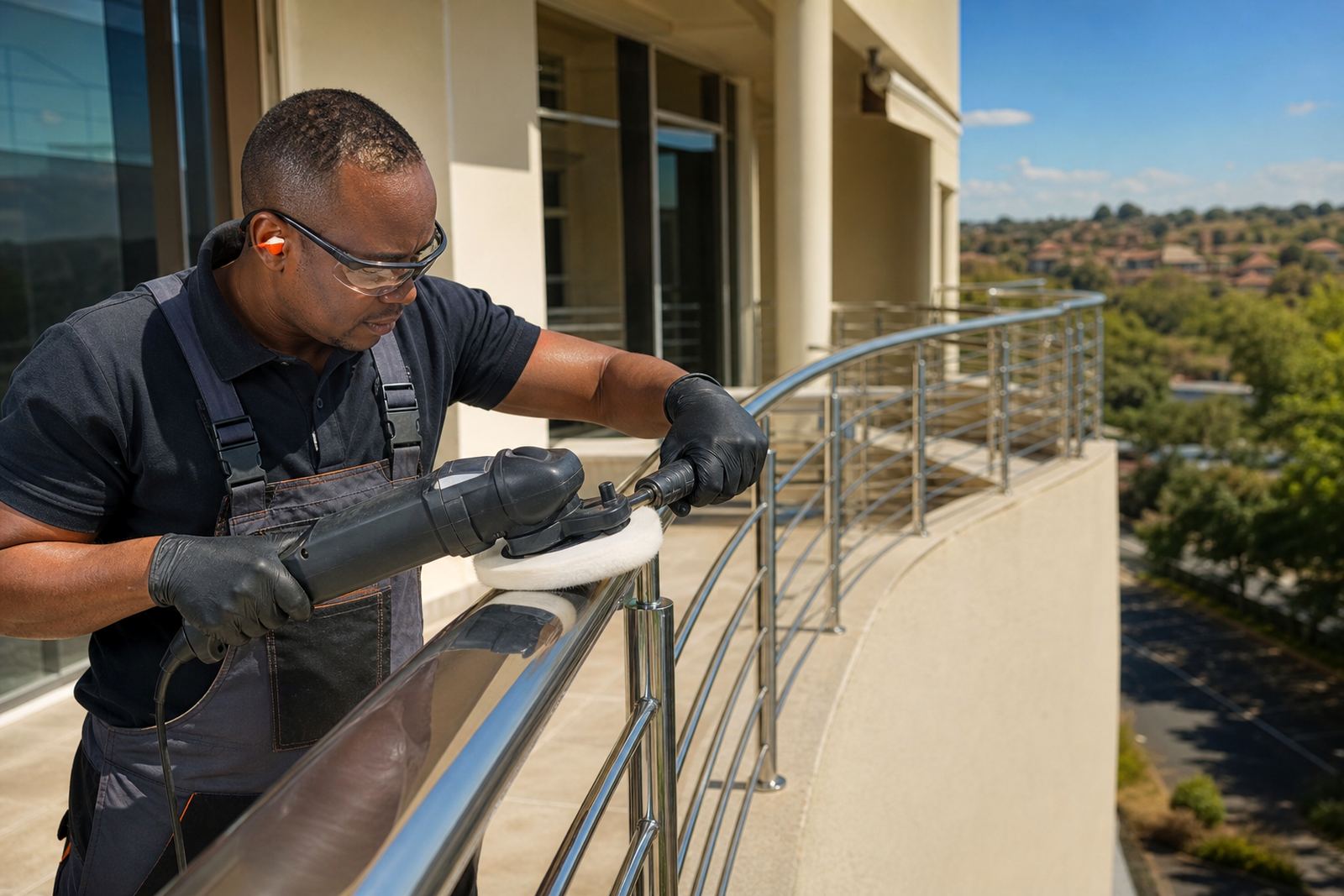
Metal finishing can range from decorative trims and show pieces to working parts in workshops, kitchens and fabrication yards. Different metals react differently, so a bright finish on one item may need cutting compound, while another only needs a finer stage to remove buffing marks. On stainless work, especially in commercial kitchens, the grain and heat marks need careful handling.
In Gauteng workshop conditions, dust control and clean pads make a noticeable difference. A dirty buff can leave streaks or drag old compound back onto the job. For cleaner results, the surface should be wiped often and tools checked before each stage. It helps a lot, even small slip ups in prep can show up at the end.
- Cutting stage to level the surface and reduce oxidation
- Intermediate buff for smoother reflection and less haze
- Finishing compound for a cleaner final look
- Pad change between stages to avoid contamination
How Customers Choose The Right Process
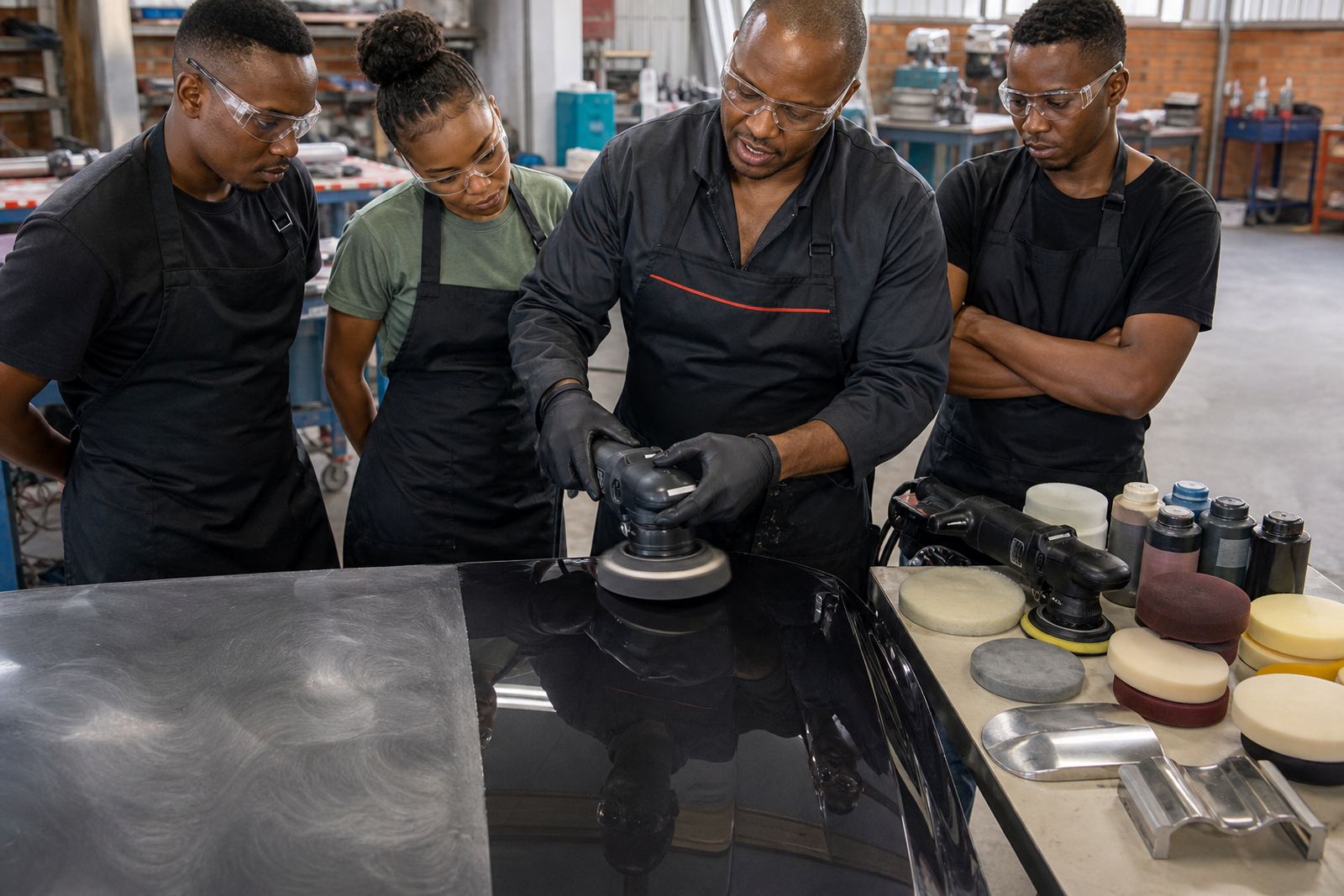
The right process depends on the material, the defect, the time available and the skill level of the operator. A beginner may need a starter kit, a simple pad and compound match, and basic machine care guidance. A more experienced user may need help refining technique for curved panels, edges and tight spaces. That is why some project pages focus on training outcomes as much as the final shine.
When choosing a route, think about the surface first. Paint correction and metal buffing are not the same job, and using the wrong method can leave holograms, heat marks or residue. If the work is being done in an open workshop, remember dust safety, hearing protection and eye protection. On-site demos can also help a team standardise the way they work.
Training That Supports Better Results
Finishing work improves quickly when the operator understands machine movement, pad loading and compound selection. Beginner Polishing Training is useful for customers who are new to rotary and dual-action machines. Rotary Skills Session and DA Skills Session help users understand movement, pressure, pad tilt and how to avoid burning edges. For metal work, Metal Buffing Training focuses on preparation, staging and the finish that suits the item.
Across South Africa, customers often ask for practical help with workshop setup advice, consumables restocking and machine care guidance.A steady method gives better results than rushing through a panel or a job lot.
What To Expect On The Project Pages
The listings linked from this hub show the sort of outcomes possible across different customer types, from individual car owners to workshop teams. Some examples will focus on a single bonnet or panel, while others show full vehicle correction, buffed metal components or training sessions that improved the team’s process. The point is to show the finish, the method and the practical support behind it.
- Vehicle paint correction examples
- Metal polishing and buffing examples
- Training and coaching outcomes
- Starter kit and workshop support results
If you are planning a finishing job in Johannesburg, Cape Town, Durban, Pretoria or Bloemfontein, use these examples to compare your surface condition with the result you want. Then choose the machine, compound and training support that suits the task.