Choose The Right Starting Point
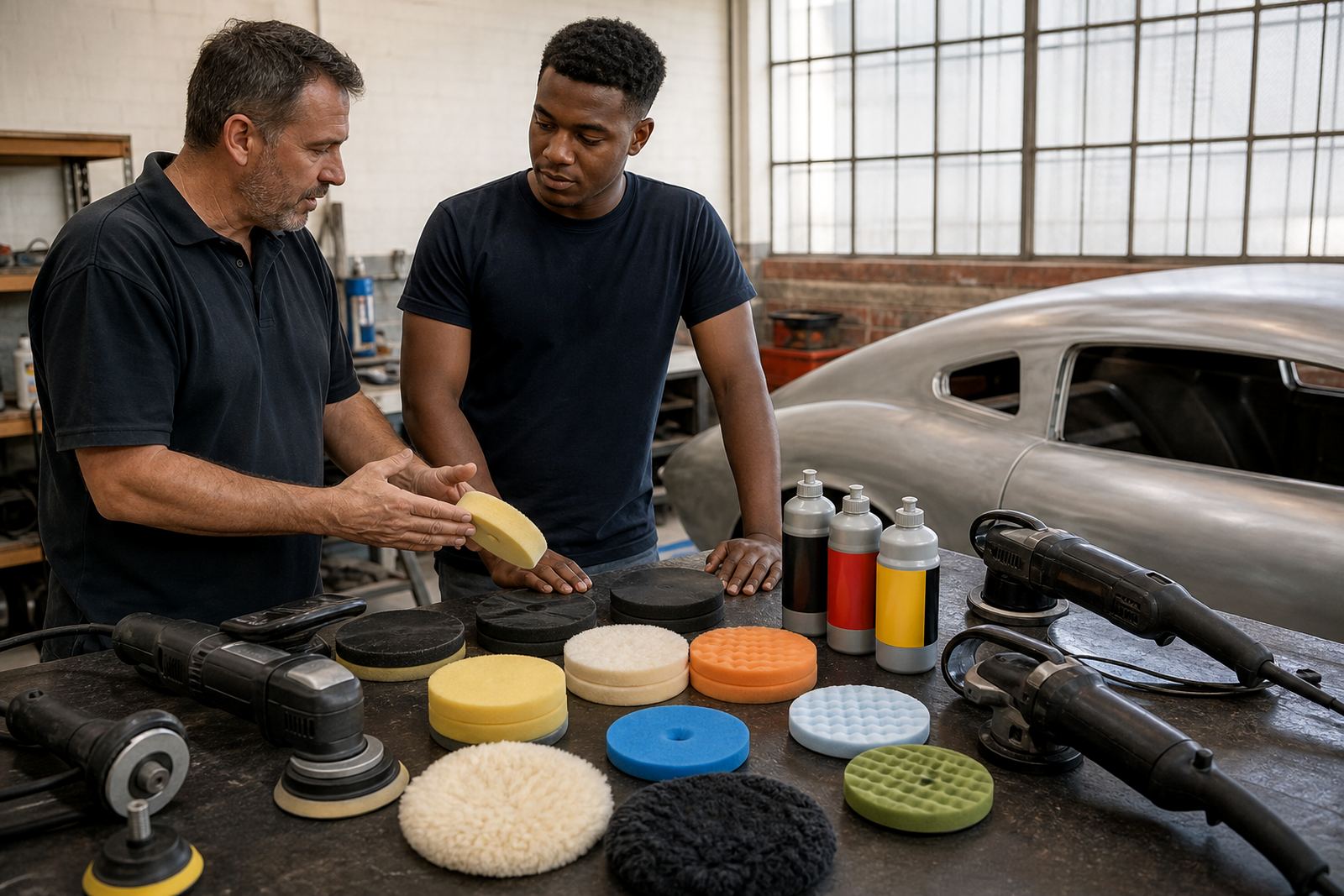
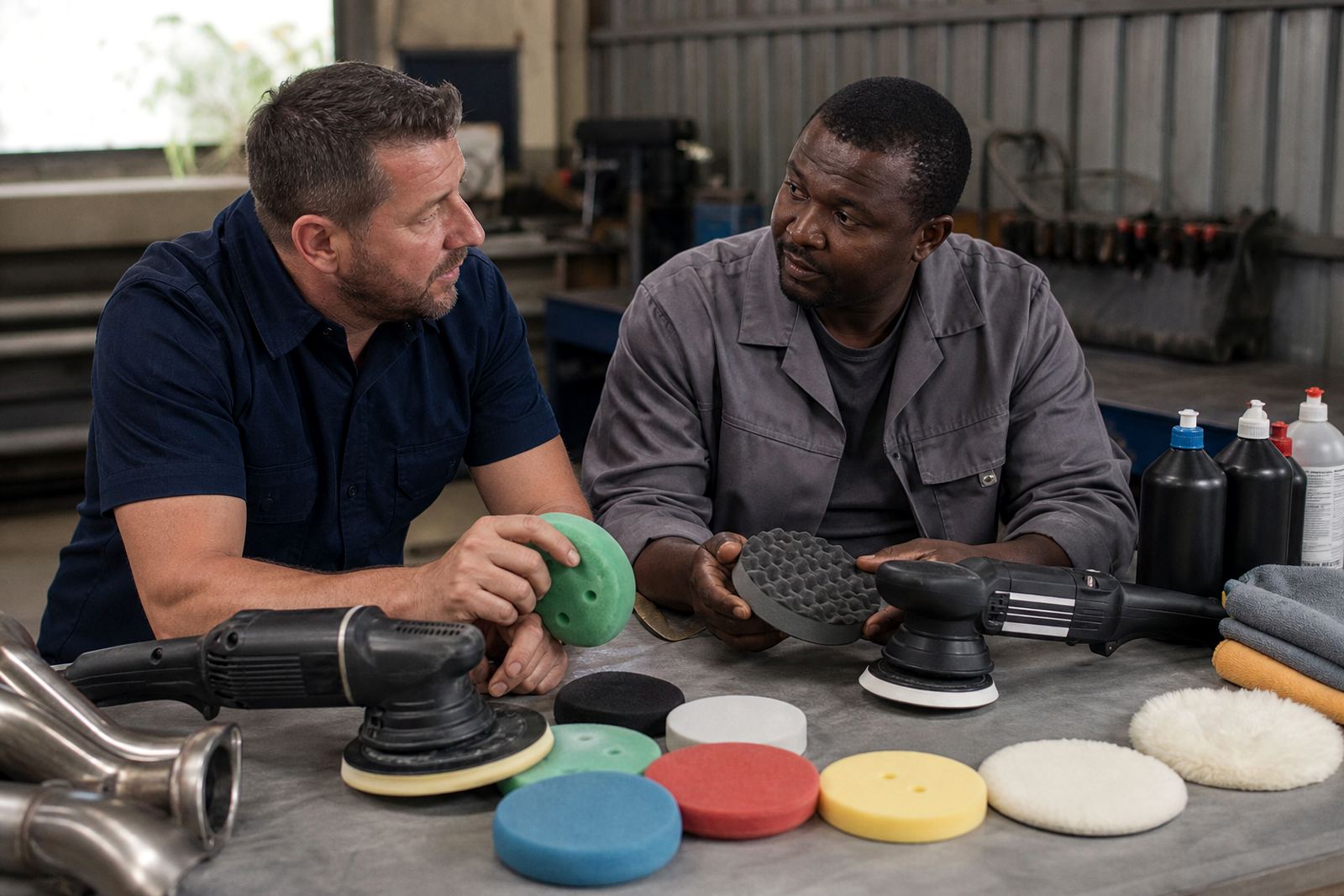
If you are new to polishing, the first choice is usually between a rotary polisher and a dual-action machine. A rotary tool gives direct cutting power and is suited to confident users working on heavy oxidation, paint defects or metal prep. A dual-action polisher moves in a safer, less aggressive pattern and is often the better starting point for car owners, panel shops and detailers who want control while learning the process.
We help customers across Germiston, Johannesburg, Pretoria and further afield compare machine size, pad type, compound strength and the finish they need to achieve. The right setup depends on the surface, how much correction is needed and how much experience the operator has.
Starter Kits Built For Real Work
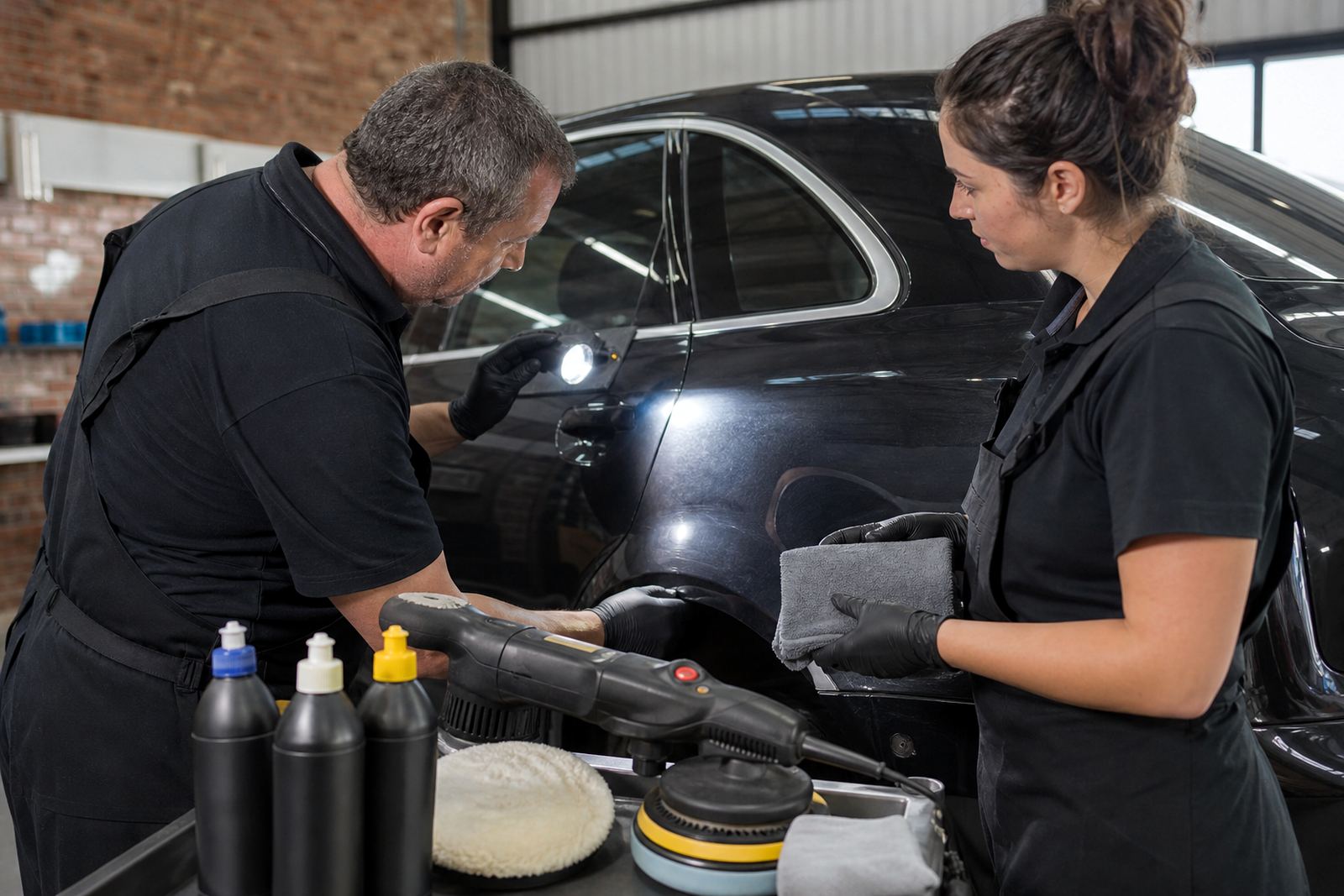
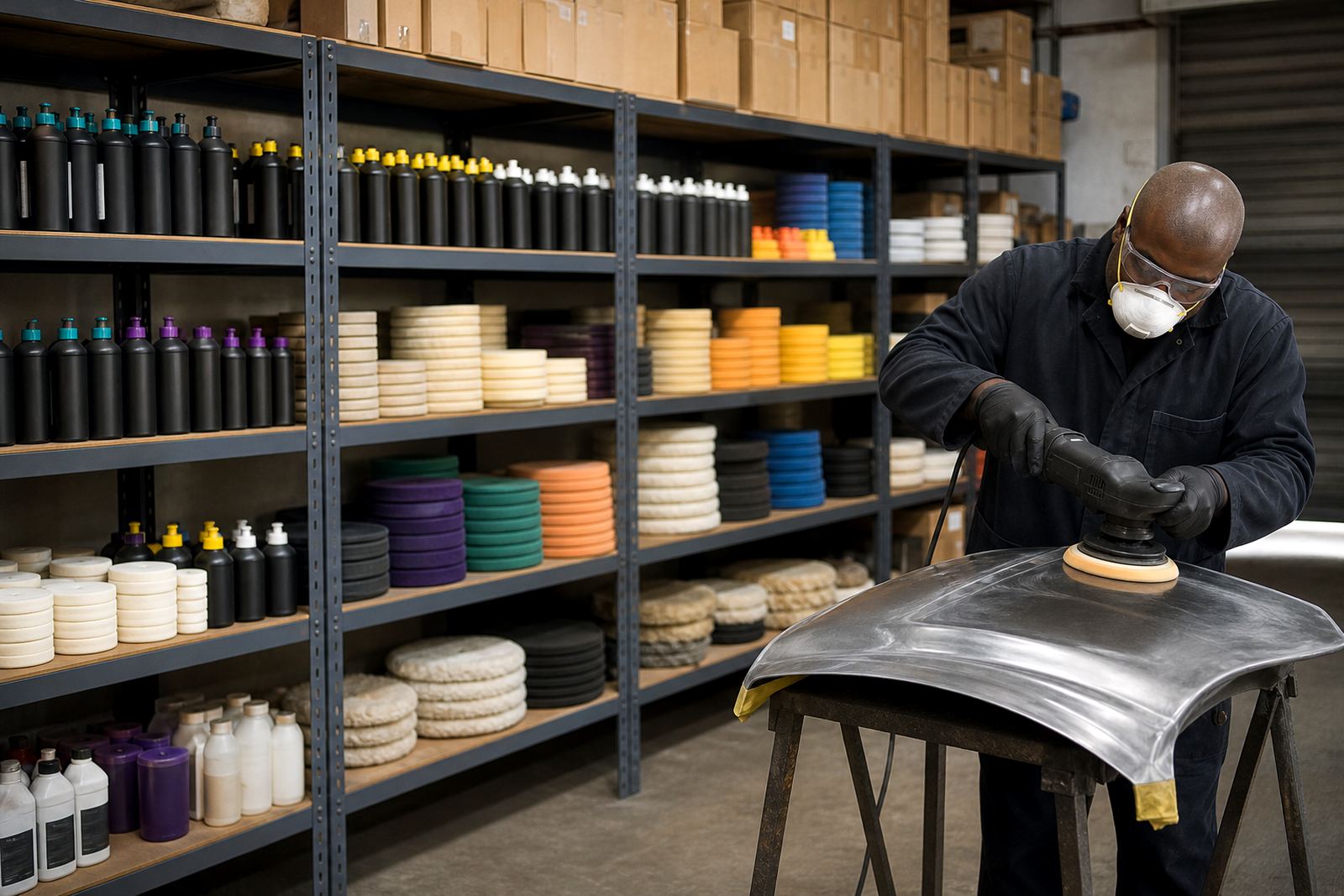
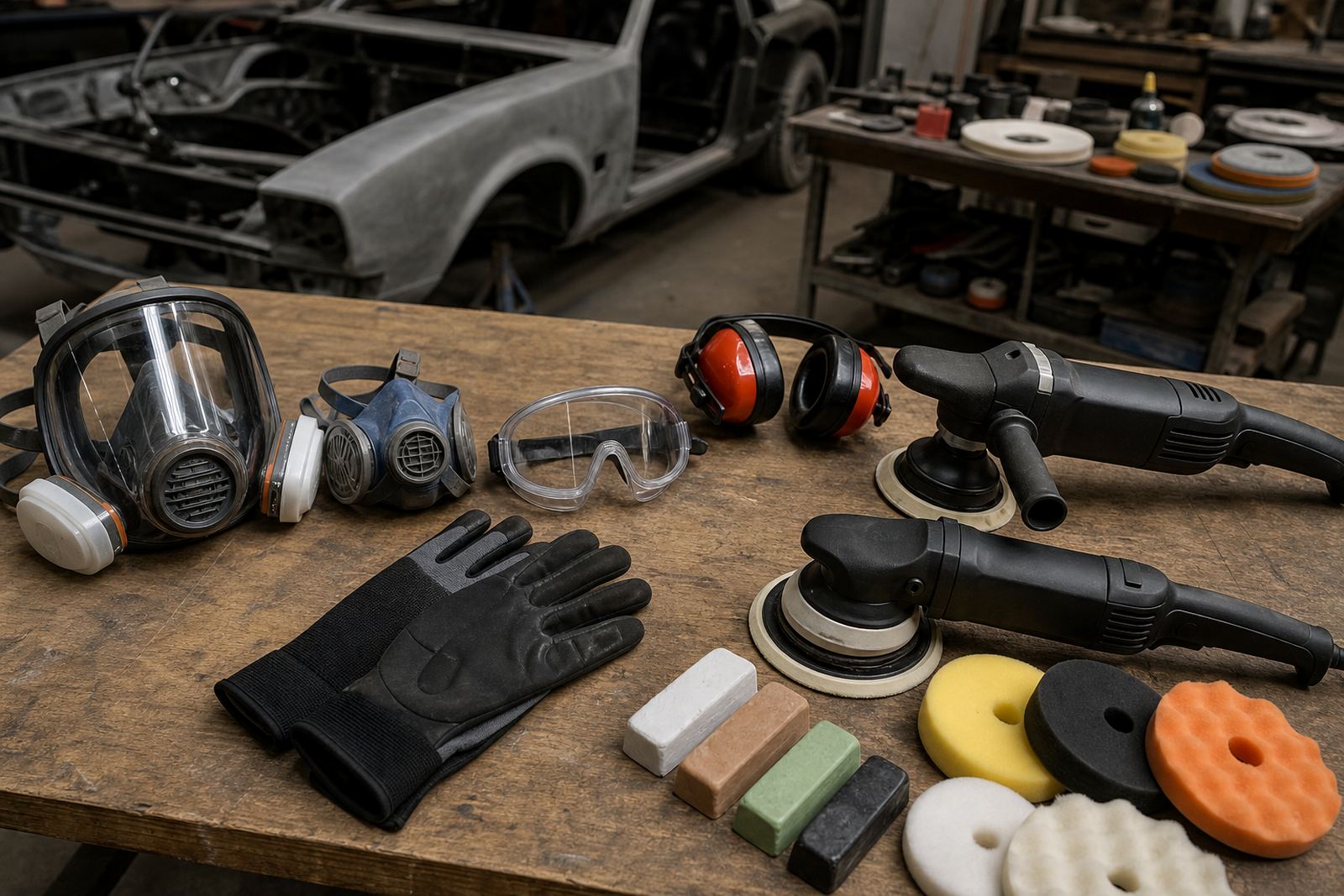
A proper starter kit should not be overloaded with gear you will never use. It should cover the machine, a small range of pads, compounds for cutting and finishing, cleaning items and basic safety gear. For metal work, a kit may also include buffing wheels and compounds suited to stainless steel, aluminium or mild steel. For paint work, the aim is to match the pad and compound to the paint hardness and the condition of the surface.
- Machine choice matched to your skill level and the job type
- Pads or buffs for cutting, refining and final finish
- Compounds selected for metal or paint correction
- Microfibre cloths, pad cleaning items and storage advice
- Safety and PPE briefing for dust, splatter and heat
We also assist with workshop setup advice so a home user in Bloemfontein or a busy team in Durban can start with the right kit first time.
Training That Covers Technique And Control
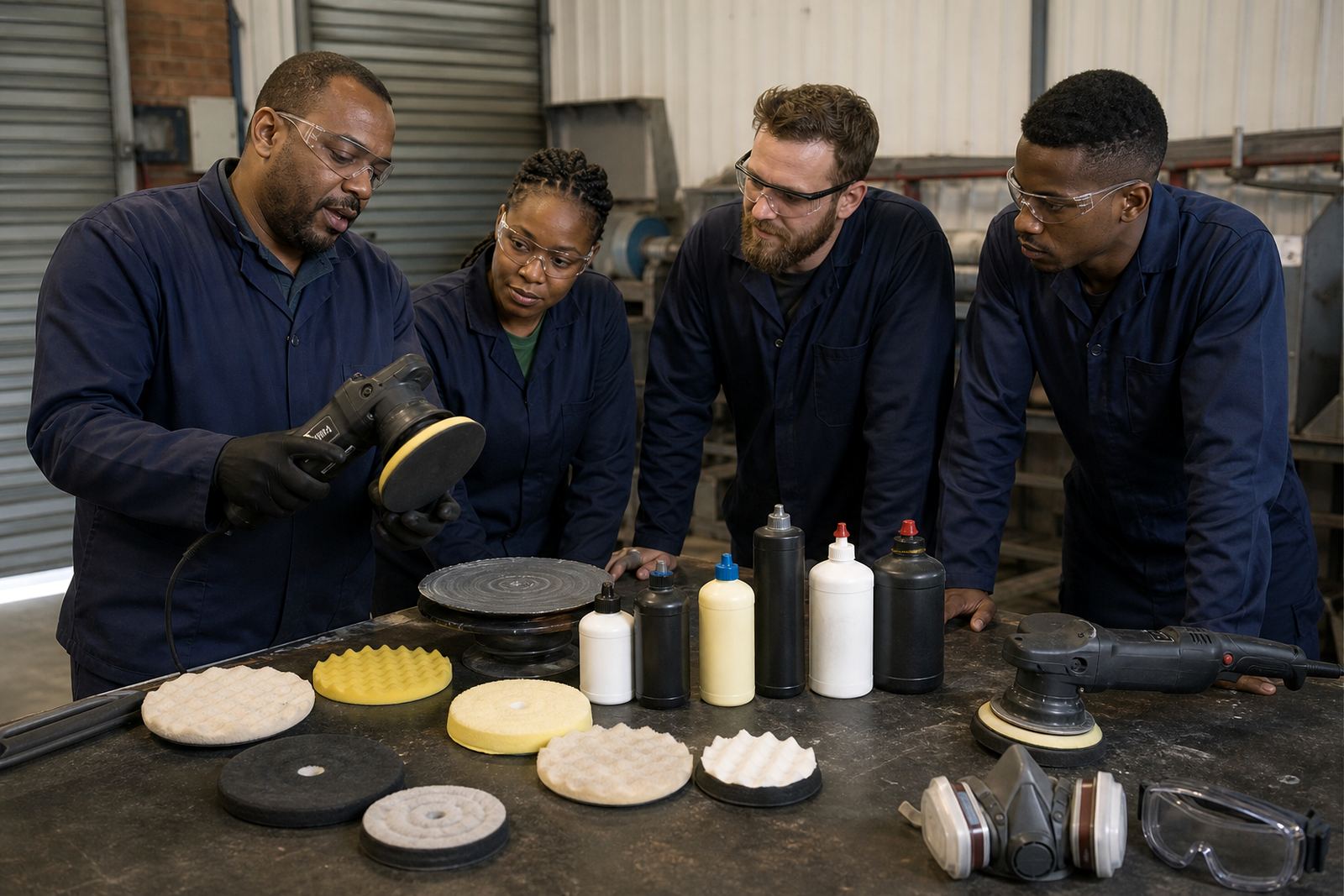
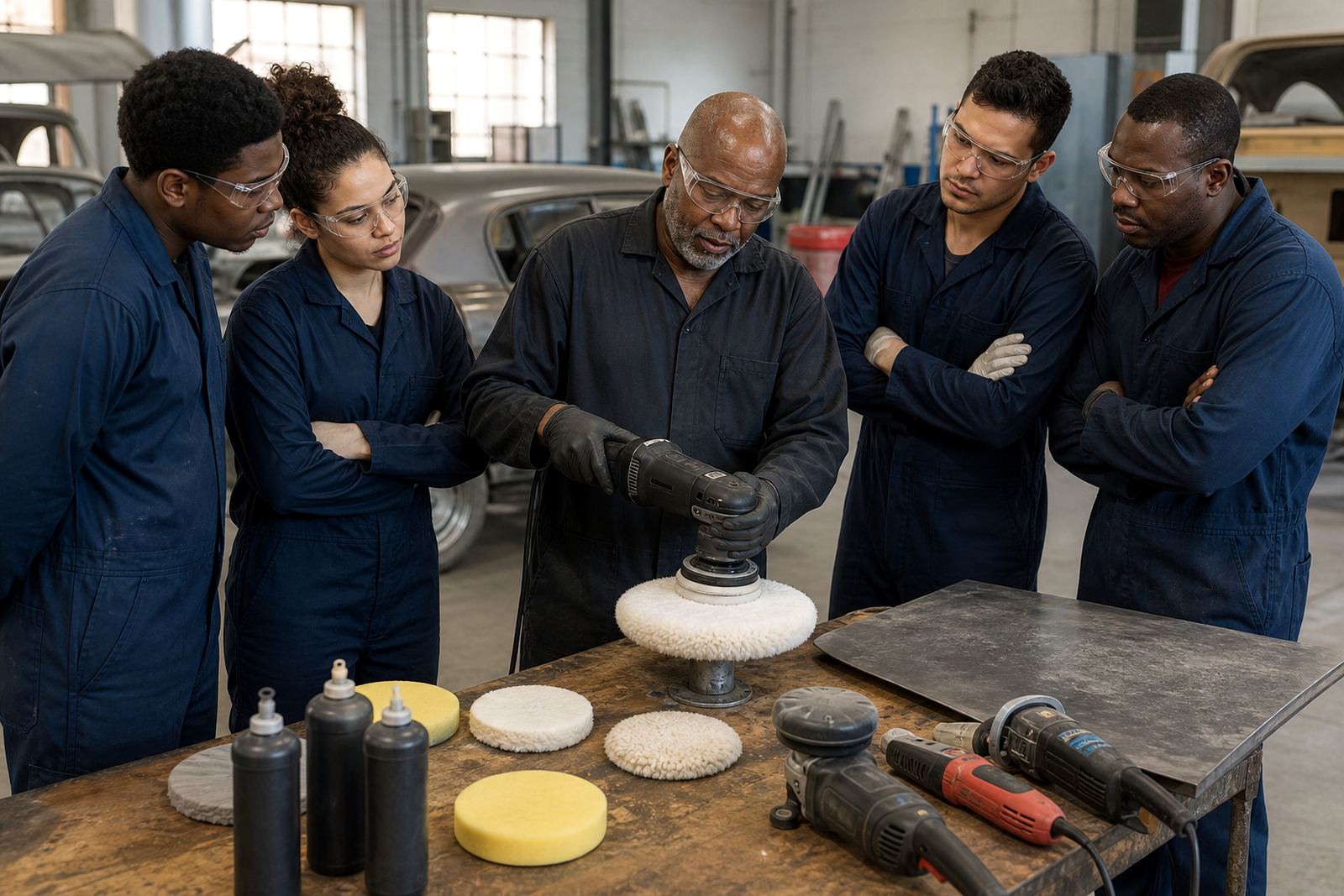
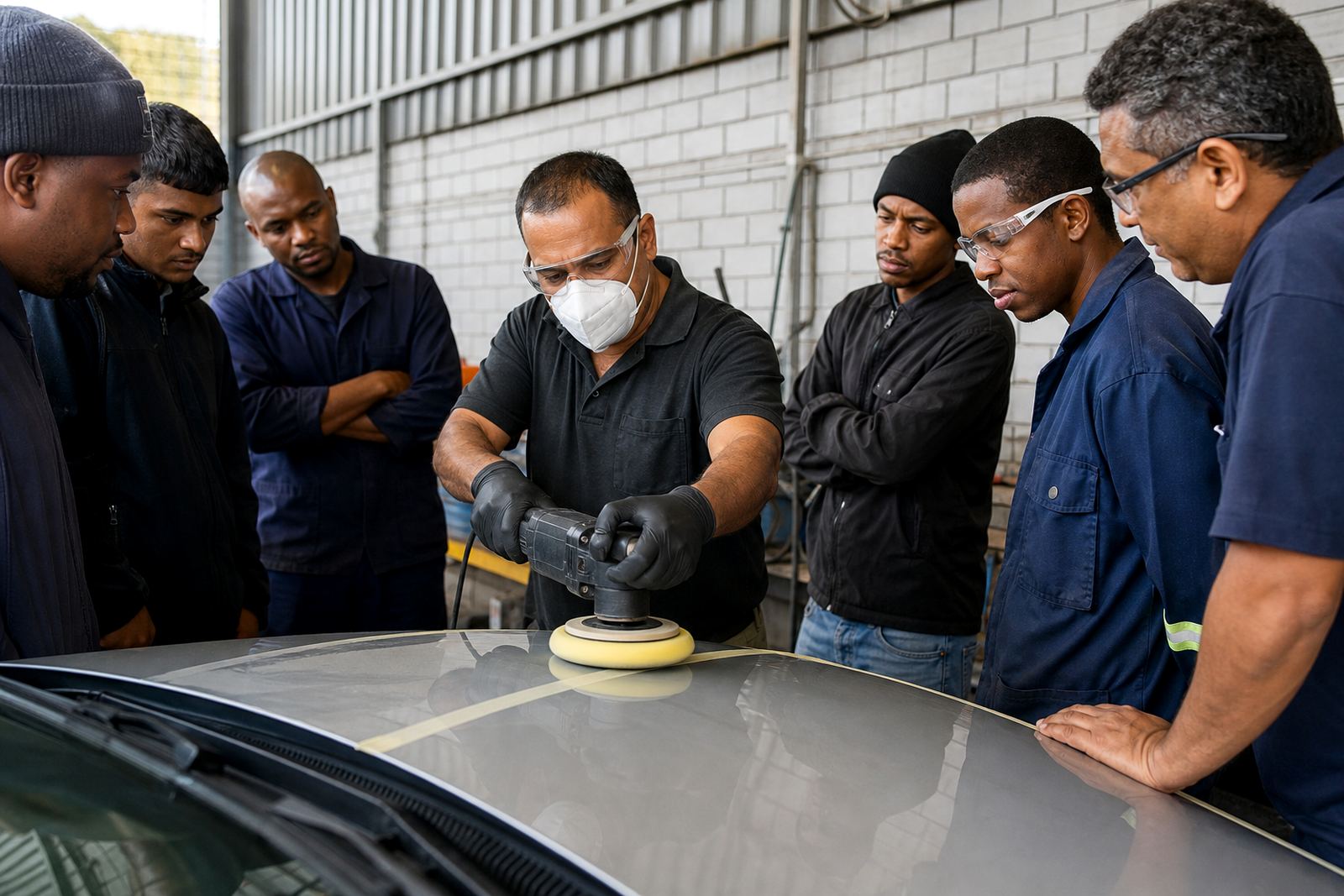
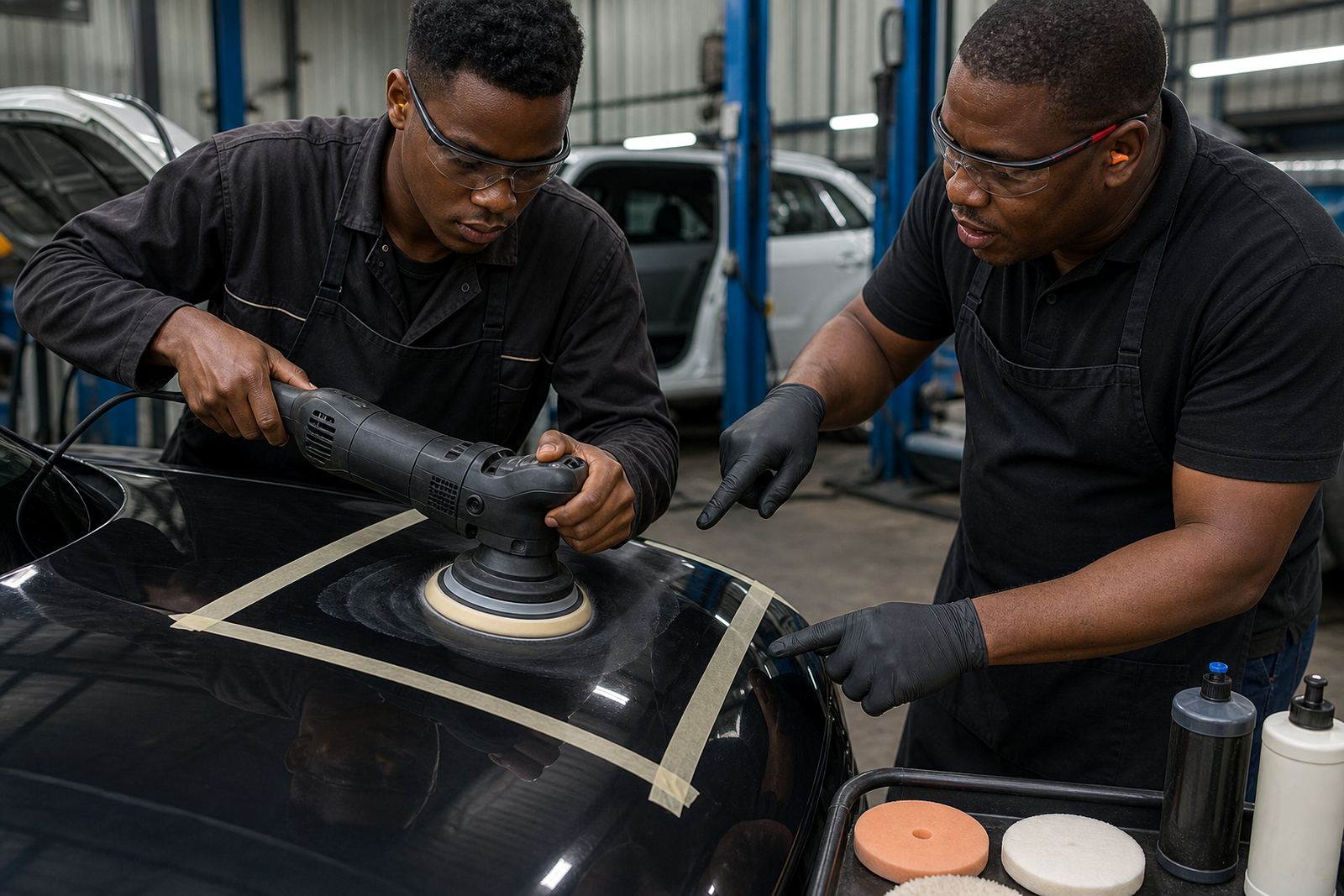
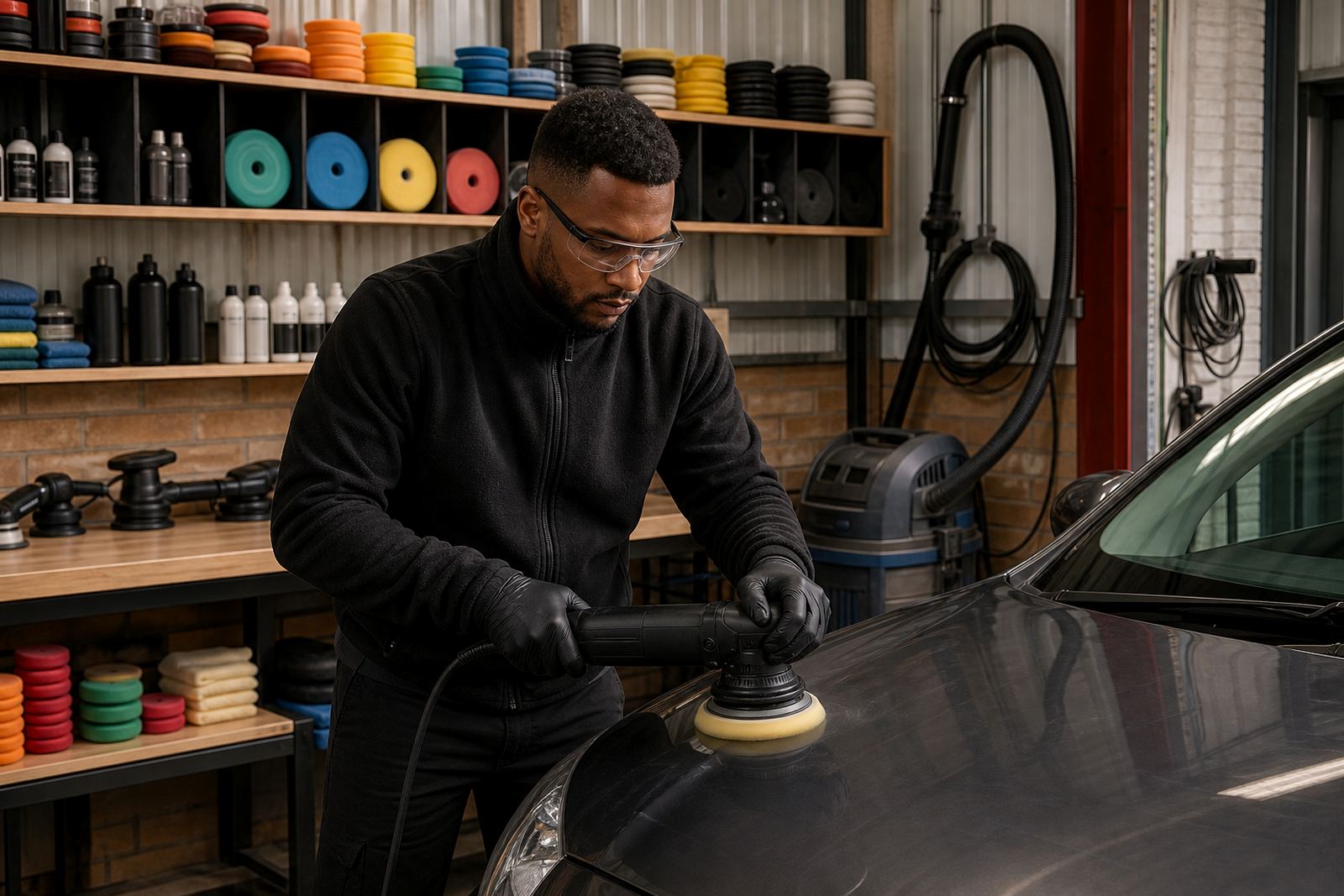
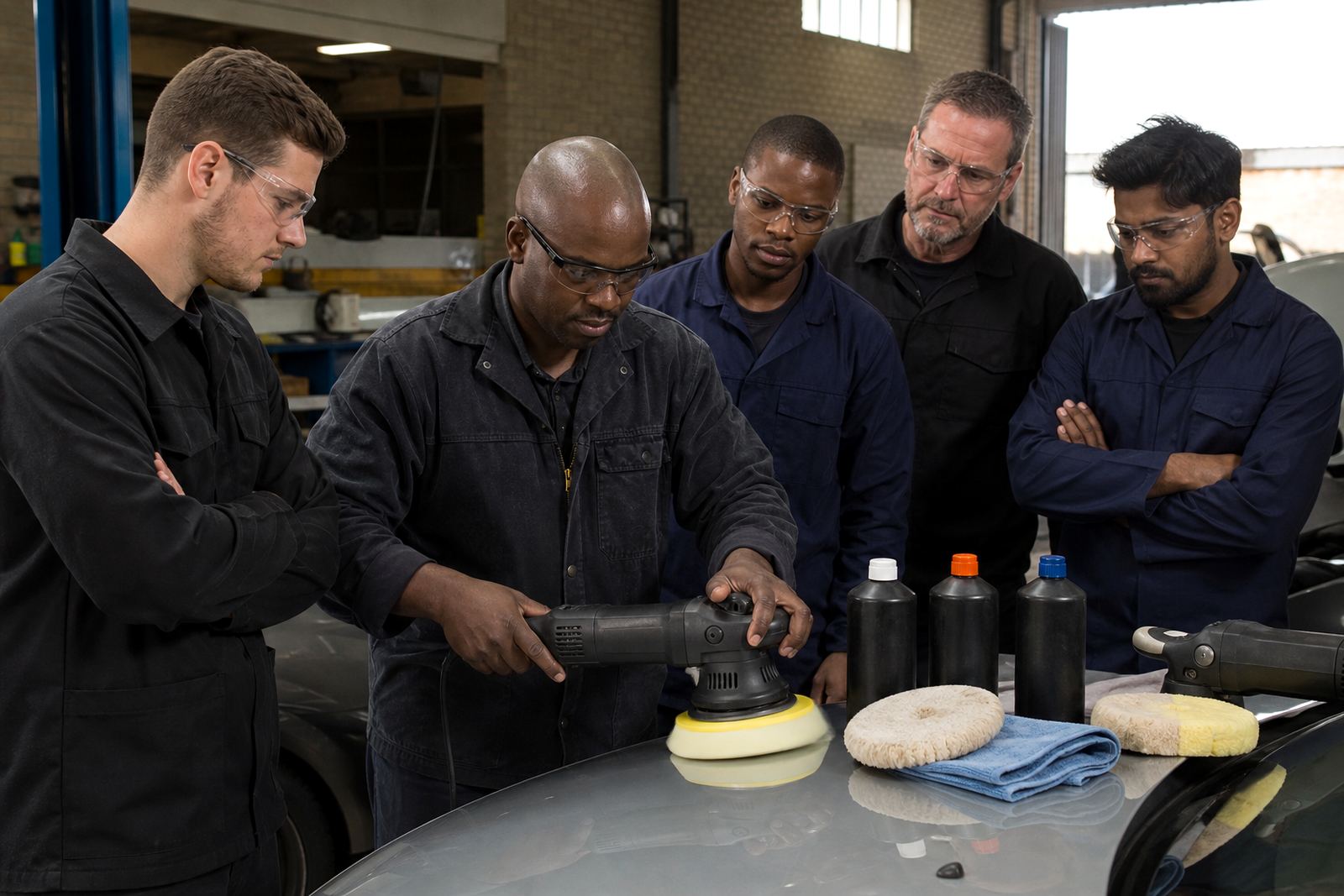
Training is where many first-time users save time and material. Our sessions cover machine control, pad pressure, working speed, compound loading and the correct polishing sequence. We also cover how to inspect the panel or metal surface between stages so you do not chase defects with the wrong step. Good technique matters more than force, and a calm, steady method usually gives better results with less heat and less wasted product.
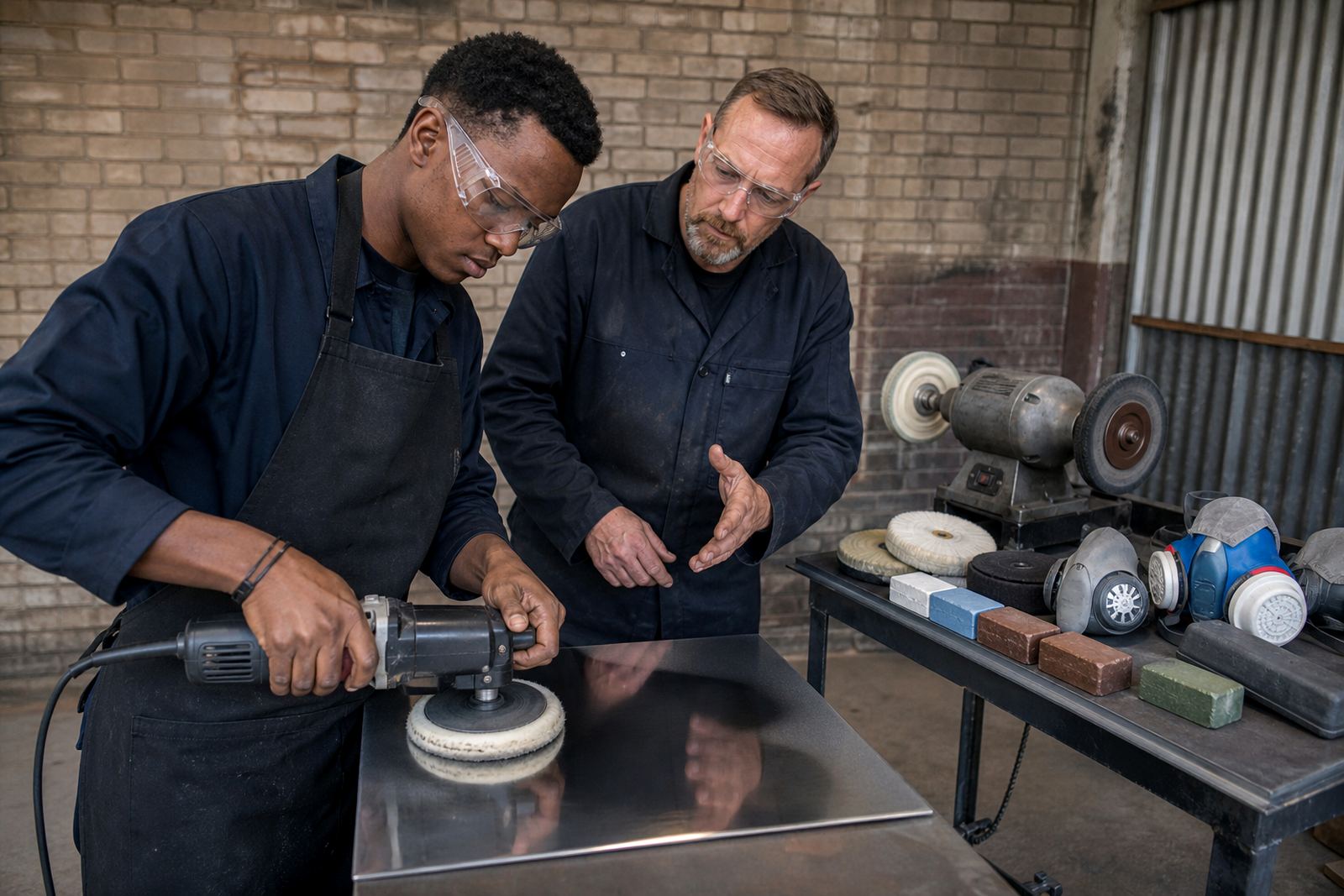
For paint correction coaching, we explain how to work small sections, how to avoid dry buffing and how to spot signs of overheating. For metal buffing training, we show how to manage edges, curves and flat sections without leaving swirl marks or burn-through on softer metals.
Safety For Dust, Heat And Moving Parts
Polishing is not difficult but it does need care. Rotating pads can catch edges, fling compound and create heat quickly if they are held in one spot. Fine dust from aged coatings, metal residue and dried compound should not be breathed in.
- Wear eye protection, gloves where appropriate and a suitable dust mask
- Keep loose clothing, cords and rags away from moving parts
- Work in a clean area with good light and controlled airflow
- Check lead condition, machine casing and backing plate before use
- Allow surfaces to cool between stages and avoid overworking edges
Where municipal or site rules apply, we help teams work within safe workshop practice and housekeeping standards.
Pad And Compound Matching For Better Results
Matching the pad and compound is one of the biggest differences between a neat finish and a frustrating one. A harder cutting pad with a stronger compound can remove heavier defects, while a softer finishing pad with a finer compound is better for final gloss. The same principle applies to metal, but the surface condition and material type will change the choice.
We guide customers on polishing sequence, from initial cut to refinement and finish. If the pad is too aggressive, you may remove more material than needed. If it is too soft, you may waste time and still leave marks. The right balance saves time and gives a cleaner result.
Ongoing Help For Teams And Repeat Buyers
Some customers need a once-off starter session. Others want support over time as their workshop grows or their team changes. We assist with consumables restocking, machine care guidance, workshop setup advice and onsite team demo sessions for businesses in the East Rand, Vaal Triangle and other South African locations. If a crew is changing from hand finishing to machine polishing, we can help them build a practical routine that fits the workday.
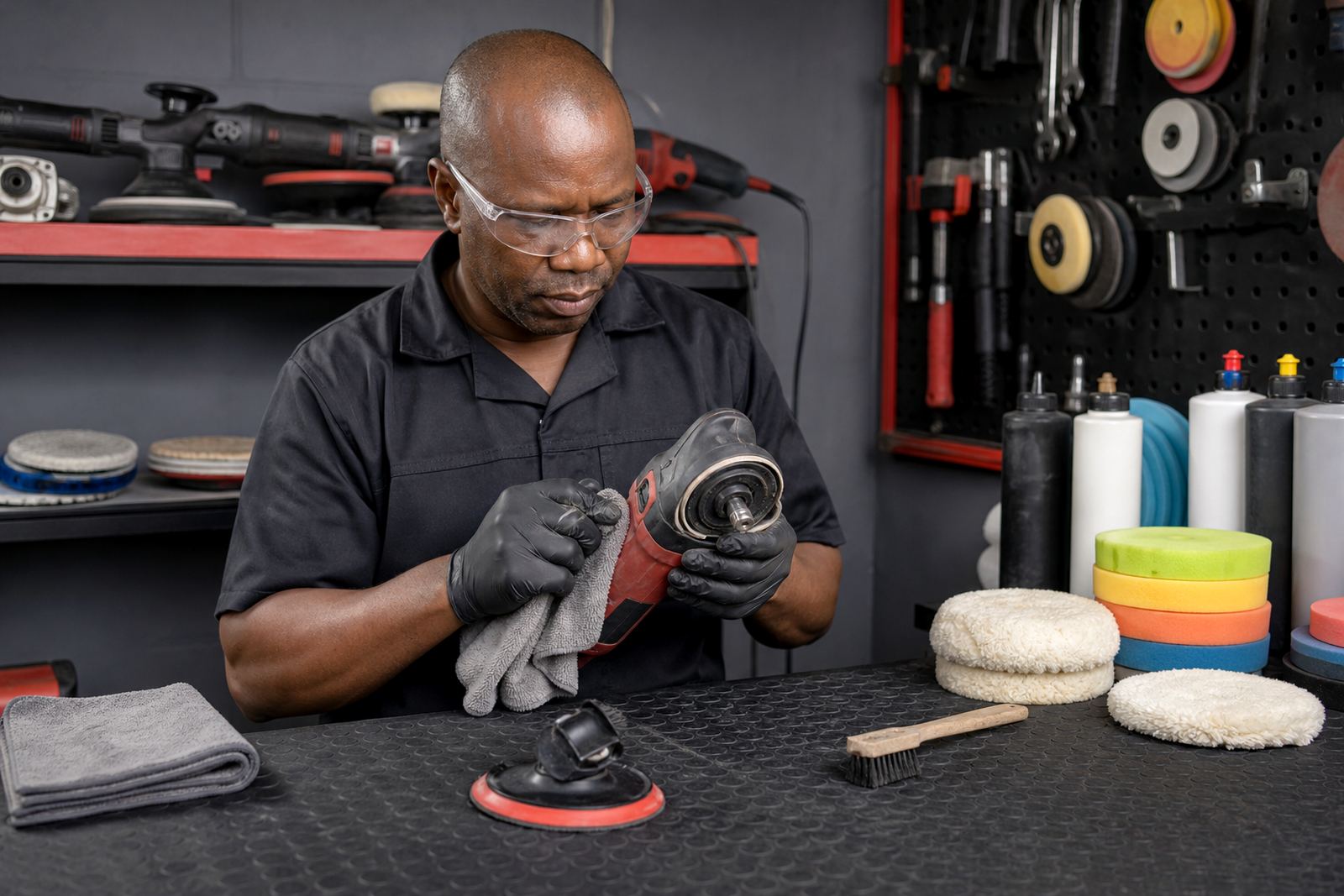
Our support also covers the basics of storing pads, cleaning machines after use and spotting early wear before it affects the finish. That kind of routine keeps equipment usable for longer and helps operators work with more confidence, especially in busy shops where time is tight and the next job starts soon after the last one.
How To Use This Hub
This page is the place to start if you want training, a starter kit or advice on getting the right polishing sequence in place. From here, you can choose the service that suits your level and your material, whether you are working on car paint, polished metal or mixed workshop jobs. The listing cards below are added separately, so use this hub to decide what support you need before you book or enquire.
Clients contact us through the enquiry form on our contact page, and we assist from Germiston to Cape Town, Durban and beyond. If you are not sure where to begin, start with a short discussion about the machine, the surface and the finish you want, then we can point you to the most suitable training or kit plan.