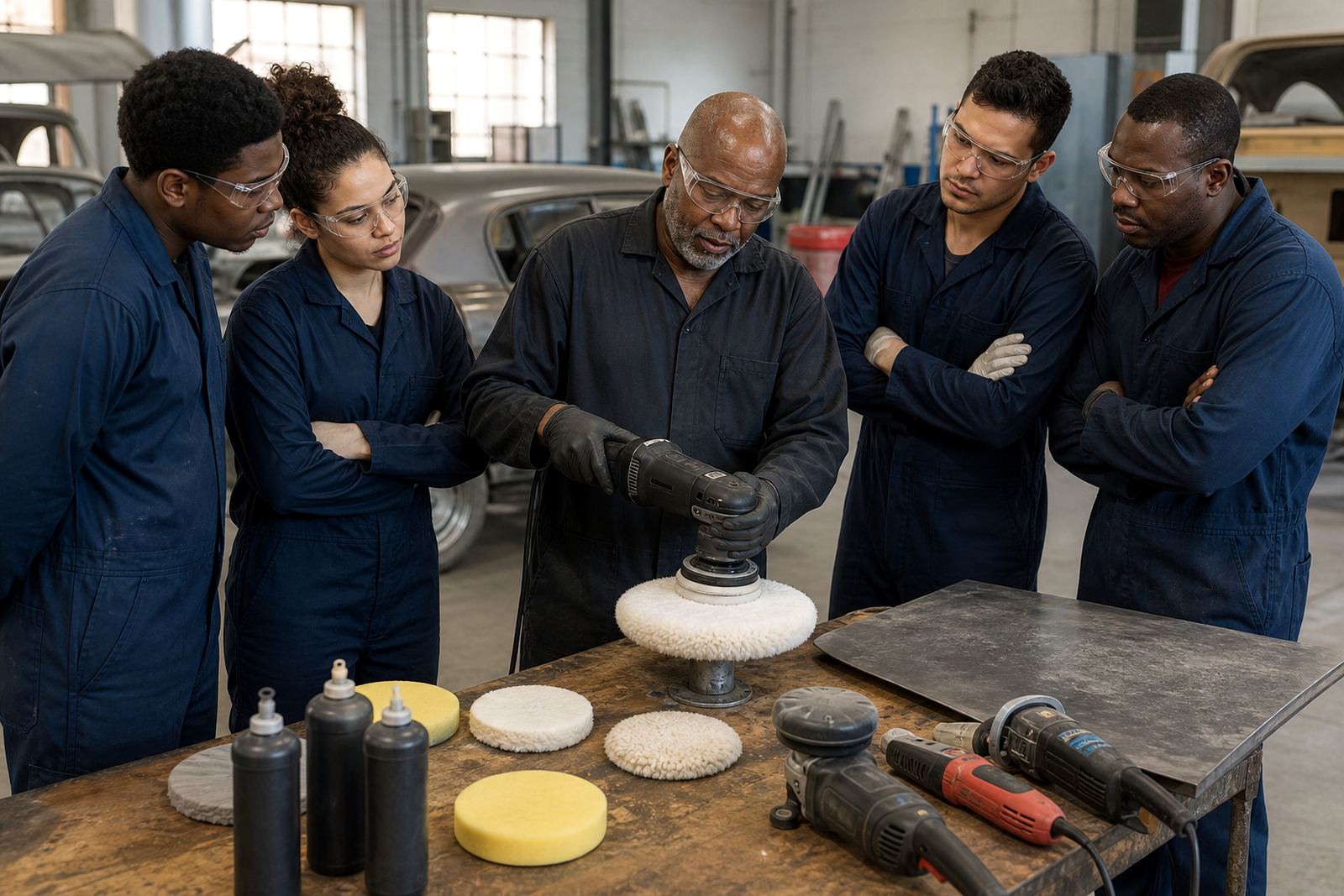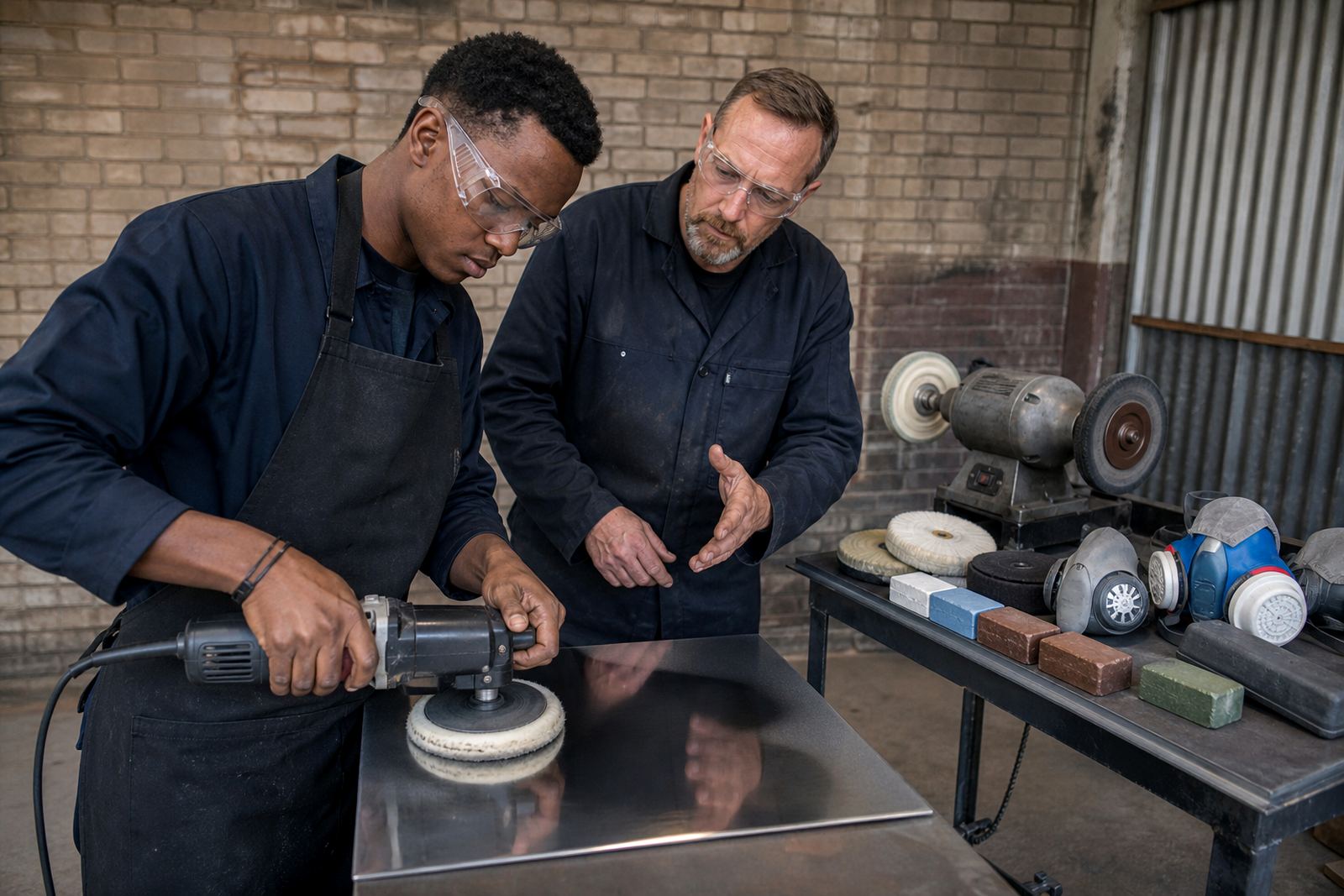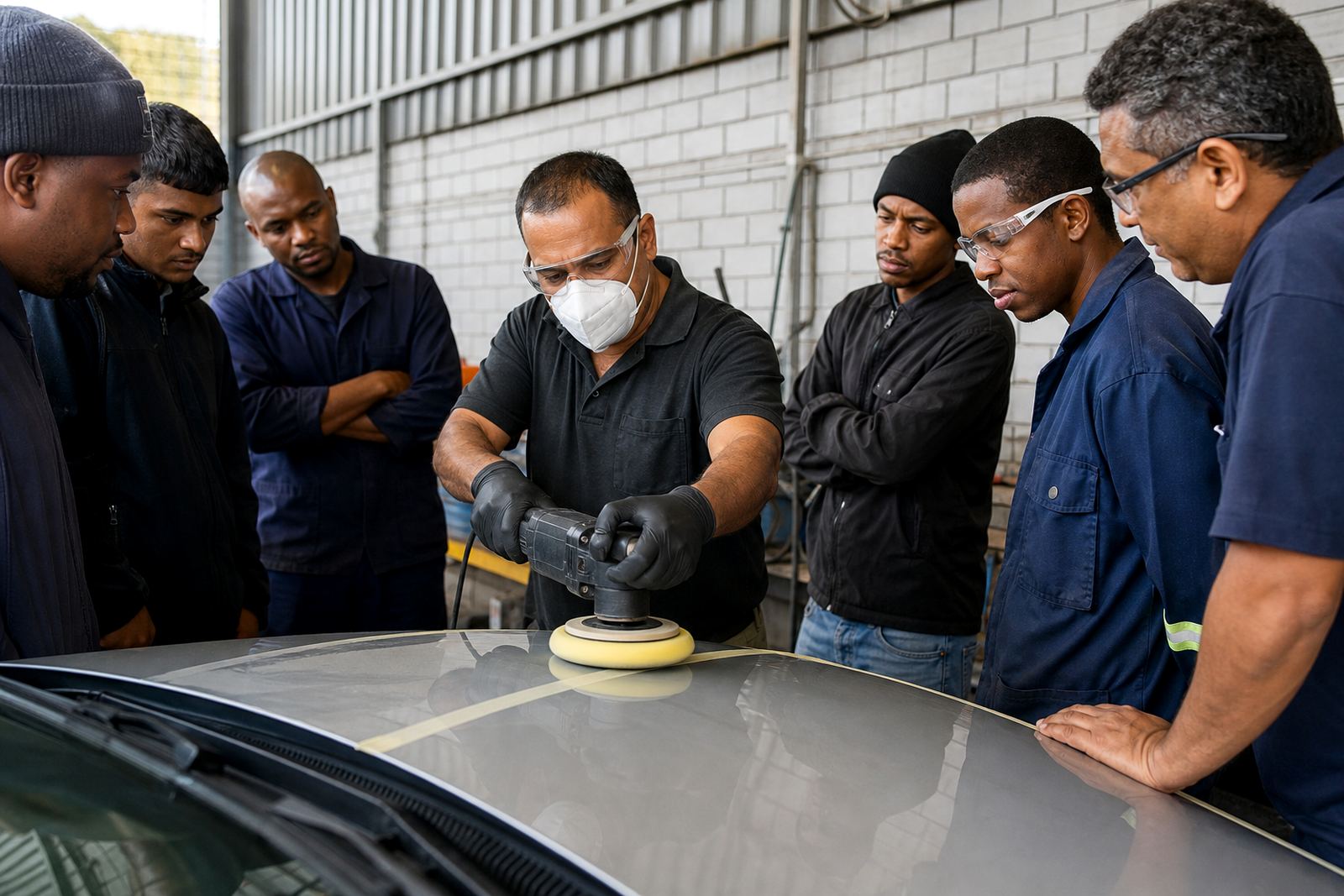

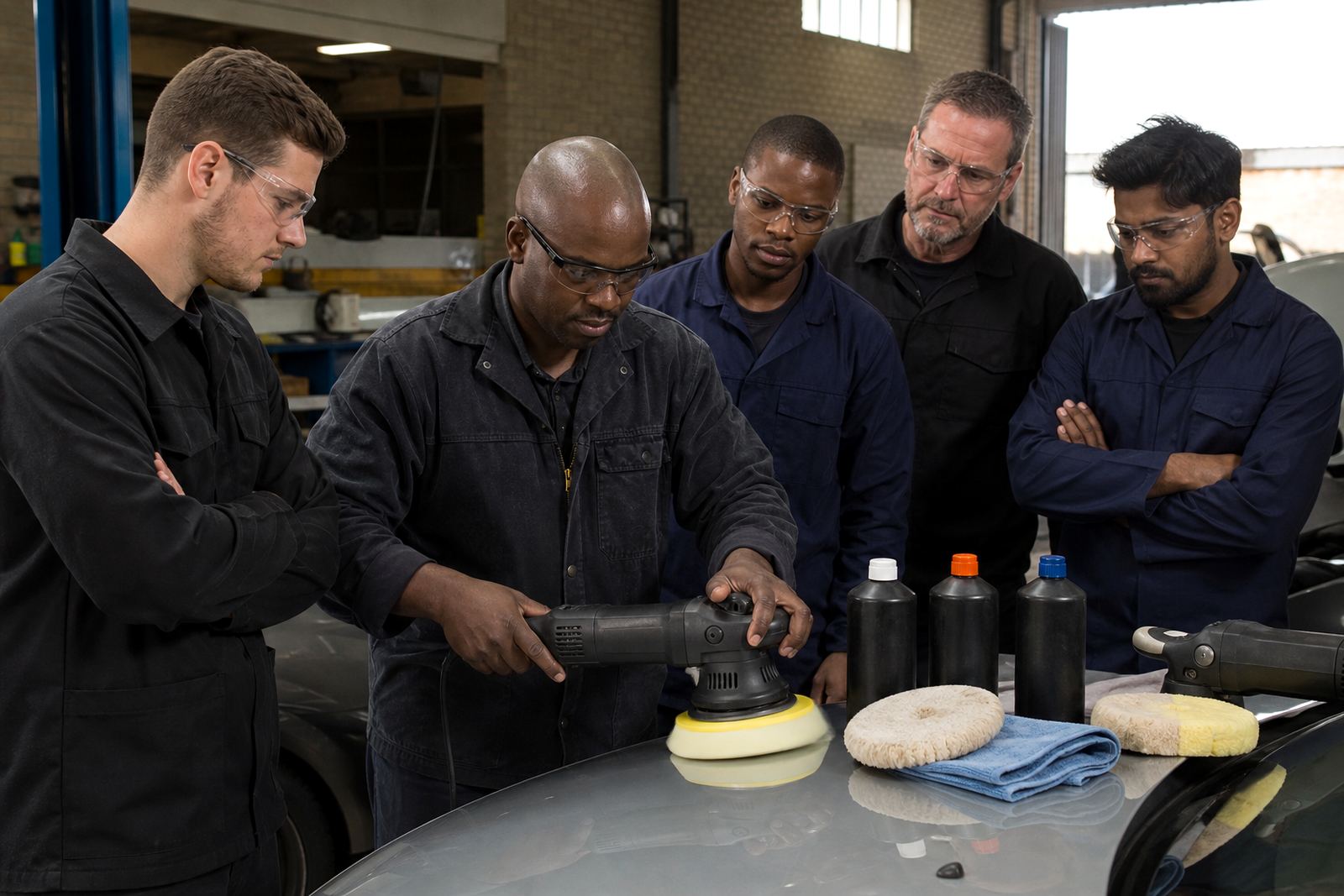
What The Onsite Team Demo Covers
This service is a practical session for workshop teams who need to use polishers, buffs and compounds with more confidence. We cover rotary and dual-action machine use, pad selection, cutting and finishing stages, and the checks needed before a job leaves the bay. The aim is to show your team a repeatable method they can use on metal parts, painted panels and mixed finishing work.
We can work with new staff, mixed-skill teams or supervisors who want a better process for setting up work, managing time and reducing rework. In Gauteng and along the coast, humidity, dust and power interruptions can affect finishing so the demo also includes handling tips for different site conditions.
- Rotary machine basics, including speed control and pad pressure
- Dual-action use for safer finishing on sensitive paintwork
- Buffing sequence for oxidised metal, stainless parts and trim
- Compound matching for cut, refine and final gloss stages
- Inspection methods using direct light and angle checks
How The Session Is Run On Site
Each demo starts with a short discussion about your current workflow, the surfaces your team handles and the finish standard you want to achieve. We then demonstrate the process step by step, from surface preparation to final wipe-down. The team can watch first, then practise under guidance where suitable.
We keep the session practical and focused. If your workshop works on metal fabrication, automotive refinishing or mixed detailing jobs, we adapt the examples to suit. Where needed, we also cover dust control, masking, pad cleaning between passes and PPE use, which should include eye protection, a suitable respirator and gloves where the task demands it.
- Pre-demo discussion of workshop goals and surface types
- Live demonstration of machine setup and safe starting technique
- Supervised practice for selected team members
- End-of-job review, fault spotting and finishing checks
Technical Details We Cover During The Demo
The demo includes practical specifications that matter in the workshop. For rotary polishers, we discuss typical speed ranges, pad sizes and how to control heat build-up on paint and metal. For dual-action machines, we show how orbit size affects correction speed and how to avoid overworking an edge. The team also learns how to choose wool, foam or microfibre pads for different jobs.
Compound selection is covered in plain terms, with attention to cut level, residue, working time and wipe-off. We explain how to pair a heavier compound with a cutting pad, then refine with a lighter polish and finishing pad. On metal work, the sequence may differ depending on the alloy, the level of oxidation and whether the part will be sealed afterwards. Small mistakes like loading too much product or holding the machine too long in one spot are easy to avoid once the method is clear.
- Machine types: rotary and dual-action
- Common pad sizes: 3 inch, 5 inch and 6 inch options
- Working speeds: adjusted to surface condition and product choice
- Surface types: painted panels, aluminium, stainless steel and chrome parts
- Finish checks: gloss level, haze, swirl marks and residue removal
Who Benefits Most From An Onsite Demo
This service suits small workshops, body repair teams, fitment centres, fabrication shops and detailing crews that want better control over finishing quality. It is also useful when a team has new staff, changing workloads or recurring issues such as holograms, burnt edges or uneven gloss. In busy areas like Johannesburg, Pretoria and the East Rand, a clear method helps keep jobs moving without wasting consumables.
Teams in Cape Town, Durban and other coastal areas often deal with salt air, moisture and quicker oxidation on exposed metal. We can show practical habits for that environment too, including storage of pads and compounds, cleaning between jobs and keeping machines in service for longer. The session is straightforward and aimed at day-to-day use, not theory alone.
- Workshops with mixed experience levels
- Teams needing consistent results across multiple bays
- Businesses handling both car finishing and metal finishing
- Sites that need better consumable control and fewer remakes
Turnaround, Scheduling And Pricing Approach
Turnaround depends on your site, team size and the level of detail you want covered. Most onsite demos can be scheduled once the workshop layout and learning goals are confirmed. For larger teams, we may split the session into machine handling, process flow and finishing review so the workshop can keep operating while training takes place.
Pricing is quoted according to travel, session length, number of attendees and whether you need a basic demo or a fuller training day with practical follow-up. If your site is in Germiston, the East Rand or the greater Johannesburg area, travel is usually simpler. For Pretoria, Vaal Triangle, Bloemfontein, Durban or Cape Town, the quotation will reflect distance and time on site. We keep the approach clear so you know what is included before the booking is confirmed.
- Half-day or full-day session options
- Travel included in the quote based on location
- Cost depends on team size and session scope
- Can be arranged around workshop operating hours
Care Of Machines, Pads And Consumables After The Demo
Good results depend on maintenance as much as on technique. After the session, we advise on cleaning pads, checking backing plates, inspecting cords and keeping vents free of dust.Pads should be marked by task and kept away from grit, moisture and overspray.
We also guide teams on service intervals and wear checks. A machine that runs rough, overheats or vibrates should be taken out of use until it is inspected. Pad replacement and compound restocking are best handled before a busy week starts, especially if your site runs multiple bays or has a high volume of finishing work. Routine care reduces mistakes and helps your team keep a steady standard.
- Clean pads after use and allow them to dry fully
- Inspect cables, switches and backing plates regularly
- Store compounds sealed and out of direct sun
- Review machine performance before each work week
Key facts
| Service type | Onsite team demo for polishing and finishing work |
|---|---|
| Machine focus | Rotary polishers and dual-action polishers |
| Surface focus | Metal finishing, paint correction and mixed workshop work |
| Typical session length | Half-day or full-day, depending on team size and scope |
| Coverage area | Germiston, Johannesburg, Pretoria, Cape Town, Durban, Bloemfontein and surrounding regions |
| Safety focus | PPE briefing, dust control, heat management and safe machine handling |