What Beginner Polishing Training Covers
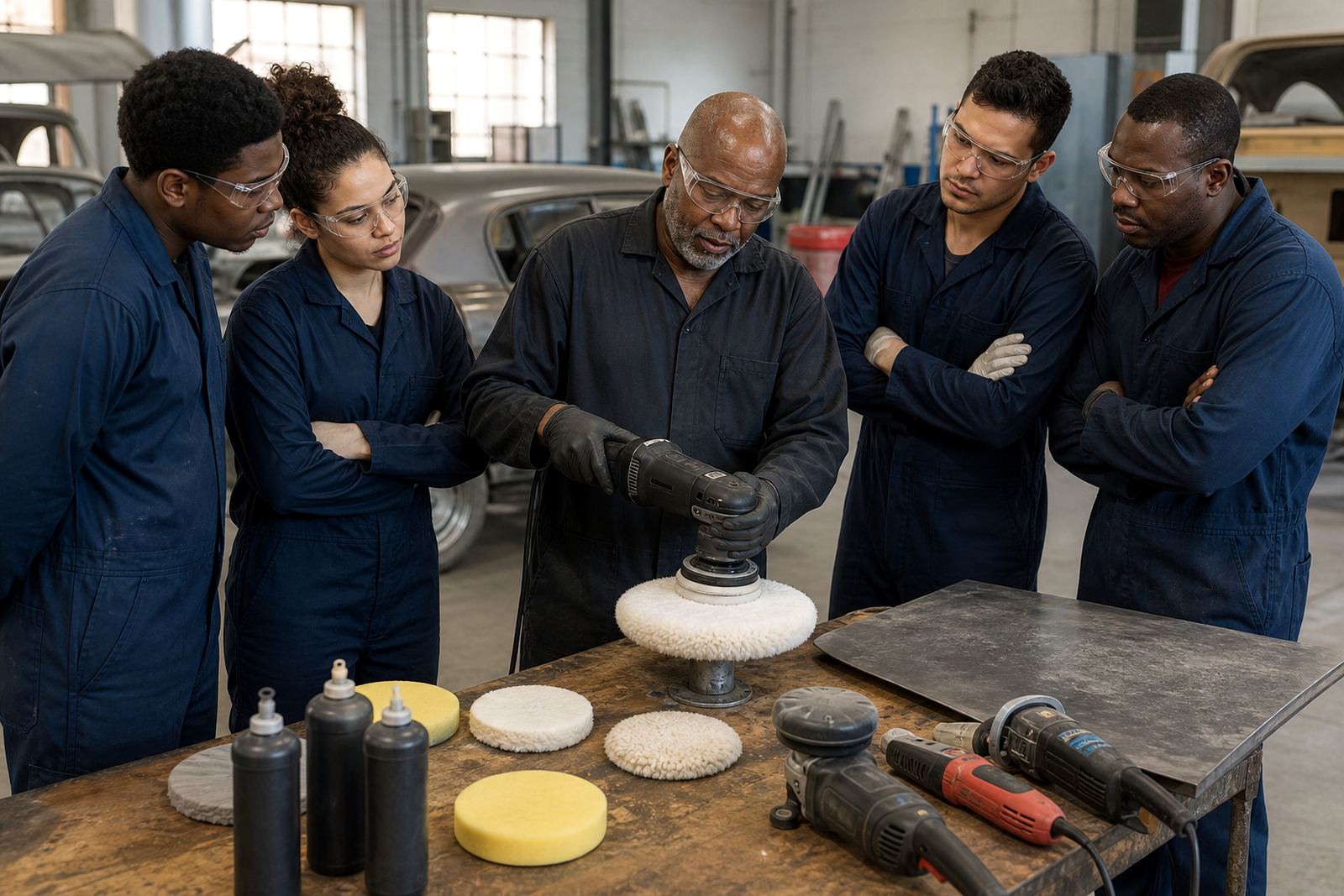
This entry-level session is built for people who want to understand the machine before they touch a vehicle panel or a metal surface. We cover how a rotary polisher differs from a dual-action machine, how to control speed, how much pressure to apply, and when to stop and inspect the work. You also learn the basic sequence for paint correction and metal finishing, from surface cleaning through to final wipe-down.
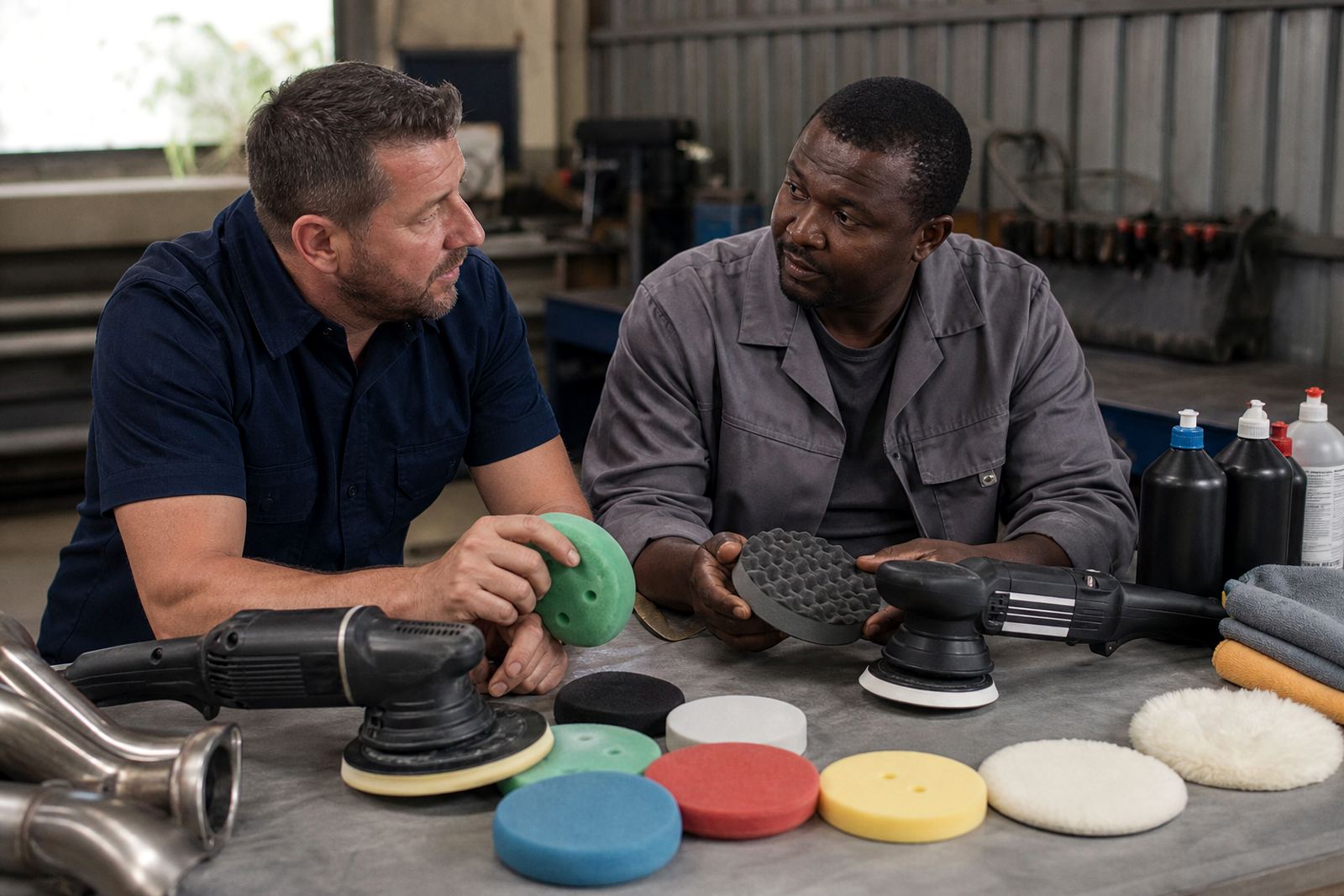
The training is practical and straightforward. We explain what each pad type does, how compounds cut and refine, and how heat builds up on painted surfaces, trims and polished metal. You will also cover the small habits that matter most in South African conditions, including dust control in open workshops, heat on summer days, and care for equipment stored in humid coastal air.
- Rotary and DA machine basics
- Pad identification and common uses
- Compound selection and pad matching
- Safe speed ranges and pressure control
- Inspection between passes
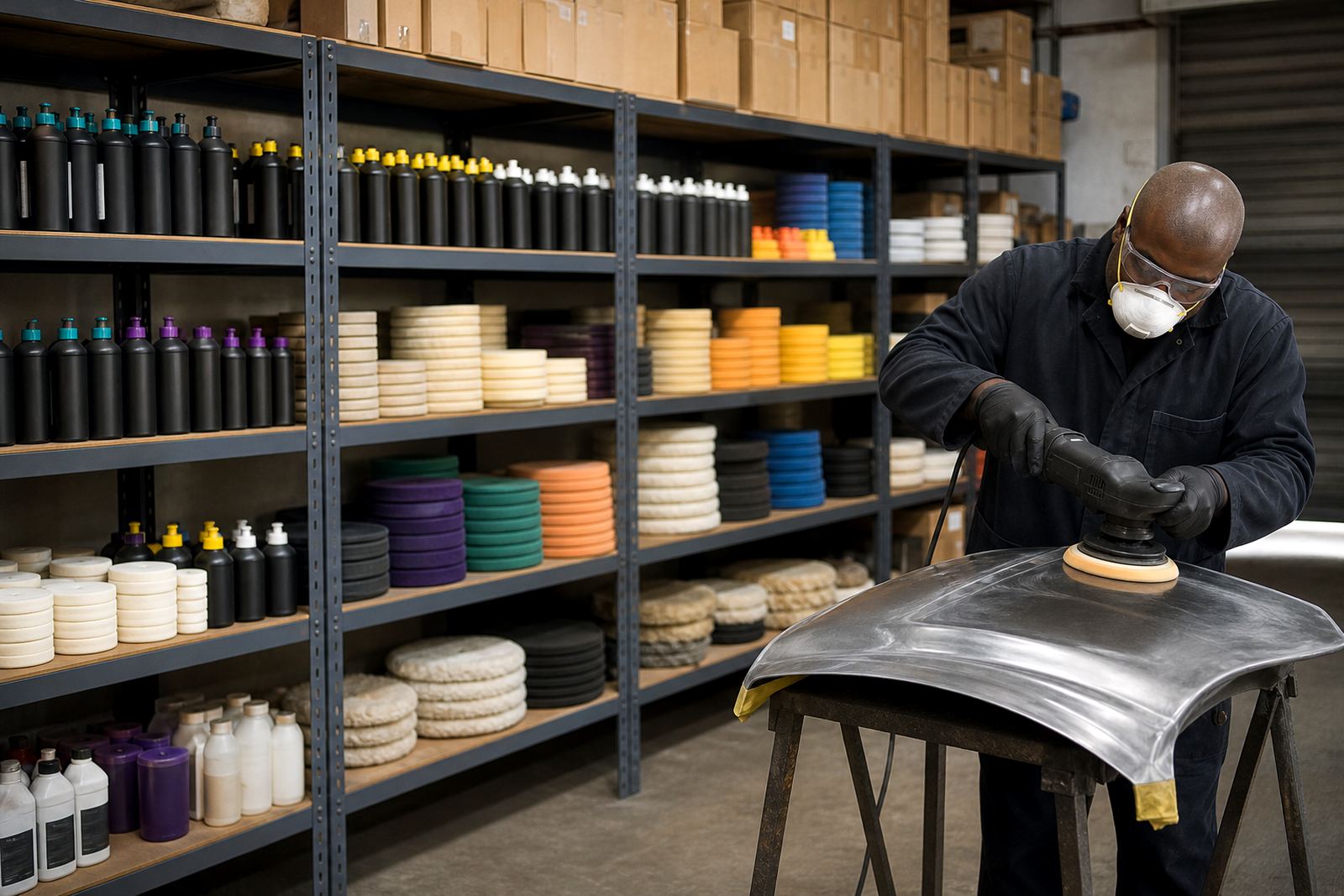
- Cleaning and storing pads after use
Hands-On Skills You Practise On The Day
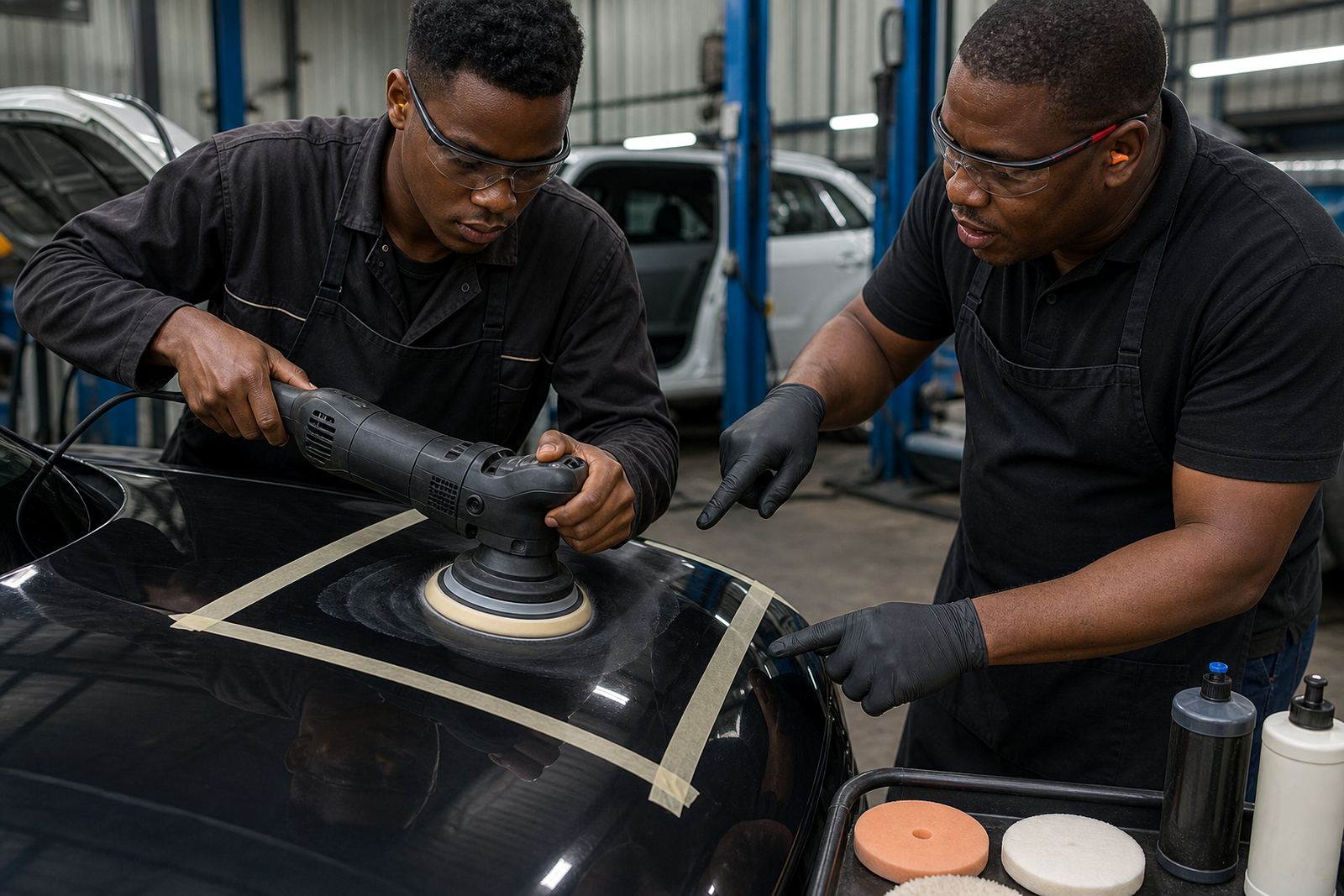
The session is not a lecture only. You work through guided exercises that show how to hold the machine, start and stop on a panel, and move in controlled overlapping passes. For paint work, we show how to reduce swirl marks and light oxidation without chasing one area too long. For metal, we show how to work with the grain where relevant, and how to avoid loading up the pad with residue.
You will also practise simple judgement calls that save time and material. That includes reading the condition of the surface, choosing a mild starting point before moving to a stronger compound, and spotting when a pad is too saturated or too dry. Learners often arrive with a machine and no clear method, so the focus is on building clean habits that can be repeated in a home garage or a busy workshop.
- Machine grip and body position
- Sectioning a bonnet, door or metal panel
- Keeping pads flat on the surface
- Managing residue and sling
- Recognising when a surface needs a second pass
Safety, PPE And Dust Control
Polishing is a finishing process, but it still creates risk from dust, compound mist and heat. We cover the basics of PPE and workshop safety from the first minutes of the session. Eye protection, a suitable dust mask or respirator where needed, snug clothing and hearing protection are all discussed, especially when using rotary machines for longer periods. Loose sleeves, jewellery and open footwear are poor choices near a spinning pad.
We also discuss practical dust safety for South African workshops, where floors may collect fine grit and the wind can bring in debris from outside. A clean surface makes a better finish and reduces the chance of scratching paint or metal during the next pass. We show how to manage cables, keep extension leads clear, and check the work area before switching on.
- Eye protection and breathing protection guidance
- Safe cable and lead positioning
- Heat checks on paint and metal
- Cleaning grit before polishing starts
- Safe stop procedures during power cuts
How The Training Is Structured
Beginner polishing training usually starts with a short assessment of your current experience, the machine you own, and the type of work you want to do. From there, the session is arranged in simple steps so the learner can move from theory to practice without confusion. We keep the pace steady and make sure every stage is understood before moving on.
Our Germiston team can tailor the training to a single learner or a small workshop group. Mandla Sipho Dlamini oversees the business, while Thabo Ngwenya supports the technical side and Ayesha Mokgatle coordinates training bookings and learning flow. Johan Liebenberg assists with workshop setup advice, and Lerato Hartnick handles customer support once the session is over. Karen van Wyk also helps clients match the right consumables to the work they plan to do.
- Initial needs check and machine review
- Safety briefing and PPE guidance
- Pad and compound identification
- Demonstration on test panels
- Supervised hands-on practice
- Wrap-up notes and next-step advice
Starter Kits, Consumables And Follow-Up Support
Many beginners need more than a single lesson. They need the right pad sizes, backing plate fitment, compounds and cloths to keep practising properly after the session. We assist with starter kit consultation so the learner can leave with a sensible first setup rather than buying random items that do not work together. That includes guidance on pad density, backing plate diameter, and when to use a cutting compound versus a finishing compound.
We also support people who want a simple maintenance routine for their machine. A polisher should be checked regularly for cable wear, backing plate condition, pad cleanliness and unusual vibration. The same applies to buffing work on metal, where compound residue can harden on pads if they are not cleaned soon after use. For users polishing often, a quick inspection after each session and a fuller check every few weeks is usually wise.
- Starter kit consultation for first-time users
- Consumable restocking advice
- Pad cleaning and replacement guidance
- Machine care checks between jobs
- Follow-up help through the enquiry form
Turnaround, Pricing Approach And Areas We Serve
Training is arranged by booking and the turnaround depends on the format you choose and the number of people attending. A solo beginner session is usually easier to schedule than a group workshop, especially when a client wants a specific machine type or surface focus. We keep the booking process clear and confirm the learning outline before the session so there are no surprises on the day.
Pricing is based on the training scope, the time required, whether the focus is rotary, dual-action or mixed, and whether starter kit advice or workshop setup guidance is included. We do not quote one-size-fits-all rates because the needs of a hobby user in Germiston can differ from a repair shop in Pretoria or a mobile detailer in Durban. Clients across Johannesburg, Cape Town, Bloemfontein, the East Rand and the Vaal Triangle can reach us through the enquiry form on our contact page.
Our base is in Germiston, Gauteng, and we supply polishing support across South Africa. If you are starting from scratch, we will help you choose a practical route that suits your space, budget and the type of finish you want to achieve.
Key facts
| Training type | Beginner Polishing Training |
|---|---|
| Machine focus | Rotary and dual-action polishers |
| Surface focus | Metal finishing and paint correction basics |
| Format | Hands-on session with guided practice |
| Safety coverage | PPE, dust control, cable management and heat checks |
| Service area | Germiston, Johannesburg, Pretoria, Cape Town, Durban and Bloemfontein |