
What We Restock For Ongoing Polishing Work
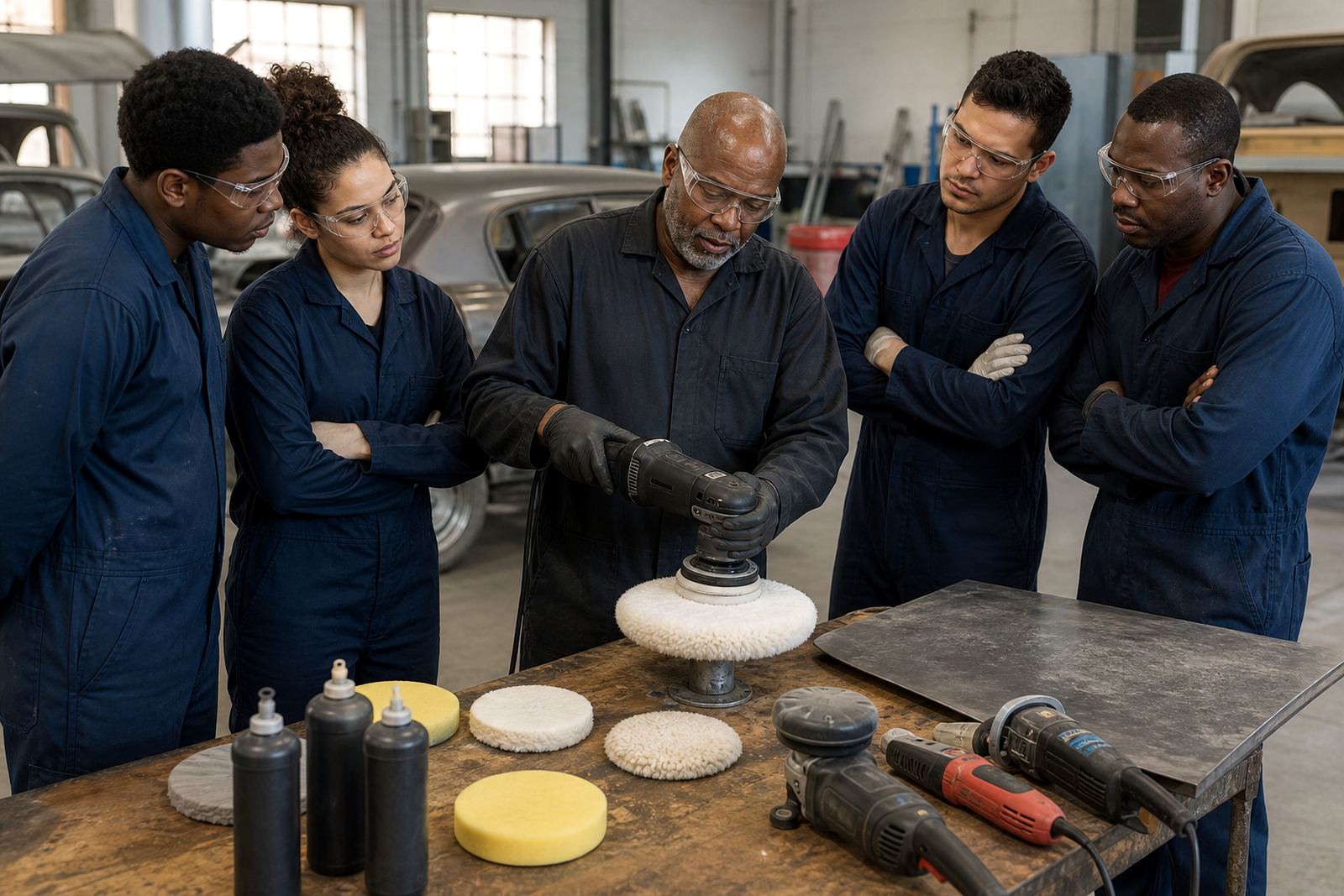
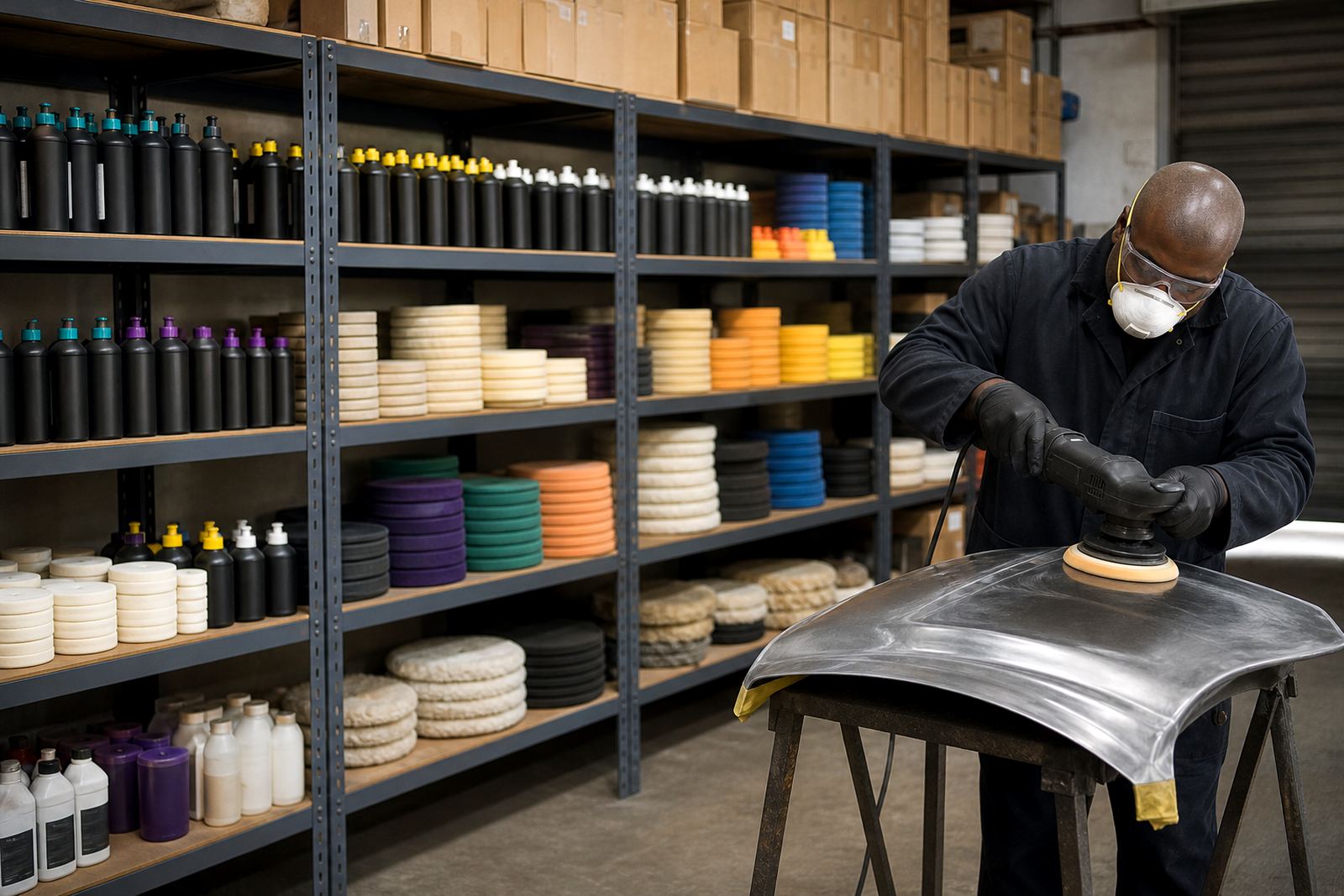
Consumables restocking covers the items that get used up the fastest on the job. That includes foam pads, wool and microfibre buffs, cutting and finishing compounds, polishing cloths, masking tape for nearby trim, and cleaning products for pads and tools. For busy workshops in Johannesburg, Pretoria, Cape Town, Durban and Bloemfontein, keeping these items in rotation saves time and helps keep finishes consistent from one vehicle or metal panel to the next.
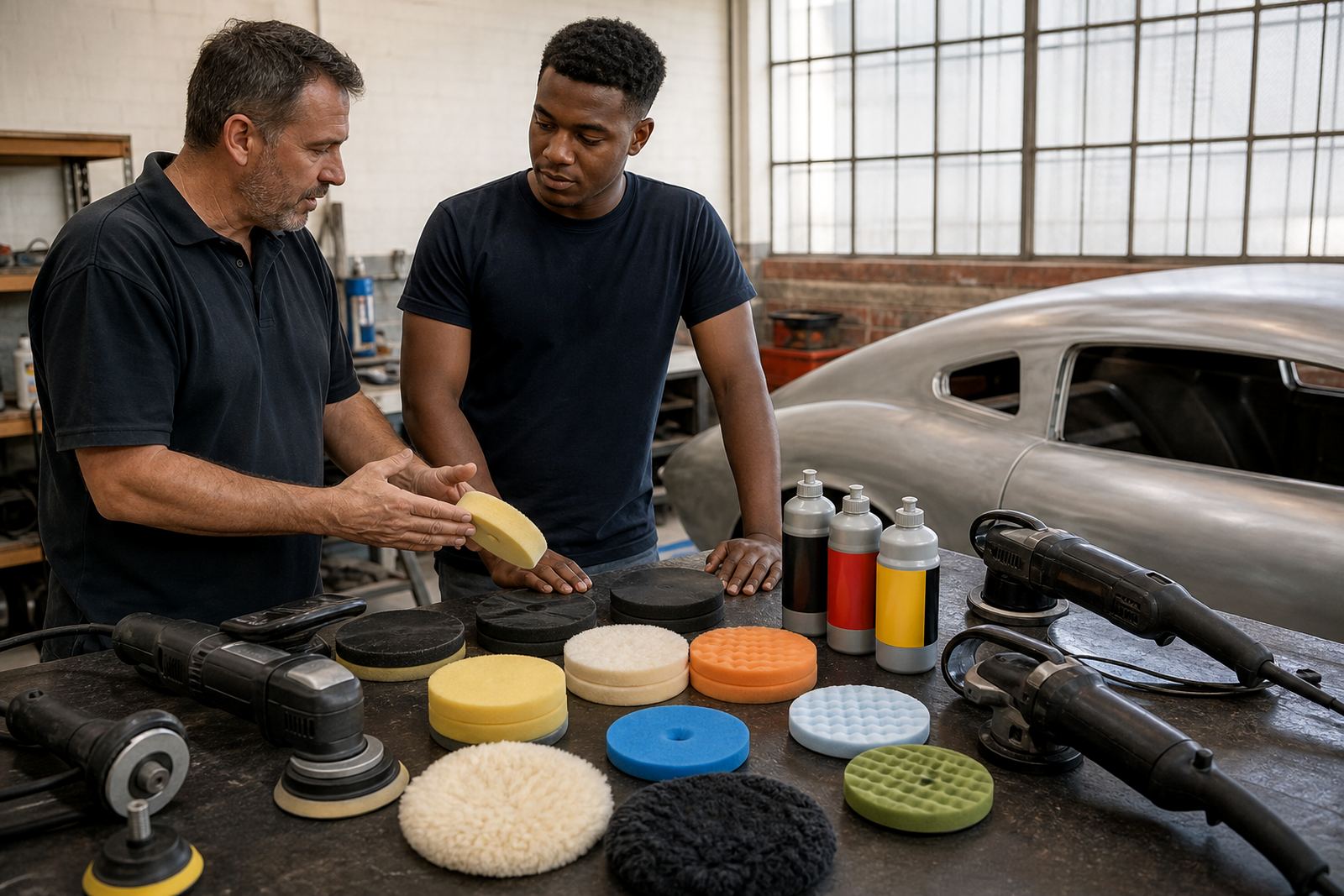
We also support the practical side of stock control. If you are running rotary machines for heavier correction or dual-action machines for safer finishing on mixed paintwork, your consumable needs will differ. Stainless steel handrails, alloy parts, body panels and lacquered surfaces all call for different pad densities and compound grades, so we help match stock to the work you actually do.
- Cutting pads for heavier oxidation and swirl removal
- Finishing pads for gloss work and final refining
- Wool buffs for faster cut on metal and hard coatings
- Microfibre cloths for residue removal and final wipe down
- Compounds for coarse cut, medium cut and final polish stages
How We Match Pads, Buffs And Compounds To The Job
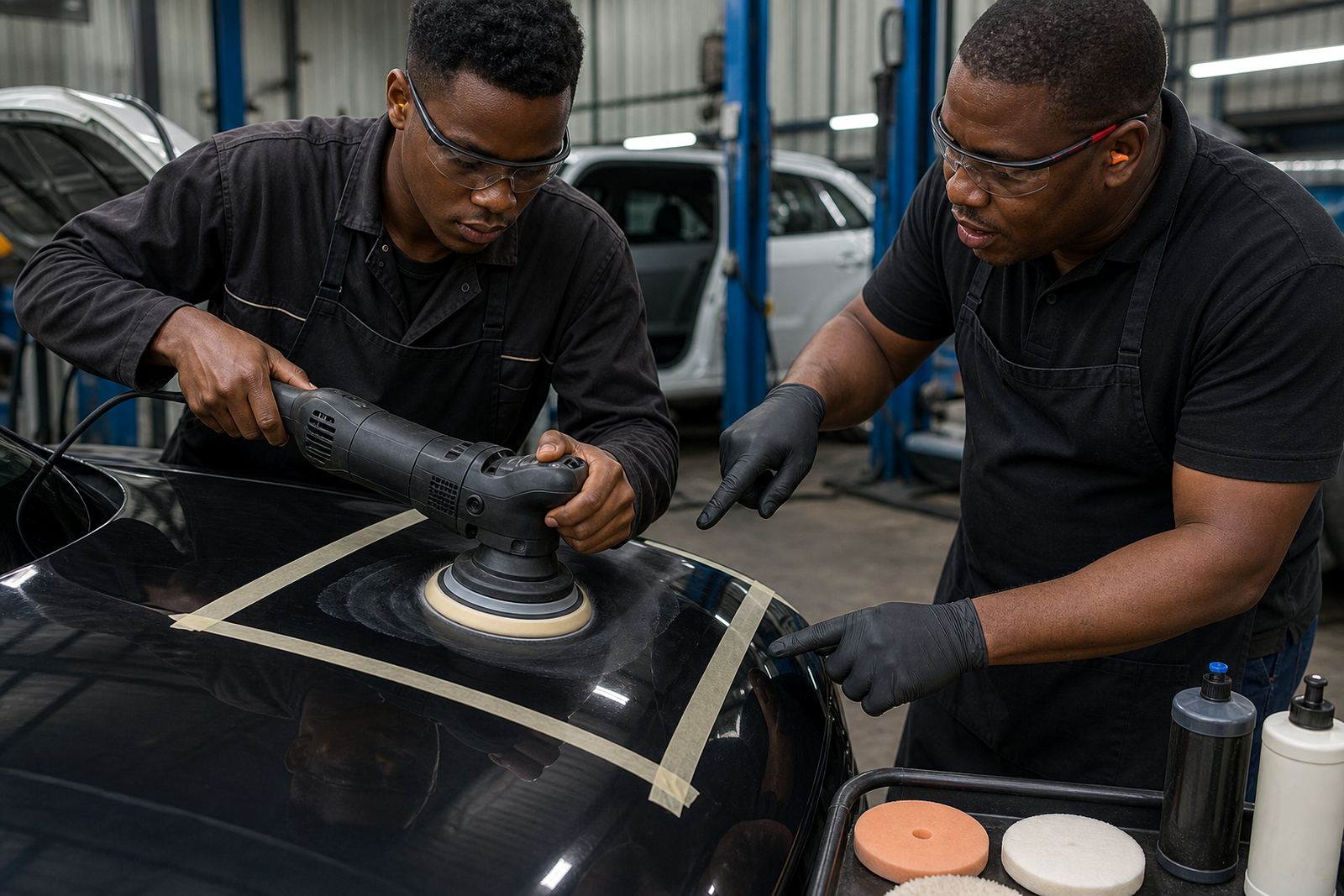
Good restocking is not only about replacing what is finished. It is also about choosing the correct consumable for the surface, the machine and the amount of correction needed. A rotary polisher can move material quickly, so it usually needs a firmer pad and a compound that breaks down well under heat. A dual-action polisher is better suited to controlled finishing and lighter correction, often with a softer pad and a finer compound.
For metal finishing, we look at surface hardness, existing scratches, oxidation and any heat sensitivity around welded areas or thin edges. For paint, we consider clear coat condition, panel size, and whether the work is a full correction or just a light refine. This is where proper pad and compound matching matters most, because the wrong combination can leave haze, dusting or extra work on the final pass.
- Pad density matched to cut level and machine movement
- Compound grade matched to defect depth and finish target
- Cloth selection for residue control without scratching
- Consumables chosen for metal, paint or mixed-surface work
Ordering Process From Germiston Supply
Clients contact us through the enquiry form on our contact page and tell us what they are polishing, how often the equipment is used, and which consumables are running low. From there we help you identify the items to reorder and whether you need standard replacement stock or a revised mix for your current work. Mandla Sipho Dlamini and the team at our Germiston base support customers across South Africa, including branches and supply areas in the East Rand and Vaal Triangle.
Once the request is received, we confirm the consumable types, sizes and quantities, then advise on the best sequence for restocking. If you are setting up a workshop from scratch, or recovering after a busy fleet job, we can suggest a basic stock pack first and then a maintenance top up after that. This keeps cashflow under control and helps avoid dead stock sitting on the shelf.
- Step 1: Send your enquiry with machine type and surface type
- Step 2: Confirm pad size, backing type and compound stage
- Step 3: Receive a restock list based on current use
- Step 4: Collect or arrange supply, depending on the order pattern
Turnaround And Stock Planning For Busy Workshops
Turnaround depends on the item mix and current demand, but the aim is to keep your work moving without long gaps between jobs. Consumables should be planned before they are completely finished, because a pad that is already worn down or a compound bottle that is nearly empty can slow the whole team. In a workshop handling multiple cars a day, that can mean lost hours and poor consistency.
As a general maintenance approach, cutting pads often need replacing sooner than finishing pads, especially when working on oxidised metal or hard clear coats. Buffs and cloths also wear faster if they are not cleaned properly between passes. In humid coastal conditions such as Durban or Cape Town, stored pads and cloths should be kept dry and sealed, while Gauteng dust means you need regular cleaning and careful bagging to avoid contamination.
- Check cutting pads after heavy jobs or repeated heat build up
- Inspect finishing pads for clogging, edge fray and loss of shape
- Replace cloths when they hold residue or pick up grit
- Review compound stock weekly in active workshops
Pricing Approach For Reorder Supply
Pricing is handled according to the items requested, the quantity needed and whether you are restocking a single workstation or a full team setup. We do not push oversized orders where they are not needed. Instead, we help you buy what suits the volume of work, so you can manage monthly spend sensibly. That makes sense for hobby users too, especially when a smaller starter pack needs topping up with only the fast moving consumables.
For many customers the best approach is to order in stages. A first stage may cover pads, buffs and cloths, while a second stage adds compounds, cleaning items and backup stock for the next few weeks. This is practical for workshops balancing polishing jobs with other repair work and it helps avoid last minute shortages when a machine is already set up and ready to go.
- Quantity based pricing guidance according to your use pattern
- Separate support for small top ups and larger workshop reorders
- Stock advice based on machine count and job frequency
Consumable Care, Safety And Replacement Intervals
Proper care extends the life of consumables and improves finish quality. Pads should be cleaned during and after use, then dried fully before storage. Buffs need to be kept free of grit, metal dust and dried compound. Cloths should be washed separately where possible so they do not pick up coarse particles that can scratch paint or polished metal. If you are using a rotary machine, dust and sling control matter even more because product spread is higher and the risk of contamination increases.
PPE matters on every job. Eye protection, gloves and a suitable dust mask should be part of normal workshop practice, especially when dry residue is removed or when working on old coatings that may release fine particles. If you are polishing in a shared space or near bodyshop preparation areas, keep the floor clean and use local dust control where possible. In many cases, a pad or buff should be replaced once it loses its shape, starts to harden, or no longer gives a clean pass, and compounds should be rotated before they separate or dry out.
- Store pads flat or in a clean container to avoid distortion
- Keep compounds tightly closed and out of direct sun
- Separate metal work cloths from paint finishing cloths
- Check backing pads and machine pads for heat damage
Key facts
| Primary consumables | Pads, buffs, compounds and polishing cloths |
|---|---|
| Machine compatibility | Rotary and dual-action polishing systems |
| Common pad sizes | 75 mm, 125 mm and 150 mm work ranges |
| Compound stages | Cutting, refining and finishing grades |
| Service area | Germiston, Gauteng and nationwide supply across South Africa |
| Support focus | Stock planning, pad matching, safety and usage guidance |