

Start with the right polishing method
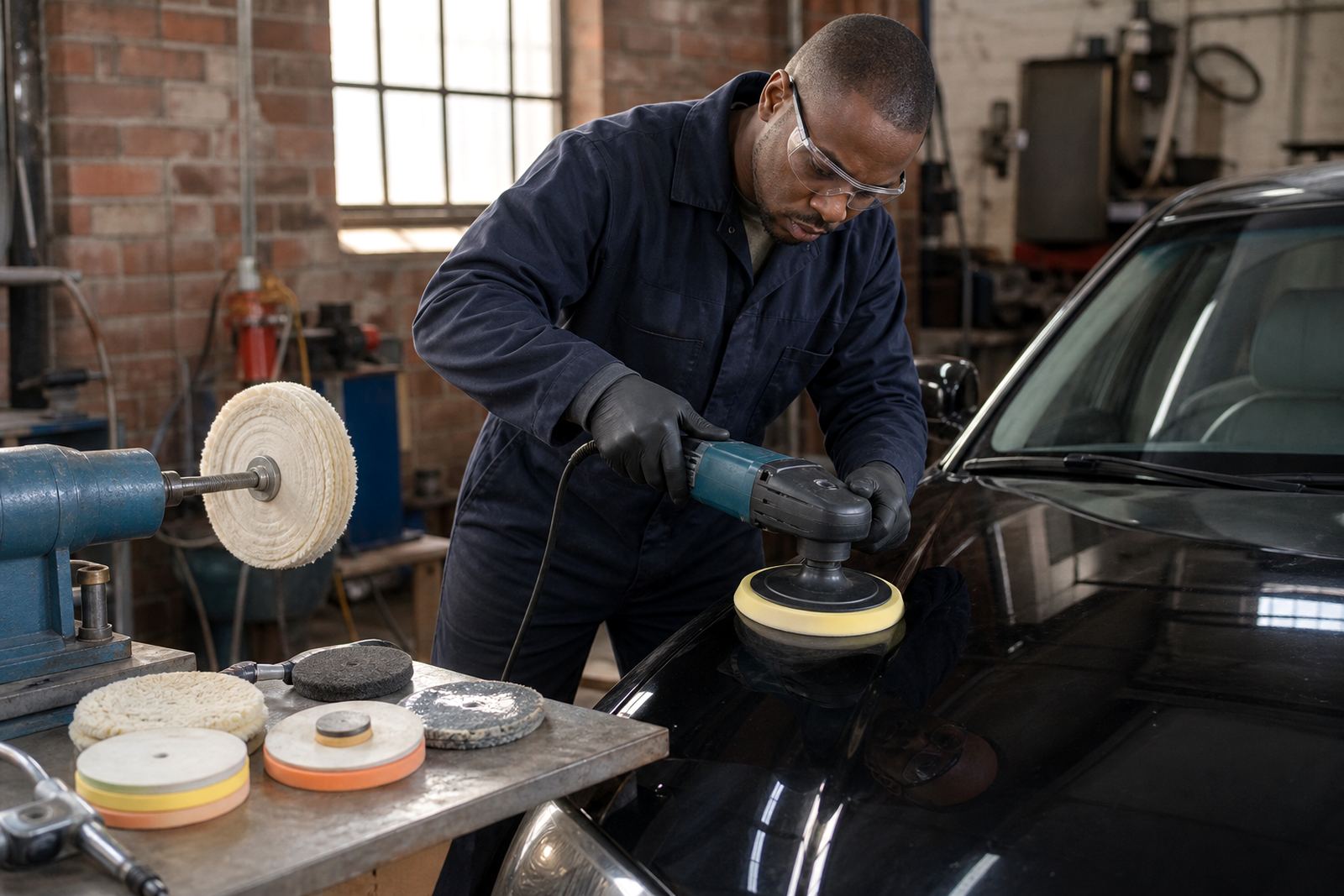
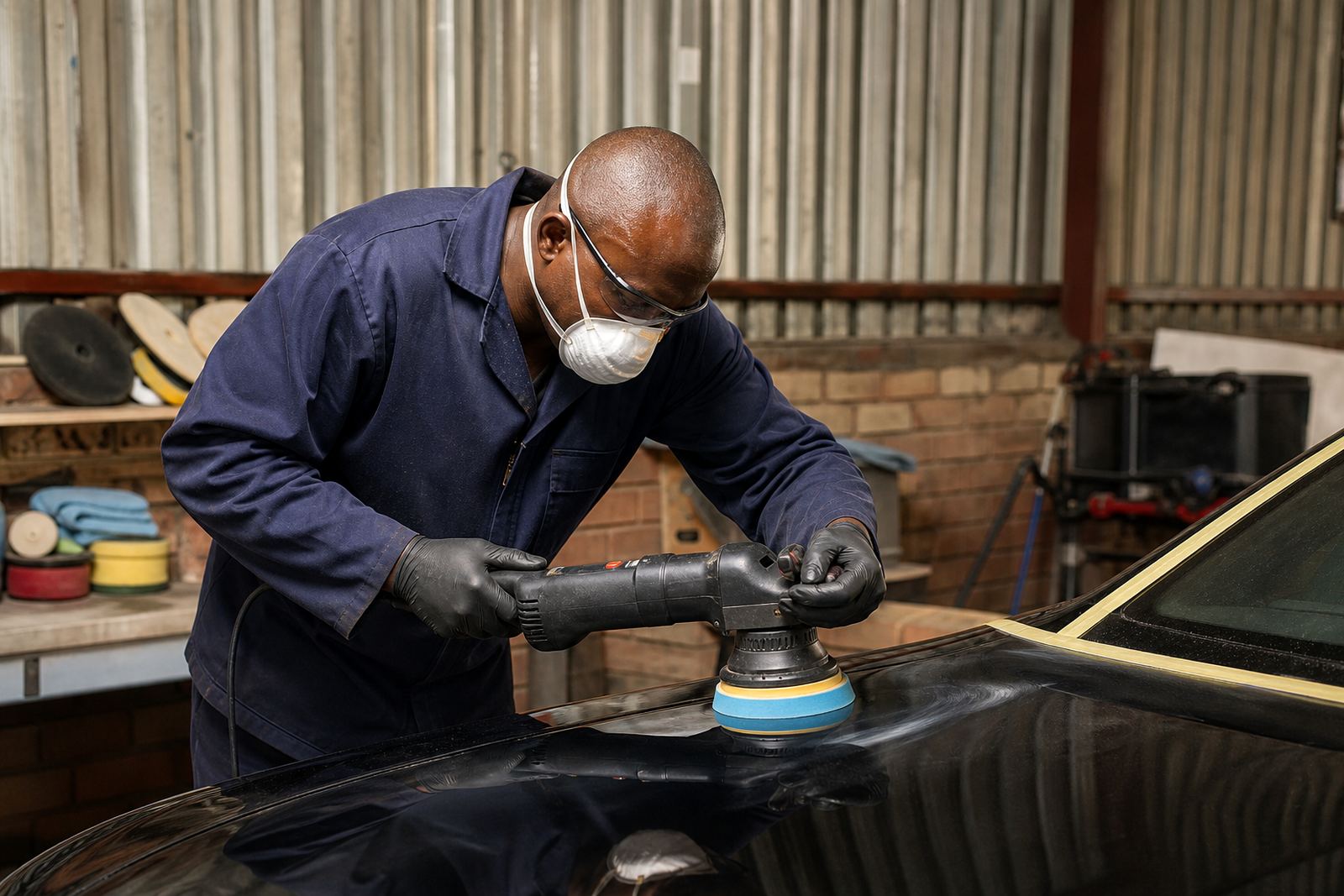
Polishing is not one single process. A rotary machine cuts faster and gives strong correction on metal, hard paint systems and heavier oxidation, while a dual-action machine is better for controlled finishing and lower risk on painted panels. The right choice depends on the surface, the level of damage, and how much heat the material can handle.
For car work, correction normally starts with washing, decontamination and a test patch before any machine work. For metal, surface prep matters just as much. Grease, sanding marks, weld tint and dust must be removed in steps, not rushed. If you are unsure which machine suits your job, support starts with the basics and builds from there.
Match pad and compound to the surface
Pad and compound choice makes a big difference to finish quality. A coarse compound with a cutting pad can remove heavier defects, but it can also leave haze if used too aggressively. A finishing pad with a fine compound is better for bringing back clarity on paint or a clean final sheen on metal. The aim is to use the least aggressive method that still gets the result.
- Cutting stage for sanding marks, oxidation or deeper defects
- Intermediate stage to reduce haze and refine the surface
- Finishing stage for gloss, clarity and a cleaner reflection
- Test on a small area first, then adjust speed and pressure
On hot days in Gauteng or in coastal humidity in Durban and Cape Town, product behaviour changes a bit so wipe-down timing and panel temperature matter too.
Training for beginners and workshop teams
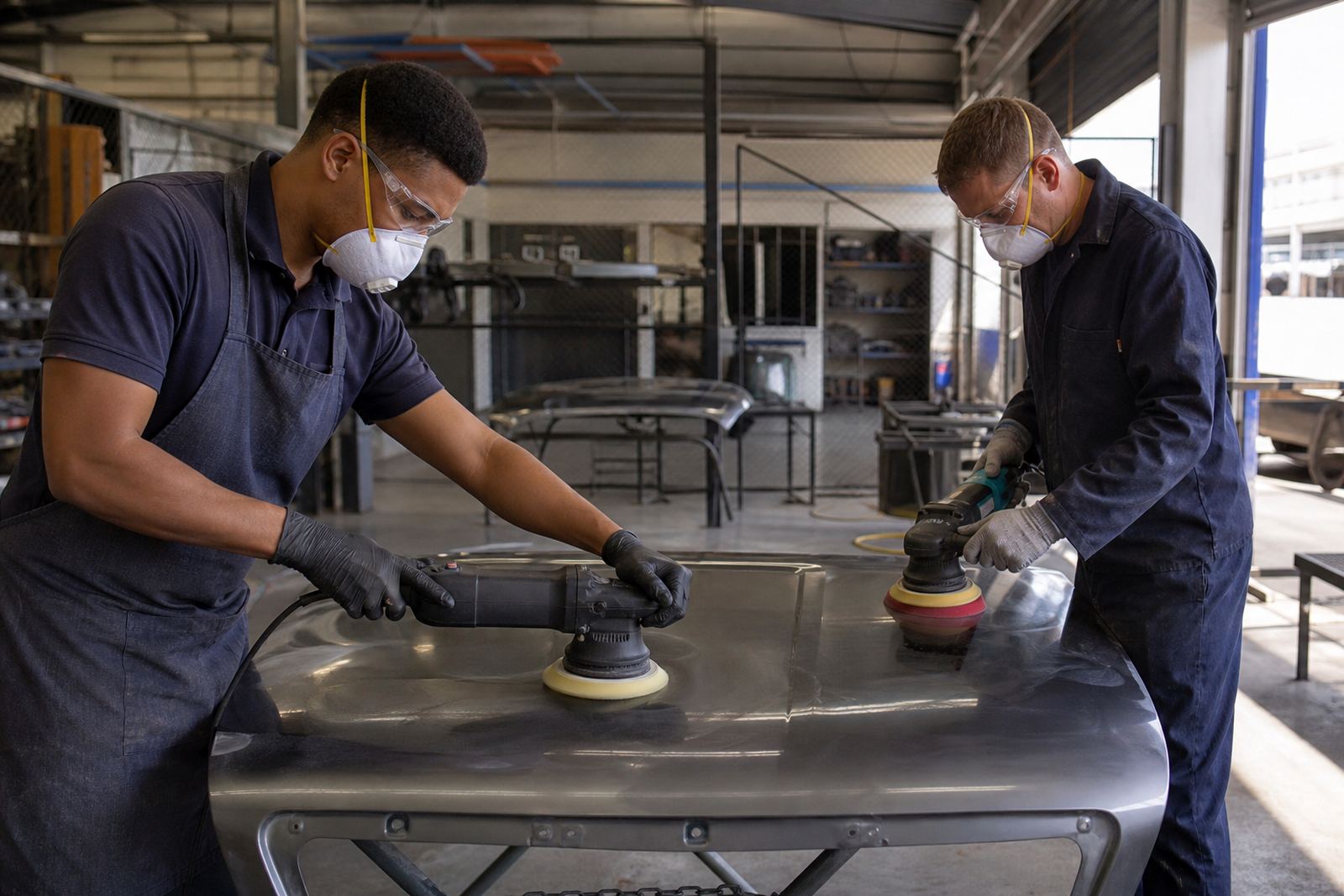
Polisher training is useful for hobbyists, detailers, panel shops and metal workers who want consistent results. Beginner Polishing Training covers machine handling, pad choice, compound use, inspection lighting, and how to avoid swirls or heat damage. Rotary Skills Session and DA Skills Session focus on control, arm speed, machine angle and working a panel or metal section evenly.
We also help teams who need a practical refresh before busy periods, especially when a workshop has multiple users on the same tools. A short session can prevent costly mistakes and keep work moving properly.
- Machine control and safe stance
- Working method for curved panels and edges
- Pressure, speed and working time
- How to inspect the finish between stages
Safety, dust control and PPE advice
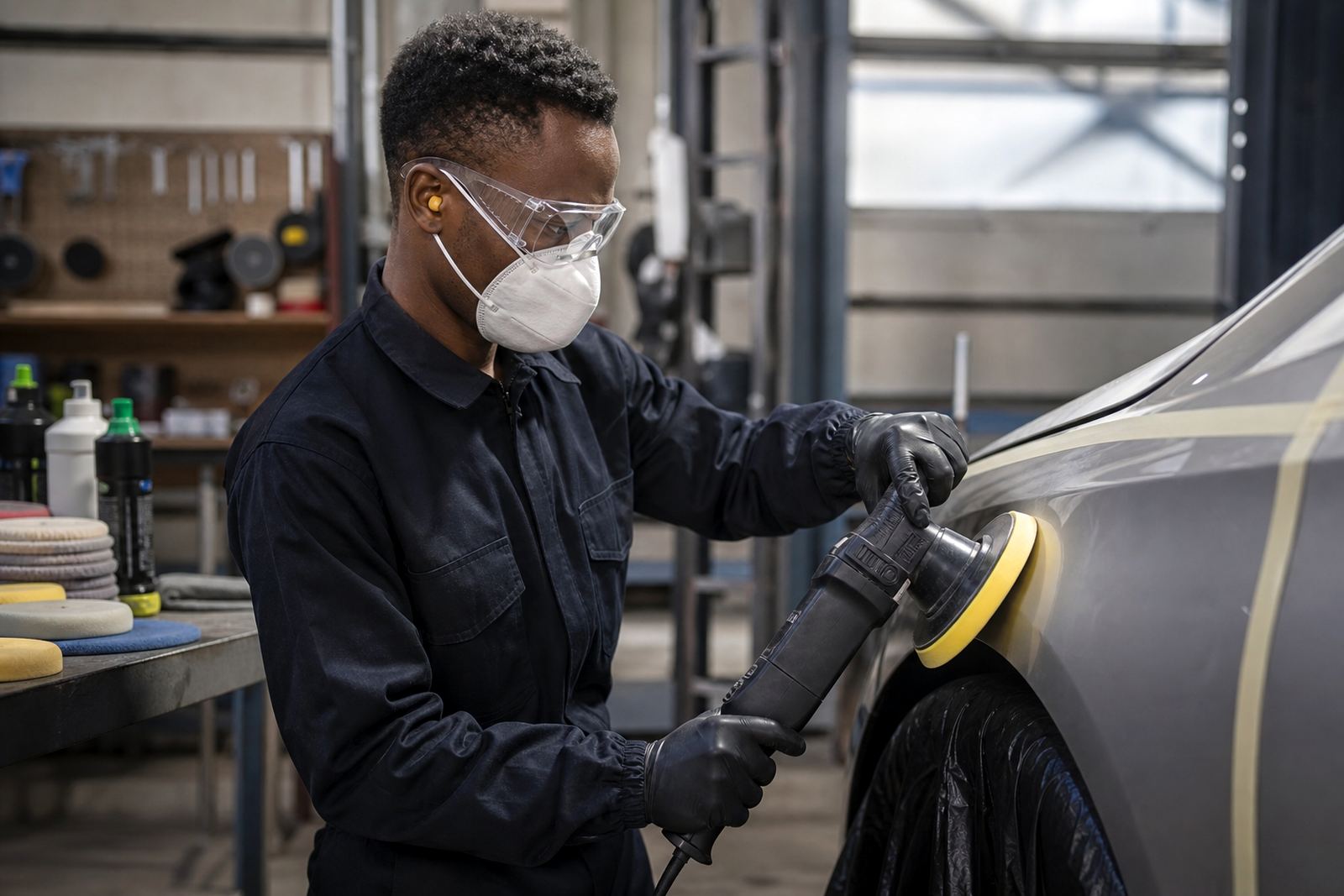
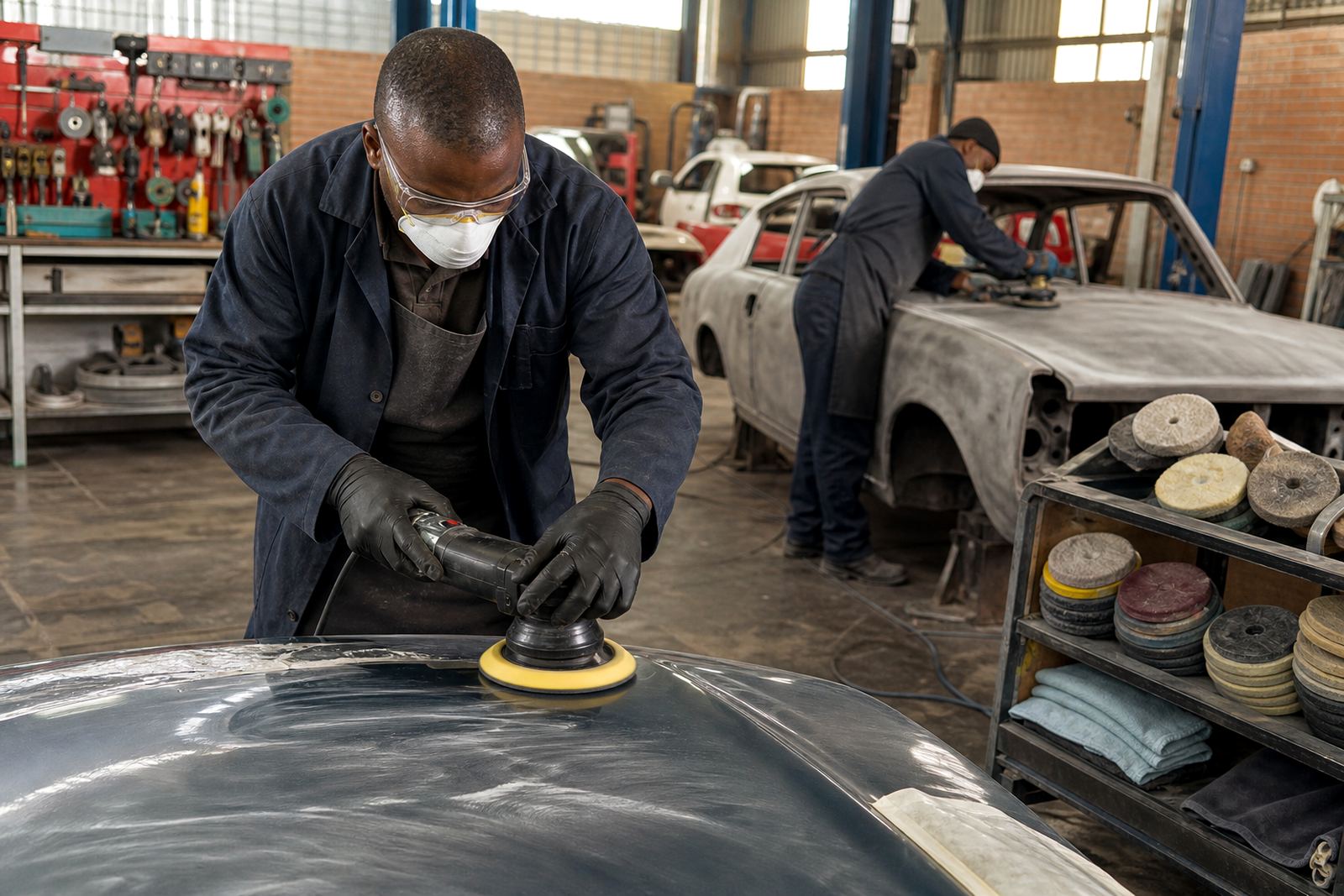
Polishing creates fine dust, spent compound and airborne residue, particularly when you work on oxidised metal or dry old paint. PPE is part of the job, not an extra. Gloves, eye protection and a proper dust mask help protect the operator, and good ventilation makes a real difference in small workshops or home garages.
It also helps to keep cables tidy, check backing plates, and avoid working near loose clothing or jewellery.Safe habits matter just as much as shine.
Starter kits, consumables and machine care
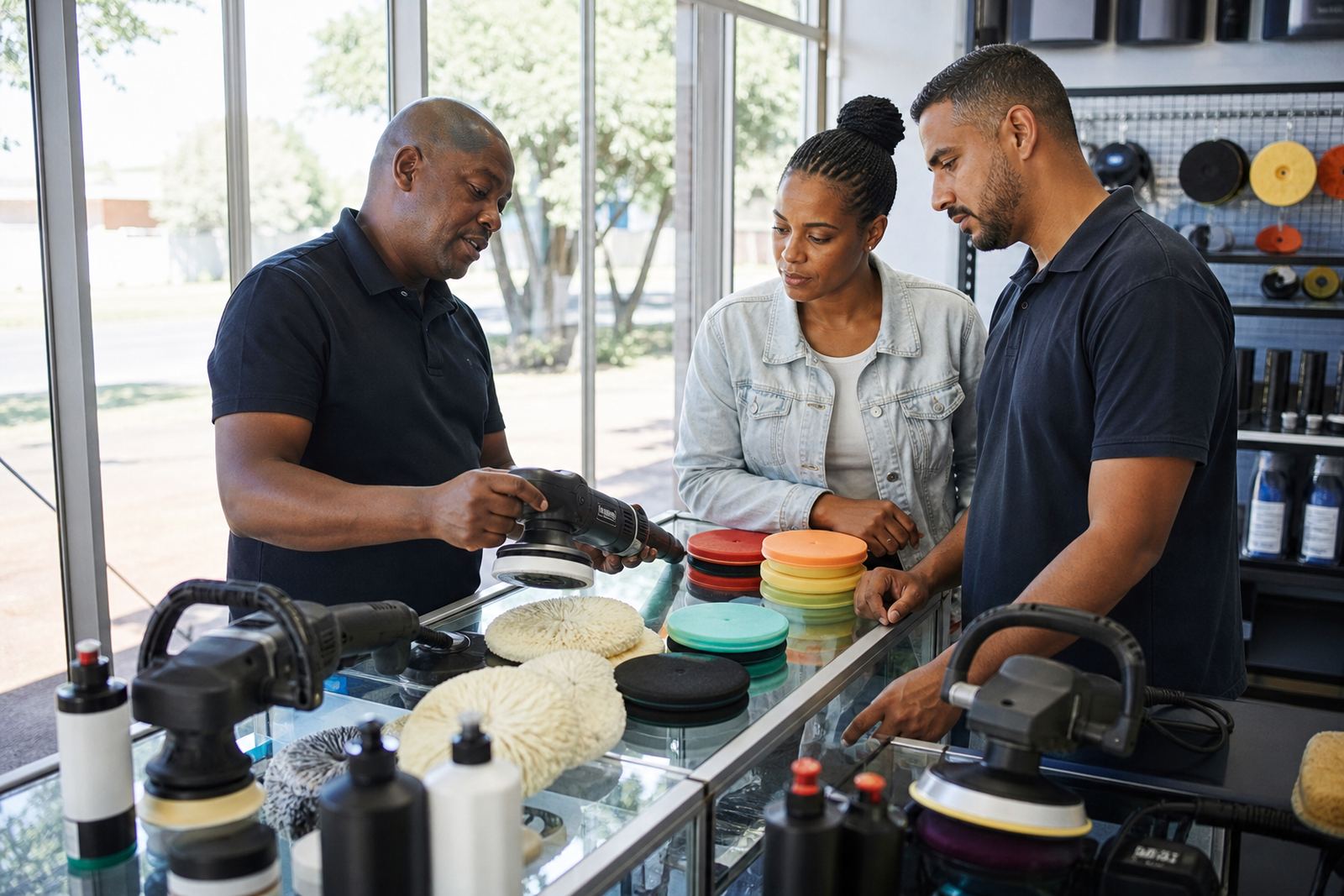
Starter Kit Consultation is useful when someone is setting up from scratch and needs a sensible first buy rather than a random mix of products. The right kit usually includes a machine, a few pad options, a small range of compounds, microfibre cloths and basic safety gear. That gives enough range to handle common tasks without overbuying.
Consumables Restocking and Machine Care Guidance help keep equipment ready between jobs. Pads need cleaning, compounds need to be stored correctly and machines should be checked for worn brushes, damaged cords and loose fittings. Small issues ignored early can turn into bigger downtime later.
Local support from Germiston across South Africa
Our base is in Germiston, Gauteng and support is available for clients in Johannesburg, Pretoria, Cape Town, Durban and Bloemfontein, plus the East Rand and Vaal Triangle. Whether you are polishing aluminium, stainless steel, body panels or finished paint, advice is matched to the job and the environment it will be used in.
Clients can reach us through the enquiry form on the contact page for help with product selection, workshop setup advice, onsite team demo requests and safety briefing questions. If you are not sure where to start, that is usually the best place to begin.
- Germiston Supply and East Rand Supply
- Johannesburg Supply and Pretoria Supply
- Cape Town Supply and Durban Supply
- Bloemfontein Supply and Vaal Triangle Supply