
Which machine should I use for the job?
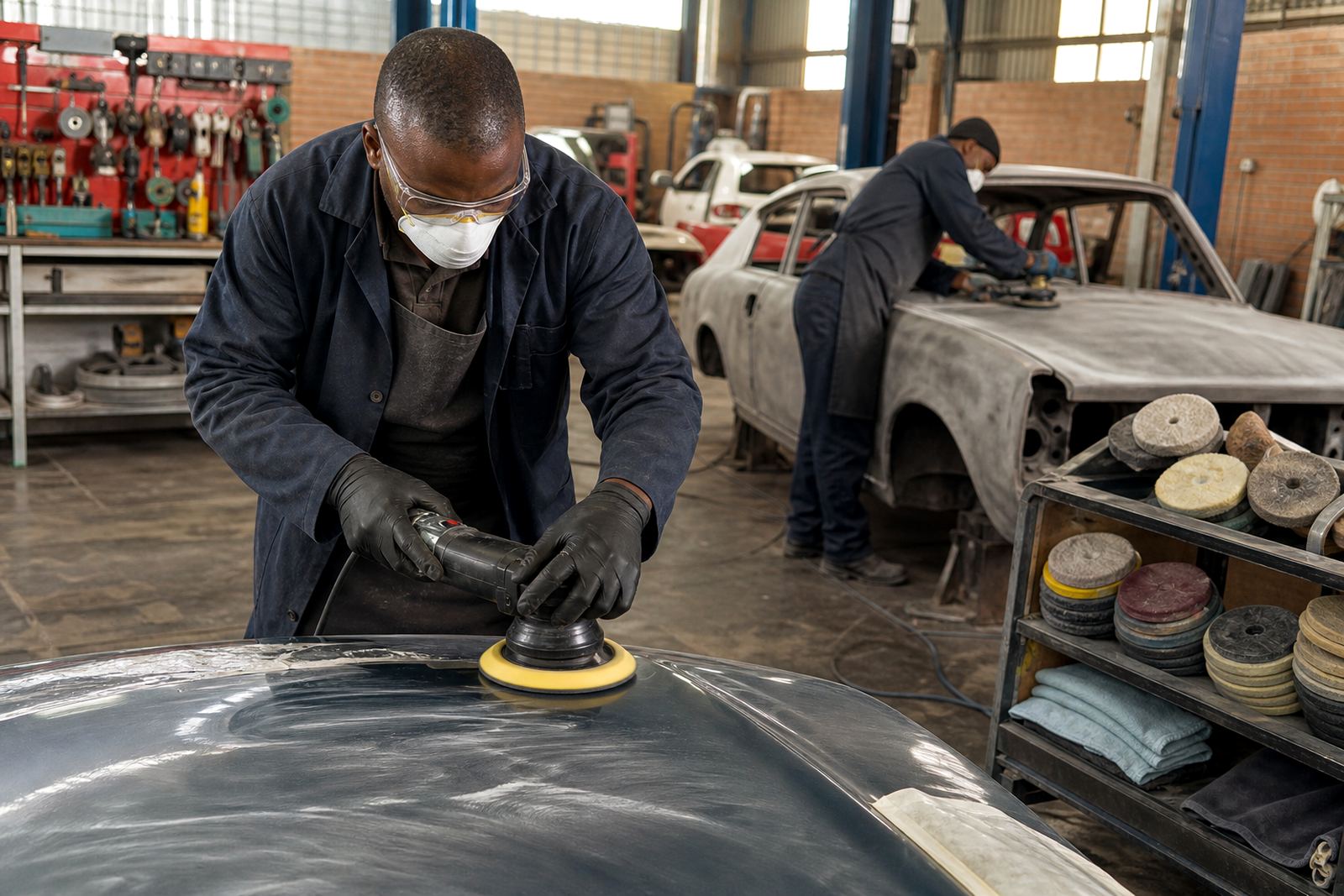
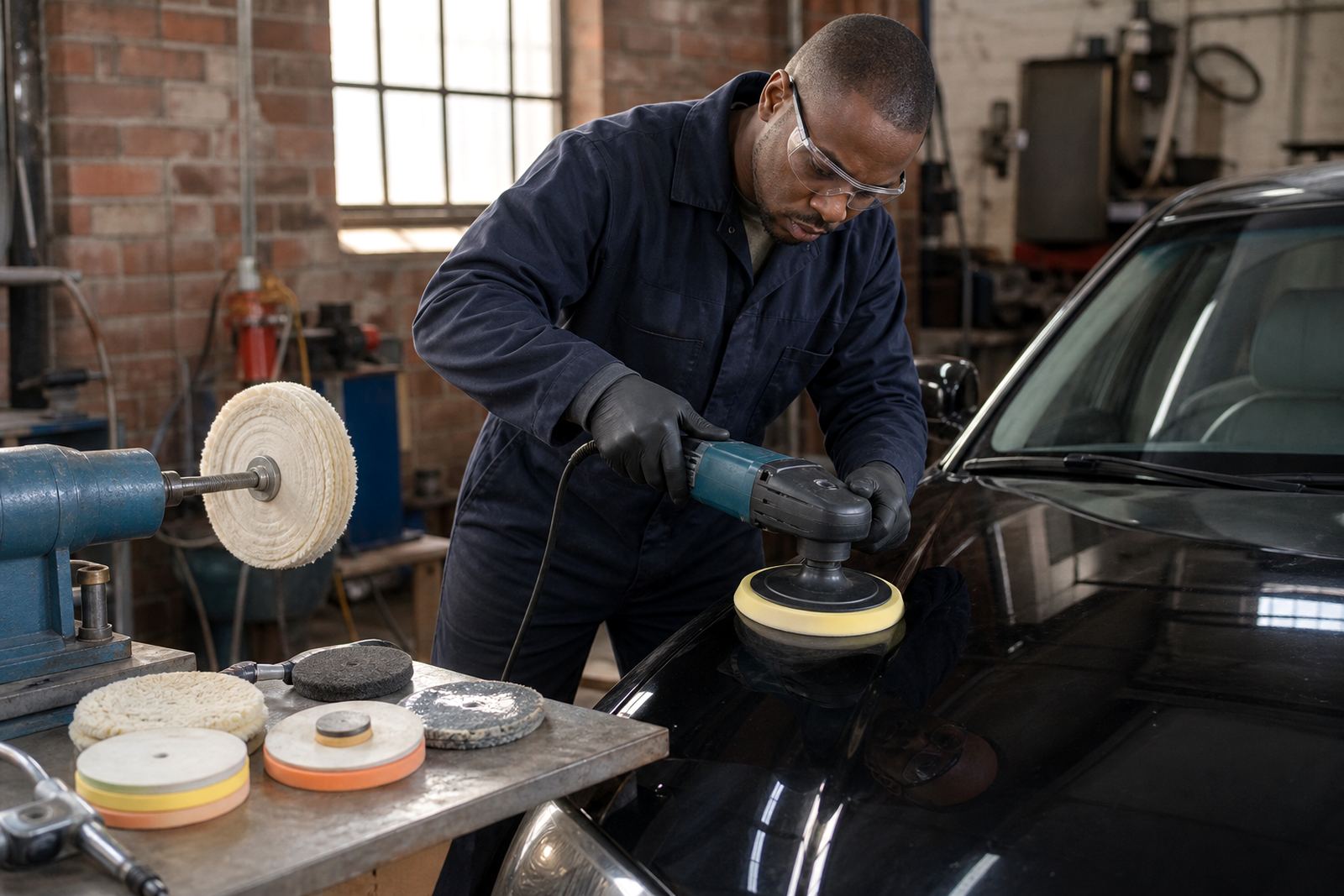
A rotary polisher spins on one axis and gives strong cutting power. It is suited to heavier oxidation on metal, sanding marks on paint after careful preparation, and faster work on larger panels, but it also creates heat quickly so the operator must keep moving and check the surface often. A dual-action polisher combines rotation with a free-spinning orbit, which makes it easier to control and more forgiving for learners, especially on automotive paint and lighter finishing work.
If you are new to polishing, start with a DA machine for paint correction and general finishing. If you are restoring alloy, stainless or mild steel parts, a rotary can be useful when used with the right pad and compound. In both cases, keep the machine flat on the surface, use modest pressure, and test a small area first.
- Use rotary for controlled cutting on metal and experienced paint work.
- Use DA for safer correction, finishing, and learner training.
- Match the machine to the surface hardness and the amount of correction needed.
How do I choose the right pad and compound?
Pad and compound choice depends on the finish you need and how much material must be removed. Foam cutting pads are common for paint correction, while softer foam finishing pads are better for final gloss. Wool and fibre pads can cut faster on metal, but they also leave more haze so a follow-up finishing step is often needed. For many jobs, the best result comes from starting mild and only stepping up if the defect remains.
Compounds are usually graded from heavy cut to fine polish. Heavy cut compounds remove sanding marks and oxidation faster, while finishing polishes refine the surface and improve clarity. Always keep pads clean because loaded pads reduce cut and can cause swirl marks. On humid coastal jobs or dusty workshop floors, this matters even more because contamination can be picked up quickly.
- Heavy cut pad and compound for oxidation, sanding marks and rough metal.
- Medium pad and compound for general correction.
- Finishing pad and polish for gloss and final haze removal.
What is the safest way to polish metal?
Metal polishing starts with a clean surface. Wash off grease, dust and loose corrosion, then dry the part fully. If there are deep scratches or pitting, level the area first with suitable abrasives before moving to compound. Work in small sections and keep the pad moving so heat does not build up on one spot. On stainless, aluminium and mild steel, different metals respond differently so a test patch saves time and helps avoid overworking the surface.
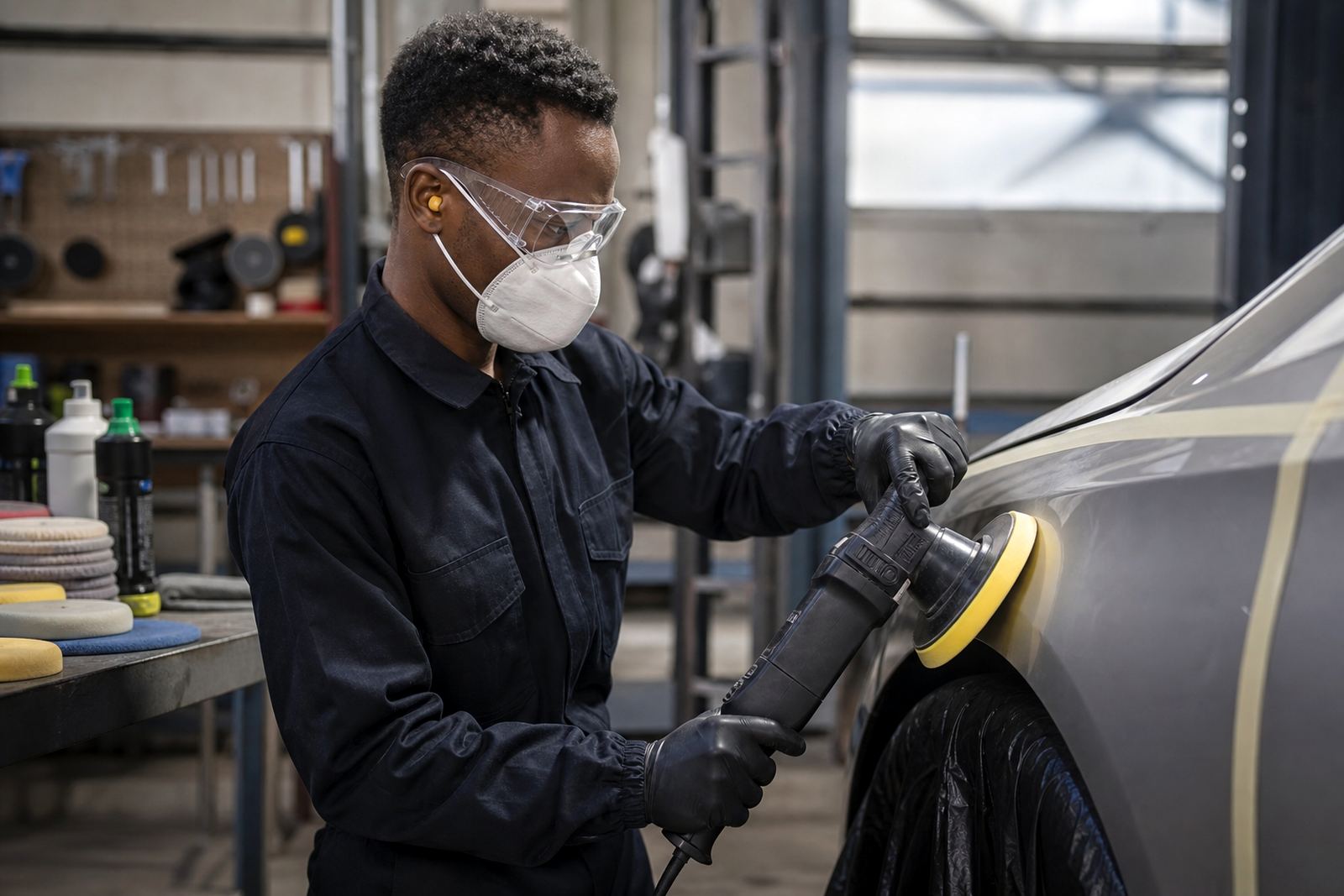
Wear gloves, eye protection and a dust mask or respirator when dry sanding. Fine metal dust can linger in the air and settle on nearby equipment.If a part becomes too hot to touch, stop and let it cool before continuing.
- Clean, inspect and decontaminate before any polishing step.
- Keep the pad moving to control heat build-up.
- Use PPE and manage dust from sanding and compound residue.
How should paint polishing be done without damaging the clear coat?
Paint polishing is about removing defects without thinning the clear coat too much. Start with a wash, clay or decontamination step if needed, then inspect the paint under good light. Choose the least aggressive pad and compound that can do the job. A DA polisher is often the safer starting point for most users because it reduces the chance of burning edges and high spots, though it still needs care around sharp body lines, badges and trim.
Work panel by panel, using overlapping passes and light to moderate pressure. Wipe residue between passes and check the finish from different angles. If the paint is soft, reduce pad aggression and slow the machine slightly. On older vehicles, repainted panels and resprays can behave differently, so a test section is always worth the time.
- Use light pressure and controlled passes.
- Avoid staying on edges, corners and raised body lines.
- Check the surface frequently under good lighting.
What should I know before buying a starter kit?
A starter kit should make first jobs easier, not more confusing. Look for a machine that suits your use case, a small set of pads in different grades, a selection of compounds, pad cleaner, microfibre cloths and basic PPE. For a first-time user in Germiston or anywhere else in South Africa, it helps to keep the kit practical rather than overpacked. Too many products can slow down learning.
Good starter advice also includes setup guidance. That means checking power supply, extension leads, pad storage and safe workspace layout. If you will be working in a home garage or small shop, make sure there is enough room to move around the vehicle, clear lighting and a clean surface for parts. Consumables like pads and compounds need restocking from time to time, so it helps to start with a clear system.
- Choose one machine, a small pad range and a few compounds first.
- Keep microfibres, masking tape and cleaning supplies on hand.
- Plan for storage, cord management and regular pad cleaning.
When should I ask for training or workshop advice?
Ask for training when you are unsure about machine control, defect removal or pad and compound matching. A short practical session can prevent damage, save time and build confidence. Beginner polishing training is useful for hobby users, while rotary skills sessions and DA skills sessions suit workshop staff and detailers who need repeatable results. Metal buffing training and paint correction coaching are helpful when your work starts to include more demanding finishes.
Workshop setup advice can also help if you are changing your process or training staff. Topics usually include machine care, cleaning routines, consumable management, safety and PPE briefing, and how to keep work moving during power interruptions. If you are in Johannesburg, Pretoria, Cape Town, Durban, Bloemfontein or elsewhere in South Africa, the same basics still apply: clean prep, correct product choice and patient technique.
- Use training when the surface is valuable or the finish must be consistent.
- Get guidance if you are unsure about pads, compounds or machine speed.
- Build safe habits from the start, not after a mistake.