Start With The Right PPE Before You Switch On
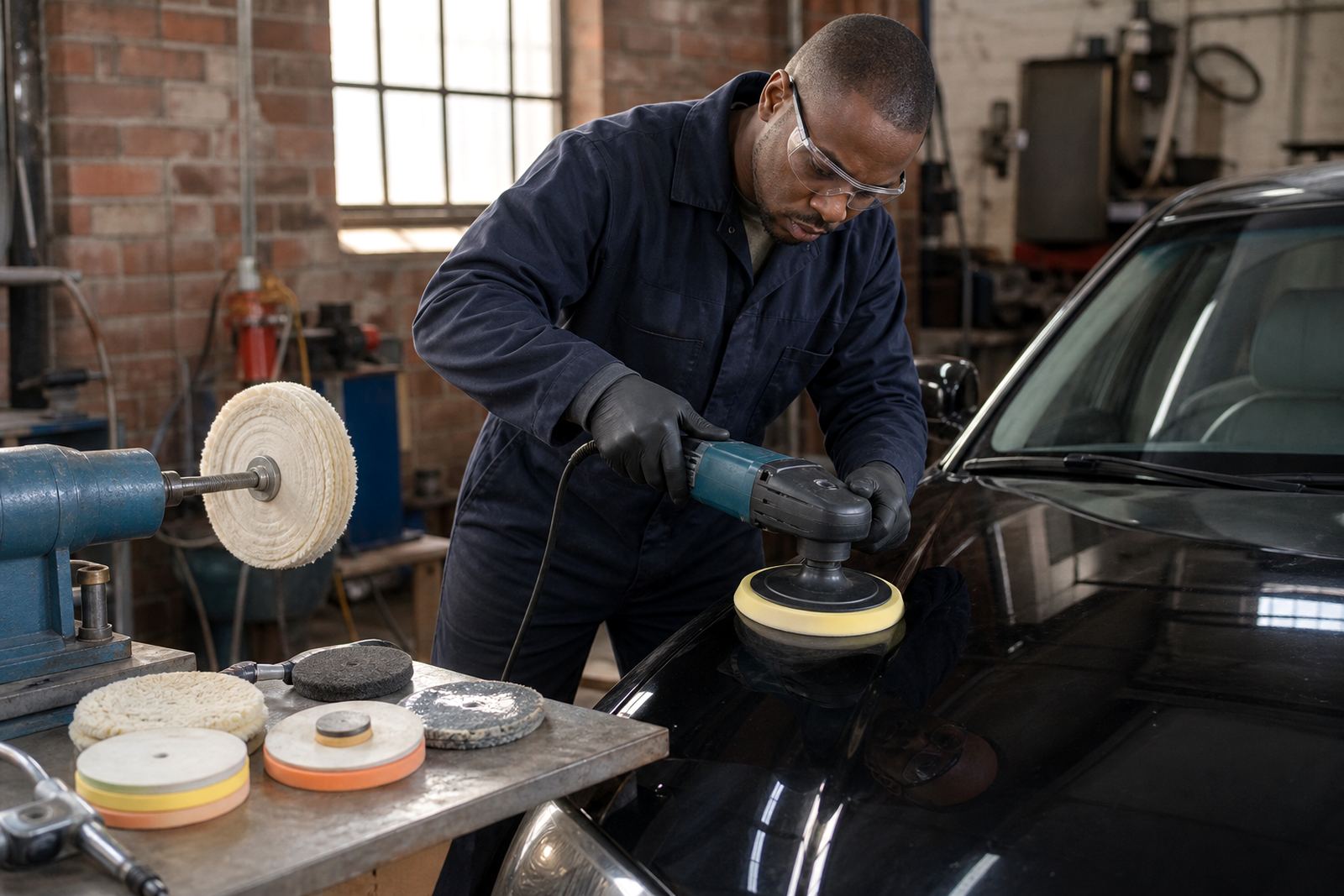
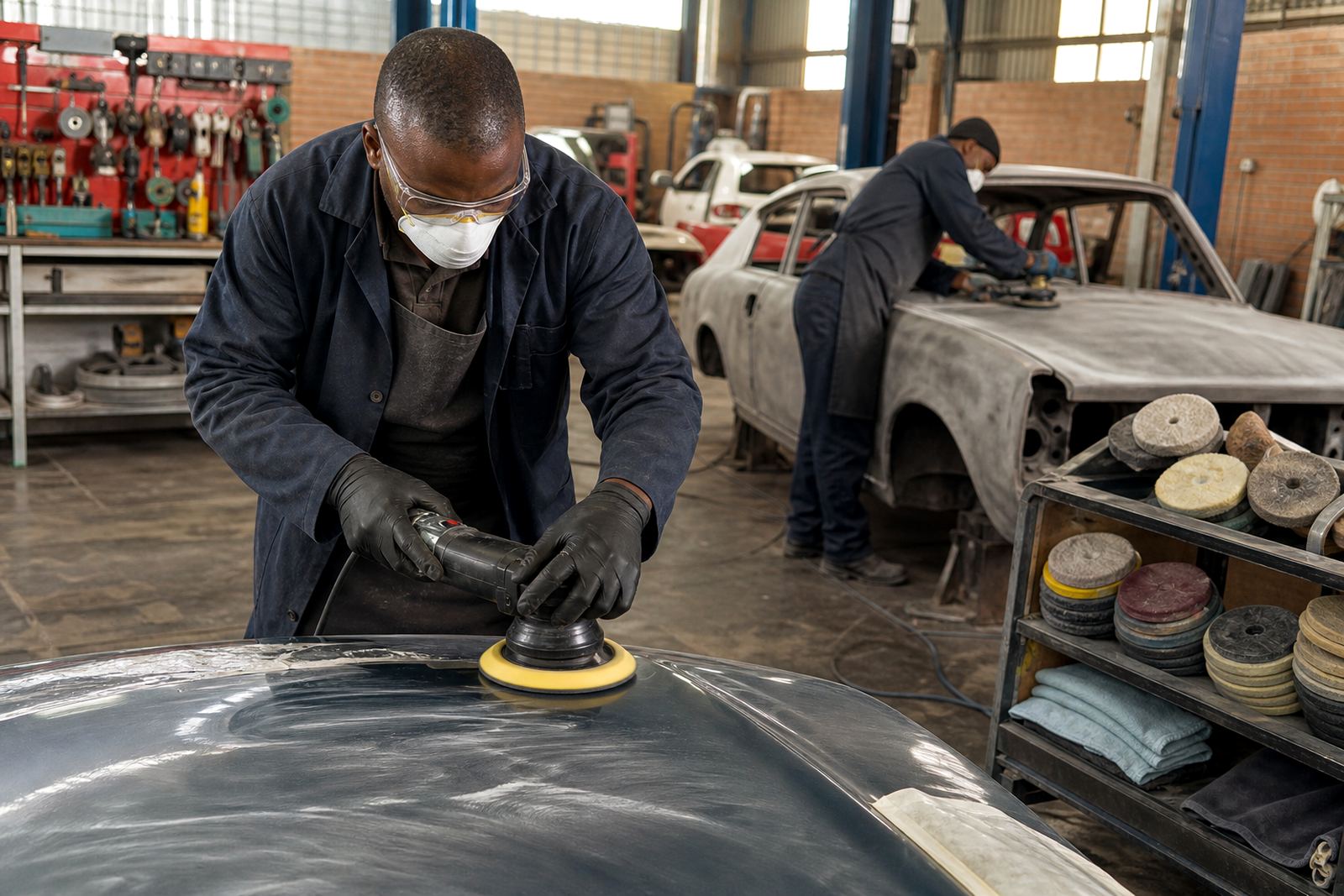
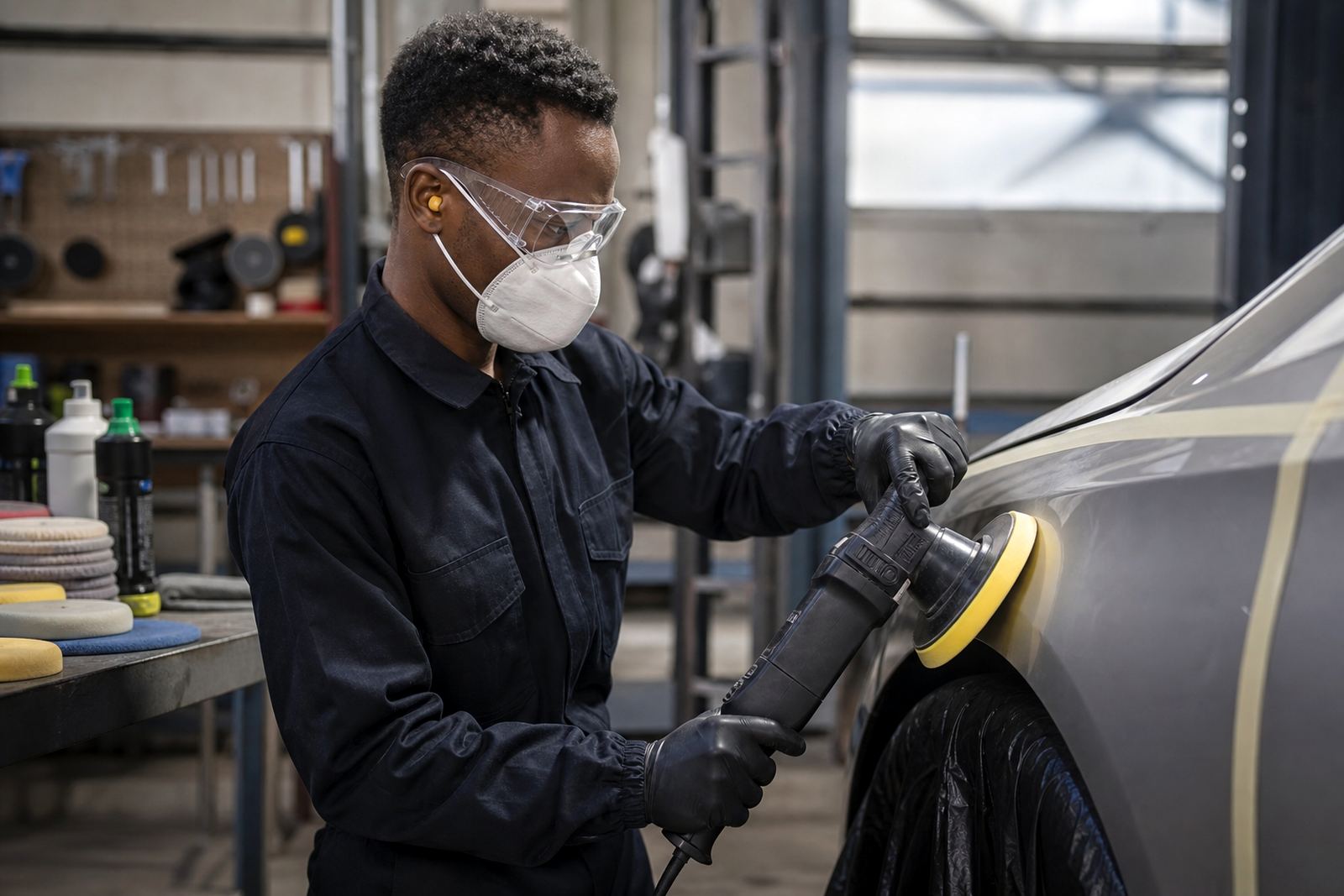
Polishing creates heat, fine dust and flying residue, especially when you are cutting back paint, working on oxidised metal or using compounds on edges and seams. Wear close-fitting safety glasses or a face shield, hearing protection for extended machine use, and gloves when handling hot panels or freshly cleaned parts. Long sleeves help with splatter, but keep cuffs tight so they do not catch on the pad.
Choose non-slip footwear and avoid loose clothing, jewellery or scarves near a moving machine. If you are working overhead or under a vehicle part, a cap and a properly fitted respirator can help when compound mist or dust is in the air. It is a simple setup, but it makes a big difference to comfort and control.
- Check that eye protection sits close to the face and does not fog easily.
- Use earmuffs or plugs when polishing for long periods.
- Keep hair tied back and sleeves secured.
- Replace damaged gloves or cracked visors before the next job.
Control Dust Before It Spreads Through The Workshop
Dry dust from old paint, corrosion and dried compound should not be left to float around the bay. If possible, use local extraction, a vacuum fitted for fine dust, or damp cleaning methods after the job. Sweep only after the heaviest residue has been collected, because dry sweeping can push fine particles back into the air.
On coastal jobs in places like Durban, humidity can make residue stick to panels and pads, while in Gauteng the dust can stay airborne longer in dry weather. Clean the bench, floor and machine body between steps so grit does not get dragged back onto the work. That grit can leave scratches in paint or a dull patch on polished metal, which means more rework and more heat.
- Keep sanding dust away from compound trays and soft finishing pads.
- Empty vacuum filters regularly so suction stays effective.
- Use clean microfibre cloths for final wipe-downs.
- Never blow fine dust around with compressed air unless the area is properly controlled.
Handle Rotary And Dual-Action Machines Safely
Rotary polishers cut faster and can build heat quickly, so they need steady hand pressure and careful pad movement. A dual-action machine is generally more forgiving, but it still needs the right pad, the right compound and a clean surface. Before you start, check the cable, switch, backing plate and pad for damage or build-up. If the pad is dirty or out of balance, stop and clean it rather than pushing on.
Keep both hands on the machine when possible, especially near edges, badges, curves and body lines. Start at a low speed, spread the product first, then increase speed only as needed. On sharp edges and thin paint, reduce pressure and do not linger in one spot. If the machine starts to hop, chatter or smell hot, stop and check your setup. A quick pause is better than burning a panel.
Use Compounds And Pads With A Careful Technique
Different compounds and pads are made for different stages, from cutting heavy marks to refining gloss. A coarse product on a firm pad removes more material, while a finishing compound on a softer pad is used to bring back clarity. Match the product to the job and test a small section first, because every panel behaves a bit differently.
Work in small sections and keep the pad flat where possible. Do not overload the pad with product, since excess residue can sling onto trim and windows. Wipe the panel often to check your progress, then inspect under good light before moving on. If you are polishing metal, be aware that heat can change the look of the surface quickly, especially on softer alloys or decorative trim.
- Prime a fresh pad lightly before the first pass.
- Brush or clean pads often to keep them cutting evenly.
- Use separate pads for cutting and finishing.
- Keep compounds capped and stored away from dust and moisture.
Protect The Vehicle, The Panel And The People Around You
Before polishing a car, mask sensitive areas such as rubber trims, badges, sharp edges and unfinished plastics where needed. Make sure the vehicle is parked on level ground and that doors, bonnet or boot lids are secured safely. On a workshop floor, keep leads out of walkways and away from standing water, especially when wash bays or wet cloths are in use.
If you are working with a team, agree on who is cutting, who is wiping and who is inspecting the finish. This avoids one person starting a machine while another is still cleaning near the same panel. Good communication matters in busy shops in Germiston, Pretoria or Cape Town where multiple jobs may be moving at once.
Simple Checks Before Training, Testing Or Daily Work
A few small checks at the start of the day can prevent bigger problems later. Look at your power supply, extension leads and plug points, especially if your workshop runs through long operating hours. Keep water away from electrics and store compounds, pads and cloths where they will stay clean and dry. If the workspace is tight, plan the order of work so you do not block exits or trip over equipment.
For beginners, good habits start with machine control, clean materials and patient polishing technique. For experienced users, the same basics still matter because they protect the finish and reduce fatigue. If you are unsure about pad choice, machine settings or safe handling, ask for guidance before you start. That small step can save time and material, and it keeps the workshop safer for everyone.
- Test lights, leads and extension cords before use.
- Keep a clear path to exits and fire equipment.
- Store flammables away from heat, sparks and charging gear.
- Clean up spills straight away to prevent slips.