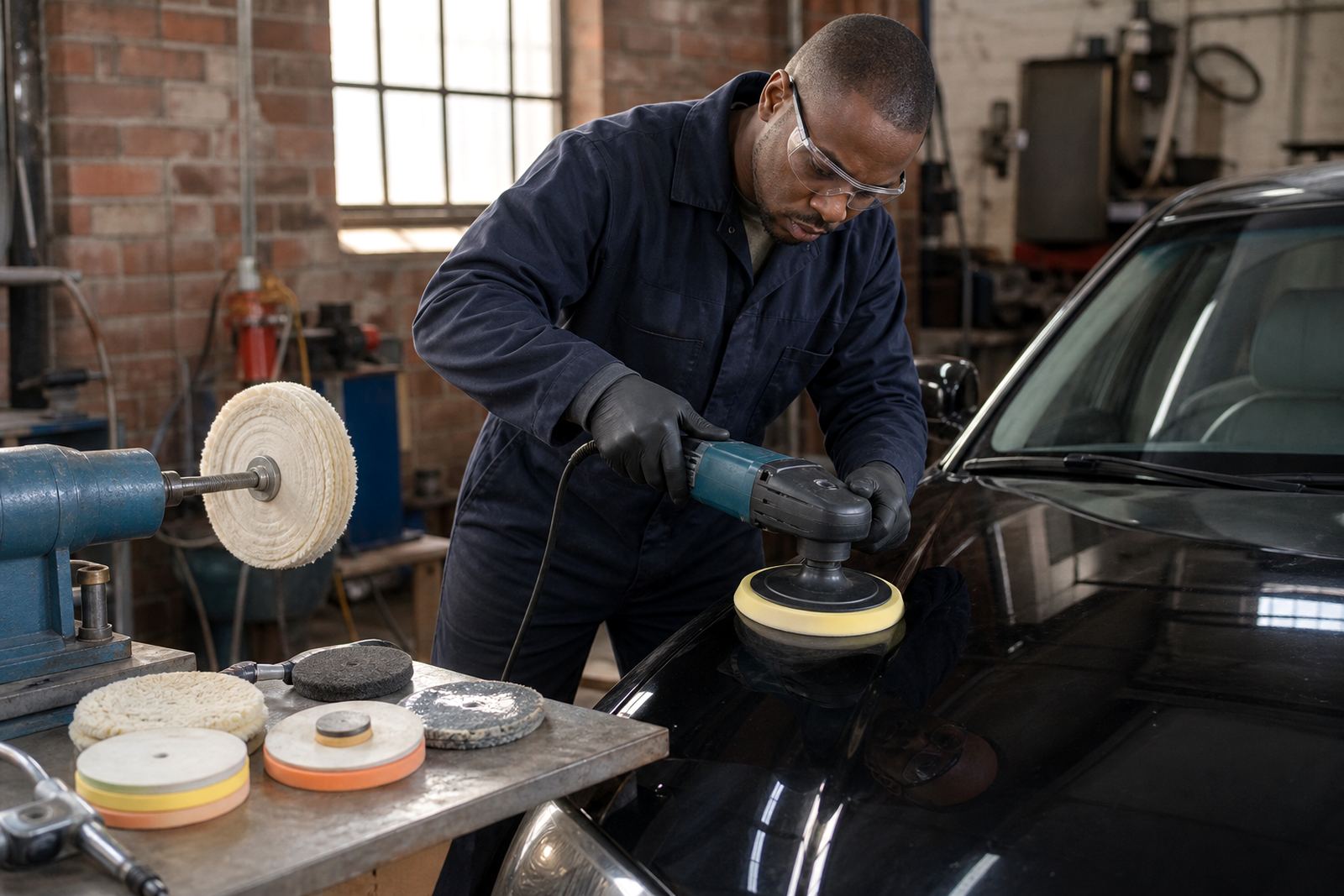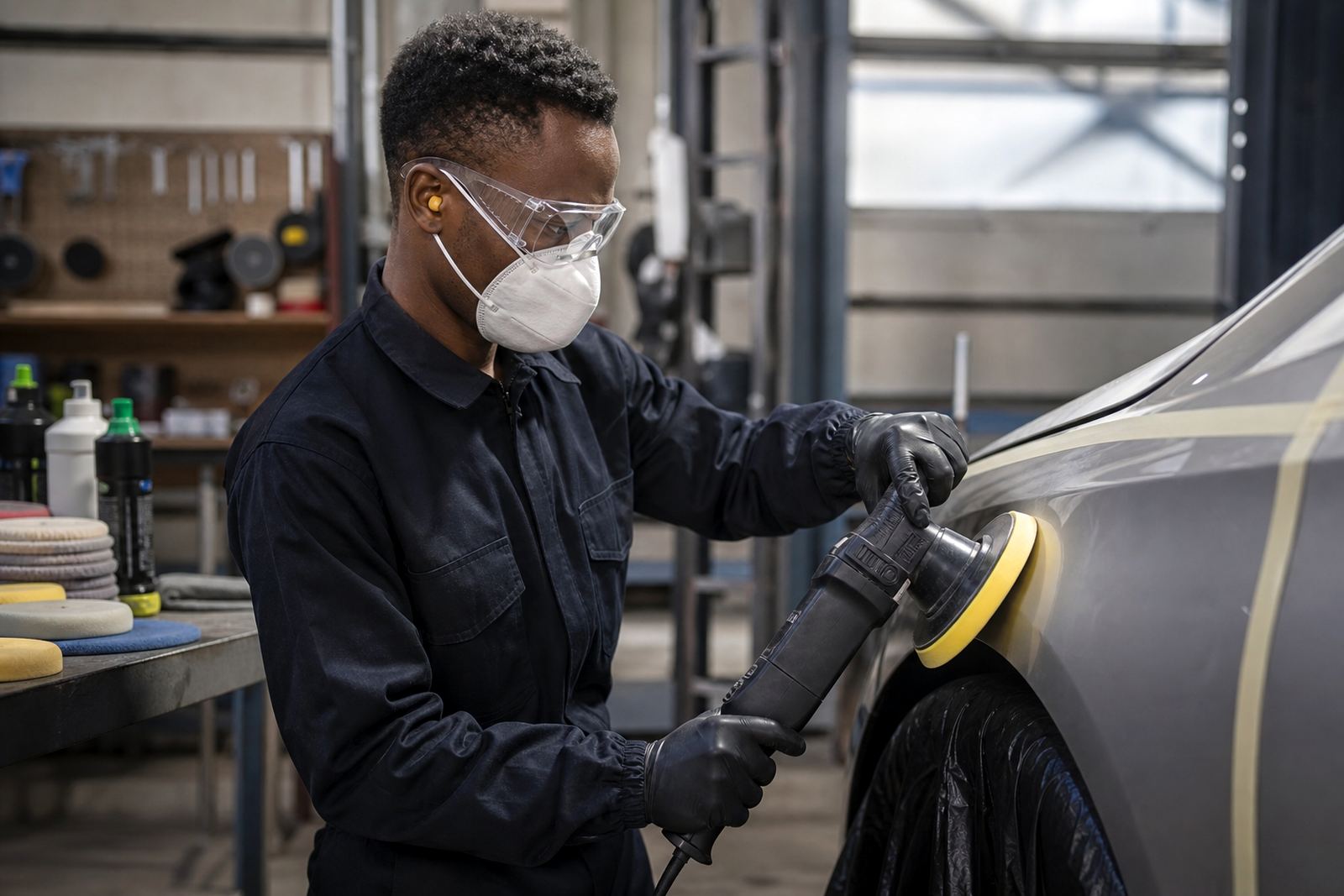

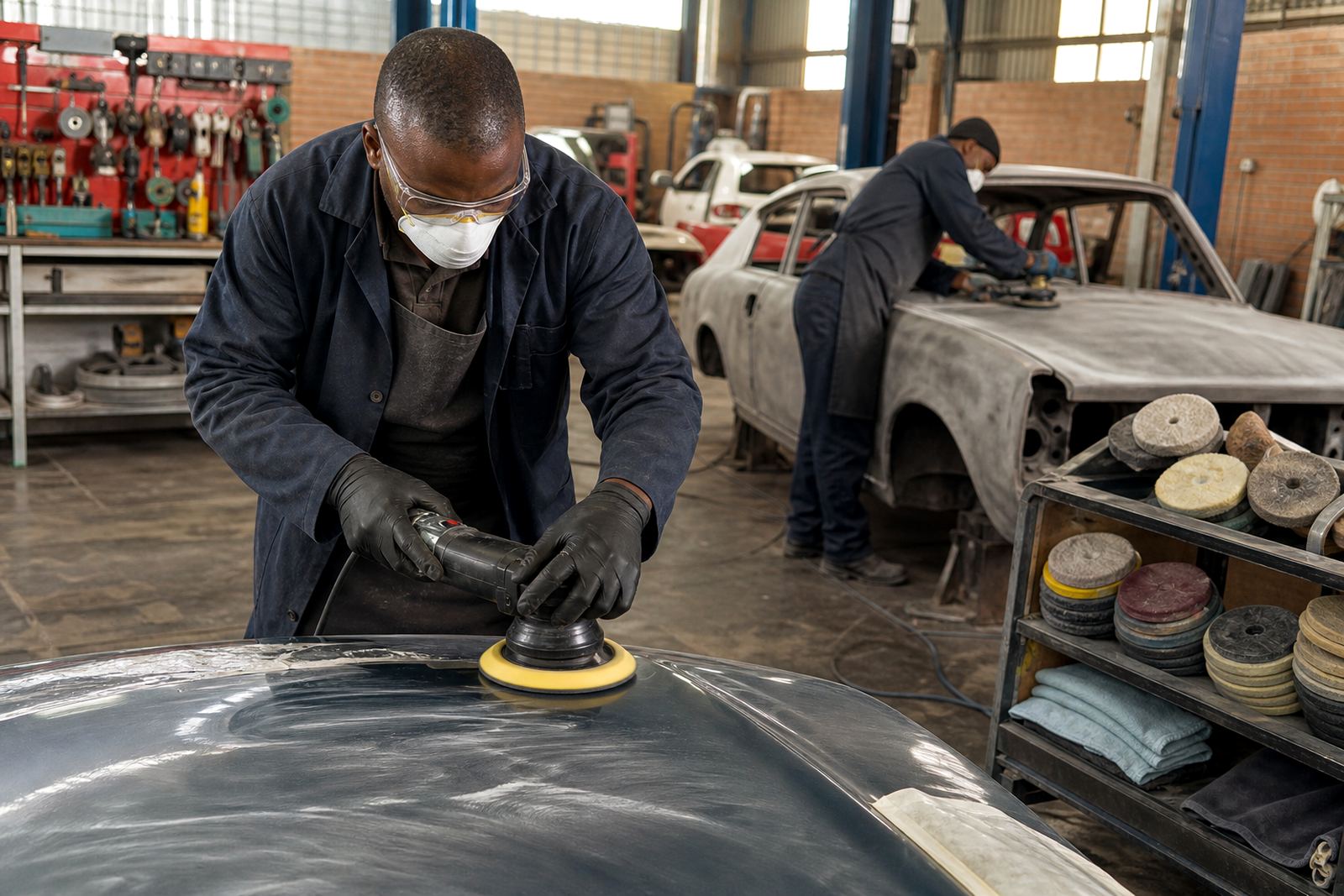
Start With A Clean Work Area And Safe Prep
Before you clean any pad or machine, switch off, unplug and let it cool completely. If you are working in a workshop or home garage in Germiston, Johannesburg or Pretoria, keep the area free of grinding dust, loose grit and overspray, because those particles can transfer straight back onto the panel or metal surface.
Wear gloves, eye protection and a dust mask when handling dried compound, especially after heavy buffing on oxidised metal. If you are cleaning after paint correction, make sure the vehicle has cured properly and that you are not introducing moisture into trims, badges or open seams.
- Remove loose residue with a soft brush first
- Keep separate cloths for paint, metal and machine care
- Never use a dirty pad on a fresh finishing pass
How To Clean Buffing Pads Without Damaging The Foam Or Wool
Pads work hard, so they need regular cleaning during the job and a proper wash afterwards. Foam pads can be tapped out between passes to remove spent compound and paint residue. Wool buffs need a little more attention because they trap more debris and can matt down if left packed with product.
For most pads, use a pad brush or a clean nylon brush to lift out the residue while the pad is still on the machine. After the session, wash them in lukewarm water with a mild cleaner, rinse until the water runs clear, and squeeze gently rather than twisting. Twisting can tear the foam or loosen the backing. Leave them to dry flat in a shaded, airy place. Strong sun can harden foam, which makes it less forgiving on curved panels.
- Do not soak hook-and-loop backing for long periods
- Do not use harsh solvents on foam pads
- Keep wool buffs combed out so the fibres stay open
Cloth Care For Better Final Wipe Results
Microfibre cloths are useful for removing compound haze, polishing oils and light dust, but they must stay clean if you want a streak-free finish. A cloth that has trapped grit will mark fresh paint or soft metals, even if it looks fine at first glance.
Wash cloths separately from general workshop rags. Use a gentle detergent and avoid fabric softener, as it reduces absorbency and can leave a film on the cloth. If you are in coastal areas like Cape Town or Durban, dry them fully before storage so moisture does not cause odour or mildew. Fold cloths neatly and keep them in a sealed tub or clean cupboard away from grinding debris.
- Reserve one cloth type for final wipe only
- Discard cloths that have picked up hard grit or metal filings
- Never wipe a polished surface with a cloth that touched floor dirt
Machine Care For Rotary And Dual-Action Polishers
Rotary and dual-action polishers need simple checks after each use. Wipe the body, handle and vents with a dry cloth to remove dust and compound. Check the cord for nicks, inspect the backing plate, and confirm the spindle or orbit action feels normal. If a machine starts to sound rough or vibrate more than usual, stop using it and inspect it before the next job.
Air vents must stay open.Keep the machine dry, store it on a shelf or in a case, and do not leave it on the floor where moisture and metal filings can get inside.
- Unplug before cleaning or changing pads
- Check bearings, switches and cable strain points regularly
- Store machines away from water, dust and solvent fumes
Compound And Residue Removal From Paint And Metal
After polishing, inspect edges, seams and textured trim for trapped compound. On paint, residue often shows up around badges, panel gaps and rubber seals. On metal, especially aluminium or stainless steel, compound can collect in corners and leave a dull film if it is not removed properly.
Use a soft brush or detailing swab for tight areas, then follow with a clean cloth and a light wipe. If the residue is stubborn, use a small amount of approved cleaner rather than scraping at it. Scraping can cut the clear coat or scratch the metal. The aim is a clean surface with no dried paste left behind, because left-over compound can harden and make the next polish uneven.
For workshop users in Bloemfontein, the Vaal Triangle or the East Rand, it helps to set up a simple cleaning routine at the end of each shift so you do not start the next day with hardened product all over the tools.
Storage, Restocking And When To Ask For Advice
Good storage protects your consumables and saves money. Keep pads in labelled bags or tubs by type and cut level. Store compounds upright with lids fully closed, and keep cloths separate from workshop rags, solvents and sanding dust. If you work on both metal finishing and car paint, use different boxes for each process so you do not mix abrasive stages.
It is also worth checking your stock before a busy week. If pads are collapsing, cloths are linting, or a machine is pulling unevenly, those are signs to slow down and sort the problem before it affects the finish. Proper care is part of the craft, and it makes a real difference when you are chasing a clean result on curved panels or bright metal trims.
Our Germiston base supports customers across South Africa with practical advice on machine care, pad cleaning, consumables restocking and safety briefings, including PPE and dust control for workshop use.