How supply works from Germiston
Orders are handled from our Germiston base and supplied to customers across Gauteng and further afield. We support hobby users, workshops and mobile detailers with rotary polishers, dual-action polishers, buffs, compounds and starter kits for metal and paint work.
To keep the process simple, send your enquiry through the contact page and tell us what you are working on, the material involved and whether the job is metal polishing, paint correction or general maintenance. That helps us point you toward the right machine, pad and compound set, instead of guessing and wasting product.
- Tell us the job type, for example aluminium, stainless steel, clear coat or painted panels.
- State your experience level so we can match the machine and training support.
- Include your delivery town or suburb for a practical supply plan.
- Ask for consumables restocking if you already use a polisher and need pads or compounds only.
Delivery areas we support across South Africa
We supply Johannesburg, Pretoria, Cape Town, Durban and Bloemfontein, with support also available for the East Rand and Vaal Triangle. In Gauteng, collections and local delivery arrangements are usually straightforward. For the coastal cities, we take extra care with packaging because humidity can affect metal products if they are stored poorly once received.
For customers in Cape Town and Durban, it helps to store compounds in a cool dry place and keep buffs sealed after use. That is especially important where salt air and warm conditions can shorten the life of consumables if they are left open in a workshop.
- Johannesburg and Pretoria supply for body shops, detailers and home garages.
- Cape Town supply for coastal finishing work and workshop restocking.
- Durban supply for humid conditions and regular paint maintenance.
- Bloemfontein supply for inland users who need dependable consumables and training support.
Choosing the right polisher for the job
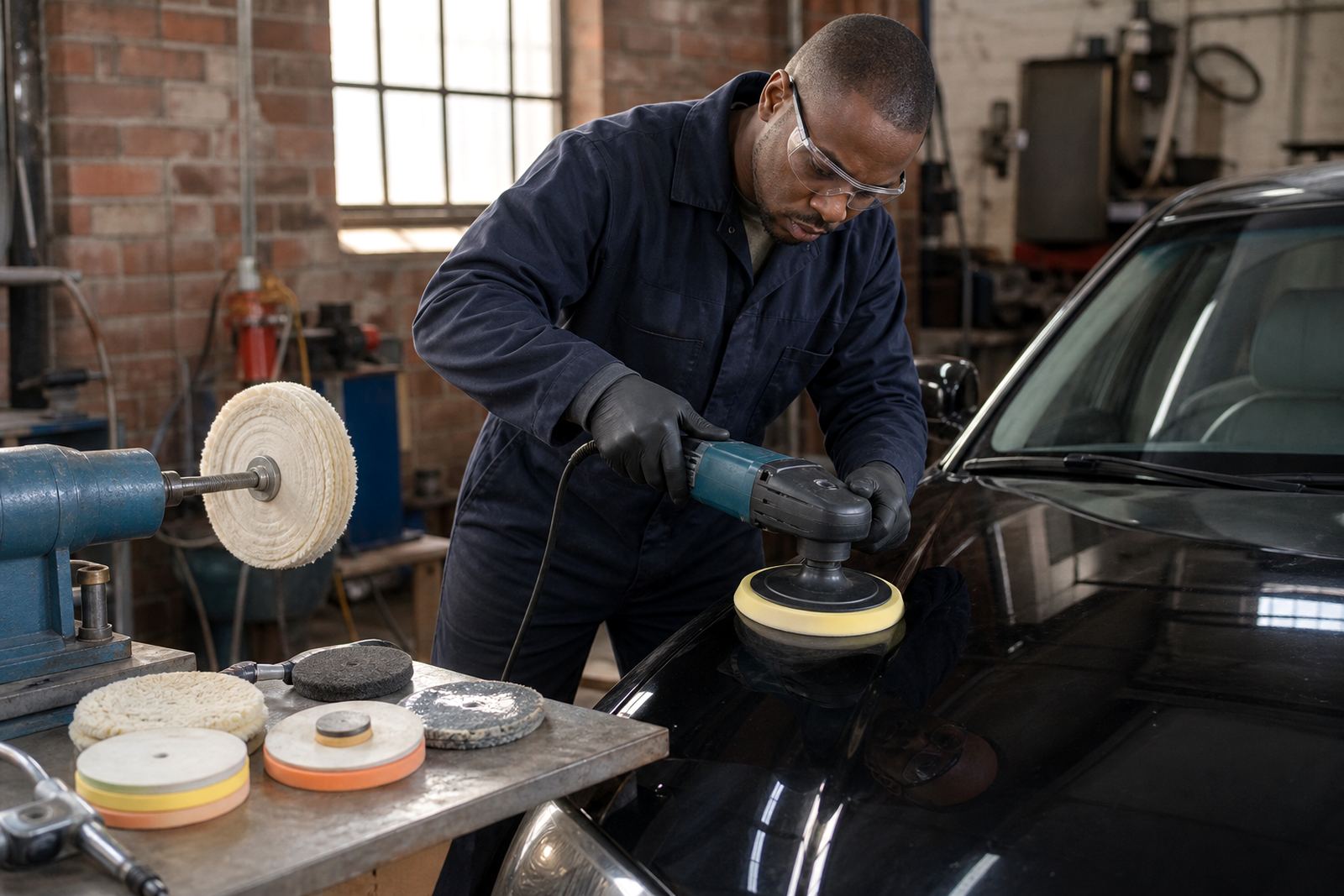
Rotary polishers suit experienced users who need strong correction on paint or controlled cutting on metal, while dual-action polishers are often better for beginners and safer for softer finishes. The right choice depends on the surface, the defect level and how much heat the material can take. On paint, too much pressure or a dry pad can cause haze, while on metal the wrong compound can leave swirl marks or a dull patch.
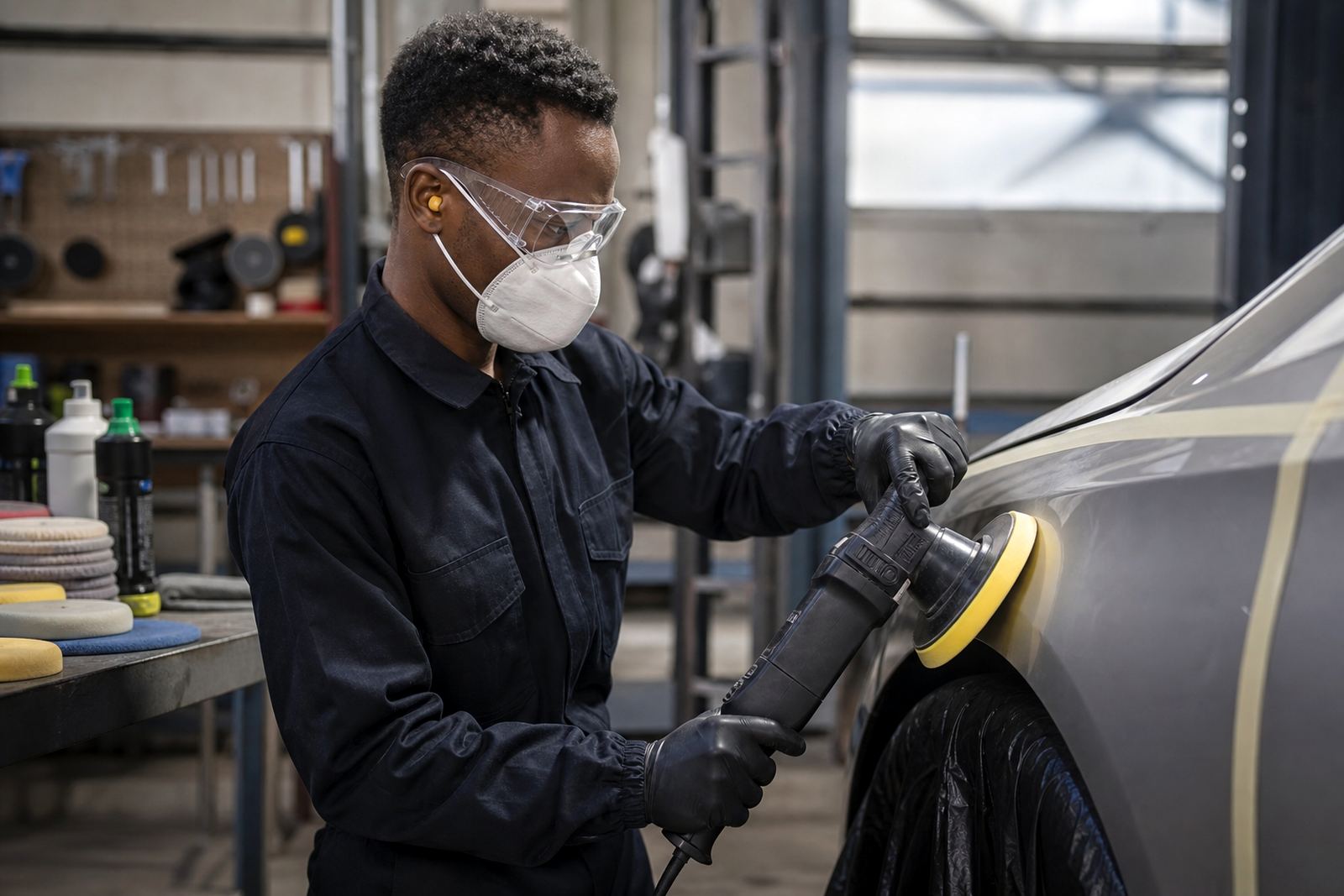
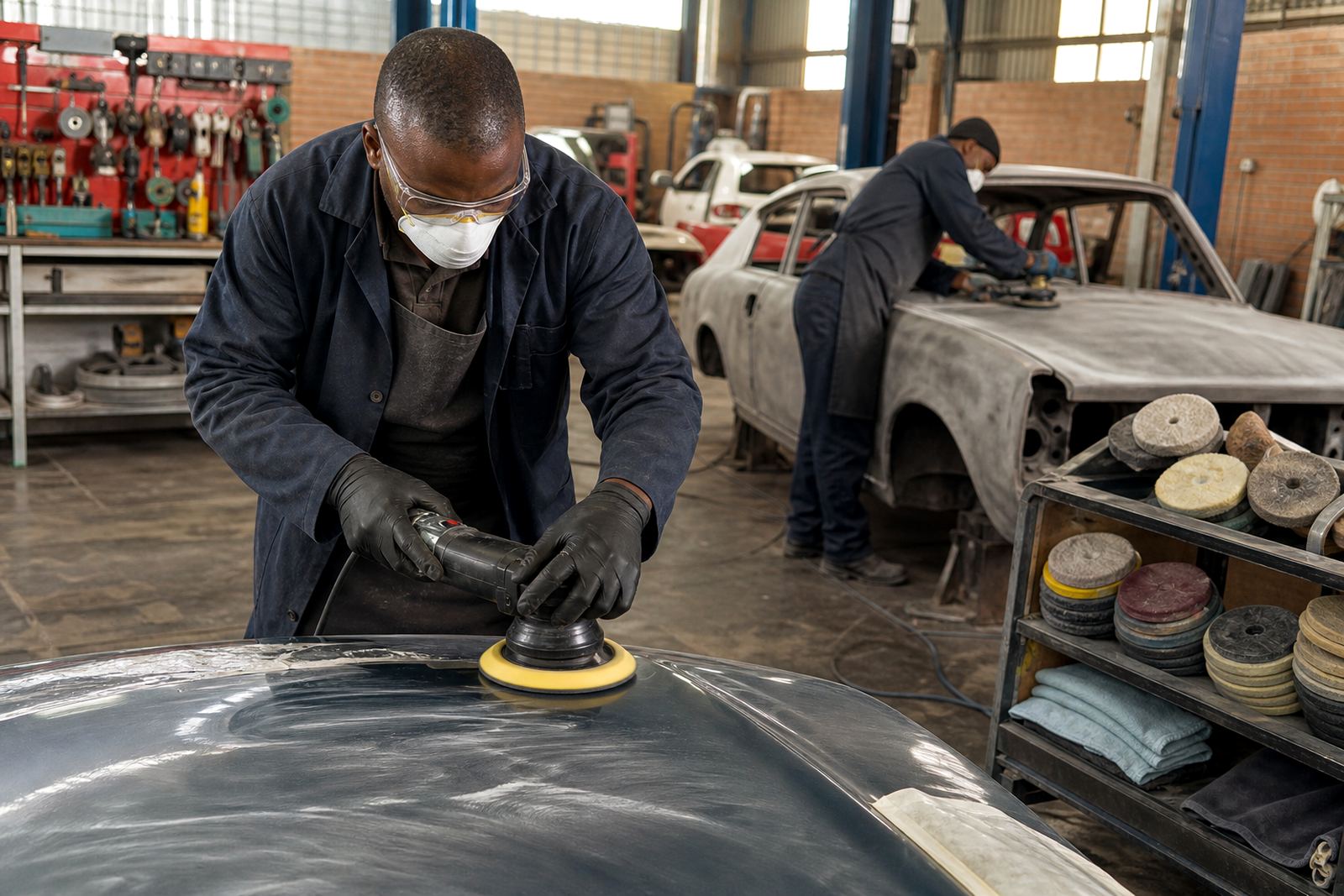
We guide customers on pad and compound matching, machine speed and working area size. As a general rule, use a clean pad, start with the least aggressive combination that can do the job and inspect the surface often. On car panels, work in small sections. On metal, keep the piece cool and wipe down residue between passes. Wear eye protection, gloves where needed and a dust mask when working around dried compound or sanding residue, because fine dust gets into everything.
Packing, handover and storage advice
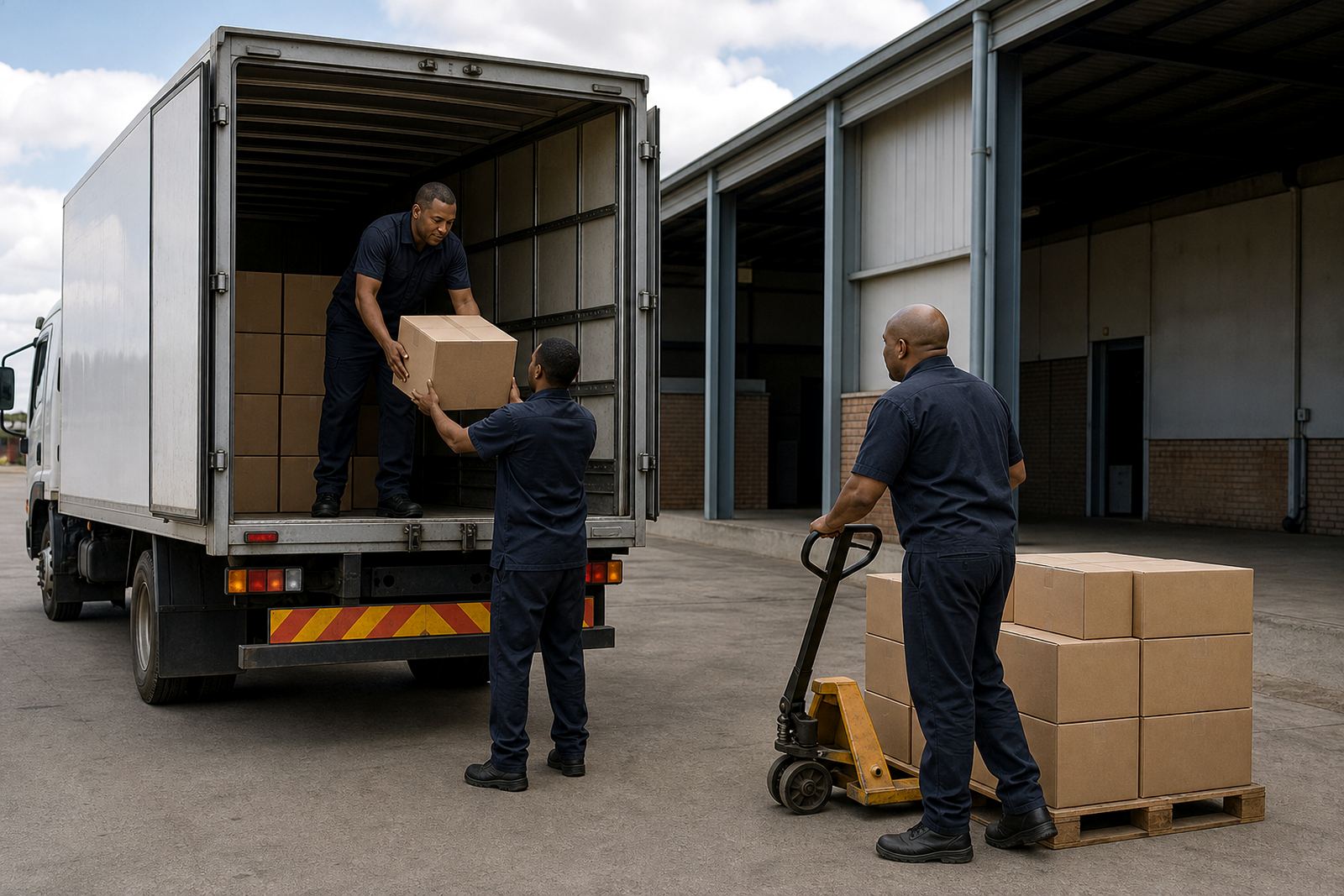
We prepare supplies so they can be handed over or sent out in practical working condition. Buffs and pads should be kept clean and dry, compounds should be sealed tightly and machines should be checked before first use. If you are collecting in Germiston or arranging supply to a workshop in Gauteng, make sure you have a clean boot or storage box ready. That saves time and keeps compounds from getting contaminated with grit.
Once your order arrives, inspect the contents before first use. Check that the backing plate fits your machine, the pad size matches the task and the compound suits the finish you want. If you are running a workshop, label your pads by cutting stage, finishing stage and metal use so staff do not mix them up. It sounds basic but it prevents a lot of wasted product.
- Keep compounds out of direct sun and away from heat sources.
- Store pads flat or hung so they do not deform.
- Clean machine vents regularly to reduce dust build-up.
- Unplug equipment before changing pads or making adjustments.
Training options for safer polishing
Our polishing training is available for beginners and working teams that need practical support with tools, technique and setup. Sessions can cover rotary skills, DA skills, metal buffing, paint correction coaching and Safety and PPE Briefing. We also assist with starter kit consultation, workshop setup advice and machine care guidance so your crew can work more confidently.
Training is especially useful when a business is moving from hand polishing to machine work or when a team needs better control over finish quality. We explain how to avoid heat damage, how to read the surface and how to keep dust down during sanding and compounding. For onsite team demos, the goal is simple: less guesswork, cleaner work and safer handling from the start.
What to do before you send an enquiry
Before you submit the contact form, have a clear idea of what you need. A small bit of preparation makes the response faster and more accurate. Tell us whether you are polishing car paint, bare metal, chrome, aluminium or another surface and include the size of the area if you know it. If you already own a machine, mention the type so we can advise on pads, backing plates and compound strength.
It also helps to note whether the job is for home use, a trade workshop or a training session. That way we can guide you on supplies and practical next steps rather than sending a generic suggestion. If you are in a coastal town or a dusty inland area, mention that too because storage and maintenance advice may change slightly. Clear details help avoid delays and yes it makes the whole process easier.