

Germiston Workshop Roots
Polisher began in Germiston in 1996 with a clear purpose, to help people get better results from polishing work by supplying the right tools and giving practical guidance. The early days were shaped by workshop realities, where metal finishing, paint correction and surface refinement needed equipment that matched the job in front of the operator. From the start, the business was built around useful advice, not guesswork.
That focus made the first conversations as important as the products themselves. Customers wanted to know which machine suited the task, which pad would cut or finish properly, and how to work neatly without damaging the surface. The business grew from those everyday questions and from a willingness to explain the process in a way that made sense to both beginners and experienced users.
Tools For Real Jobs
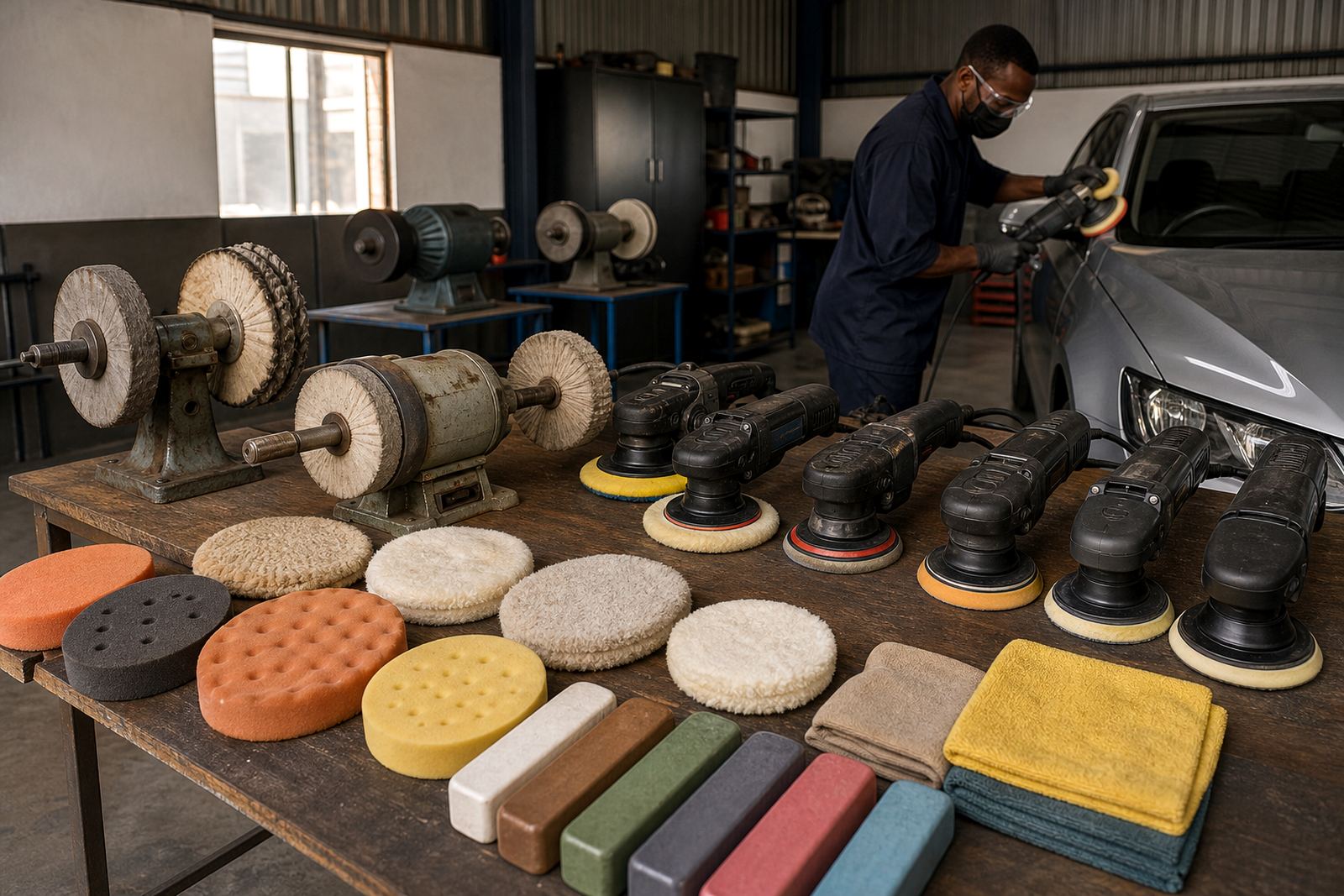
As demand expanded, the range developed around the needs of garages, workshops and detailers who wanted dependable polishing tools for regular use. Rotary machines, dual-action polishers, buffs, foam pads, compounds and starter kits became part of the offering, each selected to suit a different level of skill and a different type of finish. The aim was never to overwhelm customers, but to match them with the right setup.
That approach also helped hobbyists who were setting up for the first time and professionals who needed consistent results across many jobs. The team learned to guide people through pad choice, pressure, speed and product selection so the work could move from cutting to refining to final gloss without confusion. Practical support became part of the product offering, not an afterthought.
Learning Through Practice
Over time, the business saw that many customers wanted more than supply. They wanted to understand how polishing actually works, especially when facing paint systems, metal surfaces and different levels of correction. That led to a stronger focus on training, with hands on guidance for beginners and more experienced users who needed to sharpen technique or improve confidence in their own workshop routines.
This training mindset stayed close to real work. The advice centred on testing a small area first, working cleanly, checking results in good light and moving through the process in the right order. For metal work, the guidance covered speed control, compound choice and heat management. For paint correction, it often came down to safe machine handling, surface reading and patience.
Customers Across Industries
Polisher serves a broad group of customers, from home garage users to panel beaters, fabricators, detailers and workshop teams who rely on polishing equipment for daily work. Some need help choosing a first machine, while others want consumables that can handle continuous use. The business has grown by meeting both groups with the same practical attitude and by recognising that each customer may be at a different stage of learning.
That variety also shaped the way advice is given. A first-time user may need clarity on how to begin safely, while a busy workshop may need product matching for specific materials, repeat supply and a better process for keeping work moving. The common thread is the same: good results depend on the right tool, the right method and a clear understanding of the surface being worked on.
Support That Fits Workflows
Today the team works as a support system as much as a supply business. Staff members handle enquiries, product matching, workshop setup advice and practical troubleshooting with the aim of making each job easier to manage. The service is grounded in real use, so customers can ask about machine care, pad cleaning, backing plates, storage and how to prepare equipment for regular shop floor work.
That way of working reflects how the business has matured. It is not about pushing a box across a counter and moving on. It is about helping customers set up properly, avoid common mistakes and build a process that suits the work they do every day. In that sense, the team functions as part of the workshop routine, even when the customer is working far from Germiston.
Standards It Will Not Bend
What Polisher will not compromise on is clear. The business does not cut corners on practical advice, suitable product selection or the importance of safe, careful work. If a customer needs to know when a softer finishing pad is more appropriate than a cutting pad, or why surface inspection matters before moving ahead, the team will answer honestly. The aim is always to protect the job and the result.
That same standard applies to the culture behind the business. Clean work habits, proper protection, sensible technique and respect for the material being polished all remain central. Polisher may have grown in reach and experience, but it still holds to the discipline that shaped its beginnings in Germiston: match the tool to the task, work with care, and never treat quality as negotiable.