Start with the finish you need to correct
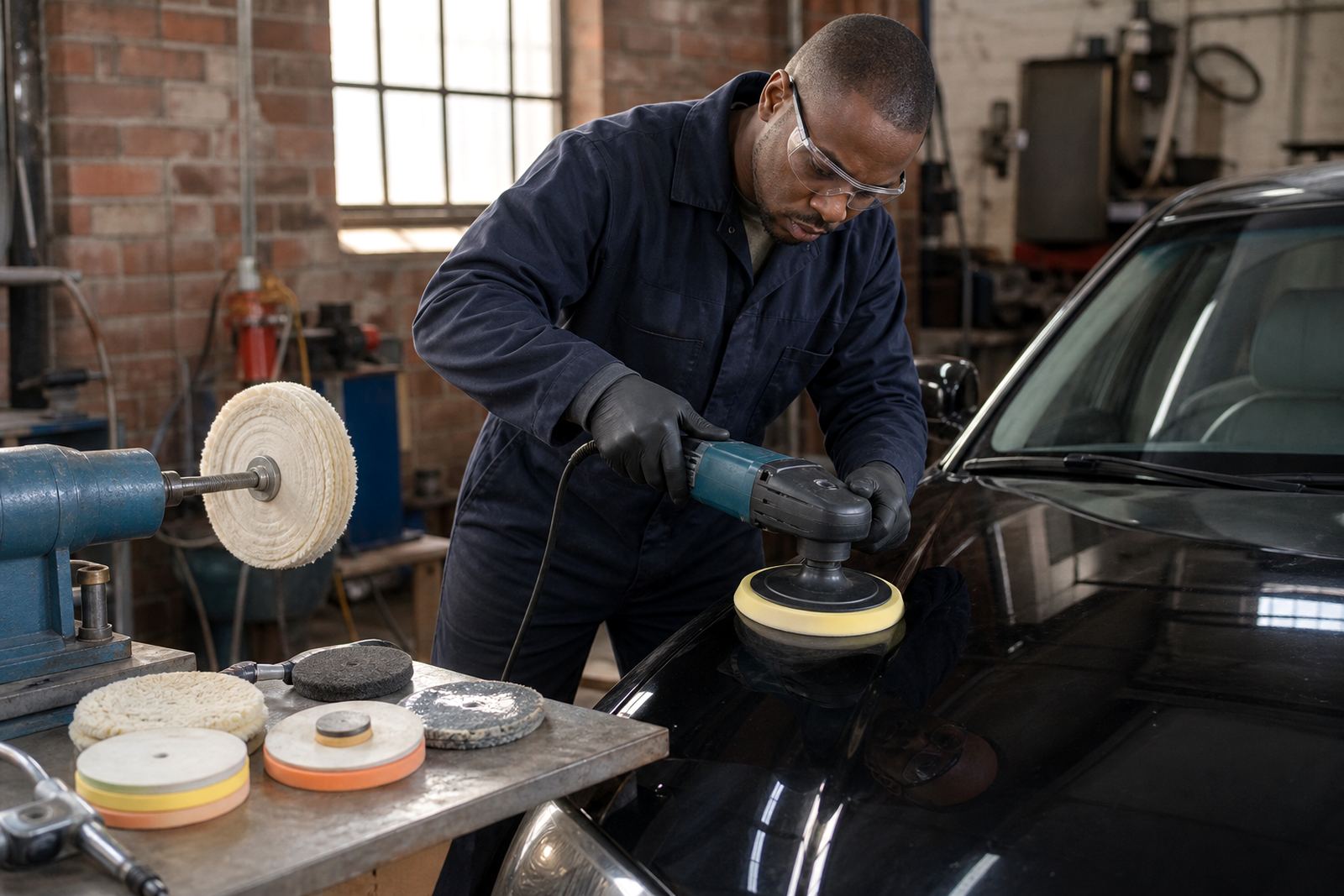
The first step is to match the tool to the surface. A rotary polisher gives direct drive and is suited to heavier correction, metal polishing and cutting back deeper defects when used with care. A dual-action machine moves in a safer orbiting pattern, which is useful for paint correction, lighter swirl removal and finishing work where heat control matters.
For painted panels, ask whether you are correcting oxidation, sanding marks, swirl marks or dull clear coat. For metal, check whether the job is stainless steel, aluminium, chrome or another alloy, because the surface hardness and heat response will change the pad and compound choice. On coastal vehicles and outdoor metalwork, salt and humidity can leave stubborn staining, so a proper clean before polishing matters.
- Use rotary for heavier cut, edge work and metal finishing
- Use dual-action for safer paint correction and final gloss work
- Inspect the surface in good light before choosing your process
Choose the right pad and compound pairing
Pad and compound matching is where many jobs go wrong. A coarse compound on a soft finishing pad may not cut enough, while an aggressive pad can haze a paint surface or leave buff marks on metal. Start with the least aggressive combination that can do the work, then move up only if needed.
Foam pads are common for paint finishing and final gloss work. Microfibre pads can increase cut on some jobs, while wool and stitched buffs are often used on metal polishing and cutting back heavier oxidation. Compounds are usually chosen by cut level, from heavier cutting compounds to medium polish and finishing polish. If you are unsure, test on a small section first and check the result under strong light.
- Heavy cut for deep defects, sanding marks or neglected surfaces
- Medium cut for general correction and reducing haze
- Finishing polish for gloss, clarity and final refinement
Follow a safe polishing sequence
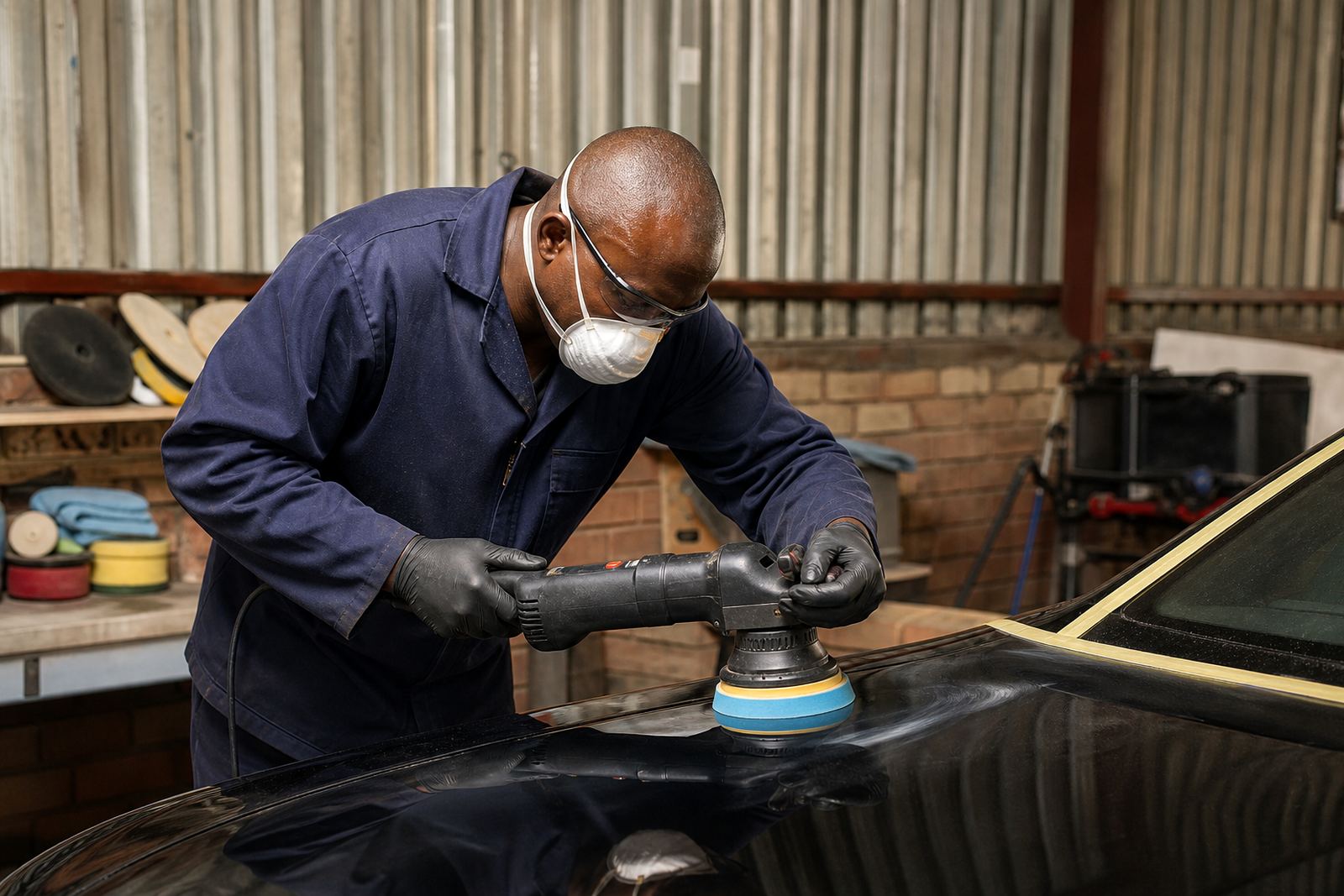
A clean, steady method gives better results than chasing speed. Wash and decontaminate the surface first, then dry it fully. Mask rubber trims, sharp edges and sensitive areas. Apply compound sparingly, keep the pad flat where possible and work small sections at a time. Too much pressure or too much product can make the machine labour and overheat the panel.
For paint, use controlled passes and wipe off residue before checking progress. For metal, keep the buff moving so you do not create hot spots or drag contamination back into the surface. If the job is in a workshop with dust, make sure the area is swept and free of loose grit. Dust and residue can scratch a fresh finish in one pass if you are not careful.
- Clean, dry and inspect the surface before starting
- Work in small sections and check results often
- Keep the machine moving to avoid heat build up
Use PPE and control dust around the job
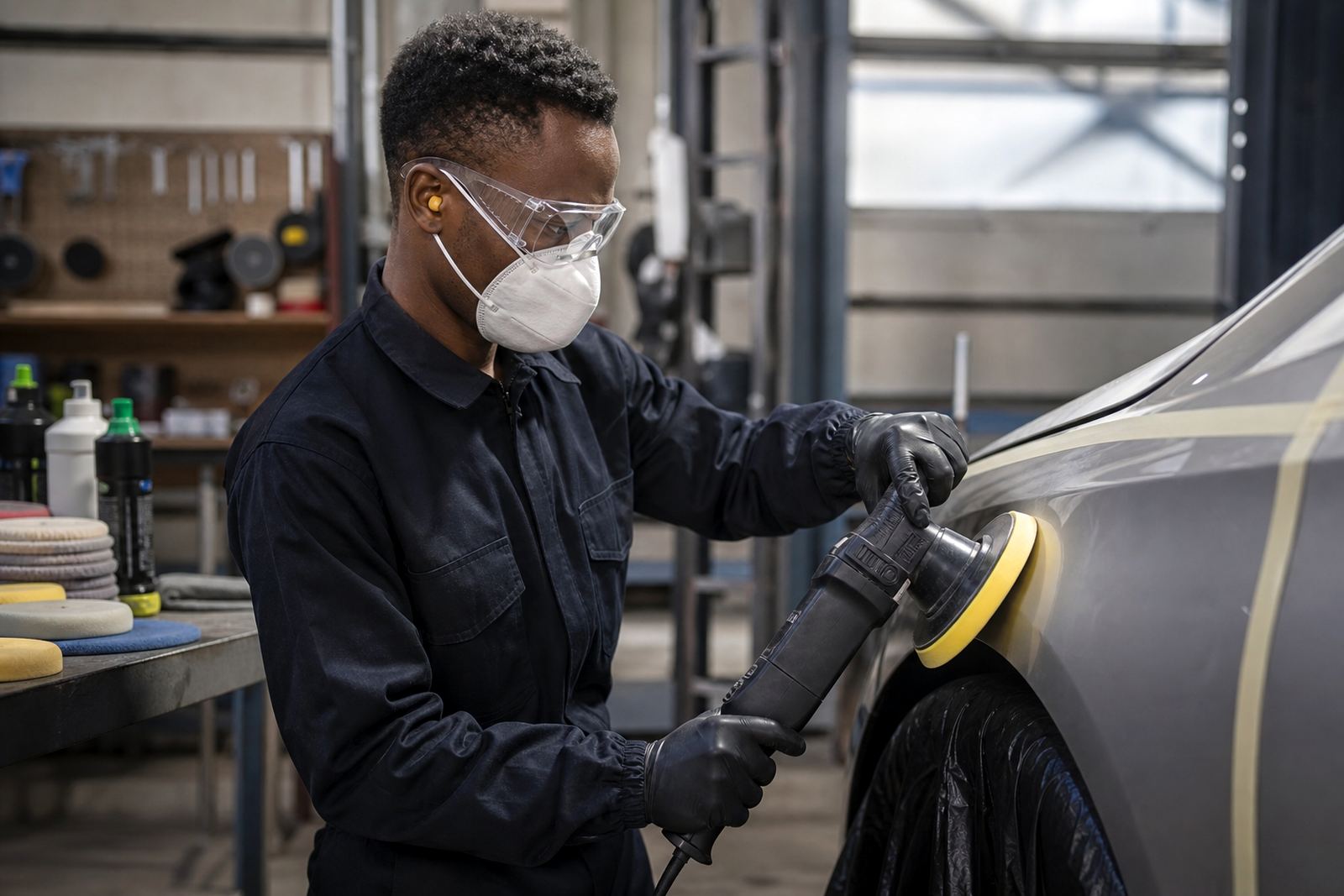
Polishing creates residue, fine dust and in some cases airborne particles from old coatings or metal oxidation. Wear suitable PPE, including eye protection, a dust mask or respirator where needed, and gloves that still allow a firm grip. Hearing protection is also sensible during longer machine sessions, especially in enclosed workshops.
When working on older paint or metal, avoid dry sanding or aggressive dry buffing unless you know the surface condition. If there is any risk of old coating dust, treat it with care and clean the area properly. In busy Gauteng workshops, a simple routine of vacuuming, wiping down and keeping compounds sealed goes a long way. It also helps to work with proper lighting so you can spot swirl marks before they become a bigger issue.
Pick the right support for beginners and teams
Some customers need a product recommendation, while others need a process they can repeat in the workshop. Beginner Polishing Training, Rotary Skills Session, DA Skills Session and Metal Buffing Training help users build confidence with machine control, pad choice and working pressure. Paint Correction Coaching and Pad And Compound Matching are useful when the finish is not responding as expected.
We also assist with Starter Kit Consultation, Workshop Setup Advice, Consumables Restocking, Machine Care Guidance, Onsite Team Demo and Safety And PPE Briefing. If your crew works across different shifts or sites, a standard method keeps results more consistent. That matters for body shops, detailers, panel beaters and metal finishers who need predictable outcomes from Germiston to Cape Town.
- Ask for help if the finish is hazing, burning or not improving
- Use training to standardise work across a team
- Set up a starter kit around the surfaces you handle most often
How to get the right recommendation from us
When you enquire through the contact page form, include the material you are working on, the defects you want to remove, the machine type you already use and whether the work is for metal or automotive paint. Mention if the job is for a home garage, workshop or mobile setup, because power supply and space affect the choice of machine and accessories.
Polisher supplies customers across South Africa from Germiston, including Johannesburg, Pretoria, Cape Town, Durban and Bloemfontein, with support for local workshop needs in the East Rand and Vaal Triangle too. Mandla Sipho Dlamini leads the business, with Karen van Wyk, Thabo Ngwenya, Ayesha Mokgatle, Johan Liebenberg and Lerato Hartnick supporting sales, technical advice, training, workshop work and customer care. If you want the right setup the first time, ask before you start cutting, buffing or finishing.