Tell Us What You Want to Learn
If you are working on stainless steel, aluminium, painted panels or mixed workshop jobs, the first step is to tell us what finish you are trying to achieve and what equipment you already have. A rotary polisher, dual-action machine, foam pad, wool buff and the right compound all behave differently, so the training needs to match the job and the operator. We work from Germiston, Gauteng and support customers in Johannesburg, Pretoria, Cape Town, Durban, Bloemfontein, the East Rand and the Vaal Triangle.
When you send an enquiry, include the material, the surface condition, the size of the job and whether the work is for a small workshop, a detailing bay or a home garage. That helps us advise on speed control, pad selection, cut level and finish steps without wasting time or consumables.
- Beginner Polishing Training for first-time users
- Rotary Skills Session for controlled cutting and finishing
- DA Skills Session for safer correction on paintwork
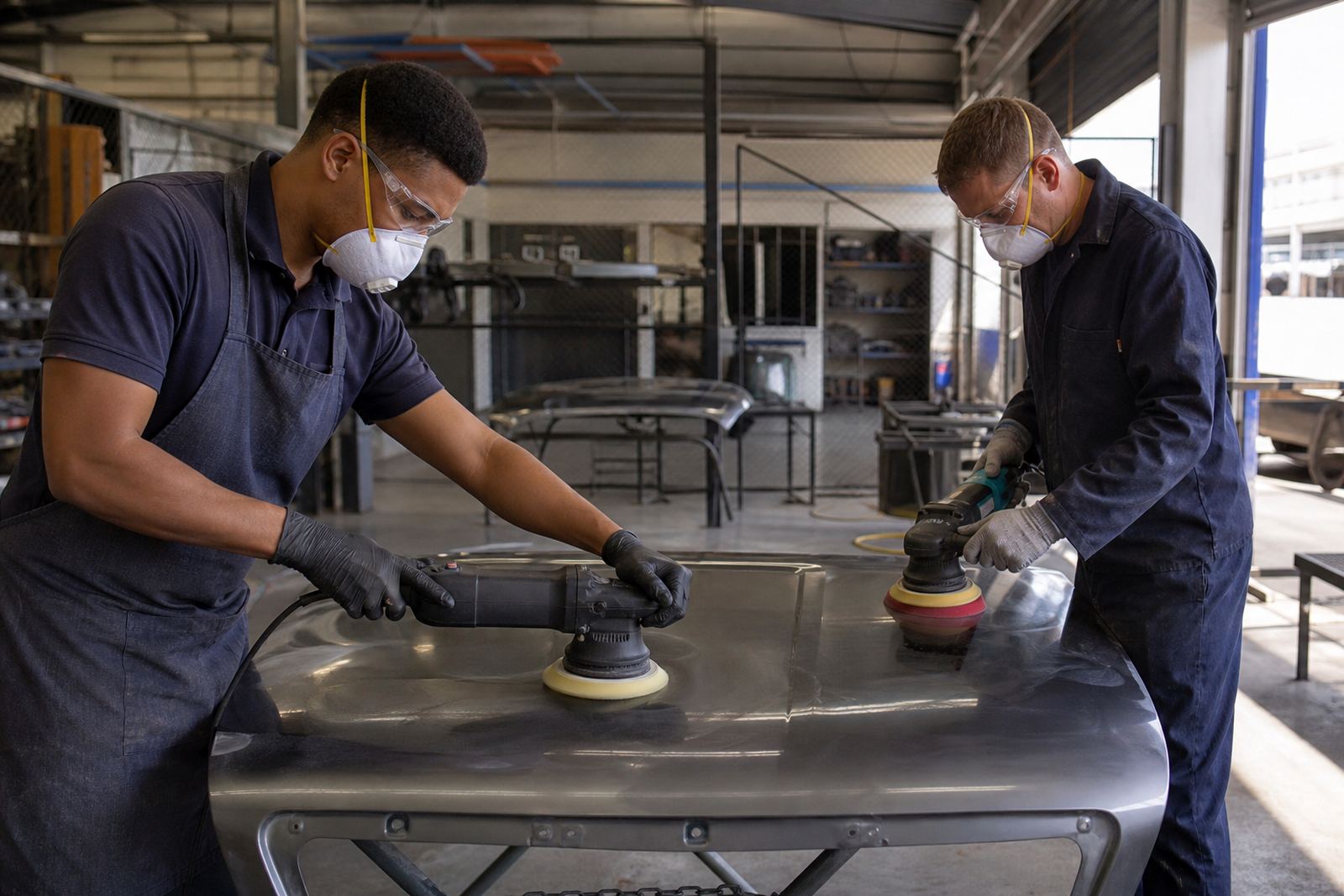
- Metal Buffing Training for stainless, mild steel and aluminium
How Our Support Process Works
Our support process is practical and straightforward. First we look at your enquiry and the work you want to do. Then we suggest the right training path, starter kit options, or a team demonstration if you need help on your own site. For many customers the issue is not just the machine, but the order of the process, the heat build-up and how to read the surface as you work.
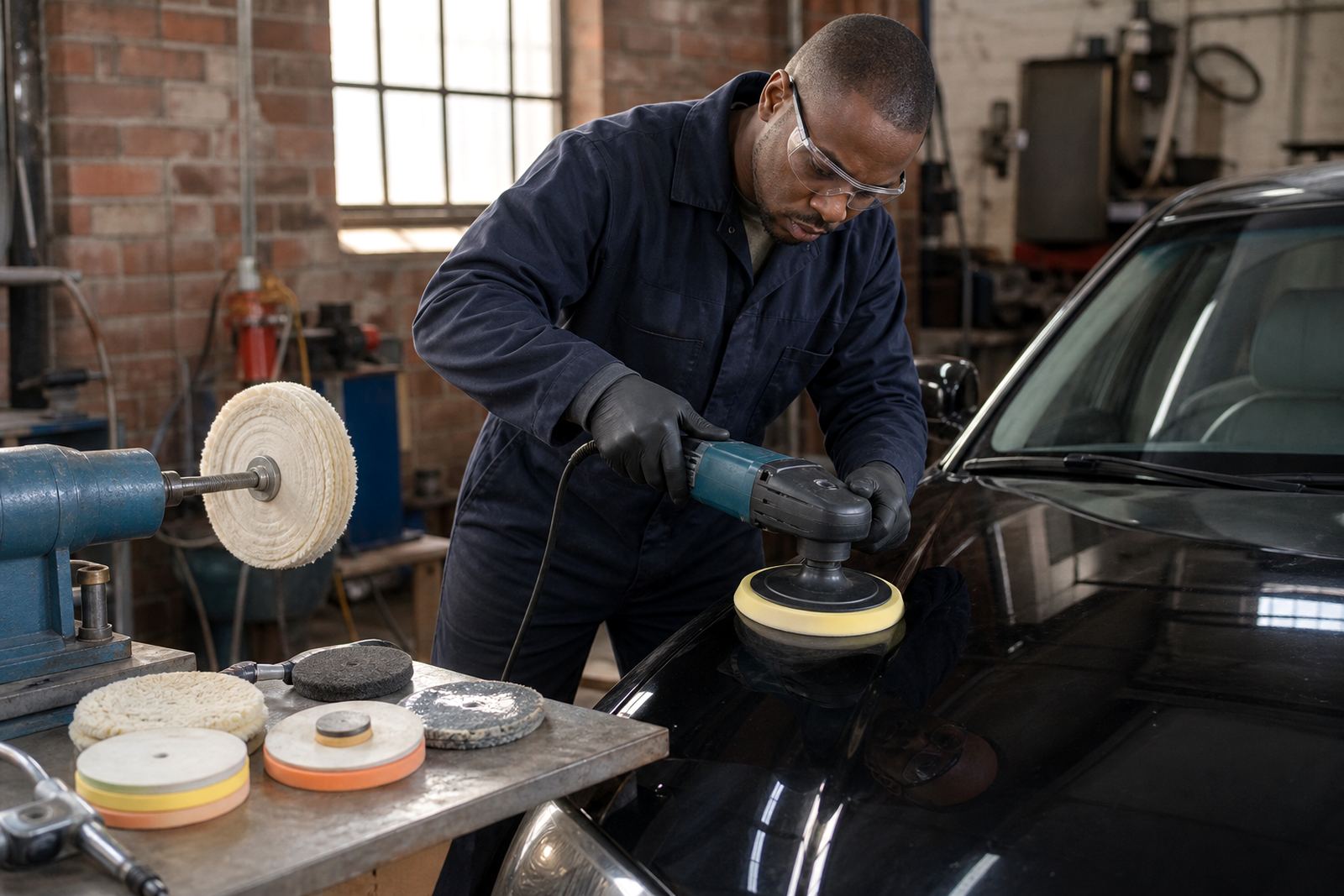
For car paint, correction usually starts with proper wash and decontamination, followed by testing on a small section before you go across the whole panel. For metal, good polishing begins with clean edges, the right compound and steady movement so you do not create swirl marks or uneven shine. We can also talk through machine care, backing plate selection and how to avoid overloading pads with residue.
- Step 1: Submit the enquiry form with your job details
- Step 2: We review your needs and suggest a training route
- Step 3: You receive guidance on tools, pads, compounds and PPE
- Step 4: Training or demo is arranged for your workshop or team
Training Options For Workshops And Individuals
Training is available for beginners and for teams that already do polishing but need better control and consistency. We cover rotary technique, dual-action movement, pad priming, compound loading, pressure control and finishing passes. For metal finishing, we also cover buffing sequence, edge handling and how to keep a bright finish on curves and corners.
We can also help with workshop setup advice, including how to arrange a polishing bay, where to keep consumables and how to manage dust and residue. On site demonstrations are useful for teams that need the same process across multiple operators, because one person pressing too hard can leave marks that the next person has to remove.
- Paint correction coaching for body panels and clear coat work
- Pad and compound matching for cut, polish and finish stages
- Machine care guidance for cords, pads and backing plates
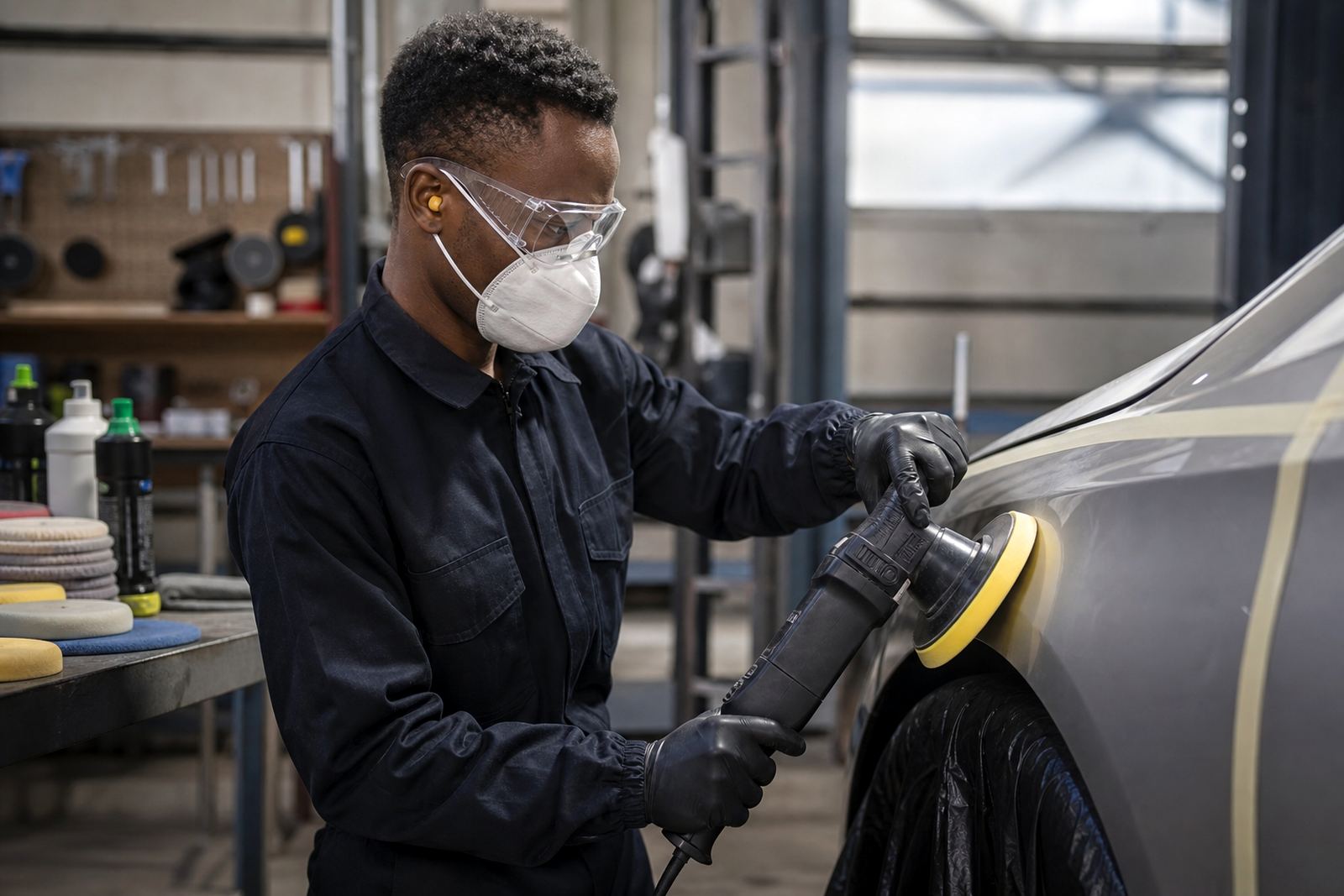
- Safety and PPE briefing for eye, hand and respiratory protection
Starter Kits That Match Real Work
If you are starting out, a good starter kit should be simple enough to learn on, but useful enough for proper work. We help customers choose between rotary and dual-action machines depending on skill level and the finish required. A dual-action machine is often easier for new users on paint, while a rotary tool gives more direct cutting power for certain metal jobs when used correctly. The choice of compound and buff matters just as much as the machine, because the wrong combination can leave haze, trails or overheating.
We also advise on consumables restocking so you do not run short halfway through a job. In coastal areas like Durban and Cape Town, humidity and airborne moisture can affect how products behave and how long a finish stays clean. In Gauteng workshops, dust control matters more than most people expect, so keep the surface clean and wipe down between stages. That simple step can make a big difference, it is often where poor results start.
PPE, Dust Control And Safe Working Habits
Polishing is not only about shine. Safe work habits protect the operator, the panel and the people around the job. Wear eye protection, gloves where suitable, and a dust mask or respirator when compound residue or metal dust is present. Keep loose clothing, cords and hair clear of rotating parts. If you are working on painted surfaces, check edges and body lines carefully because heat builds quickly on thin areas.
For metal finishing, use controlled pressure and keep the buff moving so you do not burn the surface. For paint, test a small spot first and inspect under good light before continuing. If your workshop handles multiple vehicles or fabrication items, set up a clean and dirty area so dust and residue do not travel back onto finished work.
- Use proper eye and respiratory protection
- Keep pads clean and replace worn consumables
- Work in sections to manage heat and residue
- Check the surface under strong light between stages
Book A Demonstration Or Ask For Advice
If you would rather see the process done before you buy or train a team, ask for an onsite team demo or a guided support session. We work with customers across South Africa through the enquiry form on our contact page, and we keep the advice practical: what machine to use, which pad to fit, how much compound to apply and how to finish without chasing marks around the panel. Mandla Sipho Dlamini leads the business from Germiston, with support from Karen van Wyk, Thabo Ngwenya, Ayesha Mokgatle, Johan Liebenberg and Lerato Hartnick.
Use this page when you need a clear starting point, whether you are polishing a customer car, restoring metal parts, or setting up a new polishing routine for your team. Good technique builds confidence, and the right advice can save material, time and a lot of frustration.