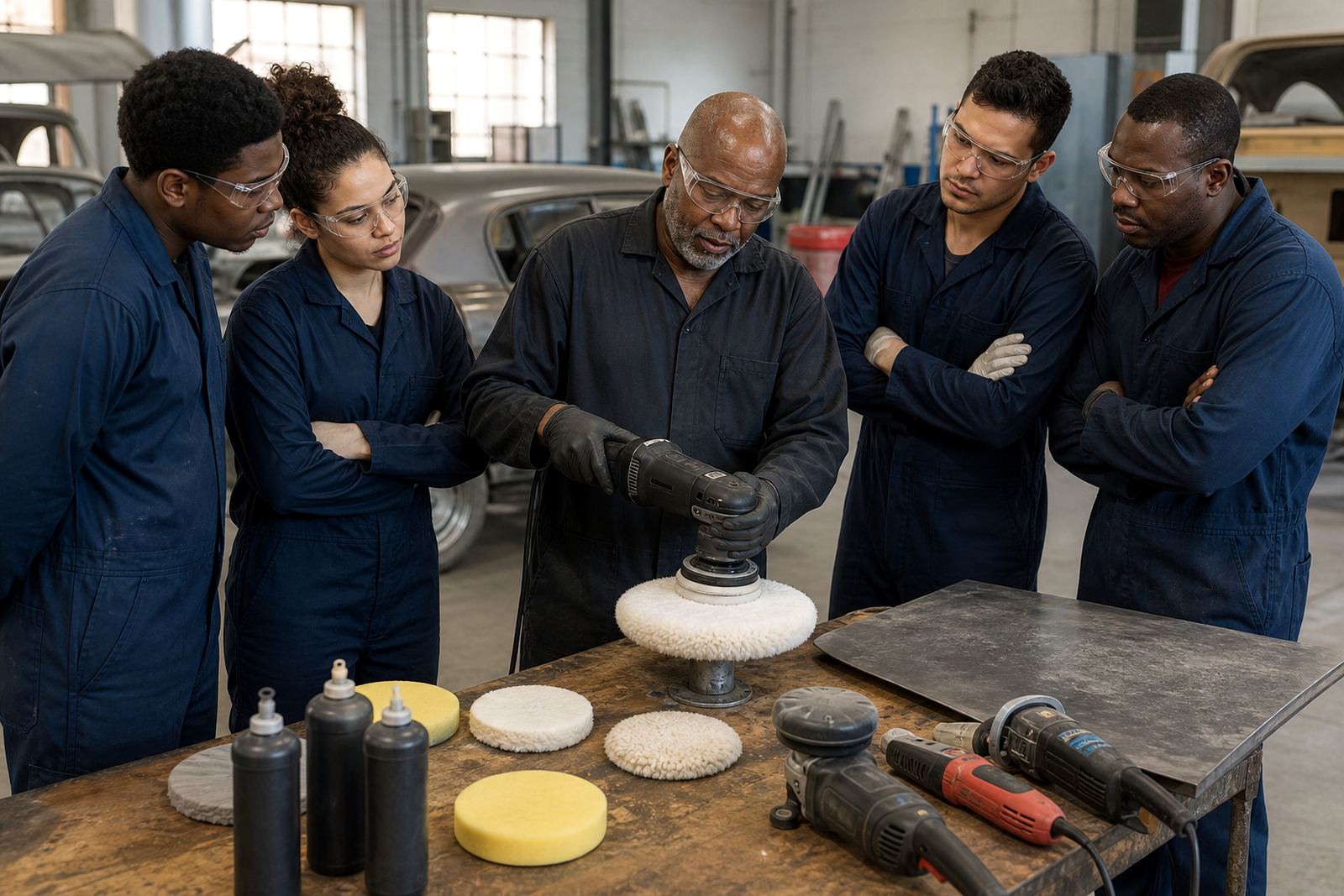
What the DA Skills Session Covers
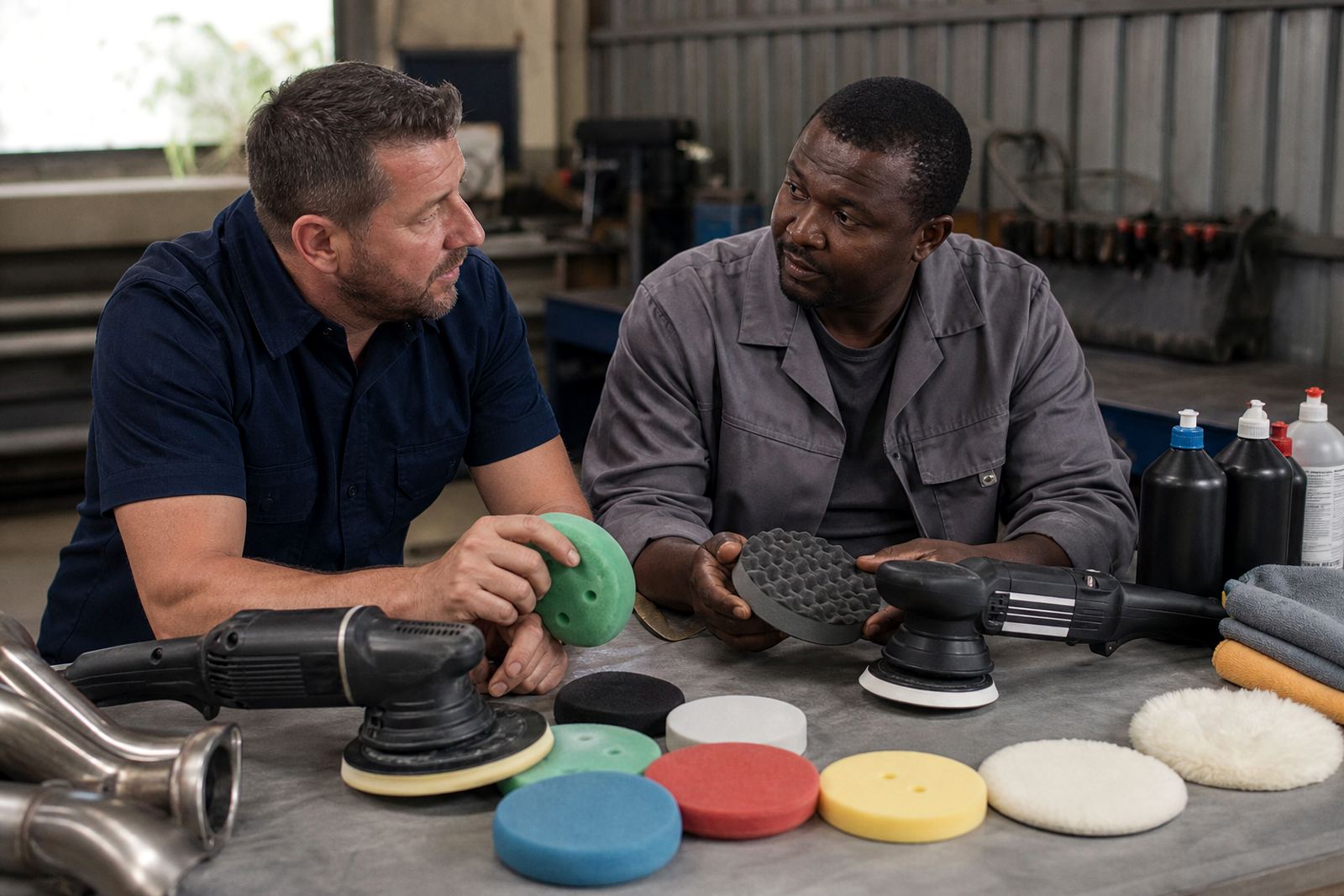
This session is built for people who want better control with a dual-action machine, whether you are working on a car bonnet, bumper, door panel or polished metal trim. We cover the basic setup, pad choice, compound selection and movement patterns that help reduce haze, buffer trails and uneven gloss. The focus is on practical technique, not theory for the sake of it, so you leave knowing what to do on your own machine.
We also talk through common problems seen in workshops and home garages around Germiston, Johannesburg and Pretoria, especially where dust, heat and limited space make finishing harder. If you are new to polishing or have used a machine before but not had consistent results, this session helps you build confidence without rushing the process.
- Machine handling and balance
- Pad and compound matching for paint or metal
- Working section size and overlap control
- Inspecting finish under different light
- Cleaning pads during the job
- Safe storage and machine care after use
Typical Dual-Action Specs We Work With
We train on the kind of DA polishers commonly used for car finishing and lighter metal work. A dual-action machine usually has an orbit between 8 mm and 15 mm, with backing plates around 125 mm for general panel work and smaller plates for tighter areas. Variable speed control matters because you often need lower speed for spreading product and a steadier working speed for correction.
In the session we explain how to read pad behaviour, especially on soft clear coat, harder finishes and textured metal surfaces. You will learn how much pressure to apply, when to reduce speed, and how to stop the machine from loading up with compound. On hot days in Gauteng or coastal humidity in Durban and Cape Town, these adjustments can make a noticeable difference to finish quality.
- Orbit size: usually 8 mm to 15 mm
- Backing plate sizes: commonly 75 mm, 125 mm and 150 mm
- Speed range: variable, with low and medium settings used most often
- Pad types: foam, microfibre and wool depending on the job
- Use case: paint correction, finishing, light oxidation removal and refining metal polish
How The Polishing Job Proceeds
We begin with an assessment of the surface and the tools you already have. That includes checking the machine, pads, compounds, extension leads where needed and the condition of the panel or item you want to work on. From there we show you how to prime a pad, test on a small area, and adjust the process before touching the full surface.
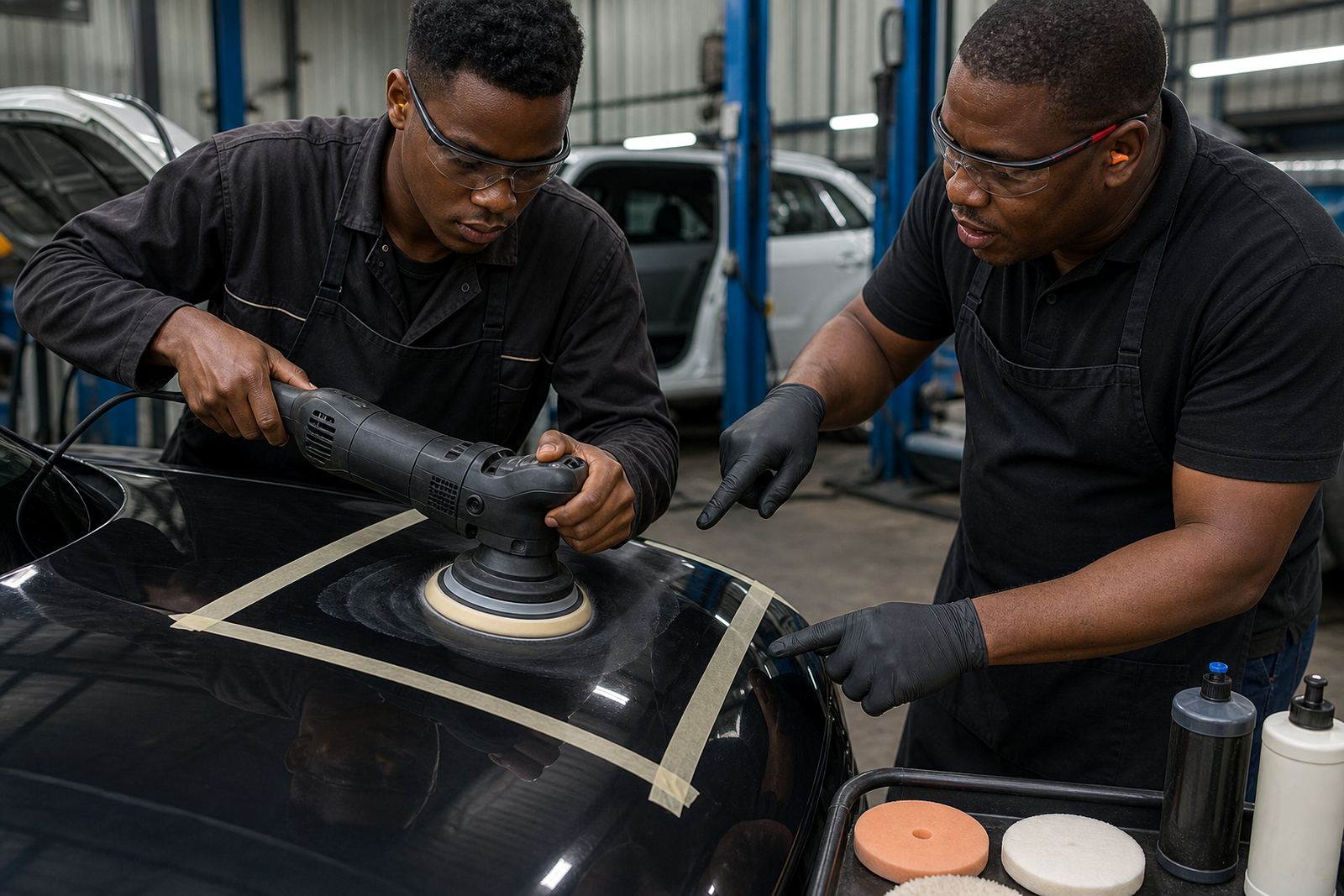
After the initial demonstration, you do the work under guidance so you can feel the difference between correct movement and poor technique. We cover slow, overlapping passes, keeping the pad flat where possible, and avoiding dry buffing. If you are polishing near body lines, badges or sharp corners, we show how to back off and protect those areas rather than chase a quick shine and risk damage.
- Surface check and tool inspection
- Pad priming and product loading
- Test section and light inspection
- Controlled polishing with supervision
- Refinement and finishing pass
- Clean-down and post-session advice
What Is Included in the Training
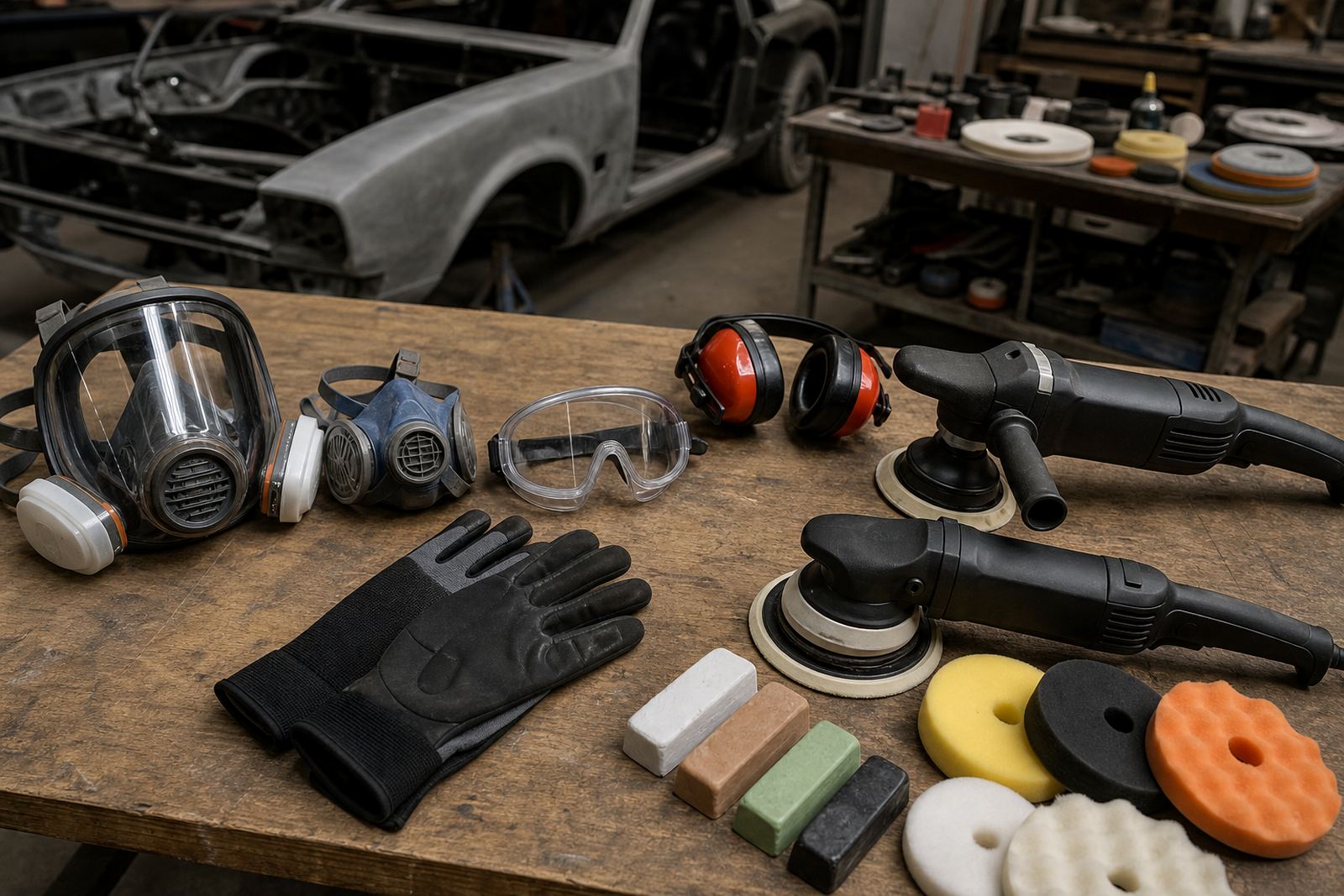
The DA Skills Session is hands-on and practical. You get direct coaching on the polishing method, pad handling and compound use, plus clear advice on when to switch pads or reduce product. We also cover dust management, PPE and workspace habits that matter in real workshops, especially where grinding residue, brake dust or sanding marks may already be present.
For those setting up a small workshop or detailing bay, we can talk through starter kit choices and daily care routines. That includes how to clean pads between stages, when to replace worn backing plates, and how to keep the machine running smoothly in ordinary South African conditions. A little routine care goes a long way, and it saves time later on.
- Technique coaching for beginners and newer users
- Pad, compound and surface matching advice
- PPE and dust safety briefing
- Starter kit consultation if needed
- Machine care guidance and cleaning routine
- Support for paint and metal finishing tasks
Pricing Approach and Turnaround
Pricing is based on the scope of the session, the number of people attending, and whether the training is for a single machine or a small team. We quote according to what is needed rather than forcing a fixed format that does not fit the job. If you only need help with pad choice and technique, that is different from a full workshop setup discussion or an onsite team demo.
Turnaround is usually arranged to suit the customer’s schedule, with bookings handled through the enquiry form on our contact page. For clients in Germiston, the East Rand and the Vaal Triangle, in person sessions can often be scheduled efficiently. For teams in Johannesburg, Pretoria, Cape Town, Durban or Bloemfontein, we plan according to the location, number of attendees and the work to be covered.
Service Intervals And Continued Support
Dual-action machines do best with regular care. We advise checking the pad condition during each session, cleaning the backing plate and vents after use, and inspecting the power lead, trigger and hook-and-loop face on a routine basis. If the machine is used often, a quick check before each job and a more thorough clean every few weeks is sensible.
Compounds and pads should also be rotated according to the work being done. A finishing pad that is clogged with residue will not cut or refine properly, and an overworked pad can leave marks that take longer to remove. We guide you on when to wash, when to replace, and when to keep a pad aside for a different stage. That sort of practical habit helps keep finish quality consistent and avoids unnecessary rework.
- Check pads before and after each job
- Inspect machine body and cable regularly
- Clean vents and backing plate area after use
- Replace worn pads when cut or finish drops off
- Store compounds sealed and away from heat
Key facts
| Session type | Hands-on DA polishing coaching |
|---|---|
| Surface focus | Paint correction and metal finishing |
| Machine range | Dual-action polishers with variable speed control |
| Typical pad sizes | 75 mm, 125 mm and 150 mm backing systems |
| Safety focus | PPE, dust control and safe handling |
| Service area | Germiston and nationwide across South Africa |