
What the Safety Briefing Covers
This service gives you a practical walkthrough of the risks that come with rotary and dual-action polishing, buffing and compound use. We look at eye protection, hearing protection, respiratory safety, gloves, clothing, dust extraction and the basic layout of a clean working area. The point is to reduce avoidable injury, protect the finish on the job and keep the workshop orderly enough for repeatable results.
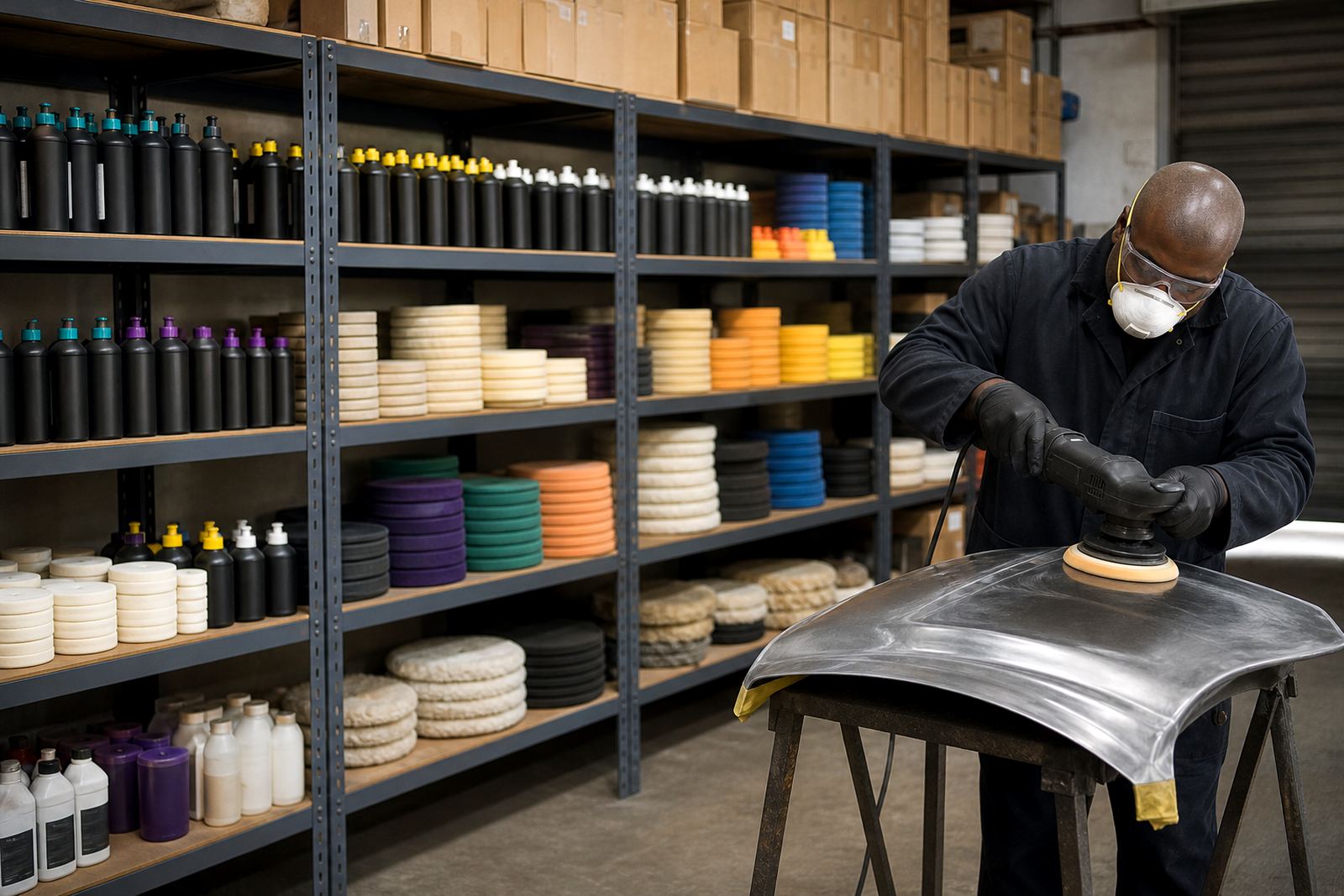
We also cover the differences between metal polishing and paint polishing. Metal work can throw off fine residue, sharp edges and heat, while paint correction can create airborne dust from old paint, polish residue and pad breakdown. In a South African workshop, this matters just as much in a home garage in Pretoria as it does in a production bay in Cape Town or Durban where humidity can affect product behaviour and panel temperature. The briefing is kept practical, not theoretical, so your team knows what to wear, what to avoid and how to set up the area before the machine comes on.
- Eye protection for splash, dust and compound flick-off
- Hearing protection for longer machine sessions
- Respiratory protection where dust or fine residue is present
- Safe clothing, footwear and tie-back rules for loose items
- Workshop cleaning habits that cut slip and contamination risks
How We Run the Briefing in Your Workshop
We start with a short site check. That includes the size of the work area, whether there is natural airflow, what type of extraction or vacuum system is already in place, and where cords, hoses and extension leads are crossing the floor.
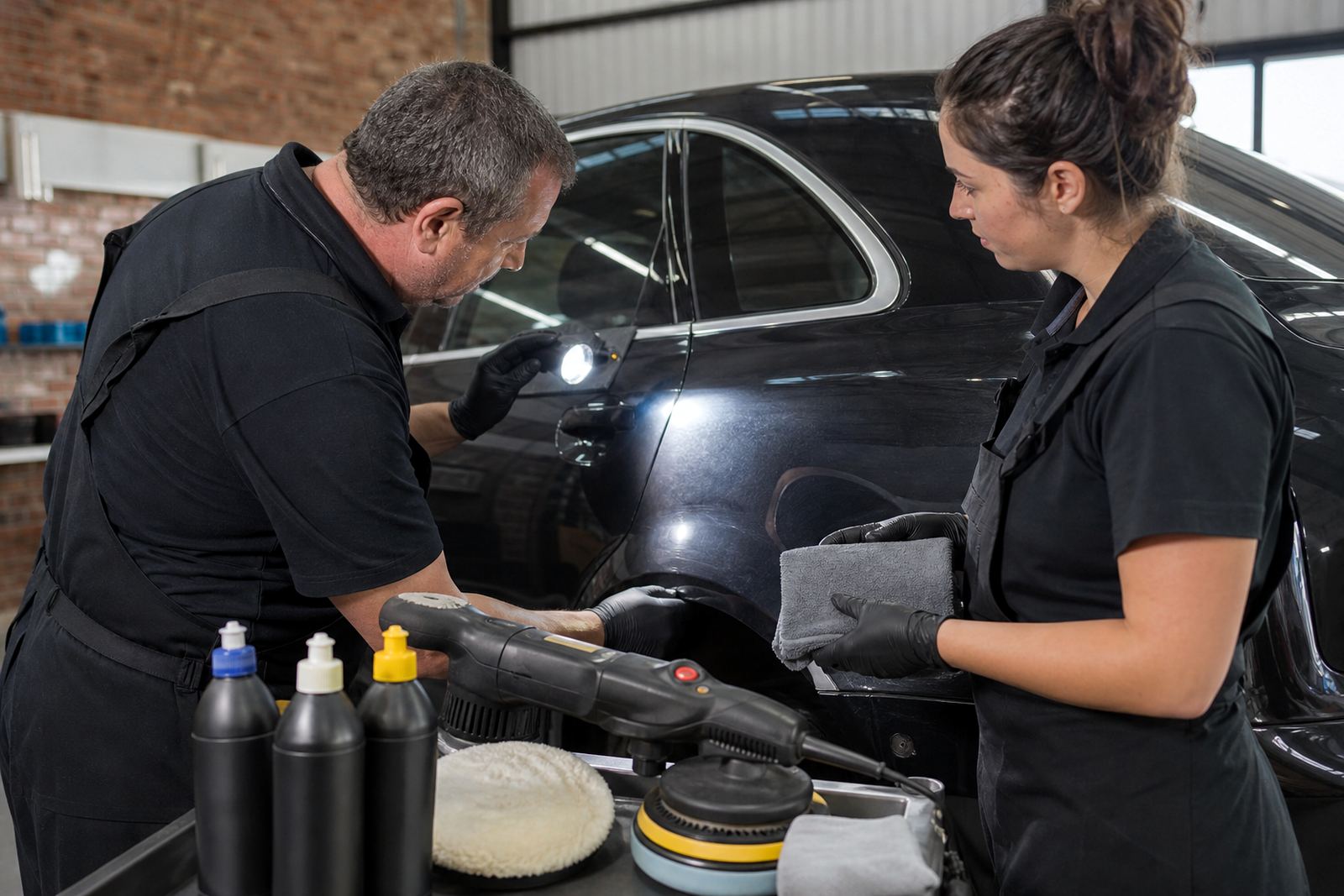
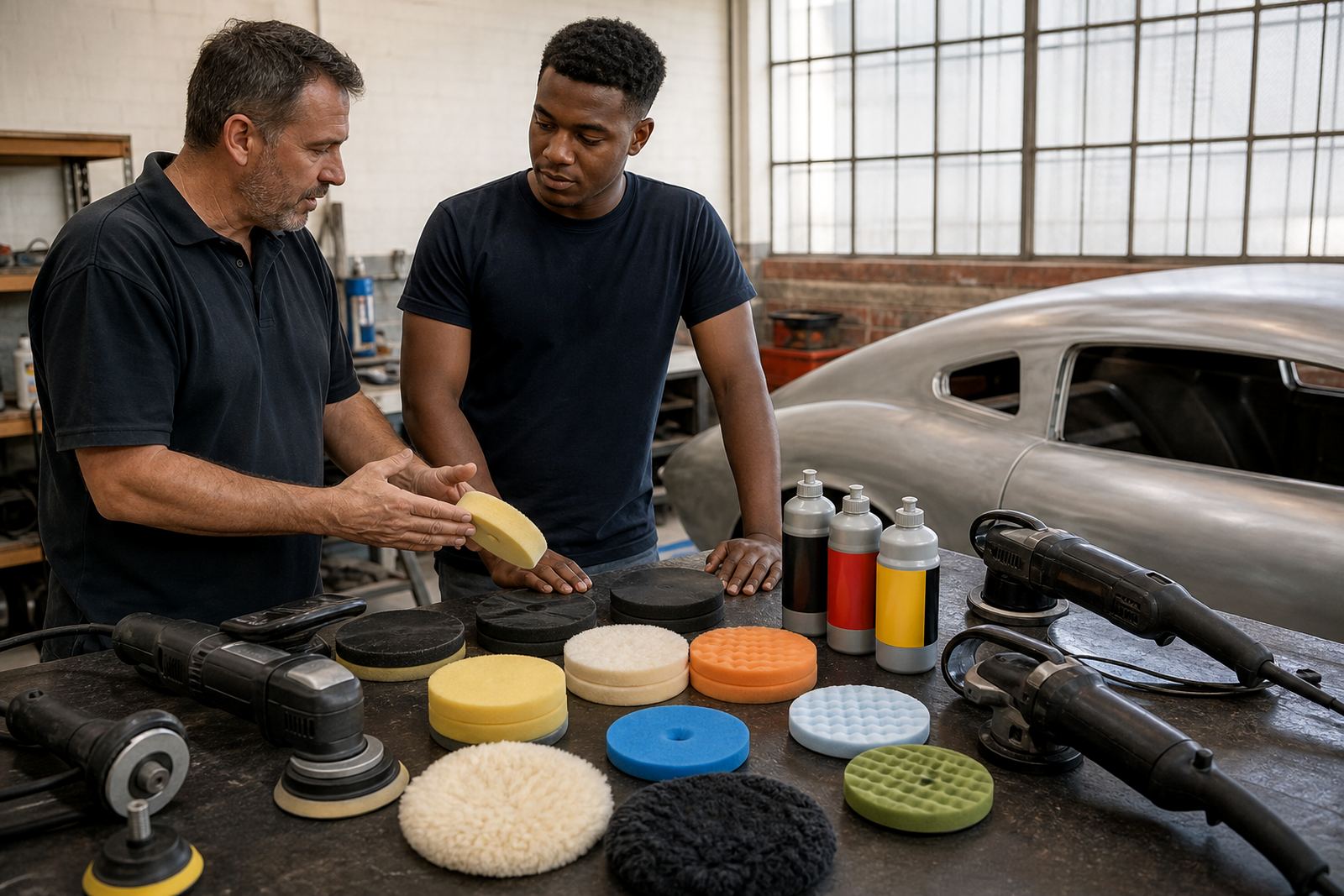
From there we run through the equipment in use, including rotary polishers, dual-action machines, foam pads, wool buffs, microfibre pads and the compounds or finishing polishes that sit in your kit. We explain where dust starts, how to control sling, and why a clean pad on a clean panel gives better control. If your team is working on metal components, we cover heat build-up, edge burn risk and the need to stop and inspect rather than chase a finish too fast. For paint work, we show how to keep abrasives and compounds away from trim, rubbers and fresh repairs.
- Site walk-through and risk points review
- Machine and accessory safety check
- PPE selection based on the task
- Dust and residue control methods
- Operator briefing on safe handling and stopping points
PPE Guidance for Rotary and DA Work
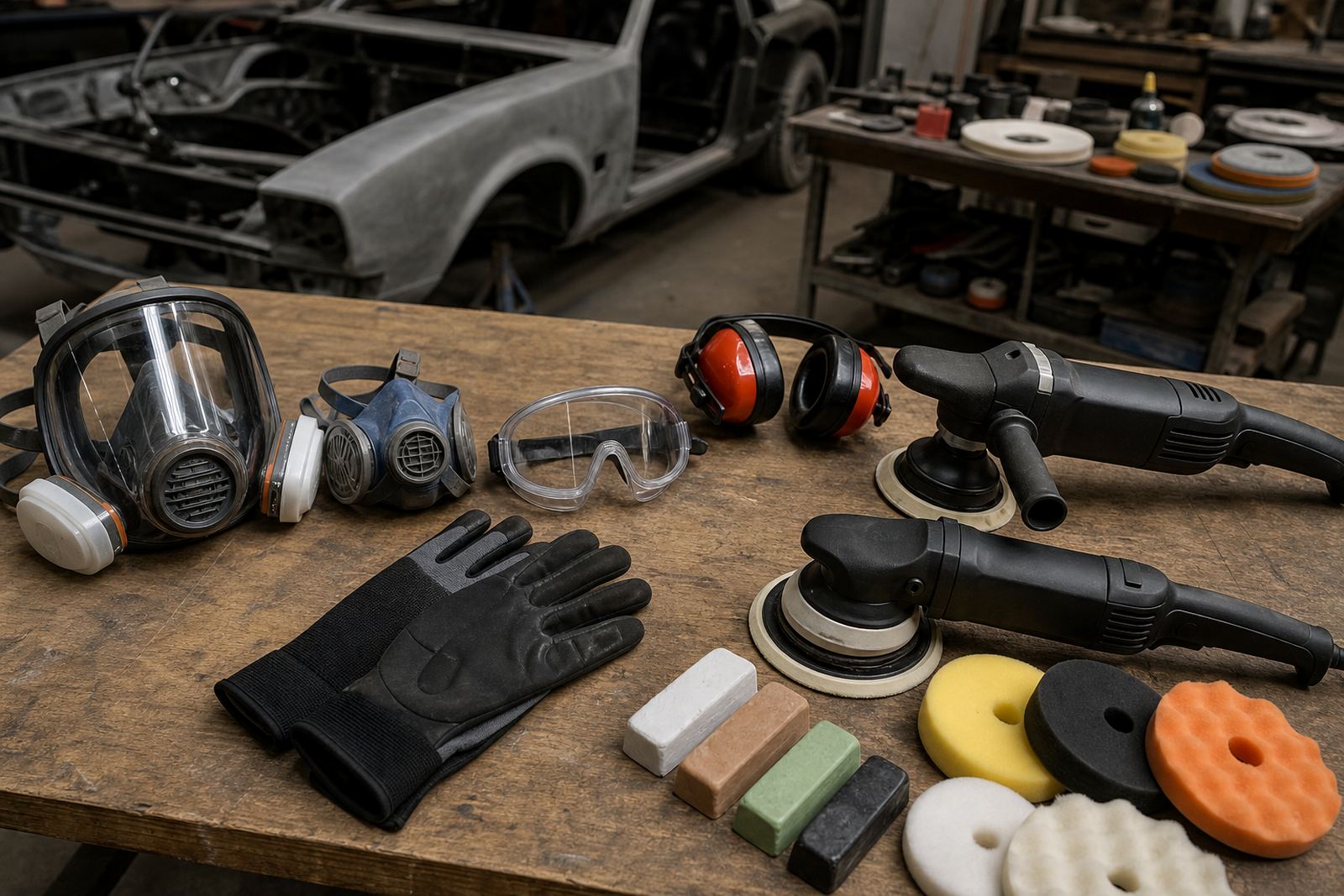
Not every polishing job needs the same protection, so we guide you on the correct level for the task. Rotary work normally throws more residue and can build heat faster, so a face shield or snug-fitting eye protection is often the better choice. Dual-action work is generally more forgiving, but it still creates fine dust and compound mist, especially when working larger panels or using an aggressive pad and compound combination. Hearing protection becomes more important during longer sessions, in enclosed workshops or where compressors and extractors are running at the same time.
We also cover respirator selection in plain terms. If the job involves heavy dust, dry residue, old coatings or buffing metal that produces fine airborne particles, you need proper respiratory protection and not just a cloth covering. We discuss glove use where appropriate, but we also explain when gloves can reduce feel and increase snag risk around rotating equipment. Good advice is always about the task, not a one-size-fits-all rule.
- Eye protection: clear lenses, side coverage, close fit
- Respiratory protection: suitable for fine dust and polish residue
- Hearing protection: useful for long sessions and enclosed spaces
- Footwear: closed shoes with grip, especially on dusty floors
- Clothing: fitted sleeves, no loose cuffs, no dangling items
Dust Control and General Workshop Safety
Dust control is one of the biggest differences between a tidy polishing area and a problem workshop. We show where dust collects on benches, under stands, around compressors and on corded tools, then how to remove it before it moves back onto the workpiece. For metal finishing, dry residue and spent compound should be cleared often. For paint correction, contaminated pads and cloths should be kept separate so they do not scratch the next panel. In coastal areas like Durban or Cape Town, moisture can make residue stick harder and then smear, so cleaning habits need a bit more attention.
We also cover the basics of a safe polishing bay. That includes keeping chemicals labelled, storing pads and compounds away from direct sun, and keeping water, oily residue and extension leads apart. If your site has municipal rules about waste water, dust disposal or nuisance noise, we help you think through the working setup so it stays practical and within local requirements. The briefing is especially useful where several people share the same bay and one bad habit can affect everyone else.
- Vacuum and wipe-down routine before and after work
- Separate clean pads, used pads and contaminated cloths
- Safe cord routing to reduce trip hazards
- Label storage for compounds, cleaners and accessories
- Noise and waste handling awareness for shared sites
Turnaround, Pricing Approach and Booking
Most briefings can be arranged quickly, depending on the size of the team and whether you need an on-site visit or a guided session at our Germiston base. A single operator briefing is usually shorter, while a team session takes longer because we need to cover the specific tools in your workshop and the way your crew handles panels, masks and cleanup. We do not quote from a fixed menu because every site is different. Pricing is based on the number of people attending, the depth of the safety review and whether the session forms part of broader polishing training.
You can send your enquiry through the contact page and we will reply with the next available slot. If your business is in Johannesburg, Pretoria, Bloemfontein or further afield, we will discuss the most practical format for your location and equipment. There is no need to pause a job for long, but it is best to arrange it before a busy production run so the team is prepared and not guessing on the day.
Follow-Up Checks and Service Intervals
Safety is not a once-off chat. We recommend a short refresh after any change in machine type, pad system, compound range or team member responsibility. A new operator should be checked again after the first few sessions, because habits form quickly and poor habits can creep in around heat, dust and machine control. If your workshop does regular polishing work, a monthly safety refresh is useful. For lighter use, a quarterly review is usually enough, provided the area stays tidy and the PPE is still in good condition.
We also advise regular inspection of pads, cables, extension leads, respirators and hearing protection. Worn face seals, cracked pads, frayed cords and clogged filters should be replaced before they become a problem. In humid areas, respiratory filters and cloth accessories should be stored dry and clean to avoid odour and early wear. The point is to keep the safety setup serviceable so the finishing work can continue without avoidable stoppages.
- New operator review: after first few sessions
- Routine team refresh: monthly for busy workshops
- Lighter-use sites: quarterly check-up
- PPE and cord inspection: before each use
- Filter and respirator check: replace as soon as performance drops
Key facts
| Service type | Safety and PPE briefing for polishing work |
|---|---|
| Focus areas | Eye, hearing and respiratory protection, dust control and workshop safety |
| Suitable for | Metal finishing, car polishing, rotary and dual-action machine users |
| Area covered | Germiston, Johannesburg, Pretoria, Cape Town, Durban and Bloemfontein |
| Format | On-site or arranged briefing with practical walk-through |
| Review interval | After new equipment, new staff, or every month to quarter depending on use |