
What This Matching Session Covers
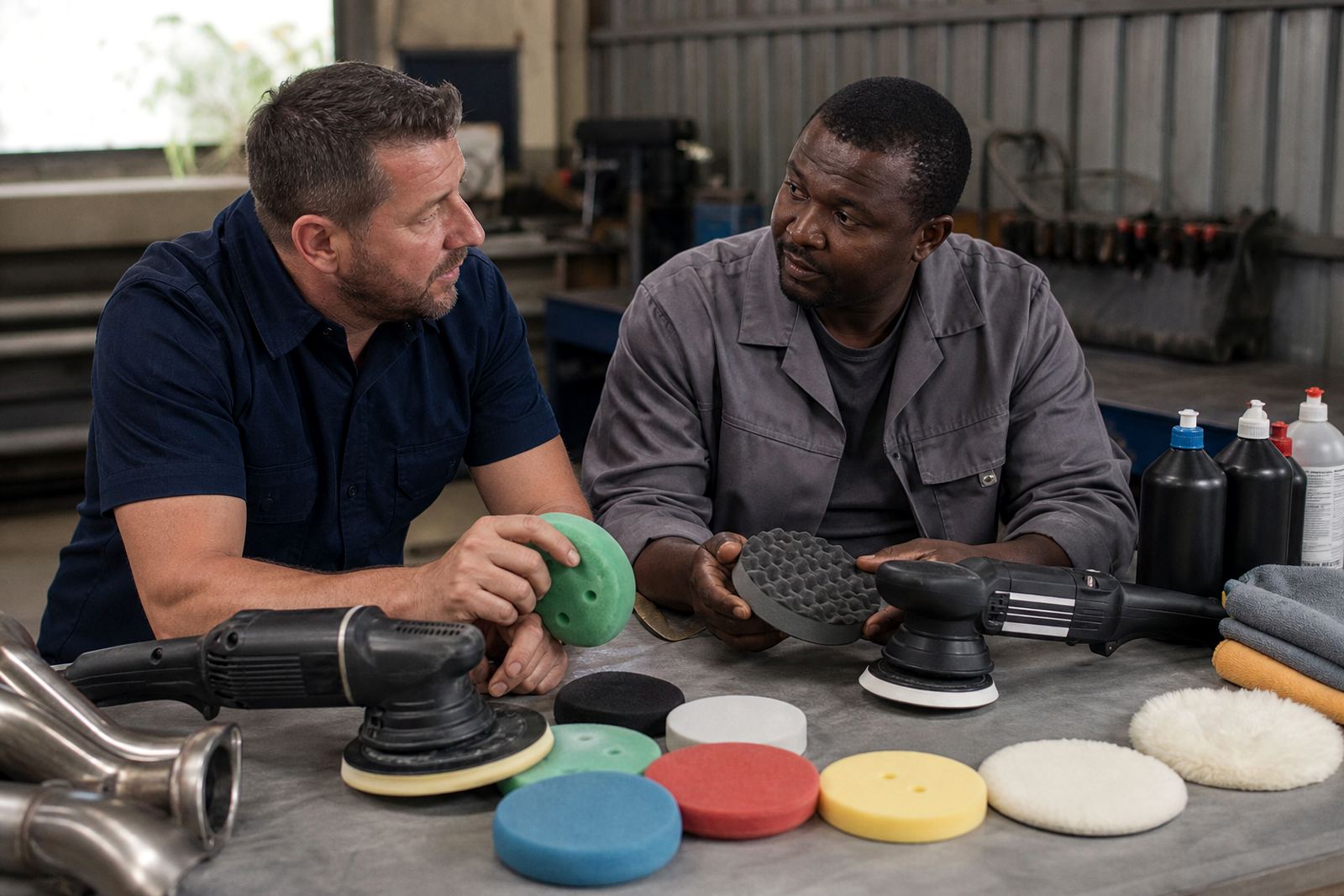
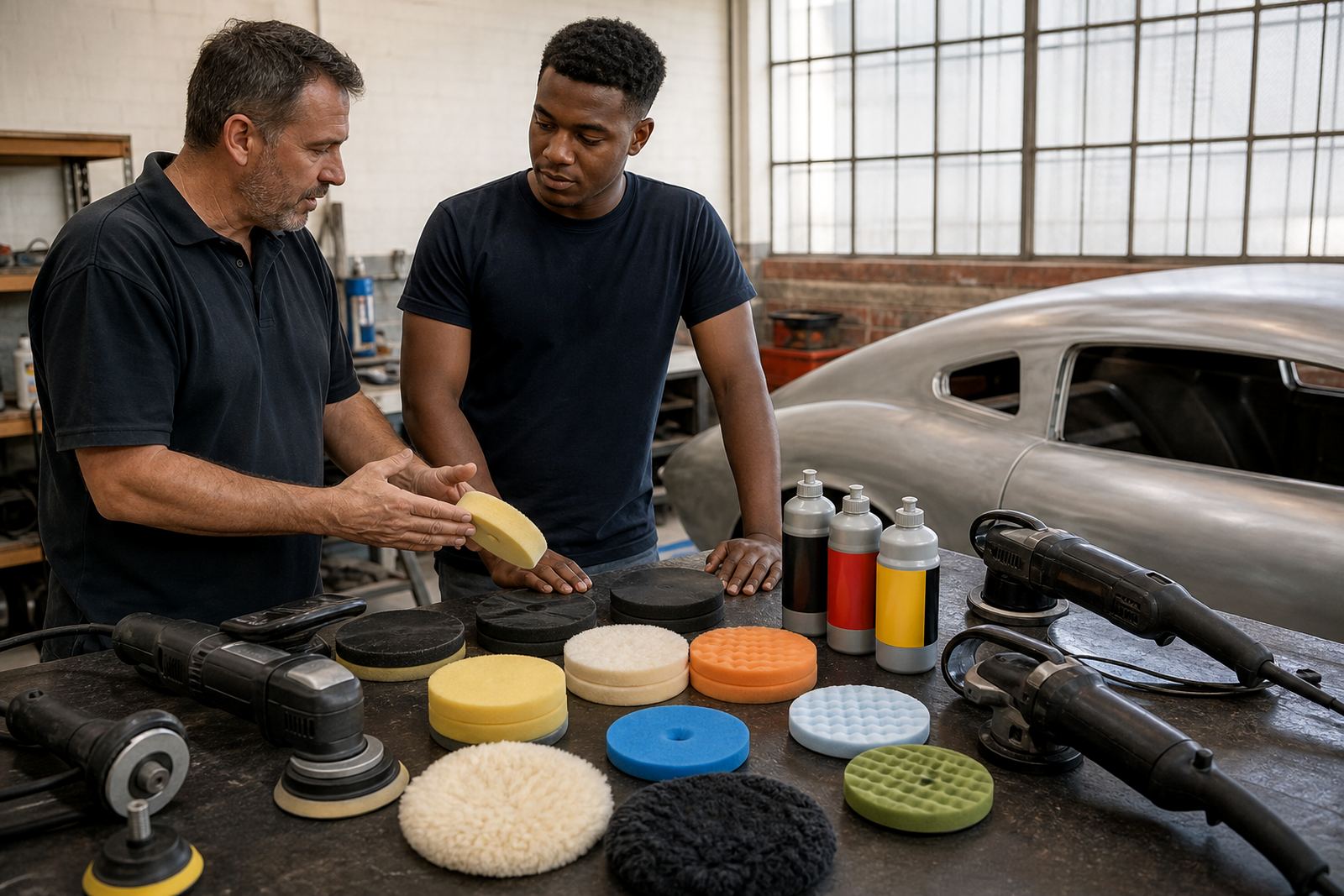
Pad and compound matching is about pairing the right abrasive action with the job at hand. On softer clear coat, a medium foam pad with a fine finishing compound may be enough. On oxidised aluminium, stainless steel or coated panels with heavier marks, a firmer pad or fibre pad with a more aggressive compound may be needed first, then a finer step to refine the surface. We look at the material, the condition of the surface and the machine you are using before recommending a practical setup.
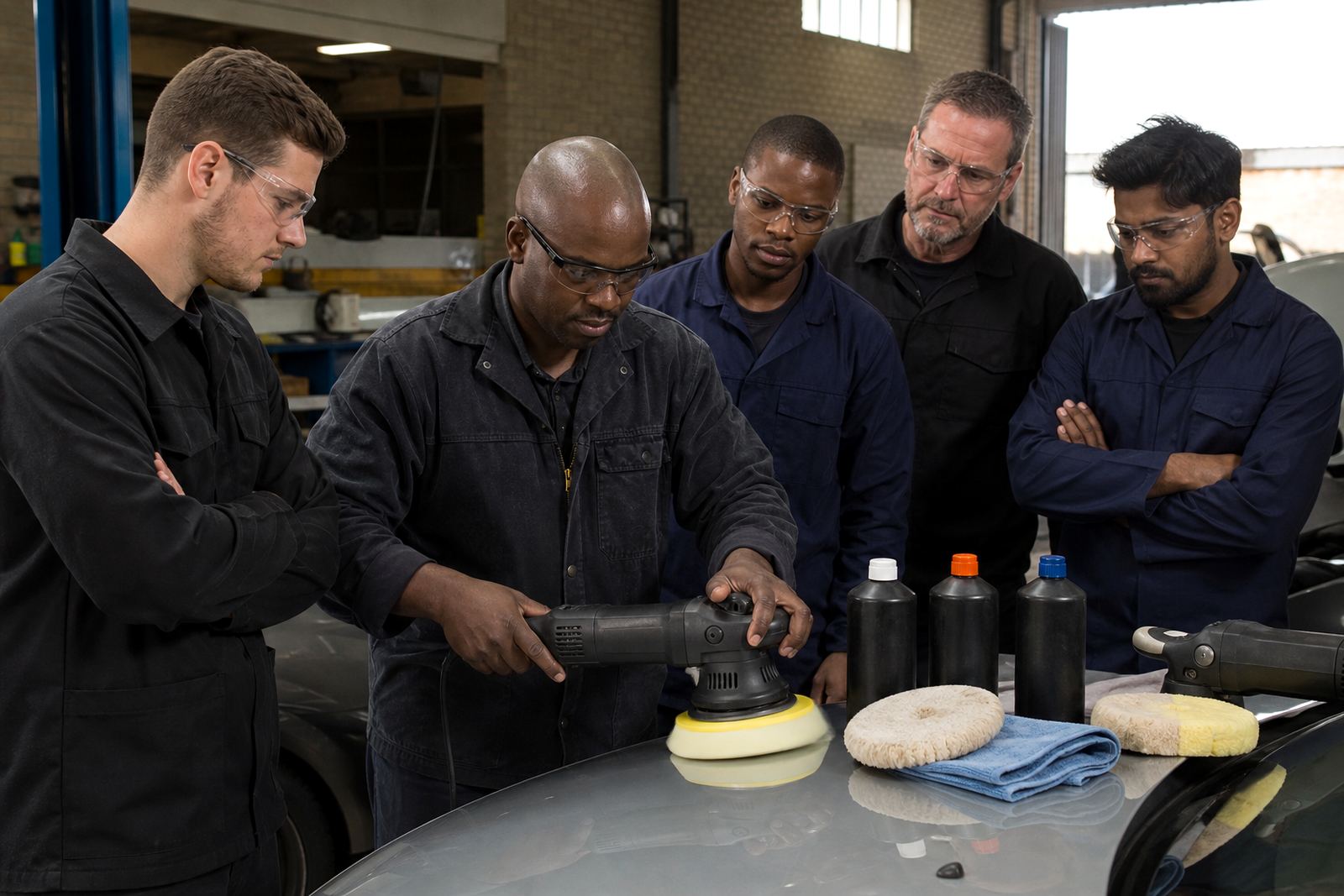
This is a support session for hobby users, detailers and workshop teams who want better control and fewer mistakes. We explain how rotary and dual-action machines behave, how pad size affects heat, and when to slow down, clean the pad or change compound. The goal is a cleaner finish with less wasted product and fewer passes, which matters when you are working in a busy shop or in Gauteng heat where panels can warm up fast.
Included In The Support Session
We work through your current machine, the pads you have on hand and the finish you want to achieve. If you are setting up a starter kit or restocking consumables, we help you choose sensible combinations for paint correction, metal polishing and general finishing work. Advice is based on surface type, defect depth and the amount of material removal required, not guess work.
- Pad density selection for soft, medium and firm applications
- Fibre and foam pad differences for paint, alloy, stainless steel and aluminium
- Compound cut levels from heavy cutting to finishing and jewelling
- Pad diameter selection for 50 mm, 75 mm, 125 mm and 180 mm systems
- Machine speed guidance for rotary and dual-action use
- Cleaning and inspection steps between passes
- PPE and dust control briefing for safe workshop practice
We also discuss how to tell if the pad is loading up, if the compound is too dry, or if you are generating too much heat. Small changes can make a big difference. In some cases the problem is not the compound at all, but a pad that is too soft for the correction needed.
How We Match Pad, Fibre And Compound
The process starts with a surface check. Paint correction usually begins by looking at clear coat thickness, swirl marks, light scratches and previous polishing trails. Metal finishing is different, because oxidation, sanding marks and colour changes from heat can affect your choice. From there, we select the pad material and compound cut in stages, starting with the least aggressive option that can still do the job.
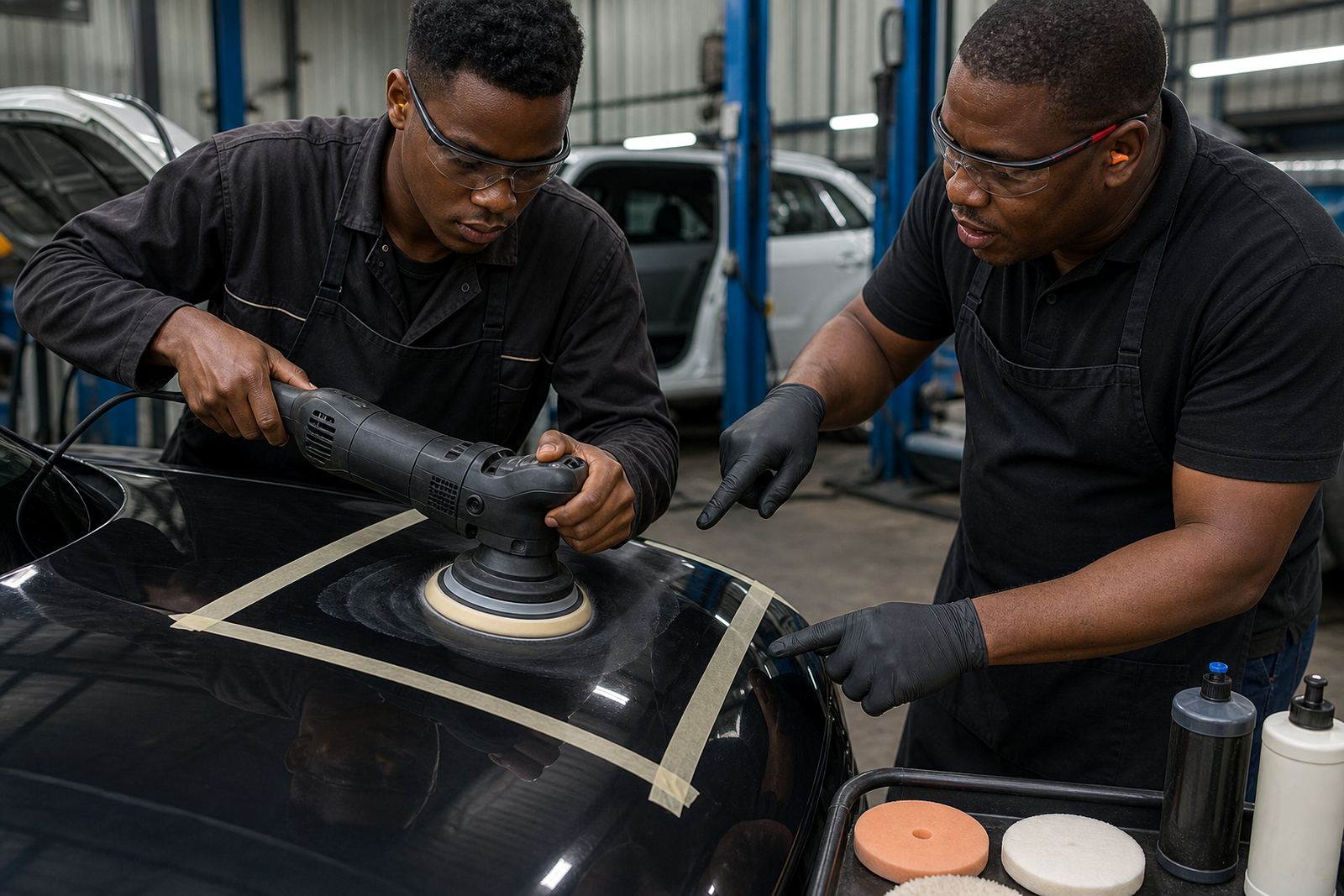
Typical pairings include foam cutting pads with medium to heavy compounds, finishing foam with fine finishing compounds, wool or microfibre pads for faster cutting, and softer finishing pads for final gloss. A rotary machine gives more direct cutting power and needs steadier hand control, while a dual-action machine is more forgiving for new users and better for reducing holograms. We show you how to test a small area first so you dont chase a bigger problem than you started with.
- Step 1: Identify the surface and the defect level
- Step 2: Choose pad firmness, fibre structure and diameter
- Step 3: Match compound cut to the required correction
- Step 4: Test a small section and inspect under good light
- Step 5: Refine the setup if the finish is too dull, too hot or still marked
Safety, Dust Control And Workshop Practice
Polishing creates fine residue, spent compound and in some cases metal dust. That means gloves, eye protection and a suitable dust mask or respirator should be part of the routine, especially when sanding marks are being removed before polishing. Good ventilation matters too, whether you are in a Germiston workshop or on a site in Durban where humidity can affect how compounds behave on the pad.
We cover safe handling of machines, cables and extension leads, and we discuss the right way to clean pads without throwing dust back into the air. A clean pad cuts more consistently and reduces the chance of dragging debris across the surface.
- Wear eye protection and a dust mask when the job calls for it
- Keep loose clothing, cords and polishing cloths clear of moving parts
- Use controlled pressure, not force, to avoid heat build-up
- Clean pads regularly with compressed air or a pad brush where suitable
- Allow panels to cool before checking your finish
Turnaround And Pricing Approach
Turnaround depends on the job size and how much testing is needed. A straightforward pad and compound matching session for one machine and a defined finish target can often be handled quickly, while mixed material work, starter kit planning or team guidance takes longer. We keep the process practical and direct, with clear advice that can be put to use immediately in the workshop or at home.
Pricing is based on the time required, the number of surfaces being assessed and whether the session is in Germiston or on-site elsewhere in South Africa. If you need support for Johannesburg, Pretoria, Cape Town, Durban or Bloemfontein, we quote according to travel, time on site and the level of technical input required. No two polishing setups are the same, so the approach is tailored rather than one-size-fits-all.
Service Intervals And Recheck Guidance
Pad and compound choices should be checked regularly, not only when a finish goes wrong. Foam compresses over time, fibre pads lose bite, and compounds can separate or dry out in storage if they are left open. On active workshop stock, we suggest a routine review after heavy use, after a change in surface type, or whenever results start to slow down or look uneven. It saves time and helps avoid wasting consumables.
As a general guide, recheck pad condition after every demanding job, and inspect compounds before each work cycle if they have been sitting for a while. For teams doing frequent polishing, a monthly consumables review is sensible, with closer checks during busy periods or hot weather. Keeping pads clean, dry and labelled makes the next job easier and the finish more consistent. Small habits count here, especially when you are trying to keep a workshop organised and avoid mix ups.
Who This Service Helps Most
This session is useful for beginners who need a clear starting point, and for experienced users who want to improve consistency across different materials. It suits car finish work, alloy wheel touch-ups, stainless steel handrail polishing, fabrication shops and maintenance teams that want fewer trial-and-error mistakes. If your current setup leaves haze, swirls or uneven gloss, the right pad and compound pairing usually makes a big difference.
Our support team and technical staff in Germiston guide customers from first questions through to practical use. You can send an enquiry through the contact page and let us know the surface, the machine type and the outcome you want. From there, we help you select a workable combination and explain how to use it properly, with proper care for the surface and the operator.
Key facts
| Session type | Support session for pad density, fibre type and compound cut matching |
|---|---|
| Machine types covered | Rotary polishers and dual-action polishers |
| Surface types | Paint, clear coat, aluminium, stainless steel, alloy and mixed workshop finishes |
| Pad sizes | 50 mm, 75 mm, 125 mm and 180 mm options |
| Common cut levels | Heavy cut, medium cut, refining and finishing |
| Coverage | Germiston base with support across Johannesburg, Pretoria, Cape Town, Durban and Bloemfontein |