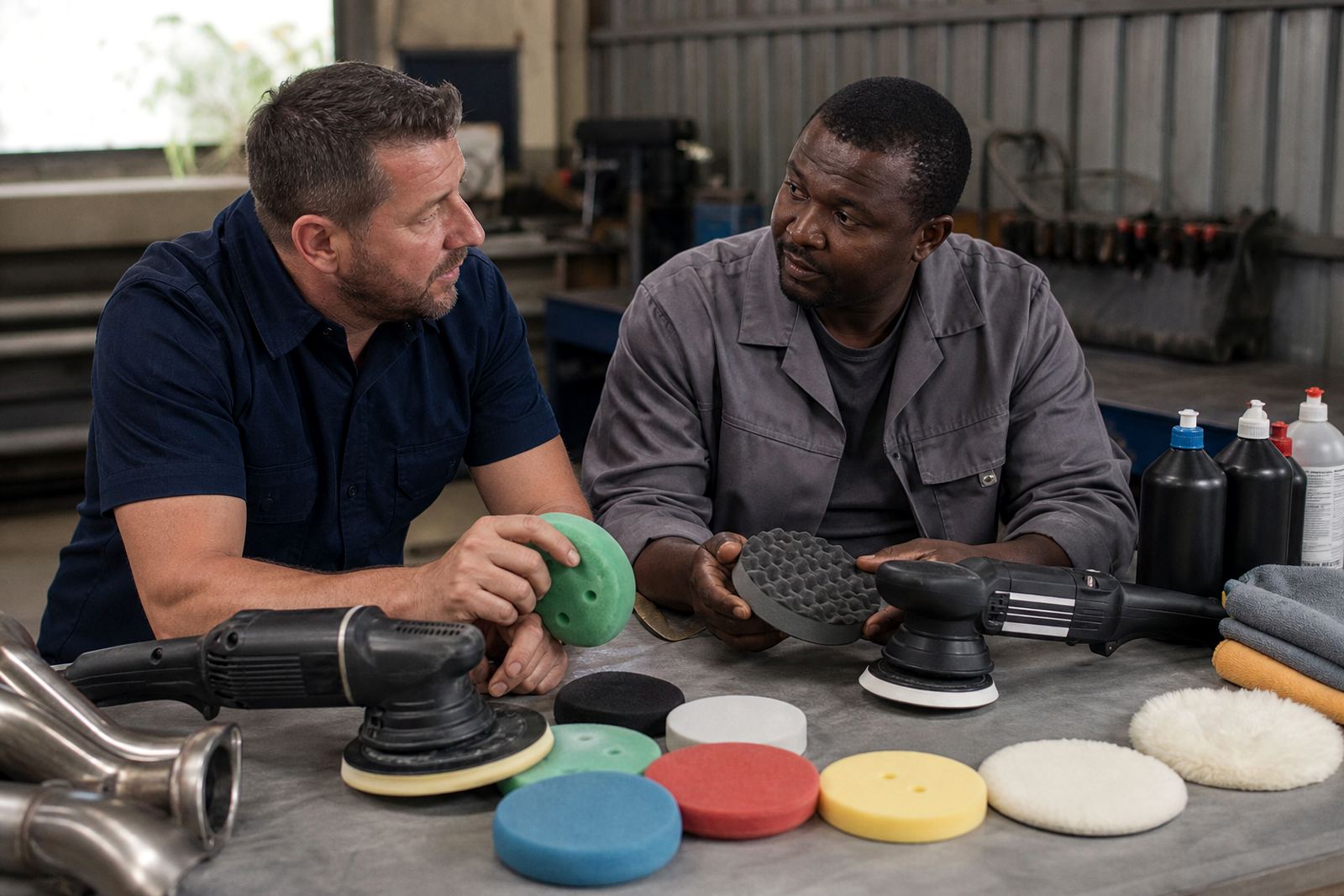
What We Cover In A Starter Kit Consultation
A starter kit should match the job, not just the machine. We look at whether you are working on painted panels, stainless steel, mild steel, aluminium, chrome or mixed surfaces, then narrow the kit to the speed range, pad size and compound strength that suit the work. For a first setup, that often means choosing between a rotary polisher for cutting and levelling, or a dual-action unit for safer correction and finishing on paint.
If you are starting in a garage in Germiston, a body shop in Pretoria, or doing mobile work in Durban where humidity changes the feel of the polish, the kit needs to be simple enough to use and easy to keep in order.
- Machine type and speed control for your surface
- Pad sizes from 80 mm to 180 mm, depending on access
- Cutting, polishing and finishing compounds
- Microfibre cloths, pad cleaners and wash items
- PPE, dust control and basic machine care
How We Match Machine, Pad And Compound
The wrong combination can leave haze, swirl marks or heat damage, so the consultation starts with the material in front of you. On paint, a dual-action machine with a 125 mm backing plate is a common starting point for safer correction. On metal, a rotary machine with the right buff and compound can move material faster, but it needs steadier handling and more care around edges and welds. It is not a one-size-fits-all job, and that is where people save money over time.
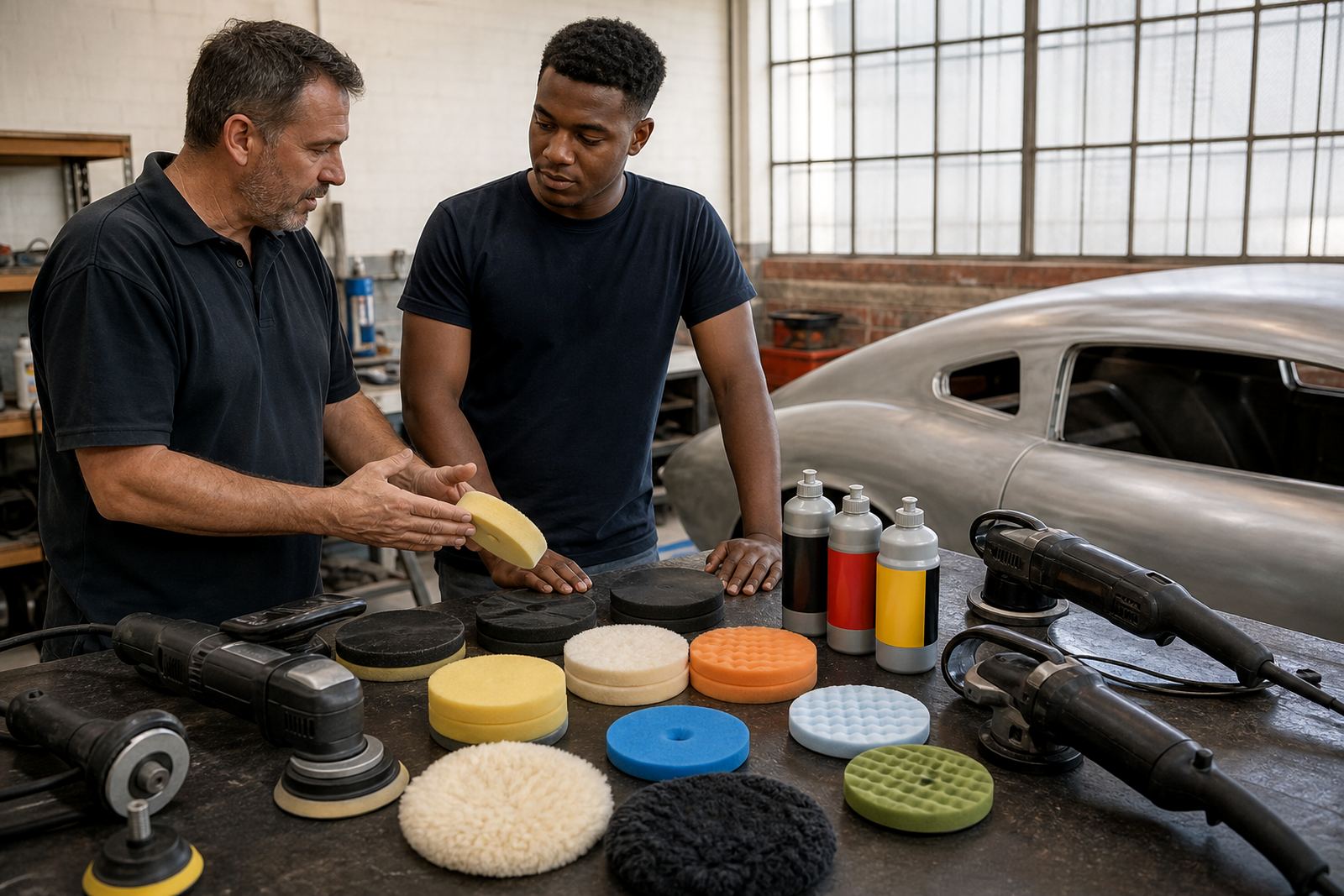
We talk through pad density, compound cut and working time so you understand what each item does. Soft finishing pads suit final gloss work, while firmer foam or wool-style buffs are used for heavier oxidation and deeper marks. The goal is to help you buy once, then restock the consumables that wear out first. It keeps the kit practical, not overcomplicated.
- Light correction kits for hobby use and weekend jobs
- Mid-level kits for detailers and repair shops
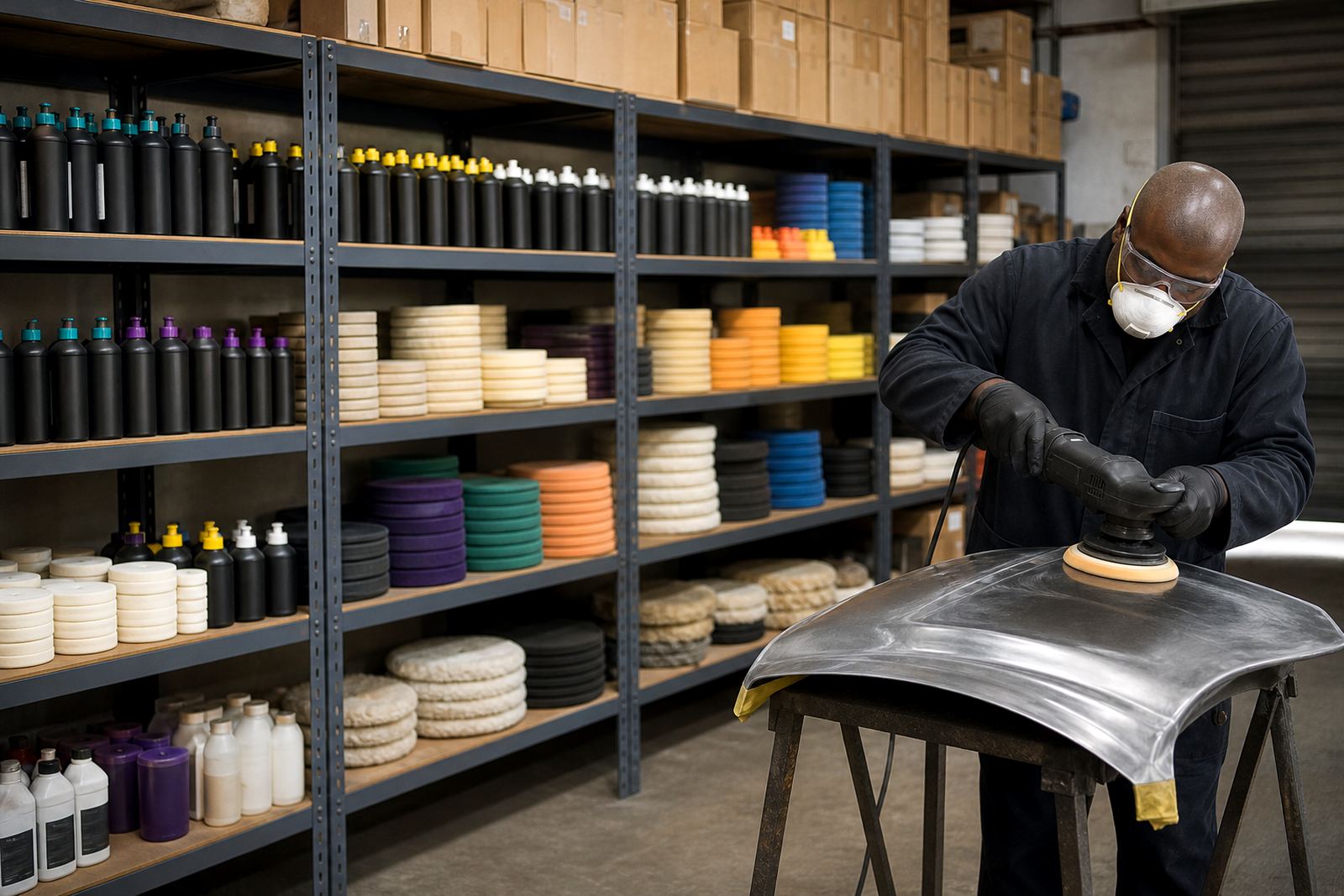
- Metal finishing kits for stainless, aluminium and mild steel
- Compound stages for cut, refine and finish
What The Consultation Includes
Every consultation is built around the surface you want to finish and the space you work in. We ask what you are polishing now, what you want to polish next, how often you will use the equipment and whether you already have some consumables on hand. From there we put together a starter list with machine size, pad count, compound grades and basic safety gear. If you are new to polishing, we keep the kit lean so you can learn without wasting money on items you wont use yet.
Where needed, we also advise on workshop layout, storage and cleaning. A clean bench, a dry storage area and a sensible place for pads and compounds makes a big difference in a busy workshop in Bloemfontein or a home setup in the East Rand. We can also help with starter kit consultation for a team, so everyone starts with the same process and the same expectations.
- Surface and goal assessment
- Machine and accessory selection
- Consumable list with quantities
- Care and storage notes
- Safety and PPE guidance
Our Step By Step Process
First, you send through your enquiry on the contact page and tell us what you plan to polish. Then we review the detail and recommend a direction based on your level, from beginner to experienced operator. If needed, we ask for photos of the surface, the marks you are trying to remove and the size of the job so the kit is sized properly. This usually saves a lot of back and forth.
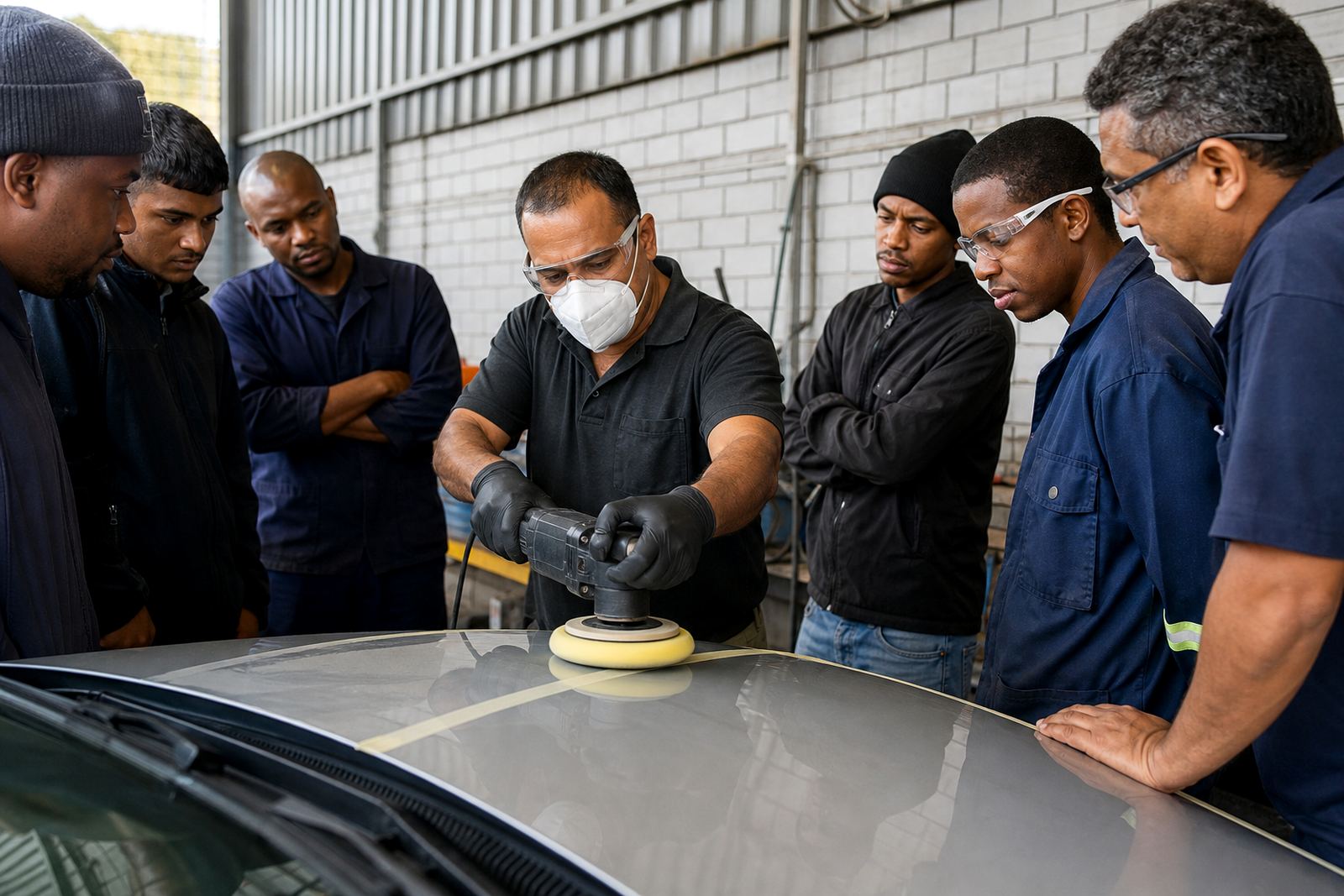
Next, we build the starter kit around the work you actually do. A small paint correction kit for a first-time user will look very different from a metal buffing kit for a workshop in Cape Town dealing with oxidation and fine finishing on stainless fittings. After that we talk through machine care, pad cleaning, compound use and safe pressure. The process is clear, and you leave with a proper plan rather than a box of random items.
- Enquiry and job details
- Surface review and kit selection
- Consumable matching and use notes
- Follow-up support for setup questions
Turnaround, Support And Restocking
Starter kit advice is usually turned around quickly once we have the details we need. Simple requests can be handled in a short time, while more involved setups for mixed surfaces or workshop teams may need a bit more checking. If your work is urgent and you are trying to get a first kit ready for the week, let us know upfront and we will keep the advice focused.
After the first purchase, maintenance becomes part of the routine. Pads need regular cleaning during use, backing plates should be checked for wear, and compounds must be stored with caps tight in a cool dry place. In coastal areas, keep an eye on moisture and oxidation, and in dry dusty areas, clean panels and pads more often. As a rule, many users review their consumables every few weeks and their machine condition after each project, especially if the kit is used on site or during long shifts.
- Check pads after each session
- Inspect cables, switches and backing plates monthly
- Replace worn pads when they stop cutting evenly
- Review compounds and cloth stock before a new job starts
Pricing Approach For Starter Kit Advice
Pricing depends on how much guidance the kit needs, whether it is for one person or a team, and how detailed the surface review has to be. We keep it practical and quote according to the scope of the consultation rather than pushing a fixed package that may not suit your work. That way a small home user in Vereeniging does not pay for workshop planning they do not need, and a trade customer gets the depth required for daily use.
We do not guess at kit requirements because polishing equipment is too easy to misbuy. The right setup can reduce waste, cut down on duplicate consumables and help you work safely from the start. If your application changes later, we can update the kit plan and talk through what should be added first. It is better to stage the purchase than to overspend on day one.
- Advice based on surfaces and usage level
- Separate planning for hobby and trade kits
- Optional team and workshop setup support
- Consumable restocking guidance as you grow
Key facts
| Service type | Starter kit consultation for polishing and finishing |
|---|---|
| Main surfaces | Painted panels, stainless steel, aluminium, mild steel and chrome |
| Typical machine options | Rotary polishers and dual-action polishers |
| Common pad sizes | 80 mm, 125 mm and 180 mm |
| Safety focus | PPE, dust control, heat management and cable safety |
| Coverage | Germiston, Johannesburg, Pretoria, Cape Town, Durban, Bloemfontein and surrounding areas |