What The Rotary Skills Session Covers
This session is practical from the first minute. We work through rotary machine control, pad choice, compound selection and how to read the surface before you start cutting. The aim is to help you remove defects without burning edges, marking trim or chasing swirls back and forth.
Training is suitable for car finishing, stainless steel, mild steel and other metal surfaces where a consistent, even finish matters. We also cover how to work in South African conditions, including dust, heat and stop-start power interruptions, because a machine behaves differently when you are working in a warm workshop in Germiston or on-site in Cape Town with coastal humidity.
- Machine grip, stance and trigger control
- Pad priming, compound loading and wipe-down checks
- Panel size planning and overlap pattern
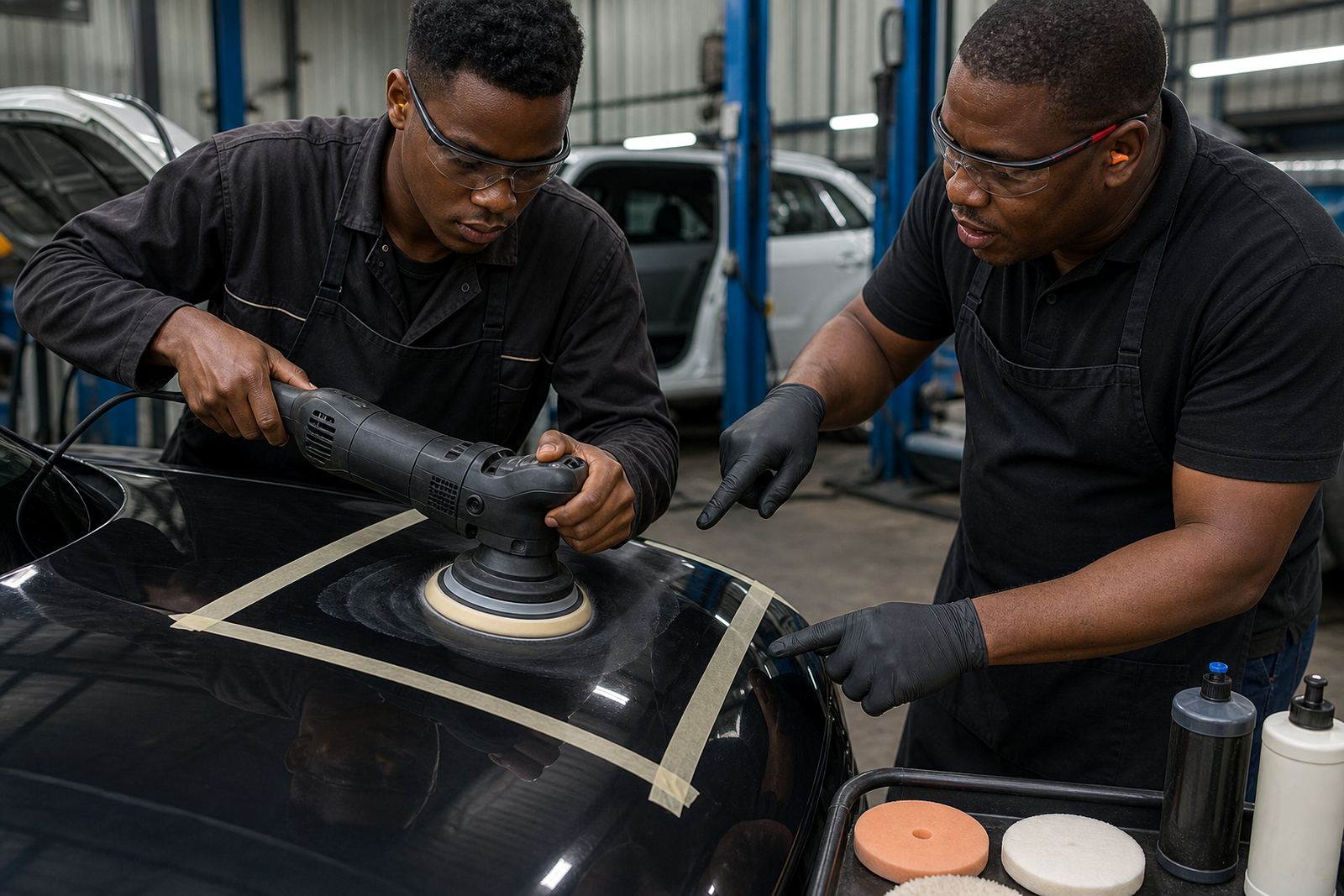
- Safe use around badges, edges, seams and curved areas
- Basic correction assessment before and after each stage
Technique, Speed And Heat Control
Rotary polishers remove material quickly when used correctly, which is why speed and pressure matter. We show how to start low, increase only when needed, and keep the pad flat enough to maintain control. Too much pressure or too much dwell time builds heat fast, especially on thin panels, repainted surfaces or softer clear coats.
You will learn how to watch for paint softening, compound dry-out and pad grab. We also explain when to stop and let the panel cool instead of pushing through. That habit saves time later and helps prevent correction marks that are harder to fix than the original defect.
- Typical rotary work range: low to medium speed for cutting, higher only where the surface and pad allow it
- Pressure guidance: light for finishing, firmer for cutting, never forcing the machine
- Heat checks: hand test, product behaviour and surface response
- Edge and crease protection with reduced pressure and controlled passes
Pads, Compounds And Matching The Job
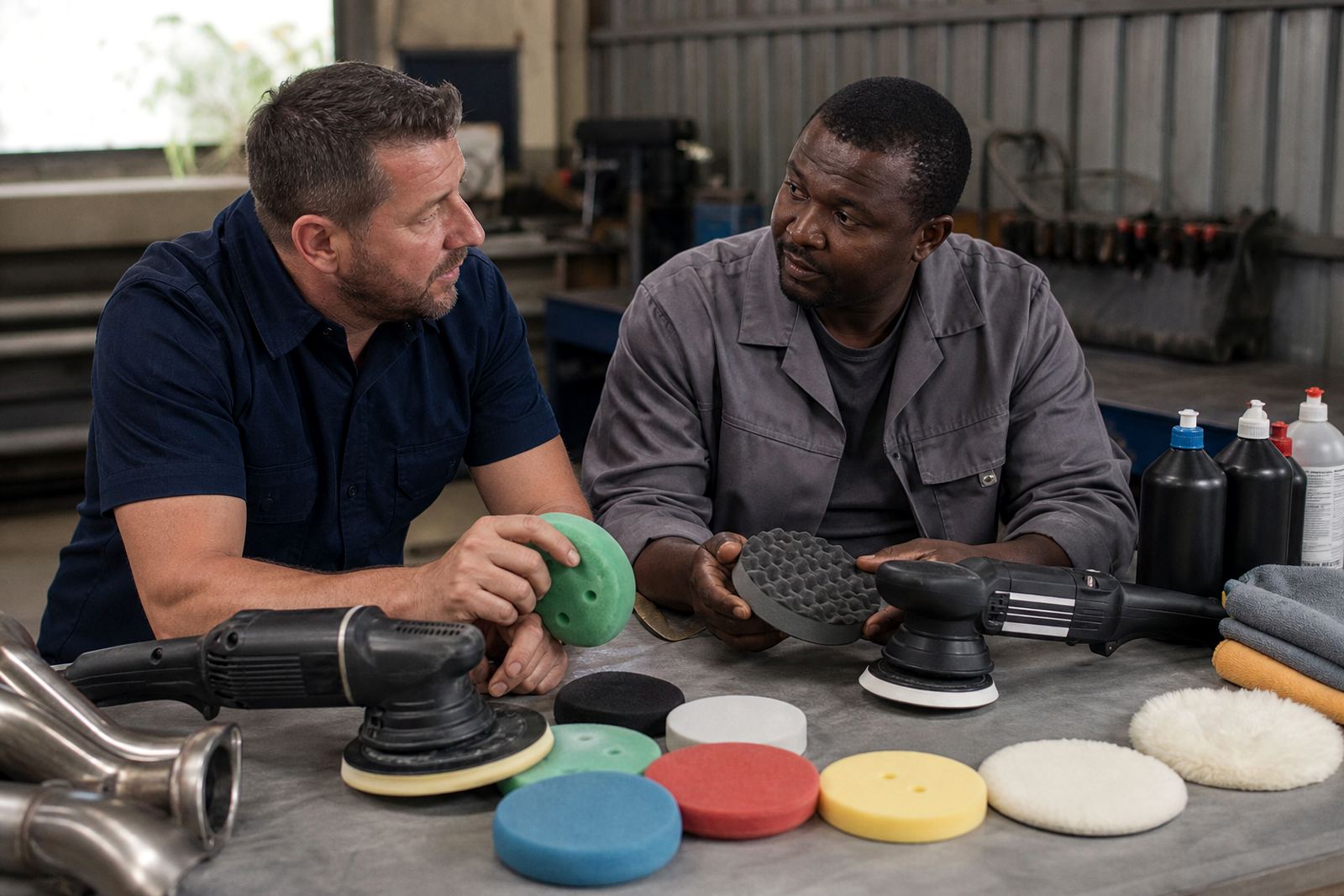
Good results depend on matching the pad and compound to the task. A heavier cutting pad with a stronger compound can remove sanding marks or oxidation, while a softer foam pad and finer compound are better for finishing. On metal, the choice changes again depending on whether you want a bright cosmetic finish, a brushed look or a deeper polish before sealing.
We cover the practical side of pairing materials so you do not waste time overcomplicating the job. You will also learn how to judge whether a pad is loading up, how often to clean it during use, and when to swap it out. A worn pad can leave poor results even when the compound is right, so this part matters more than people think.
- Foam, microfibre and wool style pads explained by use case
- Cutting, polishing and finishing compounds compared
- Pad cleaning during the session to prevent clogging
- Starter kit guidance for mixed workshop work
How The Session Runs In Practice
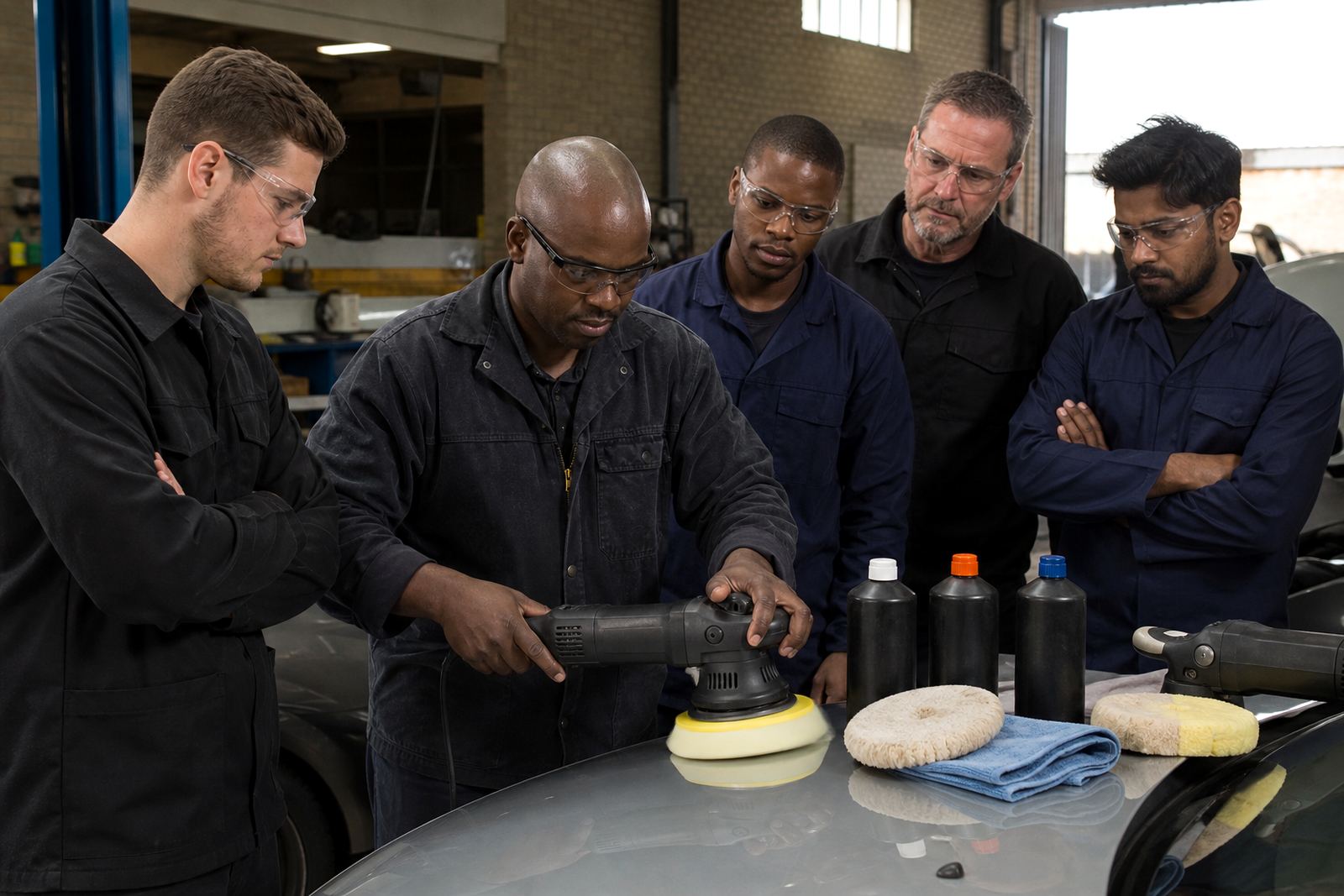
Sessions are arranged at our Germiston base or as an onsite team demo where suitable. We begin with a short discussion about the surface, the machine you use and the outcome you need. From there we move into live demonstration, supervised practice and correction of grip or movement where needed. If your team has different skill levels, we split tasks so each person gets the right level of coaching.
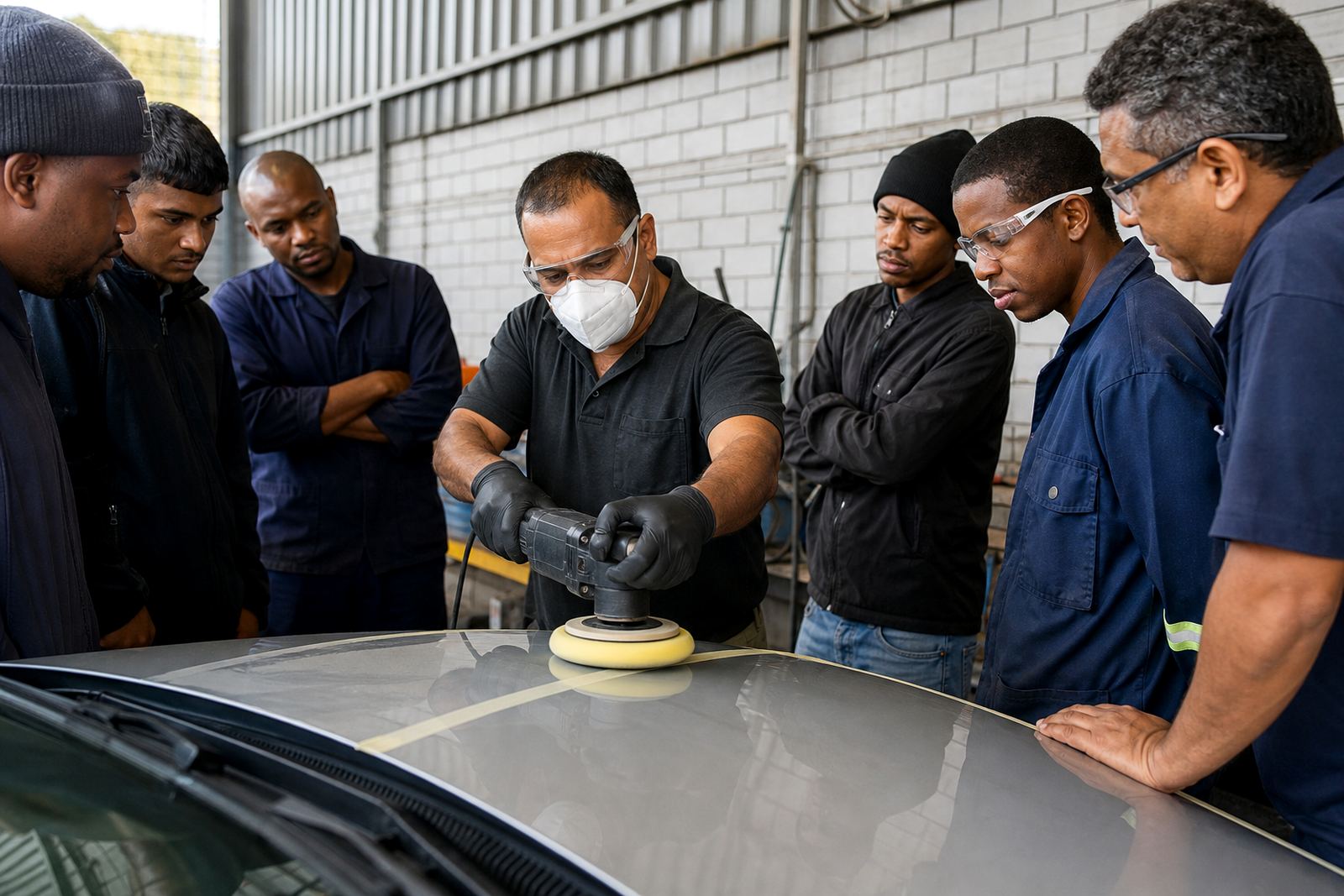
Most learners want to leave with a repeatable method, not just one good panel. That is why we finish with a step-by-step routine you can use in the workshop the next day. The process is calm and direct, with time for questions, practical corrections and proper PPE briefing before the machine comes on.
- Initial assessment of surface, defects and machine condition
- Demonstration of technique and safe setup
- Supervised practice with feedback on pressure, speed and angle
- Final check on finish quality and next-step advice
Turnaround, Booking And Pricing Approach
Turnaround depends on the size of the team, the material being covered and whether you need a one-on-one session or a workshop group. In most cases, we can schedule training around your production flow so there is less disruption. For onsite work, we also consider travel time to Johannesburg, Pretoria, Durban, Cape Town or Bloemfontein.
Pricing is quoted according to session length, group size, training depth and whether consumables or starter kits are included. We do not push a standard package on everyone because an individual starting out with a small polisher needs a different setup from a workshop handling daily correction work. Send the enquiry form on our contact page and we will match the session to the job, not the other way around.
- One-on-one or small group options
- Onsite or Germiston-based training available
- Consumables can be included in the quote where needed
- Quotes are based on scope, not guesswork
Service Intervals And Safe Working Habits
A rotary polisher performs best when it is kept clean, the backing plate is checked and the cable or battery setup is in good order. We recommend inspecting the machine before every use, checking pads after each session, and cleaning compounds and dust off vents so the motor does not run hot. In dusty inland areas and on coastal jobs, that matters more than people often realise.
For workshop use, a weekly check of pad condition, plate wear and cord damage is a sensible minimum. If the machine is used daily, add a more detailed inspection at least monthly. We also cover PPE and dust safety, including eye protection, a suitable mask or respirator for fine residue, gloves where needed and keeping loose clothing clear of the spinning pad.
- Before each job: machine check, pad check, cable check
- Weekly: deeper clean of vents and accessories
- Monthly: plate condition, bearings noise and general service review
- Always: keep trim, badges and edges protected
Key facts
| Service type | Practical rotary polishing training for paint and metal finishing |
|---|---|
| Core focus | Machine control, pressure, speed selection and heat awareness |
| Suitable for | Hobbyists, detailers, panel shops, metal finishers and workshop teams |
| Training format | One-on-one coaching, small group session or onsite team demo |
| Location | Germiston, Gauteng with service across South Africa |
| Safety focus | PPE, dust control, edge protection and safe compound use |