Plan the Bay Before the First Machine Runs
A good polishing area starts with clear movement. We look at where the machine will be used, where parts come in, where finished pieces go out and how to keep wet and dry processes apart. In a small workshop, this may mean one dedicated bay with a solid bench, wall mounted storage and a clean floor line. In a larger shop, it may mean separate stations for rotary work, dual-action finishing and hand detailing.
For metal finishing, the layout must allow room for buffing wheels, compound tins and wipe-down cloths without cross contamination. For paint correction, the station needs space for machine movement, cable routing and safe access around panels. We also advise on bench height, trolley placement and the best position for a parts rack so operators are not walking back and forth with oily or dusty hands.
- Dedicated area for polishing only
- Clear path from prep to finishing to inspection
- Storage close to the bay for pads, compounds and PPE
- Separate clean cloths from heavy cut products
Lighting, Ventilation and Dust Control
Polishing defects show up properly only under the right light. We advise on bright white task lighting, angled inspection lights and shadow free coverage across the work surface. For paint work, colour matched panels need strong even light so swirl marks, haze and sanding marks can be checked before the job leaves the bay. For metal, good light helps with edge checking and compound removal on chrome, aluminium and stainless steel.
Dust control matters just as much. We look at extraction, floor cleaning, airflow and how to keep airborne residue away from fresh polish. In dusty inland areas like Gauteng, a simple extraction plan can save time on rework. In coastal towns like Durban and Cape Town, extra care is needed for humidity, salt air and sticky residue that can affect pad loading and finish quality.
- Task lights positioned to avoid glare on curved panels
- Extraction or cross ventilation where sanding dust is present
- Closed storage for dry pads and compounds
- Anti slip floor care to reduce dust build-up and trip risk
Machine, Pad and Compound Flow That Makes Sense
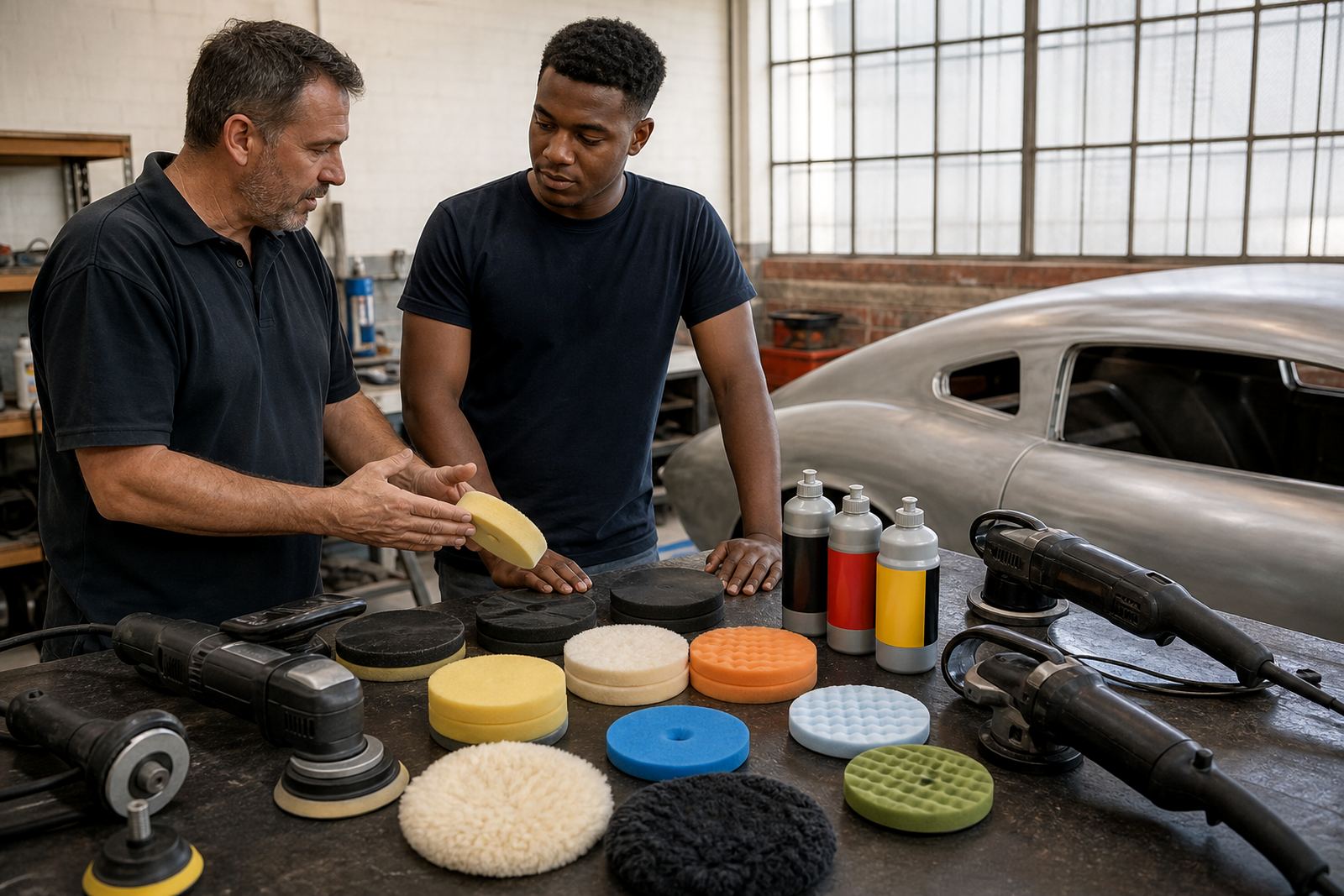
A workshop should not force the operator to hunt for the right pad or compound every time the job changes. We help set up a logical flow from cutting to refining to final finishing. That means grouping rotary polishers, dual-action machines, backing plates, lambswool or foam buffs, and compounds by task rather than by whatever space is left on the shelf.
We also advise on colour coding, label clarity and product placement. Heavy cut products must stay separate from finishing products, and pads should be kept clean, dry and easy to identify. For metal work, a buffing wheel and compound station should be close to the machine but away from paint finishing materials. For car polishing, the layout should support panel by panel work and reduce the chance of grabbing the wrong pad in a hurry.
- Keep rotary machines and DA machines in separate trays or shelves
- Store compounds by cut level and finishing stage
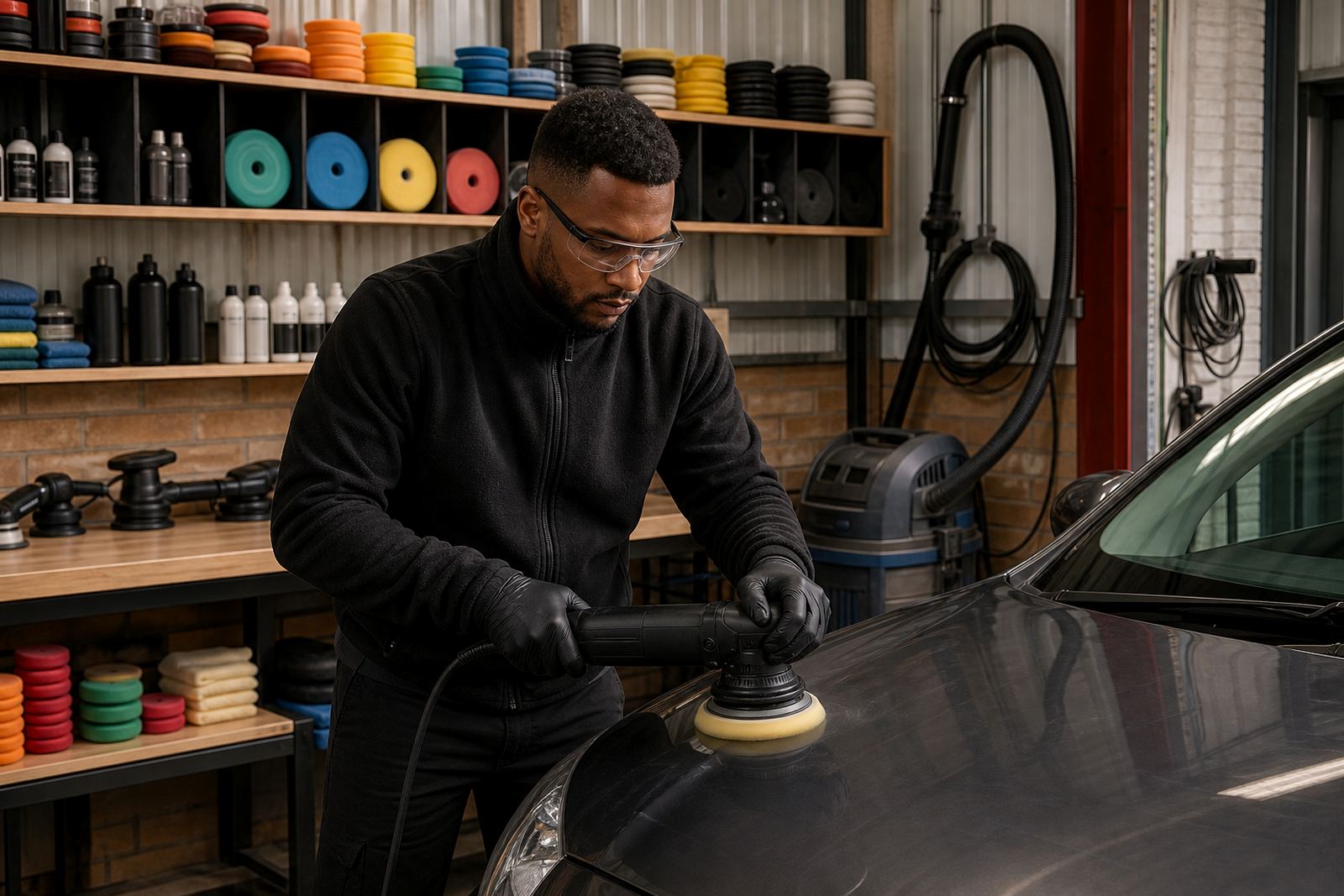
- Use clean pad bins or hanging storage to reduce contamination
- Mark damaged pads so they are removed from service quickly
Safety Setup for PPE, Cords and Clean Handling
Polishing sends out dust, residue and sometimes fine metal particles, so basic safety must be built into the setup. We guide teams on PPE, including safety glasses, gloves where suitable, hearing protection for louder machines and a dust mask or respirator when sanding or buffing dusty material. Loose clothing, open cables and poor lighting cause avoidable trouble in a busy shop.
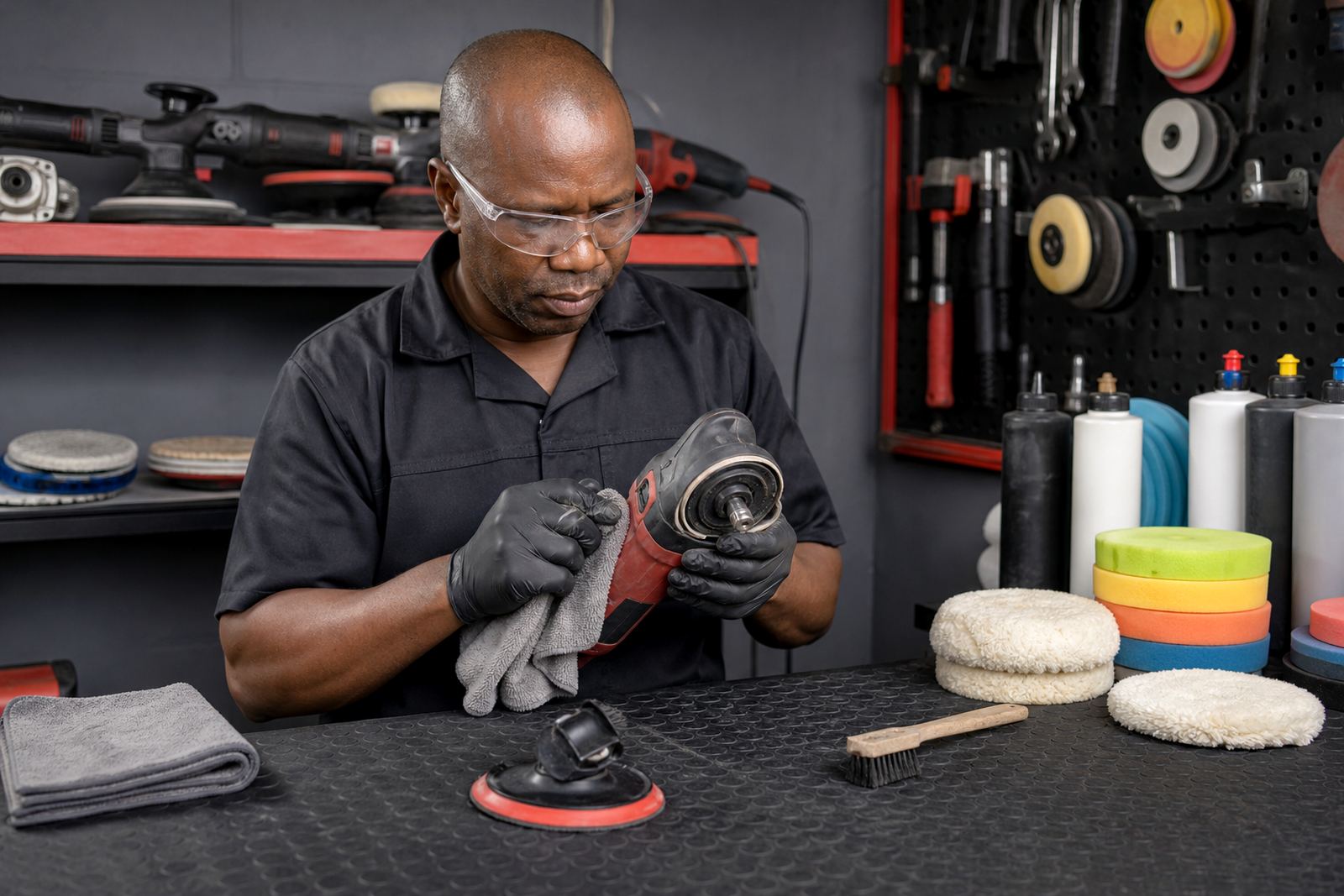
We also help with machine care points such as cable hooks, safe plug placement and a dry storage spot for electrical tools.The aim is not only a neat bay, but a workshop where staff can work with less strain and fewer mistakes.
- PPE station near the entrance to the polishing area
- Wall hooks or cable reels to keep leads off the floor
- Locked or covered storage for chemicals and compounds
- Written checks for machine condition before use
What We Cover During the Advice Session
Our workshop setup advice is practical and specific to your space, your product range and the work you do most often. We start by looking at the room size, power points, ventilation and storage. Then we map out the polishing path from prep to finish. If you work on car panels, we consider vehicle access, wash down areas and where to keep clean microfibre cloths. If you work on metal, we look at benches, stands and how to manage heavy parts safely.
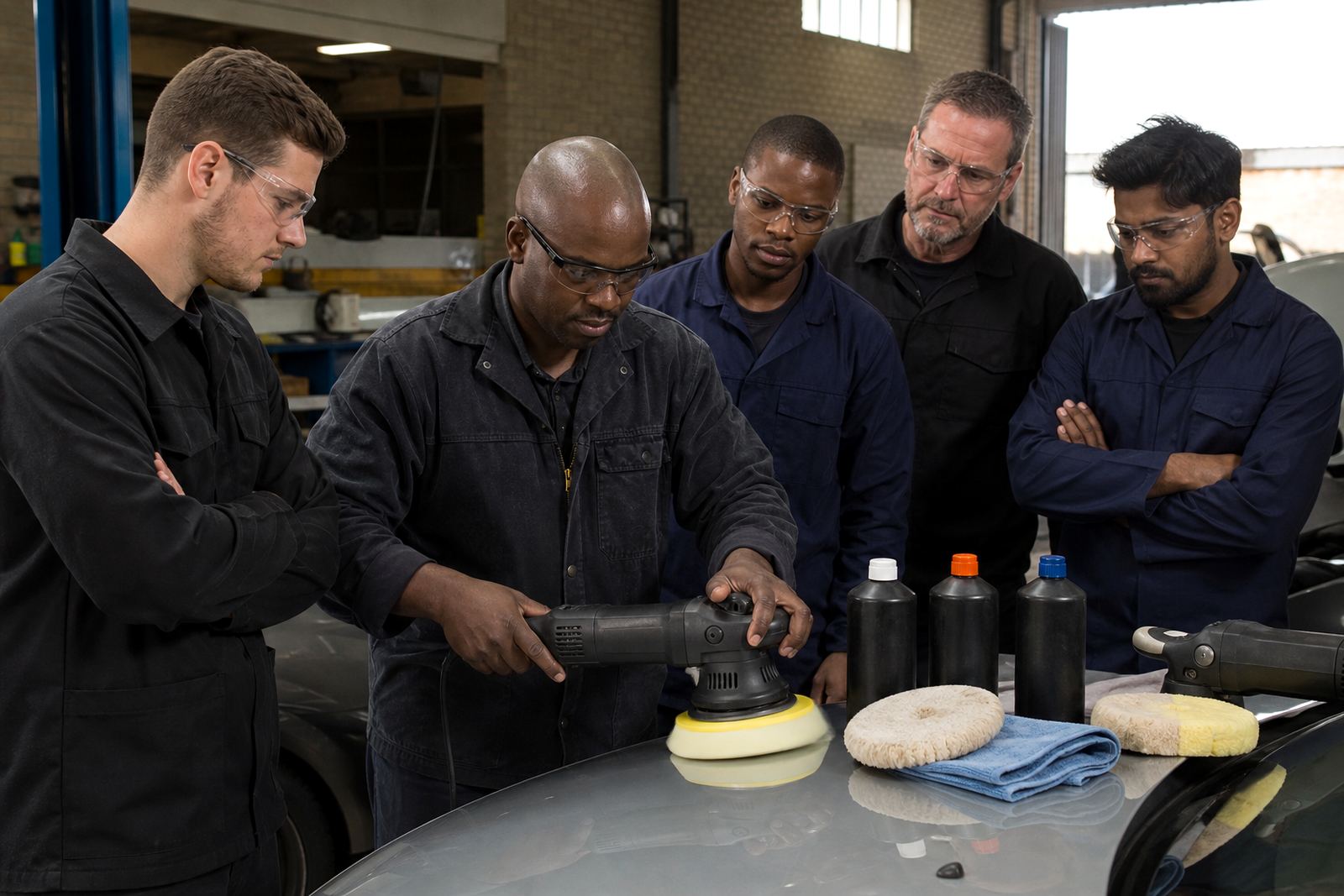
We can also advise on starter kit content, restocking levels and which products should be kept on hand for daily work versus occasional jobs. Where useful, we explain how to set up a simple station for new staff, or a more advanced bay for experienced operators who work with multiple finishing stages.
- Site walk through or photo based review
- Station layout for metal, paint or mixed work
- Storage and inventory flow for pads and compounds
- Practical advice for new and existing workshops
Turnaround, Pricing Approach and Service Intervals
Turnaround depends on the size of the workshop and whether the advice is done from photos, an enquiry discussion or an on site visit. Smaller setups can usually be mapped out quickly, while larger operations may need more than one pass to sort out bays, storage and consumables flow. We keep the process straightforward and discuss the scope before any work is confirmed.
Pricing is based on the amount of time needed, the number of stations involved and whether the advice includes team demonstration or follow up support. For maintenance, we usually recommend reviewing your polishing area every 3 to 6 months, or sooner if staff numbers change, a new machine is added, or the product mix shifts. Pads and compounds should be checked regularly, and lighting should be cleaned and tested often enough to keep the bay working properly.
- Photo review for simple layouts
- Onsite setup support for bigger workshops
- 3 to 6 monthly checks for storage and workflow
- Immediate review after major equipment changes
Key facts
| Base | Germiston, Gauteng |
|---|---|
| Service area | Johannesburg, Pretoria, Cape Town, Durban and Bloemfontein |
| Polishing equipment | Rotary polishers and dual-action polishers |
| Consumables | Buffs, pads, compounds and cleaning cloths |
| Safety focus | PPE, dust control, cable management and clean storage |
| Maintenance review | Recommended every 3 to 6 months |