What the Pretoria fabricator needed
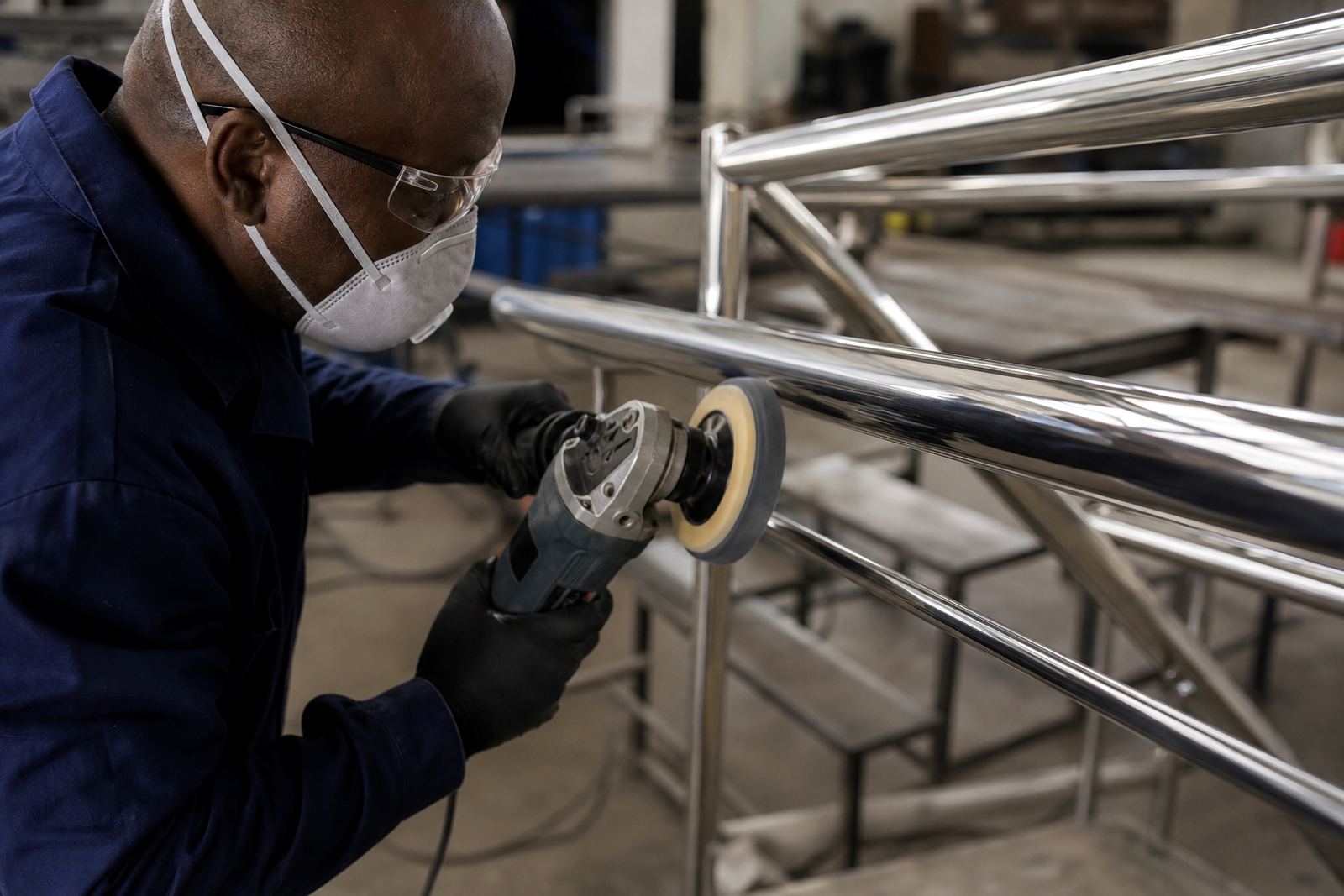
This was a local fabrication project in Pretoria for a client working on installed stainless steel pieces that were already on site and in view of end users. The brief was straightforward: improve the look of the metal, reduce the patchy appearance left by handling and fabrication marks, and bring the finish up to a more consistent standard without overworking the surface.
The job involved visible stainless components where the final presentation mattered as much as the structure. In Pretoria, that often means dealing with bright light, dust, and the reality of work being done around other trades. The client needed a practical process that could be repeated on similar pieces, not a one-off shine that would be hard to maintain later.
- Client type: fabricator handling installed stainless steel items
- Town: Pretoria, Gauteng
- Material: stainless steel with visible work faces
- Goal: cleaner, more even final appearance
- Priority: control around edges, corners and joins
Constraints on an installed stainless job
Because the pieces were already installed, the main challenge was access. You do not get the freedom you have on a bench job, so machine choice and pad selection matter. A rotary polisher can remove marks faster, but it also leaves less room for error on sharp lines and heat sensitive areas. A dual-action polisher is slower, though it gives a softer touch for blending and final refinement.
We also had to keep the finish even across different orientations and lighting conditions. Stainless shows every inconsistency, especially when the sun hits it at different angles. On this sort of job you watch for heat build-up, compound sling, and residue sitting in joints. Dust control matters too, because polishing dust can move into nearby fittings, floors and seals if you work too dry or too fast.
- No heavy strip-down available because the pieces were installed
- Need to avoid heat discolouration on thin sections
- Nearby finished areas had to stay clean
- Work had to be tidy enough for an active site
What we supplied and how we worked
We supplied machine options, suitable buffs, matching compounds and practical guidance on technique. For stainless, the surface condition decides the starting point. Coarser marks need a firmer cut, then a step-down to finer compounds and softer buffs. That progression is what gives a cleaner finish instead of a hazy one.
The team used a staged approach: assess the existing grain and scratch pattern, test a small section, then work through the affected faces with controlled passes. The aim was to improve the visible areas without rounding off edges or making the finish look patchy. Where the job allowed it, we separated cutting and finishing stages so the final pass could refine the appearance rather than chase deeper defects.
- Rotary polishing for controlled correction on suitable sections
- Dual-action polishing for blending and final refinement
- Buffs chosen to suit the level of cut required
- Compounds selected for stainless finishing rather than generic shine work
- PPE and dust safety briefing before starting
Technique used on stainless steel
Stainless finishing is about control more than speed. The right pressure, pad shape and compound load make the difference between a proper finish and a smeared surface. We advised the client to keep the machine moving, overlap passes evenly and avoid dwelling on one point. That is especially important on corners and weld transitions where the metal can heat up fast.
For this job we focused on a cleaner presentation rather than a mirror effect on every piece. That means matching the visible surfaces so they read consistently from normal viewing distance. In practical terms, that often gives the best result for installed work: neat, even and easy to keep looking good with regular wipe-downs.
- Keep the pad flat where possible
- Reduce speed on edges and thin return folds
- Wipe residue between stages so defects are visible
- Use clean buffs for the final pass to avoid cross contamination
Timeline and site flow
The work ran over two weeks, including assessment, supply, demonstration and follow-up guidance. The first week covered inspection of the installed pieces, selection of compounds and confirmation of the finish target. The second week focused on polishing, blending and showing the team how to maintain the same standard on the rest of the set.
That timeline suited the site because the client could keep moving on other tasks while the higher-visibility sections were being sorted out. There was no need to halt the whole area, which is often the better option on a working Pretoria site where trades are stacked tightly and time is always measured against access.
- Week 1: assessment and material matching
- Week 1 to 2: polishing and finish refinement
- Week 2: training on upkeep and safe machine use
- Final stage: cleanup and handover notes for the client team
Result and lessons learned
The finished result was a cleaner, more professional look on the visible installed pieces, with a more even sheen across the surfaces that matter most to the eye. The client wanted presentation first and that is what the process addressed. The work also left the team with a clearer idea of how to handle similar finshing on future jobs without overcomplicating the method.
If we were doing the same job again, we would keep the same staged approach and the same emphasis on small test areas before moving through the whole set. On installed stainless, that is the safest way to protect the surface and keep the standard consistent. We would also repeat the PPE briefing, because gloves, eye protection and dust control are not optional when polishing metal in a live work area.
- Better visual consistency on installed pieces
- Less obvious handling marks and surface haze
- Clearer maintenance method for the client team
- Approach suitable for other Pretoria fabrication sites
Key facts
| Project type | Stainless steel finishing for installed visible pieces |
|---|---|
| Town | Pretoria, Gauteng |
| Duration | 2 weeks |
| Materials used | Rotary and dual-action polishers, buffs, compounds |
| Main aim | Cleaner presentation with even surface appearance |
| Safety focus | PPE, dust control and heat management |