Fleet Brief From Midrand, Gauteng
The client was a transport and service operation based in Midrand that needed its working fleet to look presentable for daily customer visits, site calls and roadside visibility. The vehicles were mixed use units, mostly white and silver finishes, with a combination of light oxidation, wash marring, water spotting and a few isolated marks around handles, mirror housings and loading areas. The goal was not show-car finish for one panel only, but a clean and consistent result across the fleet.
Because the vehicles were still in service, the work had to be planned around dispatch times and short parking windows. We also had to account for Gauteng dust, midday heat and the fact that some vehicles were washed quickly during the week, which can leave fine marks on softer clear coat. The job was arranged as a controlled polish rather than a heavy correction, so the finish could be repeated later without taking off more material than needed.
- Client type: service fleet operator
- Location: Midrand, Gauteng
- Finish target: uniform gloss and cleaner presentation
- Main concern: repeatable process for multiple vehicles
What The Paint Needed Before Polishing
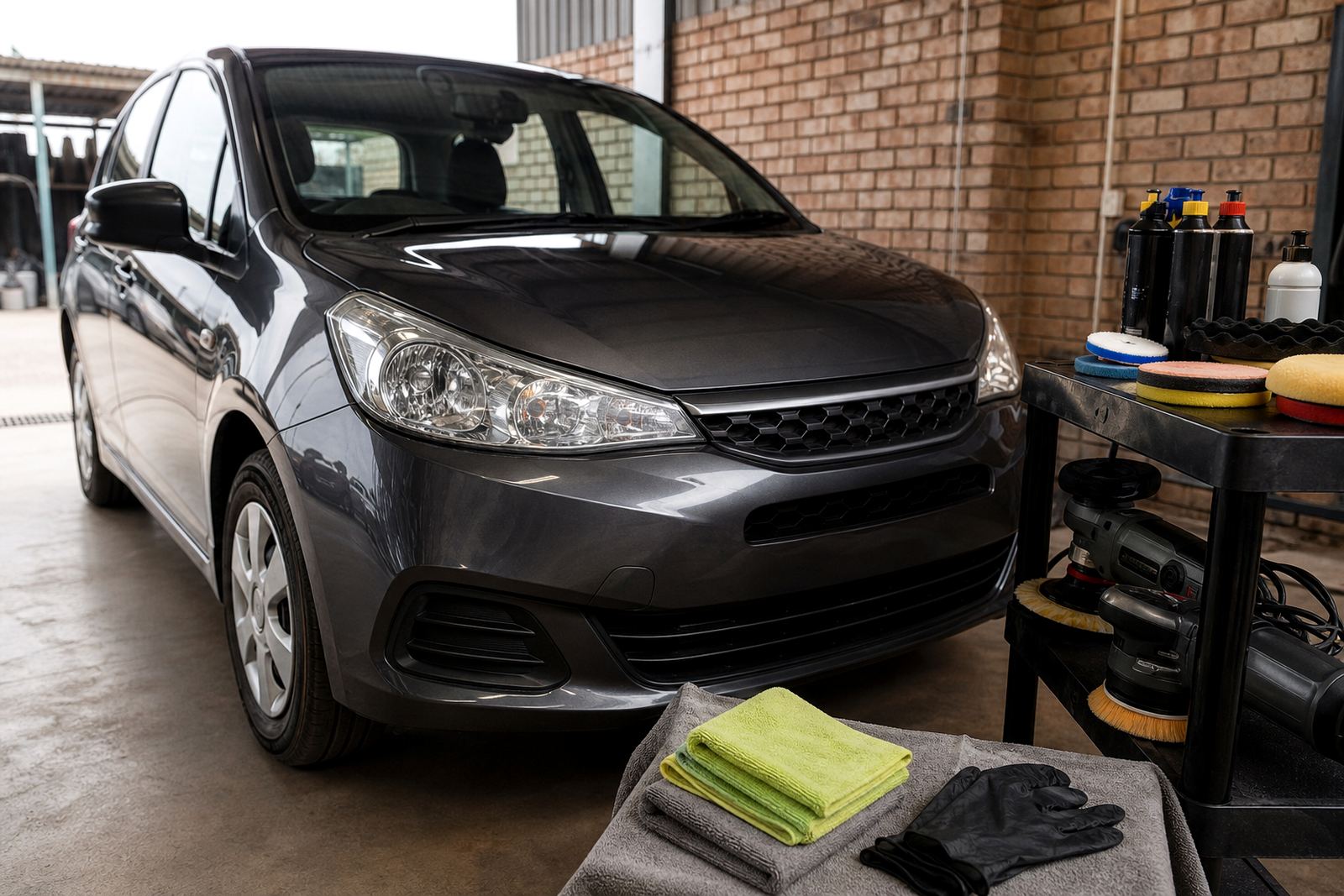
Before any machine was switched on, each vehicle was inspected for paint condition, trim sensitivity and existing defects. That step matters because the same pad and compound combination will behave differently on hard German paint, softer Japanese finishes or aged resprays. We marked areas with deeper scratching that would need extra attention, then separated those from panels that only needed a light refining step.
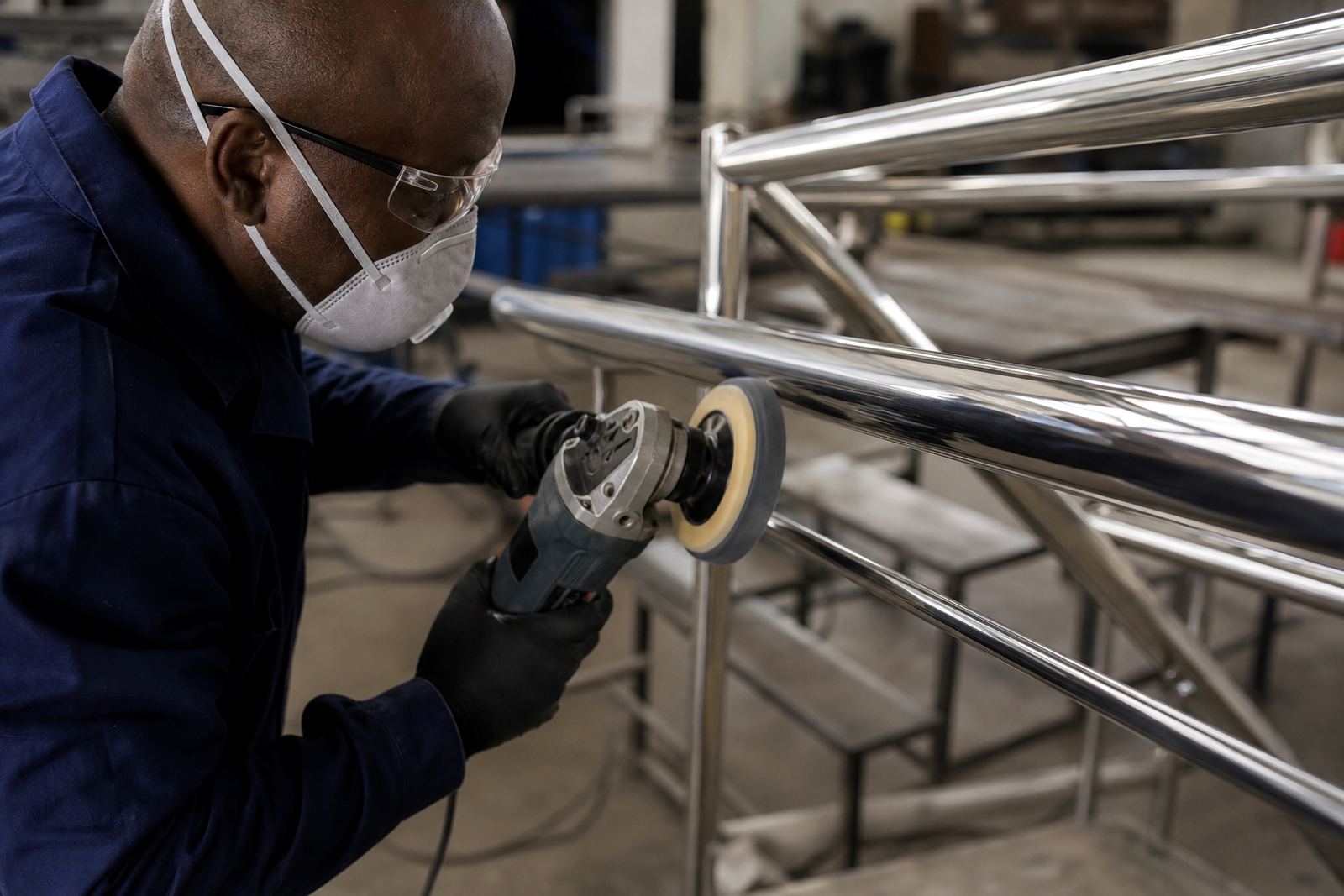
The constraints were simple but important. The fleet could not be taken off the road for long, and the work had to stay consistent from one vehicle to the next. We also needed to keep dust down because dry buffing residue can settle on fresh polish, especially when wind moves through an open yard. PPE was used throughout, including eye protection, gloves and a dust mask for compound handling and finishing work.
- Condition checks were done panel by panel
- Deeper defects were isolated, not chased blindly
- Dust control and PPE were part of the job plan
- Process had to suit active fleet operations
Polisher, Pad And Compound Matching
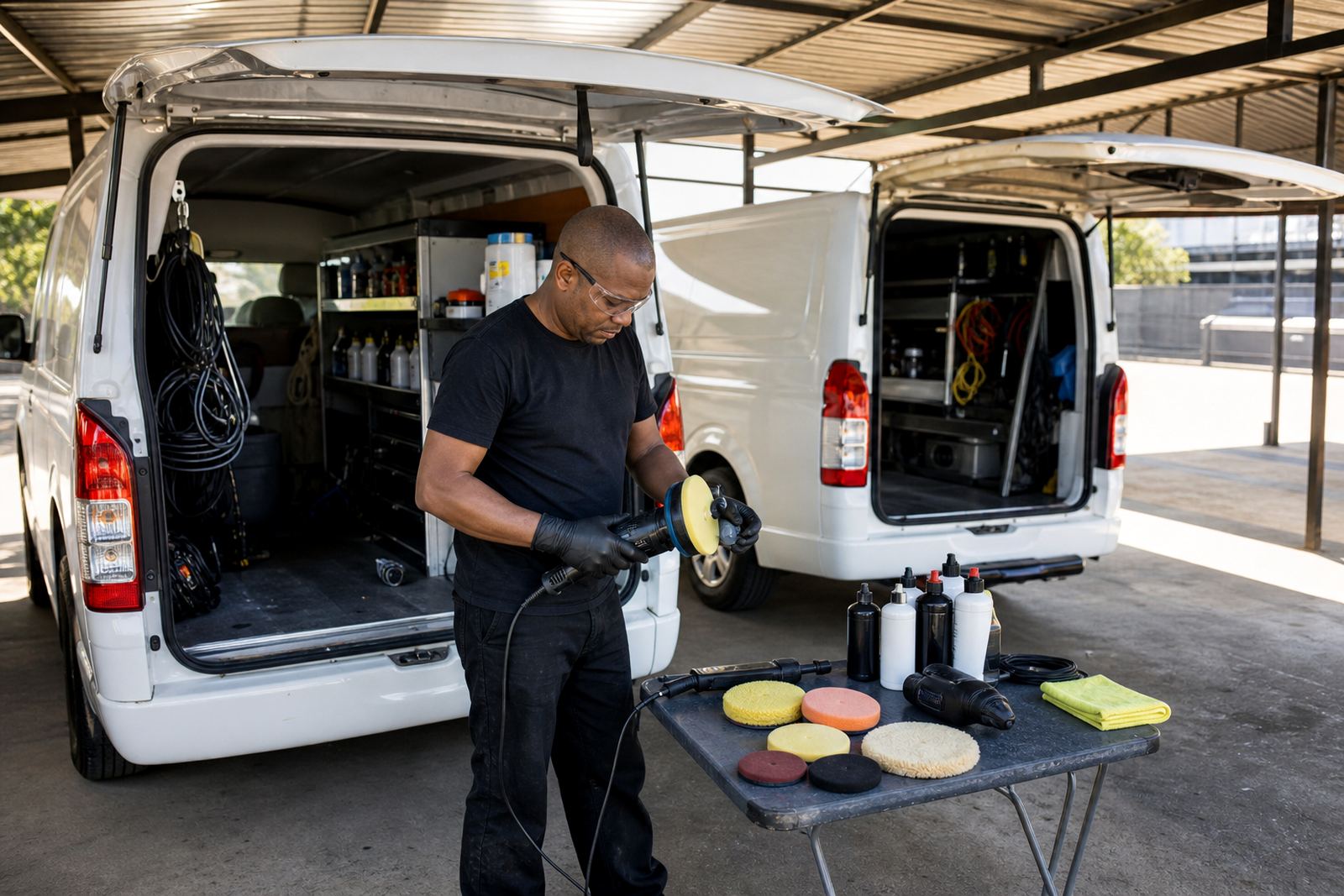
For the machine work we matched rotary and dual-action polishers to the task, because they serve different purposes. A rotary machine cuts faster and is useful when a panel needs controlled defect removal, while a dual-action machine is better for refining, reducing heat build-up and improving the final finish on more delicate areas. On fleet work, that mix gives better control and helps keep the process repeatable.
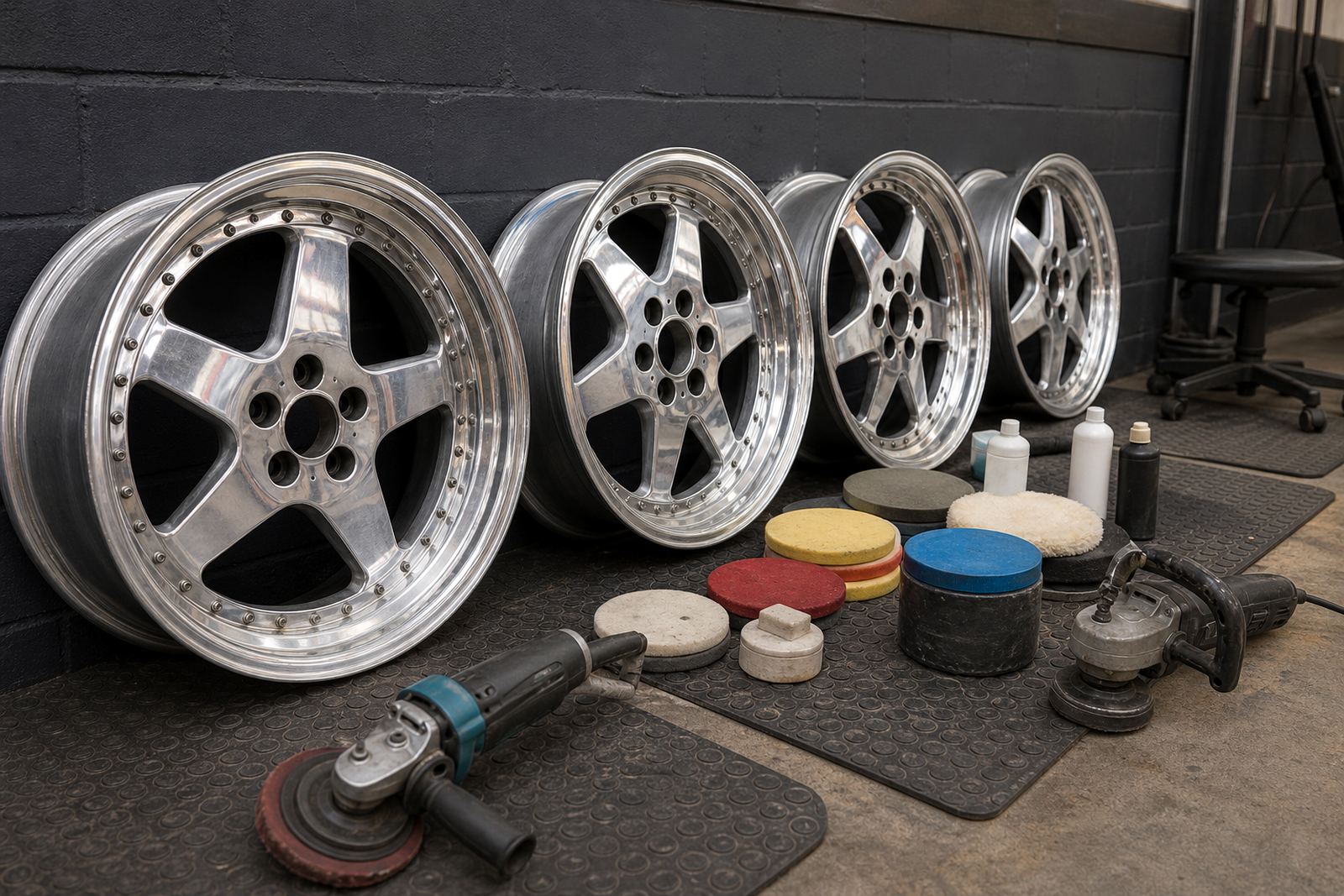
We supplied the polishing guidance, machine handling advice and consumables matching needed for the job. Buffs were chosen according to cut and finish, with foam and fibre options used where appropriate. Compound selection followed the usual rule: start with the least aggressive option that will do the job, then step up only if needed. That approach keeps clear coat removal measured and helps prevent haze, especially on darker trim and around press lines.
The team also received guidance on work speed, pad cleaning intervals and pressure control. Too much pressure or too much heat can burn edges, while a pad loaded with residue can start dragging instead of cutting. A steady hand and the right combination of pad and compound gives a better result then trying to force the polish.
How We Worked The Fleet Over Two Weeks
The project ran over two weeks, with the first week used for assessment, demo work and the main cutting stage, and the second week focused on finishing, repeat checks and training the client team. We kept the process practical: wash, decontaminate, tape sensitive trim, polish in sections, wipe down, inspect under different light and then move on to the next panel. That rhythm made it easier to maintain consistent results across multiple vehicles.
We also gave the client a starter rhythm for future upkeep. If a vehicle only needs a quick refresh later, it should not go straight to an aggressive pad. A lighter combination can often restore enough clarity without overworking the paint. For fleet use, that saves time and helps preserve the finish between proper correction cycles.
- Week 1: inspection, demo, main correction stage
- Week 2: finishing pass, checks and team training
- Method: section by section polishing with wipe downs
- Result: repeatable process for future fleet touch-ups
Results On White And Silver Work Vehicles
The vehicles left with a cleaner, more even gloss and noticeably better reflection across the flatter panels. The white units gained a brighter, more uniform surface and the silver vehicles showed better clarity around curves and body lines. We did not chase perfection on every deep defect, because on a working fleet the priority is balanced finish, safe paint preservation and a result that still looks good after the next wash.
For the client, the main benefit was a more even finish. When several vehicles are handled by different drivers, the surface can become uneven very quickly if each wash and touch-up is done a different way. After the polishing work, the fleet looked more consistent at customer sites and presented better in the yard. It also gave the team a clearer starting point for future maintenance, which cuts down on guesswork when a panel needs attention again.
The end result was practical, not flashy. That suits fleet work in a place like Midrand where vehicles move between business parks, highways and service areas every day and must still look professional at the end of the week.
What We Would Repeat On Fleet Work
If we were to do the same kind of fleet again, we would follow the same order: inspect, isolate defects, match the machine to the paint, then polish in controlled sections. For active fleet operations, the best outcome usually comes from repeatable process rather than trying to make every panel behave the same way. Each vehicle gets its own assessment, but the workflow stays steady.
We would also keep the training side in the plan from the start. That means one crew briefing on pad care, compound choice, machine speed and safe handling, plus a simple maintenance plan for future restocking. On busy fleets, that makes a real difference because the staff know what to use, when to stop and how to avoid mistakes that lead to haze or swirl marks.
- Keep a panel-by-panel inspection before polishing
- Use the least aggressive pad and compound that gets the result
- Clean pads often to avoid residue build-up
- Brief staff on PPE, dust control and machine safety
- Build a follow-up plan for future fleet upkeep
For enquiries, clients in Midrand and across South Africa can reach us through the enquiry form on our contact page. We assist with polishers, buffs, compounds and polishing training for metal and car finishing, including setup advice for teams that need a practical start and a dependable process.
Key facts
| Project | Midrand Fleet Polish |
|---|---|
| Town | Midrand, Gauteng |
| Timeline | 2 weeks |
| Vehicle type | Mixed work fleet |
| Process | Machine polishing with rotary and dual-action methods |
| Focus | Repeatable finish, safe paint care and fleet presentation |