Alberton Brief: Brighter Wheel Faces, Less Haze
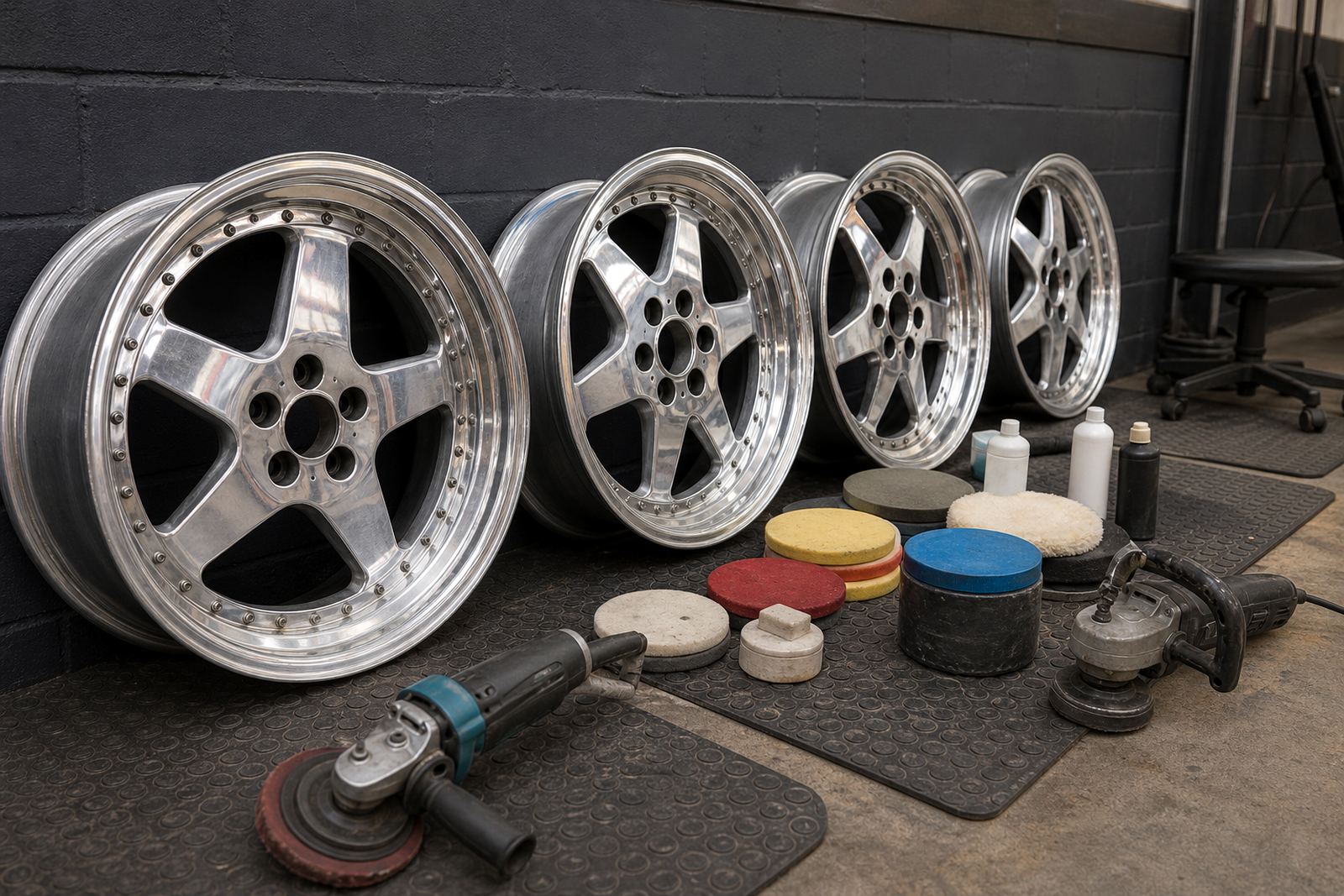
The customer came to us from Alberton with a set of alloy wheels that had lost their clean reflective look from brake dust, wash marks and general road wear. The brief was simple, bring back a brighter finish on the visible faces and keep the work practical for everyday driving on Gauteng roads, where dust and stop start traffic can mark polished metal fast.
This was not about making the wheels look overworked or highly mirrored at the expense of detail. The focus was on removing dull oxidation, reducing minor surface staining and getting the face to read cleaner from a normal viewing distance. We also had to be careful around the edge profiles and spoke corners, because alloy wheel faces can heat up quickly and the wrong pad or pressure can leave marks.
- Client type: retail customer
- Town: Alberton, Gauteng
- Finish goal: cleaner, brighter wheel faces
- Work area: alloy wheel faces and visible spoke surfaces
What We Supplied for the Wheel Job
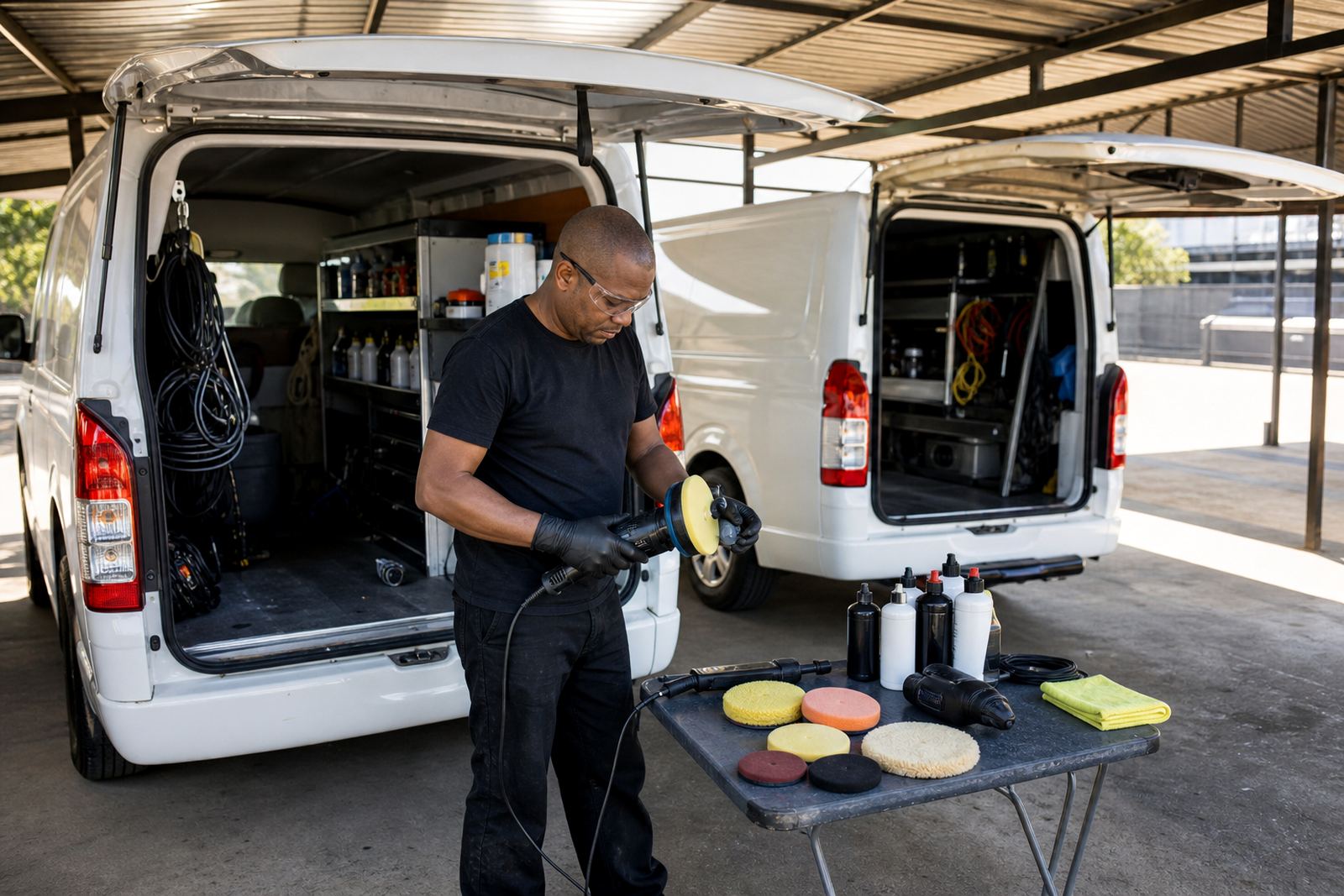
For this project we supplied a practical polishing package suited to alloy wheels and hand finished detail work. That included rotary and dual-action polishers, foam and wool buffs, compound grades for cutting and refining, plus cleaning materials for inspection between stages. Where needed we added soft brushes, microfibre cloths and masking to help protect tyre sidewalls and adjacent trim.
We also gave the customer a straight explanation of what each stage does. A rotary polisher gives faster cutting action and is useful when the face has heavier dulling, while a dual-action machine helps refine the finish with less risk on delicate areas. For alloy wheels, especially on narrow spokes or near valve stems, the operator still needs a light touch and steady movement. Too much pressure in one spot can build heat and leave a patchy result.
- Rotary polisher for initial cut on dull areas
- Dual-action polisher for refining and finishing
- Foam pads and wool buffs for staged work
- Cutting and finishing compounds matched to surface condition
- Masking and cleaning items for safe inspection
Our Method for Alloy Wheel Polishing
We followed a standard wheel polishing process that suits metal finishing in workshop conditions. First the wheels were cleaned thoroughly to remove road film, brake dust and grit. That step matters because trapped dirt can scratch the face as soon as the pad starts moving. After cleaning, we checked the surface for curb scuffs, oxidation marks and old product residue, then selected the pad and compound combo that would remove dullness without going too aggressive.
The polishing itself was done in stages. We started with a controlled cut on the worse areas, then stepped down to a finer pass to improve clarity and reduce swirl marks. On alloy, the finish usually improves when the operator works small sections at a time and wipes down often. That makes it easier to see whether the surface is clearing properly or whether another pass is needed. The wheel lips and spoke edges were kept under close watch because those areas can grab a pad if you rush it.
For this kind of job, we also keep safety front and centre. Polishing compound dust, dried residue and fine metal particles should not be ignored. PPE such as eye protection, gloves and a dust mask is part of the routine, especially if the job is being done in a closed workshop or during windy conditions where dust can move around the bay. On a busy site in Alberton or Germiston, clean working habits save time later and help keep the finish consistent.
- Wash and decontaminate before any machine work
- Test the face first, then choose the least aggressive method that works
- Work in small sections to control heat and residue
- Use PPE and keep the area free of loose dust
Timeline, Handling and Practical Constraints
The project ran over one week from first inspection to final handover. Day one was assessment and material selection, day two and three covered the main polishing work, and the remaining time was used for final refining, cleaning and a check against natural light. That approach works well when you want a clean finish without chasing perfection on every tiny mark, because alloy wheels do still show use once they go back on the road.
There were a few practical constraints. The wheels had to stay dimensionally intact, so no heavy sanding was used that would change the profile. We also had to plan around the fact that polished alloy can haze again if it is handled too early or exposed to dirty water before the surface has been properly wiped down. In Gauteng, with dust and changing weather, timing matters. The customer needed the car back in use quickly, so we kept the process tight and avoided unnecessary downtime.
We would take the same measured approach again for a similar Alberton rim job. It gives a good balance between visible improvement and safe handling of the wheel face. If a customer wants a deeper mirror on bare metal, that becomes a separate discussion because the prep changes and so does the level of aftercare needed.
Result on the Road and at the Curb
The finished wheels showed a clearer face with a brighter appearance and less of the grey haze that had built up before the job. The spokes read cleaner in daylight, and the reflective areas were improved enough to give the car a more cared for look without making the finish look overdone. The customer could see the difference straight away when the car was moved outside.
From our side, the main result was consistency. The same level of finish carried across all the visible faces, and the wheel edges still looked natural. That is important on a retail vehicle because buyers and owners tend to notice mismatch more than small marks. The job also left a useful base for future maintenance, as the surface was cleaned properly and not left with heavy residue.
- Cleaner wheel face reflection
- Reduced dullness and oxidation look
- More even appearance across all wheels
- Better presentation for daily use and resale value
What We Would Repeat on the Next Rim Job
If we handled another alloy wheel polishing project in Alberton, or elsewhere in Johannesburg and the East Rand, we would use the same process and keep the early assessment very detailed. That includes checking whether the wheel is painted, clear coated or bare polished alloy before selecting pads and compounds. A wrong starting point can waste time and leave a less even finish.
We would also repeat the customer briefing. A lot of wheel polishing issues happen after the workshop stage, when the owner uses harsh cleaners or skips basic drying. For polished metal, the advice is simple: avoid aggressive wheel acids, use a soft wash method, dry properly, and keep an eye on brake dust build up. If the customer wants training, we can cover rotary skills, DA skills, pad and compound matching, safety and PPE briefing, and starter kit consultation from our Germiston base.
- Confirm wheel material and coating before starting
- Use the least aggressive method that achieves the brief
- Give aftercare advice suited to local road conditions
- Offer training or workshop guidance if the customer wants to maintain the finish themselves
Key facts
| Project | Alberton alloy wheel polishing |
|---|---|
| Client type | Retail customer |
| Location | Alberton, Gauteng |
| Duration | 1 week |
| Surface | Alloy wheel faces and visible spokes |
| Supplied from | Germiston, Gauteng |