
Fleet condition and finish brief
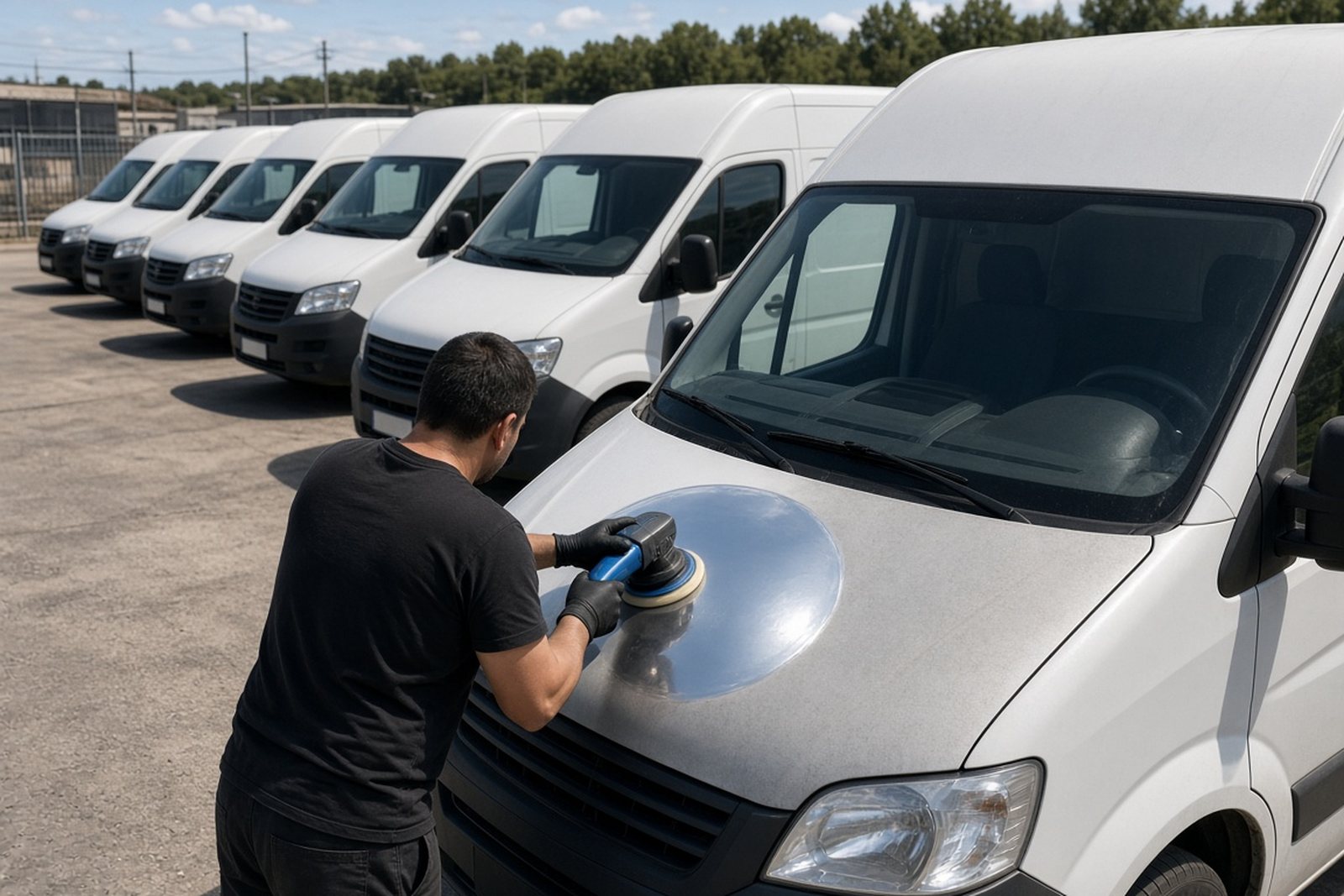
The client was a service fleet operator in Benoni dealing with mixed paint conditions on light commercial vehicles and passenger units. Some panels had wash marks, oxidisation and light swirl from daily use, while a few metal trims and fittings had dull patches from grime and repeated cleaning. The brief was straightforward: improve appearance, keep the process efficient, and make sure the same standard could be repeated vehicle after vehicle.
We discussed the vehicles one by one, then set a finishing plan around paint-safe correction and controlled metal polishing. For fleet work, consistency matters more than chasing a perfect show finish on every panel. The goal was to get a clean, even gloss that looked professional on the road and still held up to daily washing and regular use.
- Fleet type: mixed service vehicles
- Location: Benoni, Gauteng
- Finish focus: paint gloss, trim clean-up, and light metal brightening
- Method: repeatable machine polishing with matched pads and compounds
Equipment and consumables supplied for the job
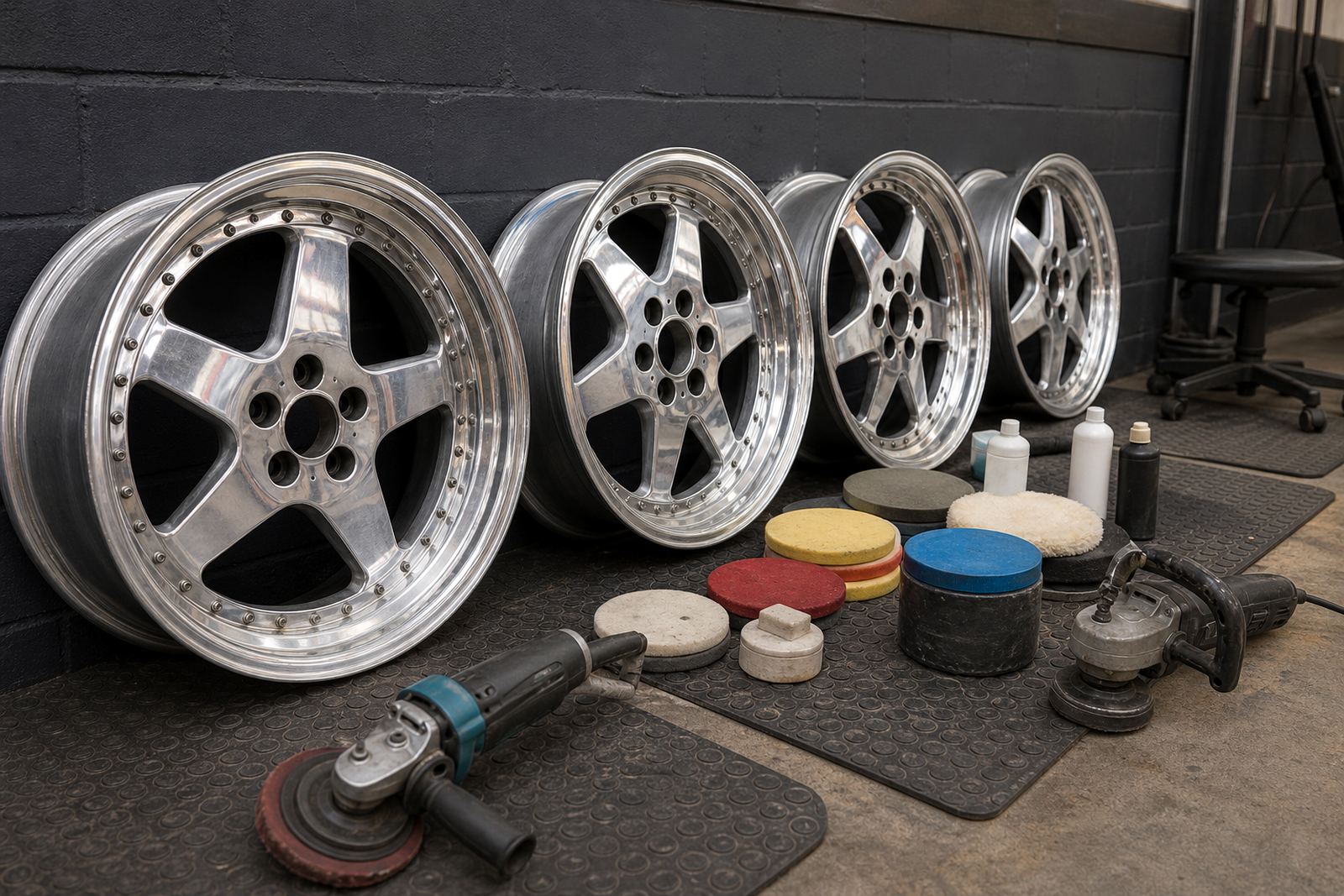
We supplied rotary polishers for faster correction on the harder panels and dual-action polishers for safer refining on more sensitive areas. That mix gave the team enough control to remove light defects without building excess heat or leaving heavy haze behind. On a fleet job, the right machine choice saves time and reduces the chance of rework.
We also matched the buffs and compounds to the condition of each surface. Coarser compounds were used only where needed, then stepped down to finer finishing products for clarity and a smoother surface. For trims and small sections we used smaller pads so the work stayed neat around badges, handles and mirrors. The workshop kit included PPE guidance, pad cleaning practice and dust control advice too, which matters when you are working through multiple vehicles in one week.
- Rotary polishers for efficient correction on harder panels
- Dual-action polishers for safer finishing and refinement
- Foam and microfibre buffs for different stages of the process
- Cutting, refining and finishing compounds matched to panel condition
Process used across the vehicles
Before polishing started, every vehicle was washed, decontaminated and inspected under good light so the team could see what needed attention. Any trapped grime, tar or loose debris was removed first, because polishing over contamination only drags defects across the surface. We then marked off sections and worked in a fixed pattern, which helped keep the finish consistent from bonnet to doors to tailgates.
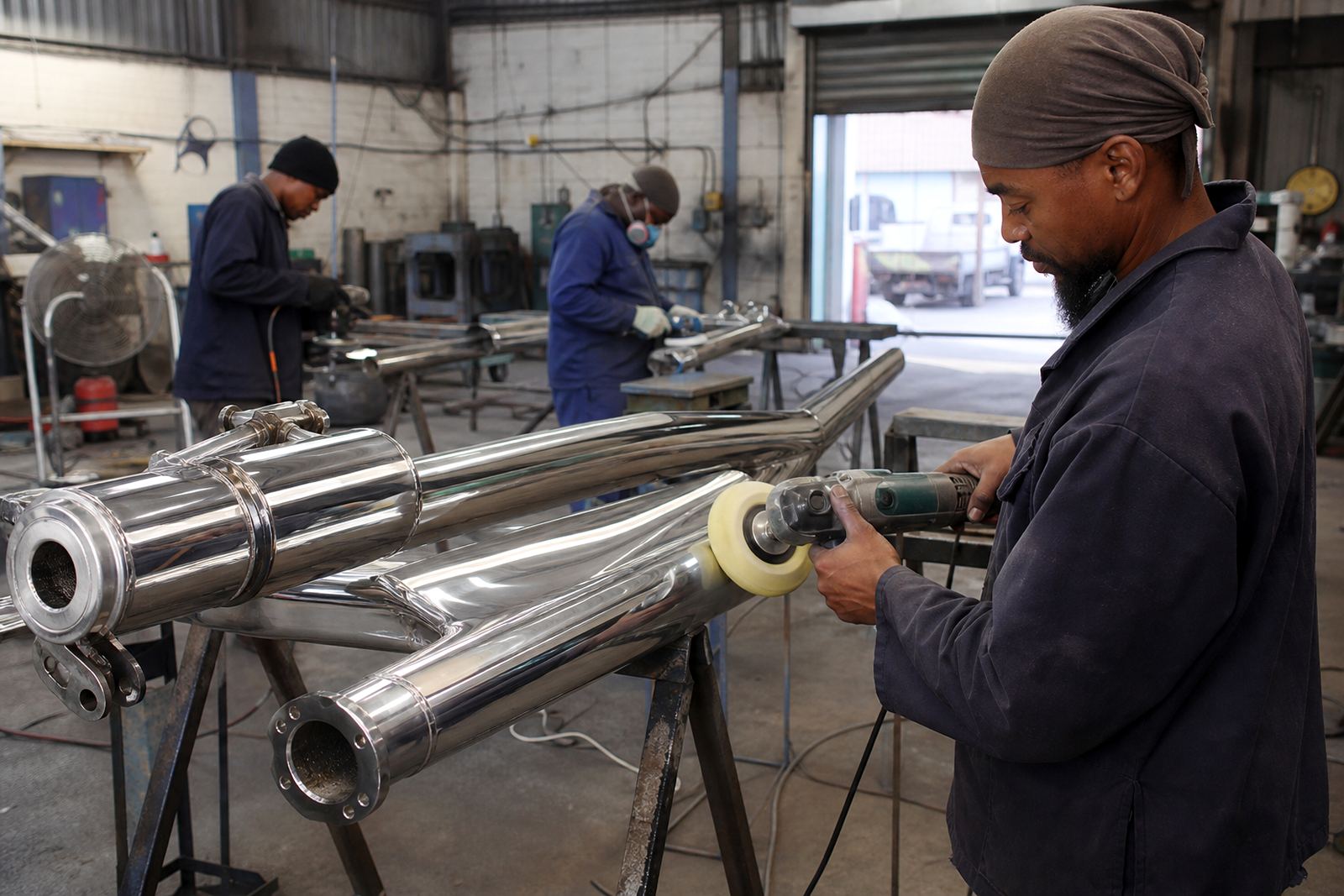
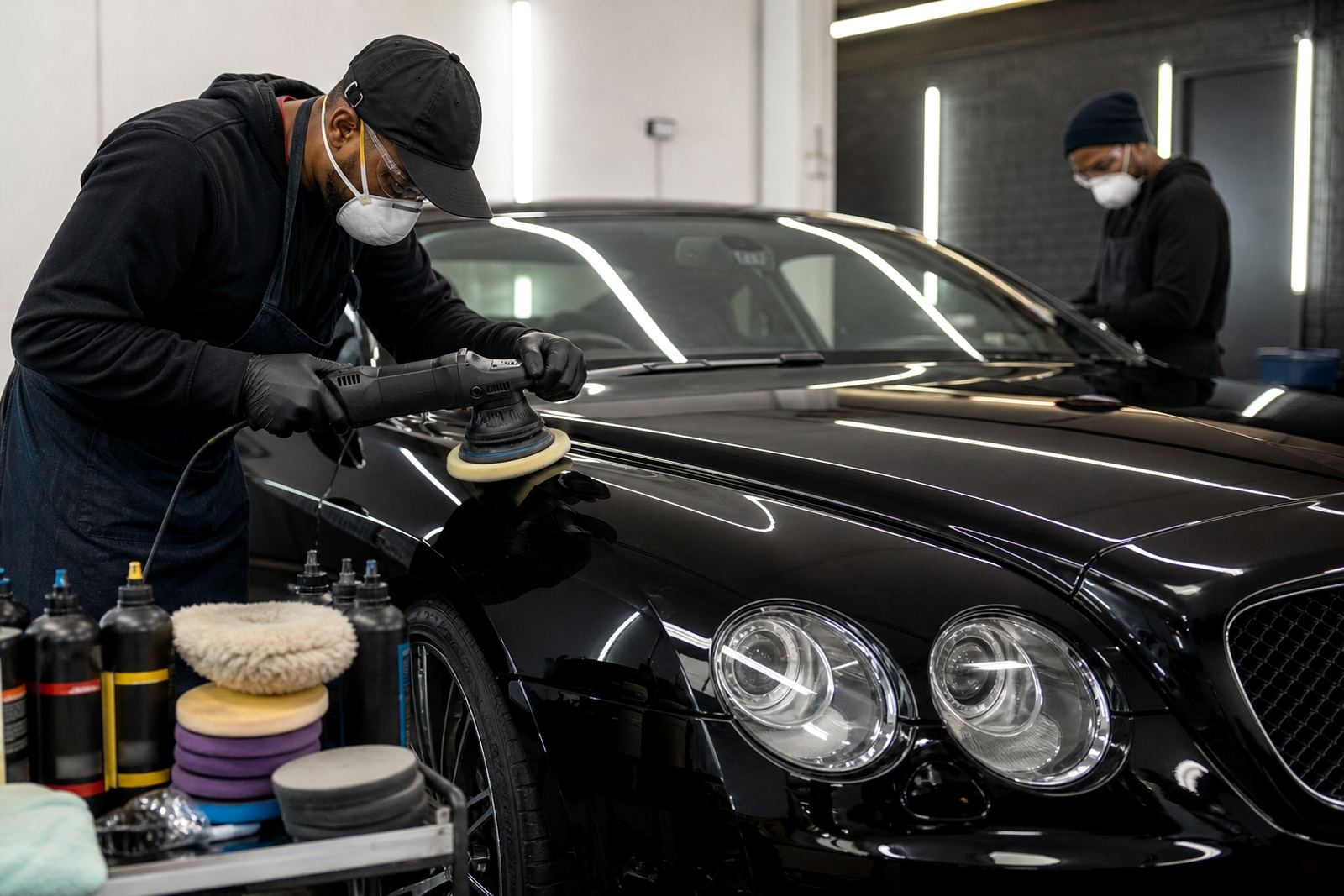
The technique was kept practical. Lower machine speed on the first passes, controlled pressure, short working sections and regular pad cleaning all helped avoid heat build-up. On paint, we aimed for correction without overworking the clear coat. On metal trim, we used a lighter hand and checked each piece as we went because polished metal can change quickly if the pad loads up. Safety was part of the process from the start: gloves, eye protection and dust control were used throughout, especially during compound work and pad maintenance.
- Wash and decontaminate before machine work
- Work in small sections with regular inspection
- Use reduced pressure and correct pad rotation
- Keep PPE on for the full process, not only the noisy stages
Training support for repeatable fleet work
Because the job was part of a working fleet, we paired the supply of tools with short practical training. The aim was not a classroom theory session but simple, usable guidance that supervisors and operators could apply on site. We showed the team how to judge paint condition, when to use rotary versus dual-action machines, and how to move from cutting to finishing without leaving patchy marks.
We also covered pad and compound matching, because that is where many fleet jobs go wrong. Too aggressive a pad on a soft panel can leave marks, while a finishing pad with the wrong compound can waste time and still miss dull areas. The session included starter kit advice, machine care, and how to store buffs and compounds so they stay usable between jobs.
- Beginner Polishing Training for new operators
- Rotary Skills Session and DA Skills Session
- Pad and compound matching for mixed paint conditions
- Machine care guidance for daily fleet use
Timeline, pace and practical constraints
The project ran over two weeks, with the first week focused on inspection, test sections and the higher priority vehicles. The second week covered the remaining units, final refining and a review of the process so the client could repeat it when needed. That pace gave enough time to check each machine setup, avoid rushed passes and keep the finish consistent across the fleet.
The main constraints were time, mixed surface condition and the need to keep vehicles in circulation. We worked around the fleet schedule so only a limited number of units were offline at once. Benoni weather can also play a part, especially when humidity affects drying and compound wipe-off, so the work was planned around stable conditions where possible. There was no point forcing a finish on a hot panel or dusty surface when a short pause would give a better result.
Outcome on paint, metal and presentation
The finished vehicles had a cleaner, more even appearance and the dull patches were visibly reduced. The paint showed better gloss and the metal sections had a brighter, more uniform look without an over-polished shine. For a service fleet, that matters because the vehicles represent the business on the road and at customer sites every day.
We also left the client with a clearer method for ongoing care. Regular washing with safe products, quick inspection after long trips and scheduled light polishing on problem panels will keep the finish presentable for longer. The important part was not only the result on the day, but the repeatable process the team could use the next time the fleet needs attention.
- Improved gloss across multiple vehicles
- Reduced swirl marks and visible wash haze
- Brighter metal trim and fittings
- Cleaner process for future maintenance cycles
What We Would Repeat On Site
If we were doing the same type of Benoni fleet job again, we would use the same staged method, the same machine split between rotary and dual-action, and the same discipline around inspection before each panel. That approach keeps the finish predictable. It also makes training easier because the team follows the same sequence each time instead of changing methods from one vehicle to the next.
For fleet managers, the lesson is simple: proper polishing is not just about shine, it is about process. With the right buffs, compounds, PPE and a bit of planning, the job stays controlled and the vehicles stay in better condition for longer. That is especially useful where a fleet must keep moving and cannot afford avoidable downtime.
Key facts
| Project | Benoni Fleet Job |
|---|---|
| Client type | Service fleet operator |
| Town | Benoni, Gauteng |
| Timeline | 2 weeks |
| Main scope | Multi-vehicle polishing, trim brightening, pad and compound matching |
| Methods used | Rotary polishing, dual-action refining, dust control and PPE briefing |