
Project Brief From Germiston
The client was a local fabrication shop in Germiston working on decorative steel components for a commercial installation. The parts had already been welded, ground and handled during fitment, but the final finish still showed swirl marks, heat tint, light oxidation and patchy sheen from earlier stages. The request was for a brighter surface that would look good under indoor lighting and hold up better in normal use around Johannesburg and the East Rand.
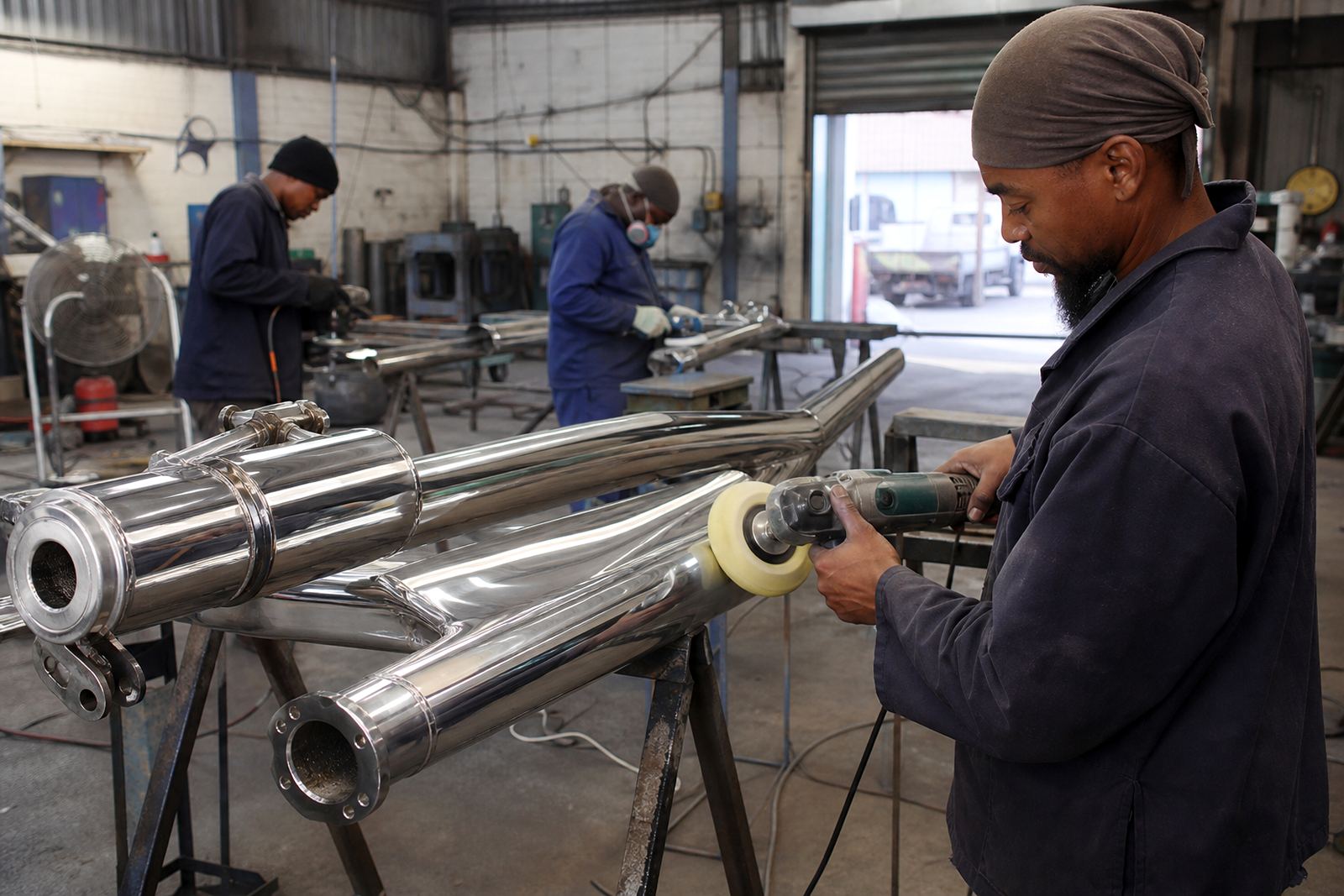
Because the pieces were large and had mixed surfaces, the finishing plan had to suit both flat sections and tighter profiles. Some areas needed controlled cutback, while other sections only needed a softer gloss pass. We also had to keep dust under control, since dry buffing around fabricated steel can send fine residue into nearby machinery and fittings. The work was carried out over 2 weeks, with the first week used for test sections, compound matching and safety checks.
- Location: Germiston, Gauteng
- Client type: Fabrication and metal finishing workshop
- Finish goal: Brighter, cleaner presentation without rounding edges
- Work method: Rotary polishing, staged buffing and final wipe-down
What We Assessed Before Cutting In
We started with a surface check to see where the metal needed correction and where it only needed refining. The brief was not to chase a mirror finish on every section, because that can remove detail from formed edges and leave a surface looking uneven under natural daylight. Instead, we divided the job into zones and matched the tool to the material. That approach is especially useful on fabricated steel where weld seams, grinding marks and heat affected areas all respond differently.
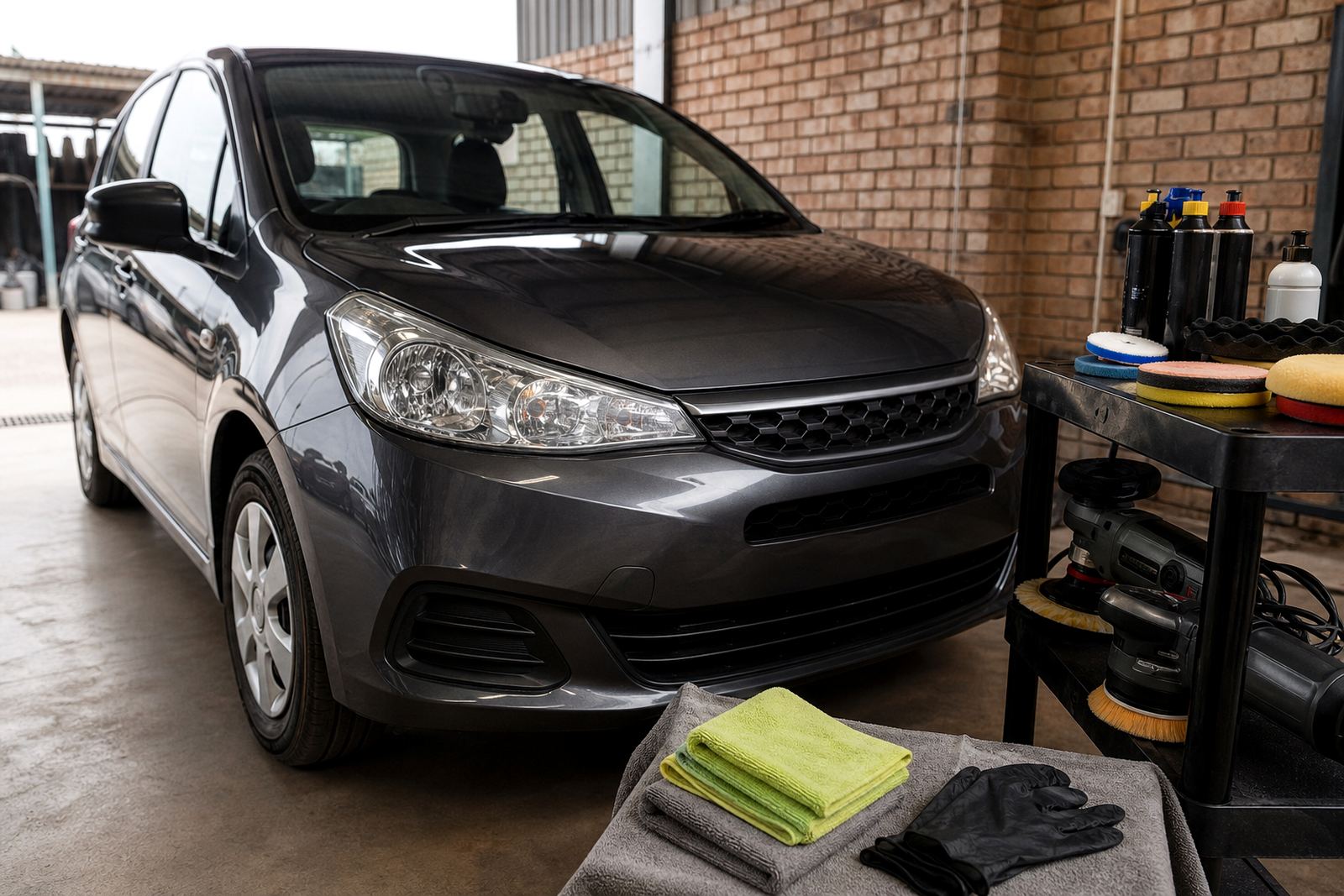
For the heavier marks we used a rotary polisher, which gives direct cutting action and is useful when you need to level the face more decisively. On the lighter areas and the final refinement stages we used dual-action polishing to reduce the risk of haze and uneven pressure marks. The compounds were selected by cut and finishing behaviour rather than by feel alone, and pad choice was matched to the surface texture. This is where many jobs go wrong, because the wrong pad can leave a panel looking clean in one light and streaky in another.
- Surface defects identified: grinding haze, oxidation, weld discoloration and handling marks
- Tool split: rotary for cut, dual-action for refinement
- Pad strategy: firm cutting pads first, then softer finishing pads
Staged Buffing And Compound Work
The work was done in stages so the finish could be checked after each pass. The first stage removed the worst marks with a moderate cut compound and a controlled rotary pass. The second stage reduced swirls and brought the sheen up with a finer compound and a cleaner pad face. The final stage was a low-pressure finishing pass to even out the reflection and make the surface read consistently under workshop lights. On metal, especially across broad panels, small pressure changes can leave visible banding, so keeping the hand steady matters just as much as the product choice.
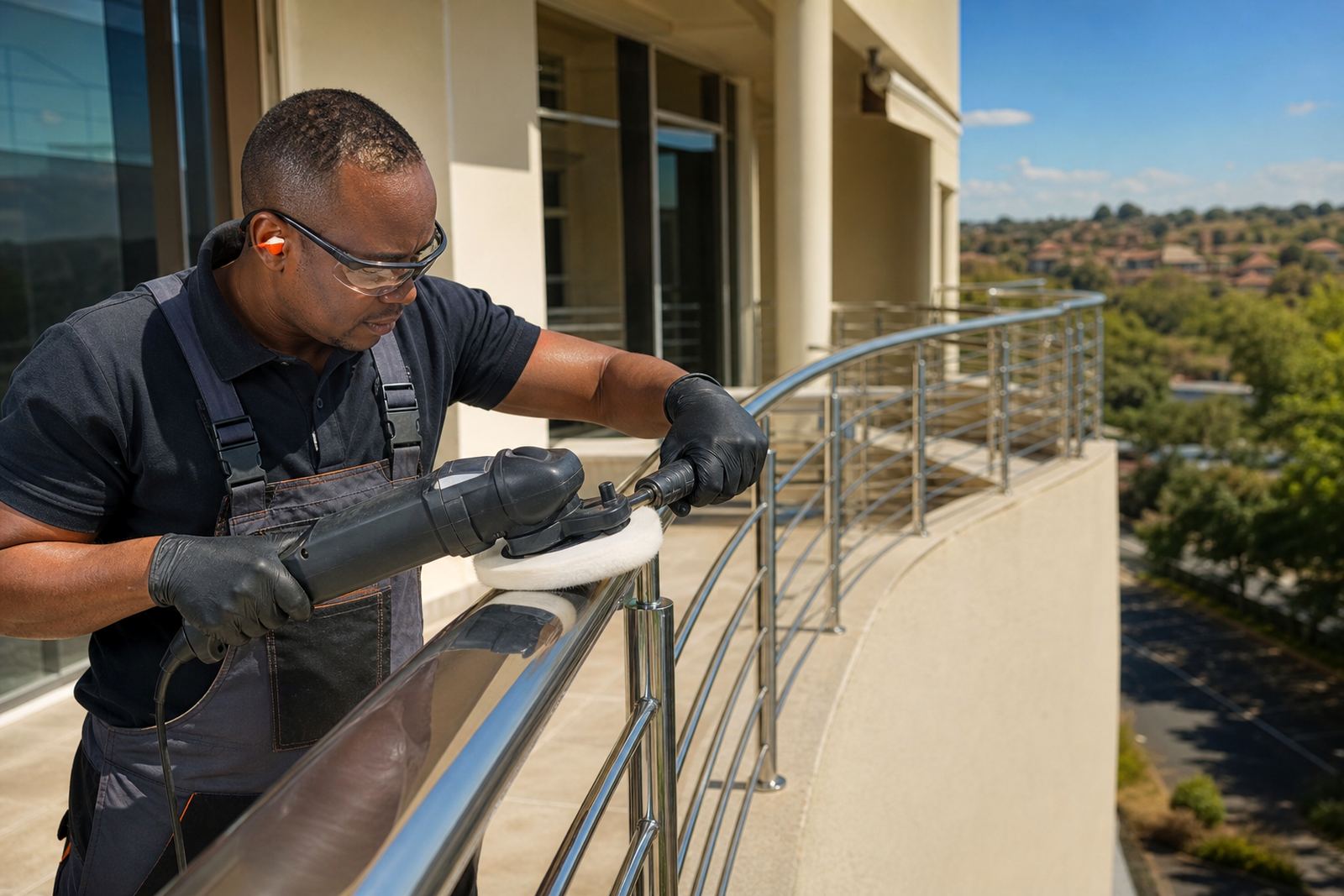
We also cleaned pads often during the process. A loaded pad can hold spent compound and grit, which increases heat and can scratch the surface again. That is why a simple pad cleaning routine is part of proper polishing technique. Dust extraction and regular wipe-downs were used as well, because fine residue from compound and metal oxides should not be left to build up around the work area. Wearing eye protection, gloves and a dust mask is not optional on this kind of job, particularly when dry finishing is involved.
- Compound stages: cut, refine, finish
- Safety used: eye protection, gloves, dust mask and good ventilation
- Control points: pad cleaning, heat management and pressure control
Training Built Into The Job
Because the client wanted the finishing team to repeat the process on future jobs, we built a training element into the project. Our technical advisor and training coordinator worked through machine handling, pad selection, compound loading and how to read the surface between passes. We also covered what to do when a section is coming up too dry, too hot or too glossy in one spot only. That kind of practical guidance helps a crew work faster without guessing.
The team was shown how to manage rotary movement near edges and corners, where the machine can bite if the pad is not kept flat. We also covered dual-action use on broader faces, since that method is kinder to thinner material and useful for final correction. The crew appreciated the explanation on staged polishing because it gave them a process they could follow on site, not just in the shop. It sounds simple, but having a repeatable order of work saves time and avoids rework.
- Training included: machine handling, pad and compound matching, surface reading
- Useful for: fabricators, maintenance teams and finishing crews
- Follow-on support: starter kit guidance and consumables restocking advice
Results On Site And What Changed
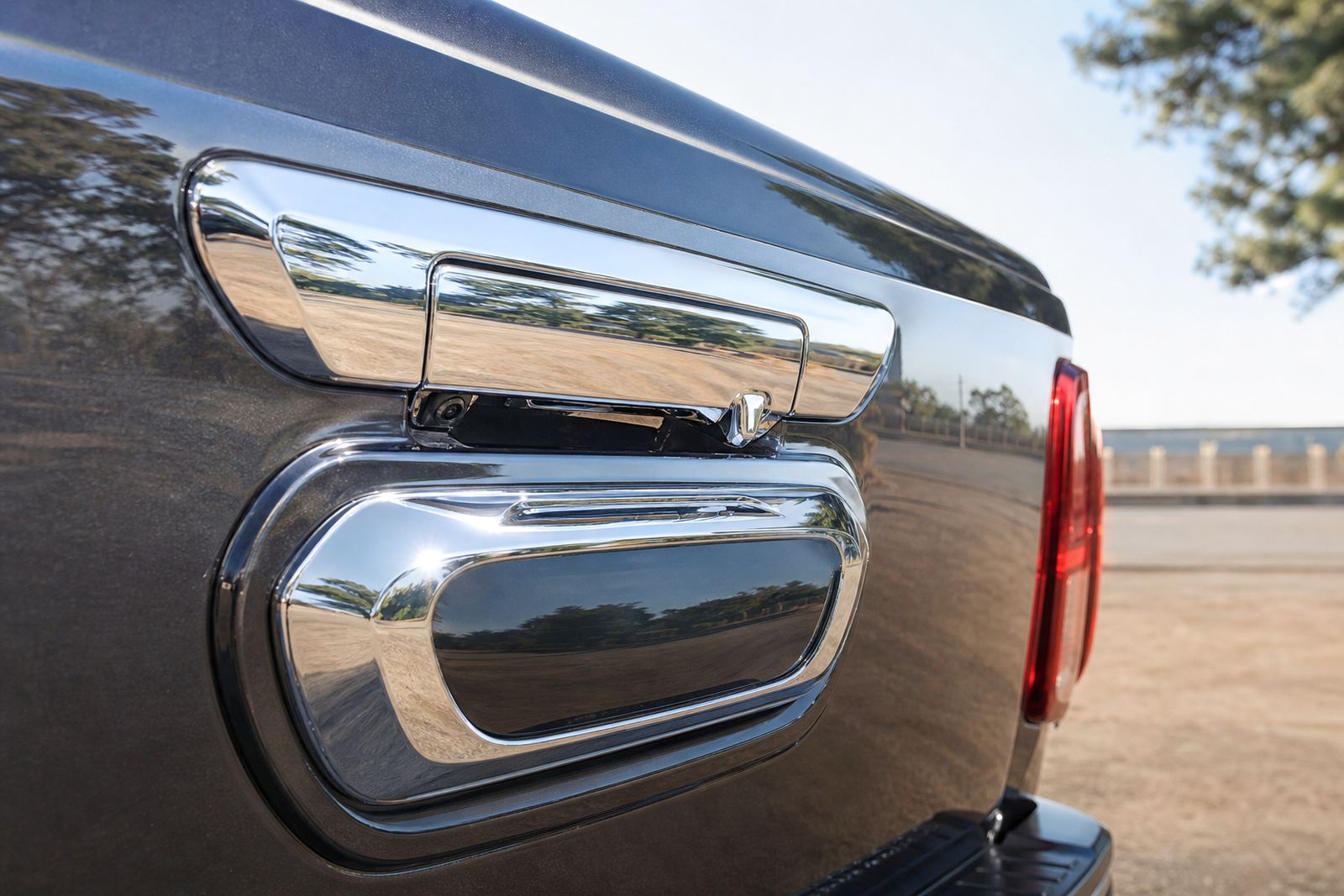
By the end of the second week, the metal presented with a cleaner, brighter finish and a more even reflection across the visible faces. The welded areas blended better into the surrounding surface and the overall look was more suitable for client-facing installation work. The surface was still clearly metal, which was the right outcome for this project, but it no longer carried the dull, patchy look from the earlier fabrication stages.
The client also gained a clearer method for future finishing work. They now had a better sense of when to use a rotary polisher, when to switch to dual-action work and how to choose a compound that matches the level of correction needed. That means less trial and error on the next batch.
We would use the same staged approach again on similar fabricated metal jobs, especially where appearance matters but the surface still needs to stay practical. The main lesson was simple: start with the least aggressive method that can do the job, then step up only where the surface actually needs it. That keeps the finish more even and reduces the risk of chasing defects that were not there in the first place.
Metal Prep Steps We Trust
For a similar project, we would keep the same sequence of inspection, test section work, staged compound choice and final surface check. On fabricated steel, that order gives the best balance between speed and control. We would also keep the same safety brief at the start, because polishing creates fine dust and moving parts that need respect, not guesswork.
This kind of project suits workshops in Germiston, Johannesburg, Pretoria, Cape Town, Durban and Bloemfontein where metal finishing has to look presentable and hold up in day to day use. It also suits teams that want practical help with workshop setup, machine care guidance and onsite team demo support. If a crew needs help matching a pad to a compound or setting up a simple polishing process, that is the sort of thing we handle every week. It keeps the finish consistent and helps the team work with more confidence.
- Best repeat method: inspection, test area, staged cut, refine and finish
- Best use case: fabricated steel, fittings, display parts and client-facing metalwork
- Support available: training, consumables advice and workshop guidance
Key facts
| Project | Germiston metal finishing job |
|---|---|
| Client type | Local fabrication workshop |
| Work period | 2 weeks |
| Location | Germiston, Gauteng |
| Primary process | Rotary polishing with dual-action refinement |
| Finish target | Brighter presentation with controlled reflection |