Coastal Stainless Railings Needing A Cleaner Look
The customer was a private homeowner in Durban looking after a stair and balcony railing set at a coastal property. The railings were still sound, but the finish had picked up a mix of water spotting, light oxidation and handling marks from regular use. On stainless, that sort of wear can make the whole installation look tired even when the metal is structurally fine.
The brief was straight forward: improve the presentation, keep the grain direction consistent, and avoid changing the profile of the tube or flattening the joins. Because the property sits close to the coast, the customer also wanted a method that would be practical for ongoing maintenance in humid conditions. We advised on a polishing approach that suited the surface condition rather than forcing one heavy process across every section, which would have left some areas too bright and others still uneven.
- Project type: stainless railing finishing
- Location: Durban, KwaZulu-Natal
- Material: brushed stainless steel railing sections
- Goal: cleaner, more even presentation for a residential coastal property
What We Supplied For The Job
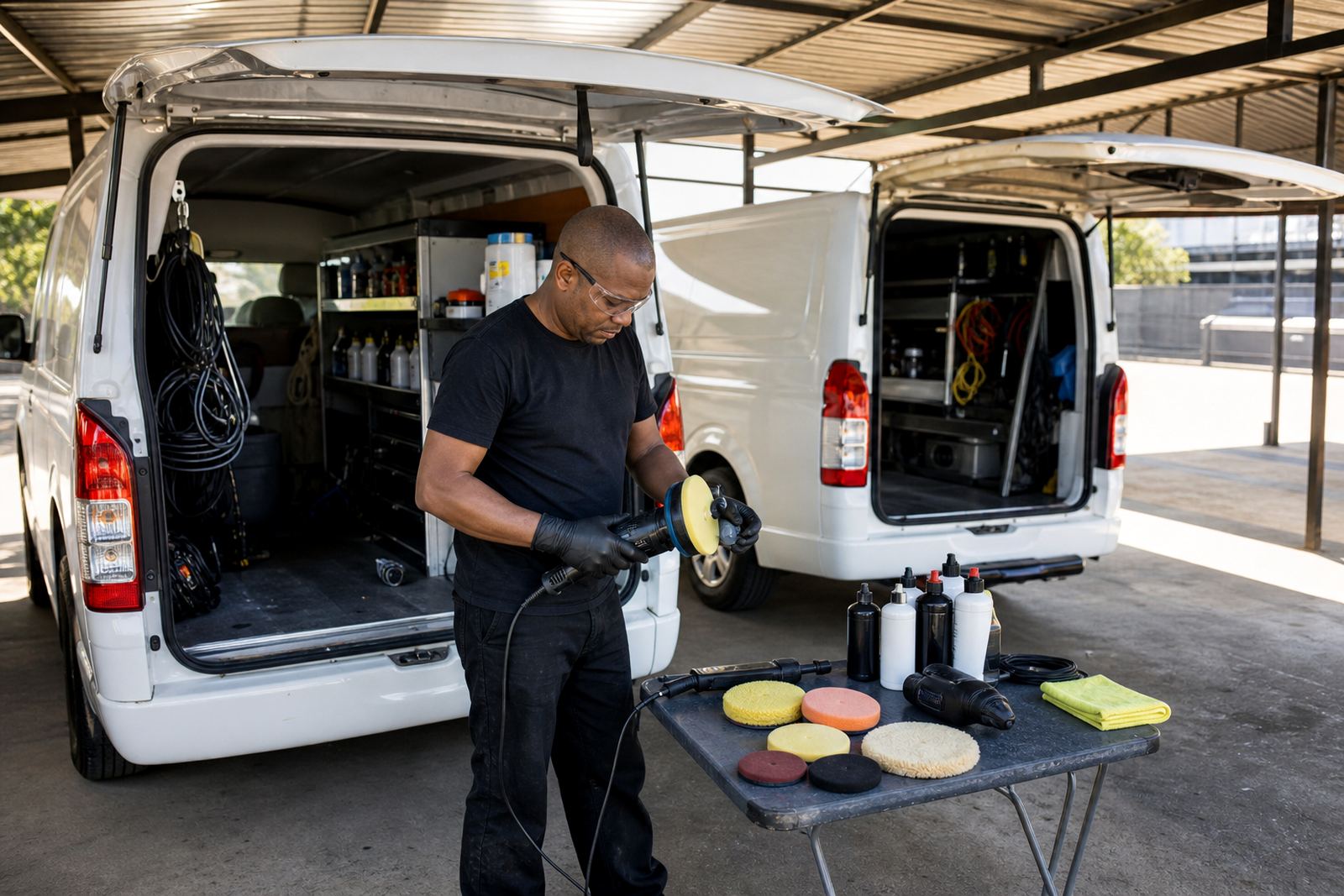
For this job we supplied polishing compounds, buffs and practical guidance on machine use. Stainless needs the right balance between cut and finish, so the pad choice and compound grade were matched to the actual state of the surface. Where the marks were light, a softer finishing approach was enough. Where the surface had more visible handling wear, a slightly firmer cut was used first and then stepped down.
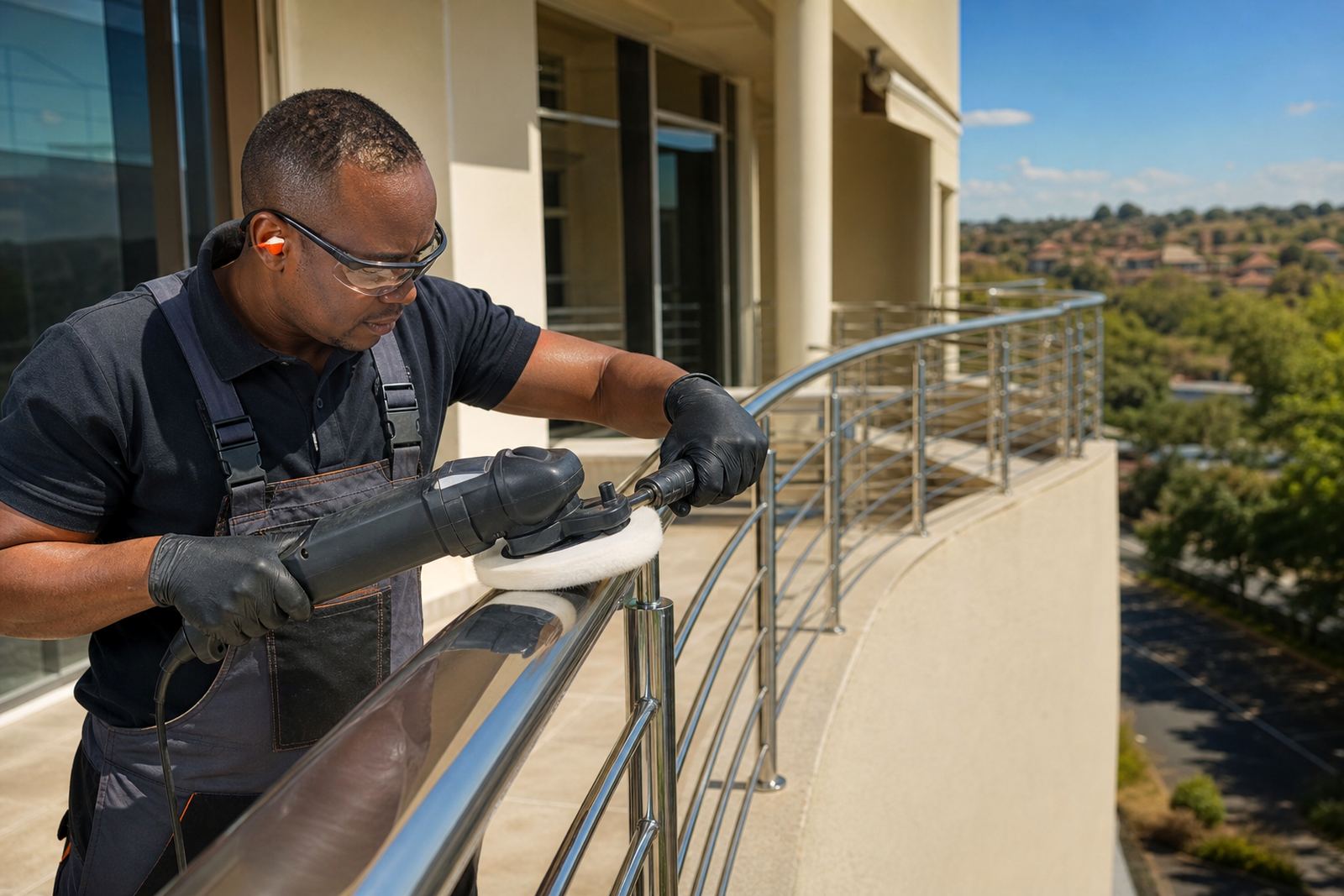
We also covered PPE and dust control before any polishing started. Even on stainless work, fine residue and spent compound can end up on nearby paving, glass or painted surfaces. The team was advised to use eye protection, gloves and a dust mask where needed, with cloths and cleanup kept close at hand. In coastal areas it is easy to rush a job because the weather feels forgiving, but once the sun and salt air dry compound onto the metal, cleanup gets harder not easier.
- Rotary polisher for controlled correction on heavier marks
- Dual-action polisher for finishing and reduced risk of swirl on visible sections
- Foam and fibre buffs selected to suit the stage of polishing
- Compounds for cutting, refining and final finish
- PPE briefing and surface protection advice
How The Railing Surface Was Handled
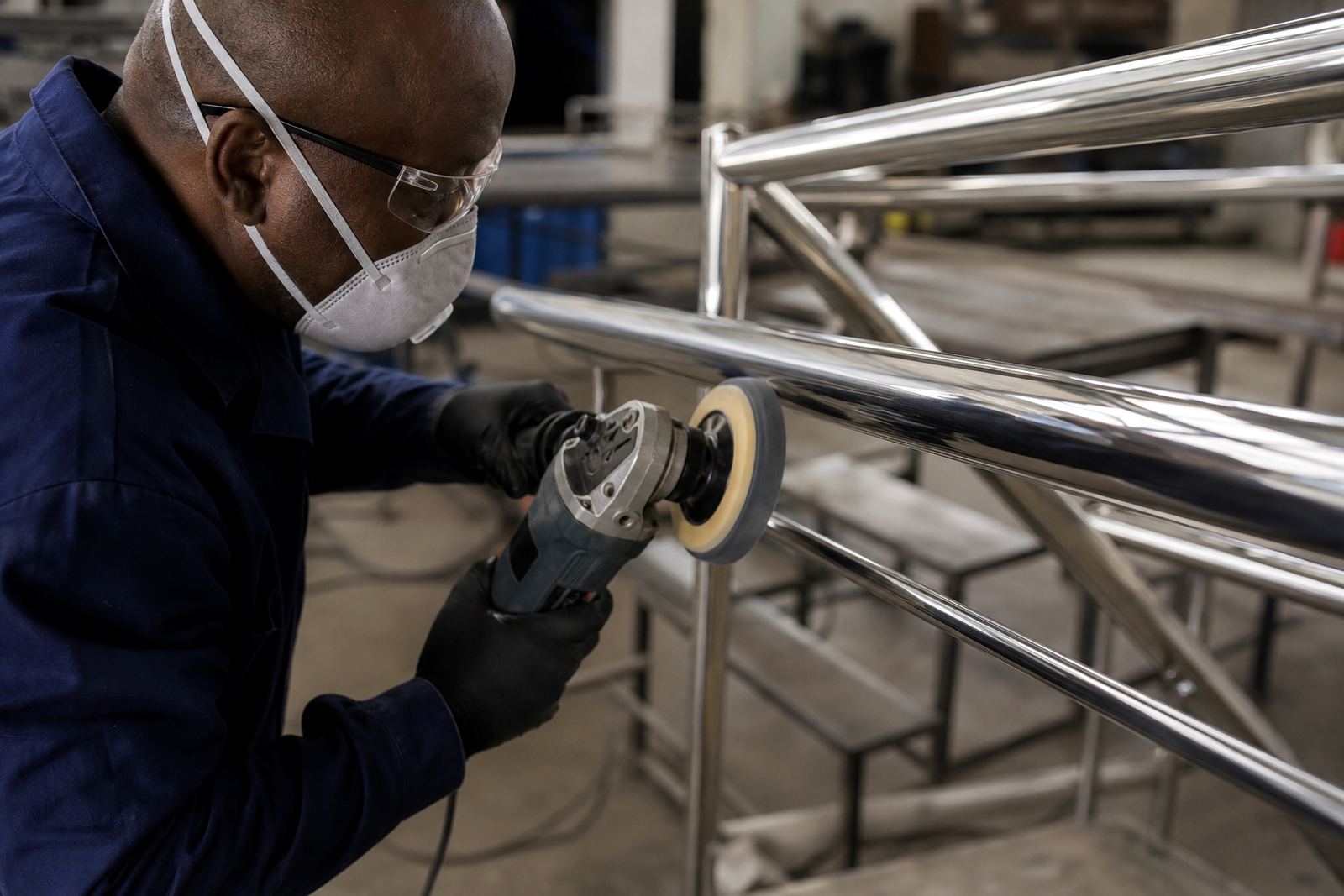
The work was carried out with care around corners, brackets and welded joints because those areas show mistakes quickly. On tubular stainless, it is important to keep the movement even and not sit on one point too long. Too much pressure or heat can leave discolouration, especially where the tube changes direction or where weld finishing has already been done. We kept the motion consistent and worked in short passes rather than trying to fix everything in one go.
Where the grain was visible, the polishing direction followed the existing line as far as possible. That matters on decorative railing work because a cross pattern stands out in sunlight. We explained to the customer that polished stainless should still look like stainless, not like chrome. A good result is clean, even and easier to maintain, not mirror bright in every section. The final pass was used to reduce haze and lift the overall presentation without taking too much metal off the surface.
We also kept an eye on surrounding finishes. Durban humidity can make residue stick to glass and powder coated frames, so masking and cleanup were part of the process, not an afterthought. That saved time at the end and left the railings and adjacent surfaces in a better state than we found them, with no messy overspray or compound build up left behind.
Timeline, Constraints And Site Conditions
The project was completed over one week, allowing time for surface assessment, supply of the correct consumables and final finishing in manageable stages. Because this was a live residential property, access had to fit around the household and normal movement through the staircase and balcony area. That meant the work had to stay tidy and predictable, with no loose dust or clutter left in walkways.
Coastal exposure was the main condition affecting the job. Salt in the air, morning moisture and regular hand contact all contribute to the dulling of stainless surfaces over time.We therefore recommended a process that could stop and start cleanly without leaving obvious lap marks.
- Duration: 1 week from assessment to final finish
- Property type: occupied residential home
- Main constraint: coastal humidity and salt exposure
- Work area: staircase and balcony railings
- Access requirement: keep pathways clear and safe during the job
Result On The Finished Railings
The railings ended up with a cleaner, more even appearance and the surface marks were reduced to the point where the installation looked properly maintained again. The customer was not asking for a showroom mirror finish, and that was the right call. For railing work in a coastal home, a practical finish that looks good in daylight and is easy to wipe down usually gives the best long-term value.
What improved most was the consistency. The brushed look was retained, the uneven dull patches were reduced and the metal read as one finished run rather than a series of different sections. The homeowner also received a straightforward maintenance guide for keeping the stainless presentable with mild cleaning, soft cloths and regular wipe downs after wet weather. That kind of routine matters in Durban because salt air will mark untreated surfaces again if left too long.
There was a clear lesson in the project: stainless does not need to be overworked to look good. The better result came from matching the pad, compound and machine control to the exact state of the railings. That kept the surface cleaner without unnecessary wear, and the finish held together well across the full length of the railing runs.
What We Would Repeat On Similar Jobs
If we were doing the same type of railings again, we would use the same staged approach. Start with an inspection, identify the level of oxidation or handling wear, then choose the polishing path that suits the surface rather than applying one heavy method everywhere. That keeps the result cleaner and reduces the chance of heat marks or uneven gloss. It also helps when the client wants a finish that is presentable but not overdone.
For similar residential work, we would also repeat the safety briefing and surface protection steps. In a coastal area, dust, compound residue and moisture all travel further than people expect. A small amount of planning at the start saves a lot of cleanup later. For customers, the practical value is simple: the railings look better, stay easier to maintain and the process is less disruptive to daily use of the property.
- Inspect first, polish second
- Keep the grain direction consistent
- Use the least aggressive method that still corrects the surface
- Protect nearby glass, paint and paving
- Clean and wipe down before residue dries hard
Key facts
| Project | Durban stainless railing finishing |
|---|---|
| Client type | Private residential customer |
| Location | Durban, KwaZulu-Natal |
| Material | Stainless steel railings |
| Timeline | 1 week |
| Scope | Polishing consumables, method guidance and finishing support |