What the Krugersdorp team needed
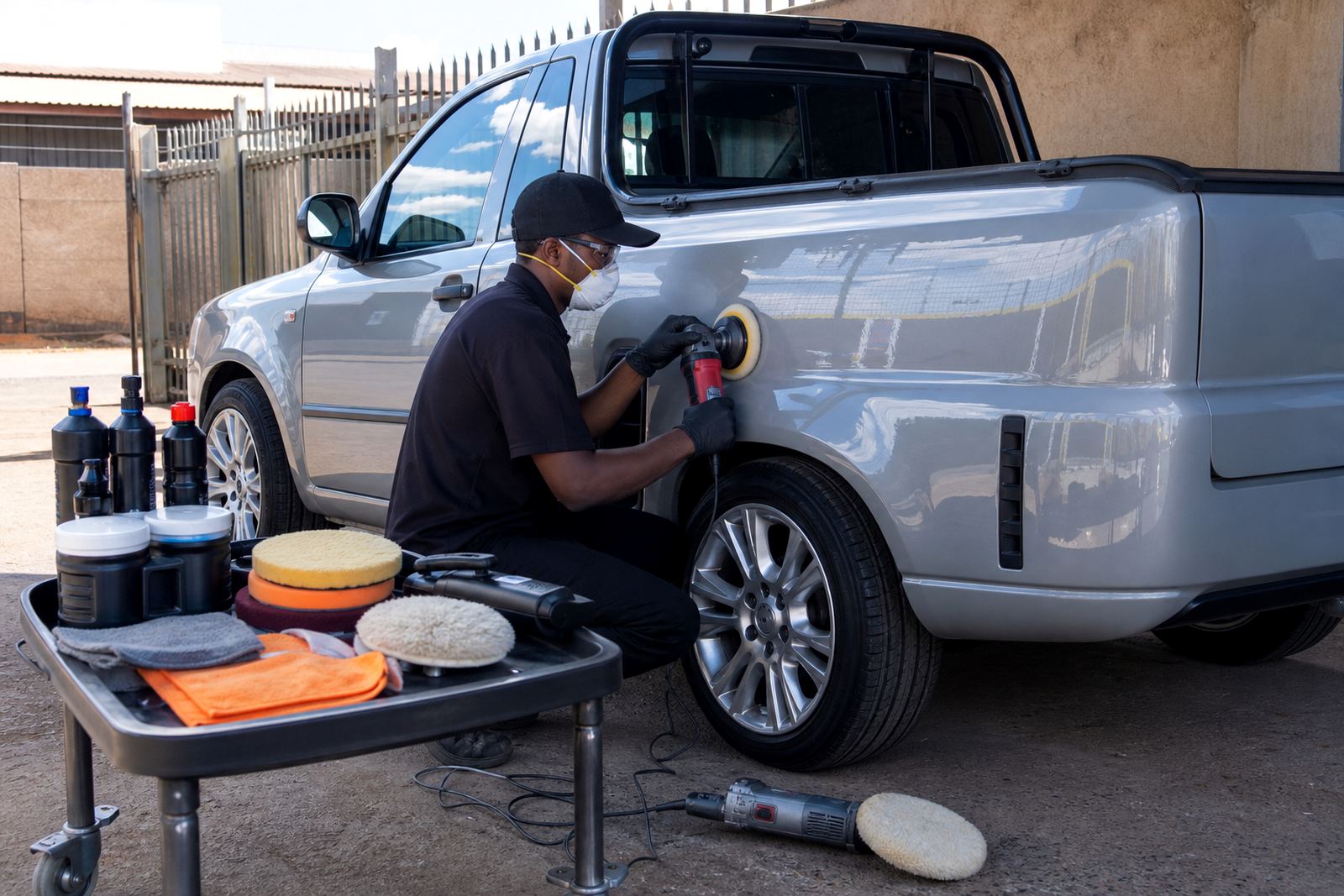
The vehicle was a well used work ute based in Krugersdorp, Gauteng and it came in with faded paint, light swirls, tar marks and dull metal trim. It still had to do daily work, so the owner wanted a proper refresh without stripping the vehicle apart or locking it away for a full week. That meant a practical approach, with careful masking, controlled polishing and a finish that would hold up to dust, sun and regular washing.
The main challenge was time. The ute could only be off the road for a short window, and the surface condition was mixed. Some panels needed light correction while the metal parts needed a cleaner, brighter finish rather than aggressive cutting. We also had to keep safety front of mind because the work involved machine polishing, dust from dry areas and residue near trims and seals.
- Vehicle type: work ute used for daily client visits and site runs
- Location: Krugersdorp, with supply support from Germiston
- Finish goal: neater paint, brighter metal, cleaner presentation
- Main constraint: short turnaround and limited downtime
Tools, compounds and pad selection
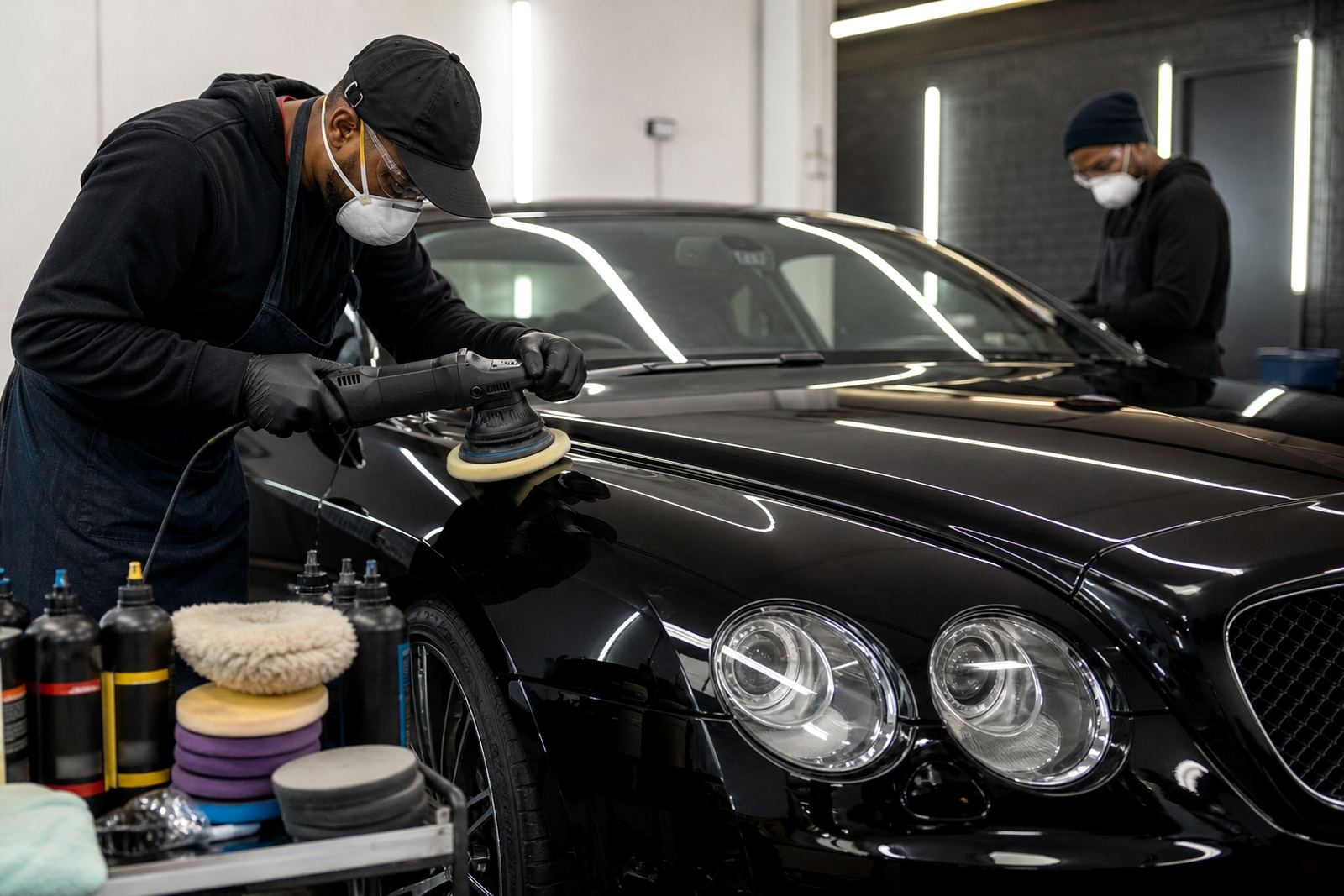
For this job we matched the process to the condition of the paint and the metal. A rotary polisher was used where a more direct cutting action was needed on harder affected areas, while a dual-action polisher was used on the broader body panels for a more controlled finish. That combination gave us flexibility, especially on curved panels and around badges, handles and edges where heat build up can become a problem.
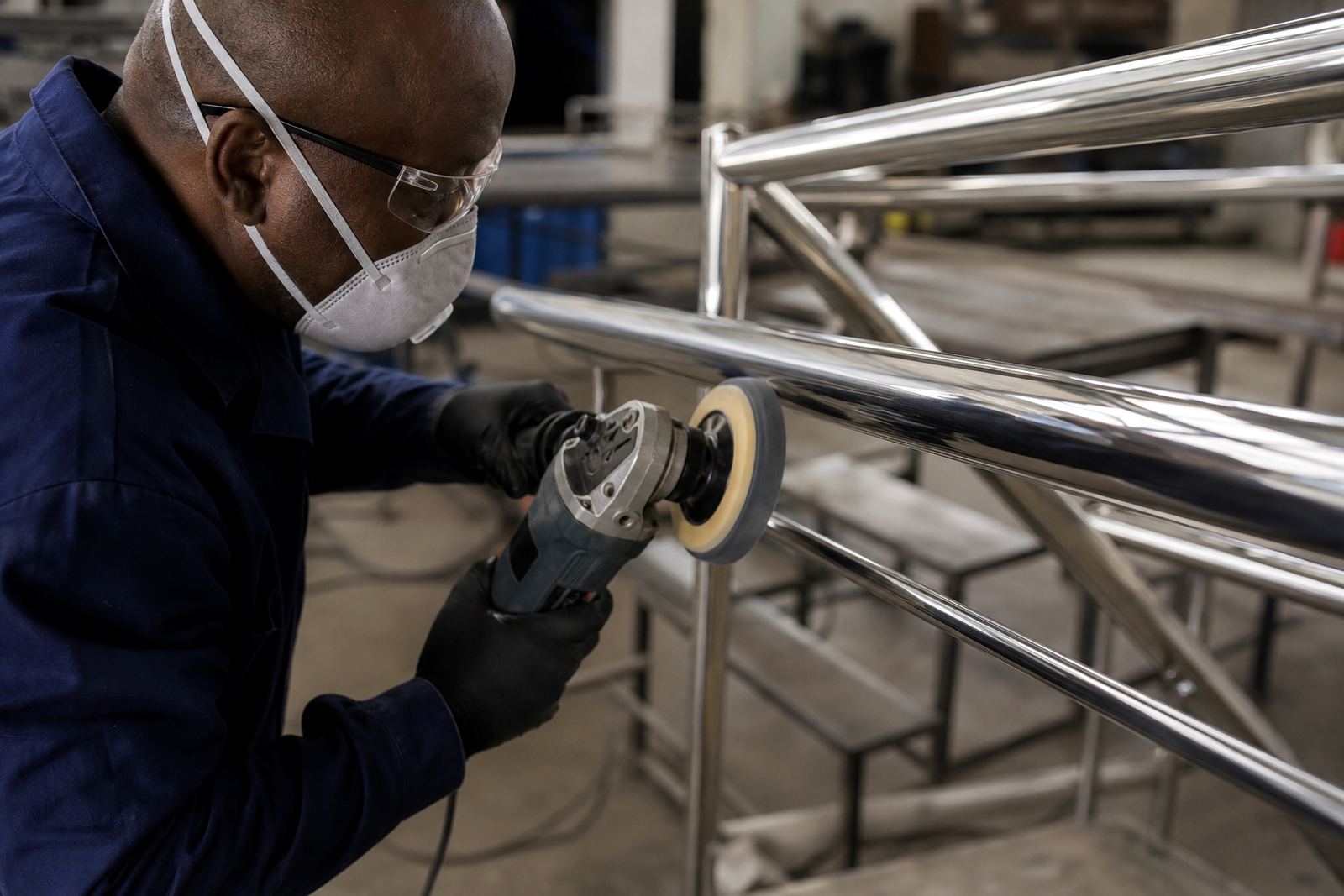
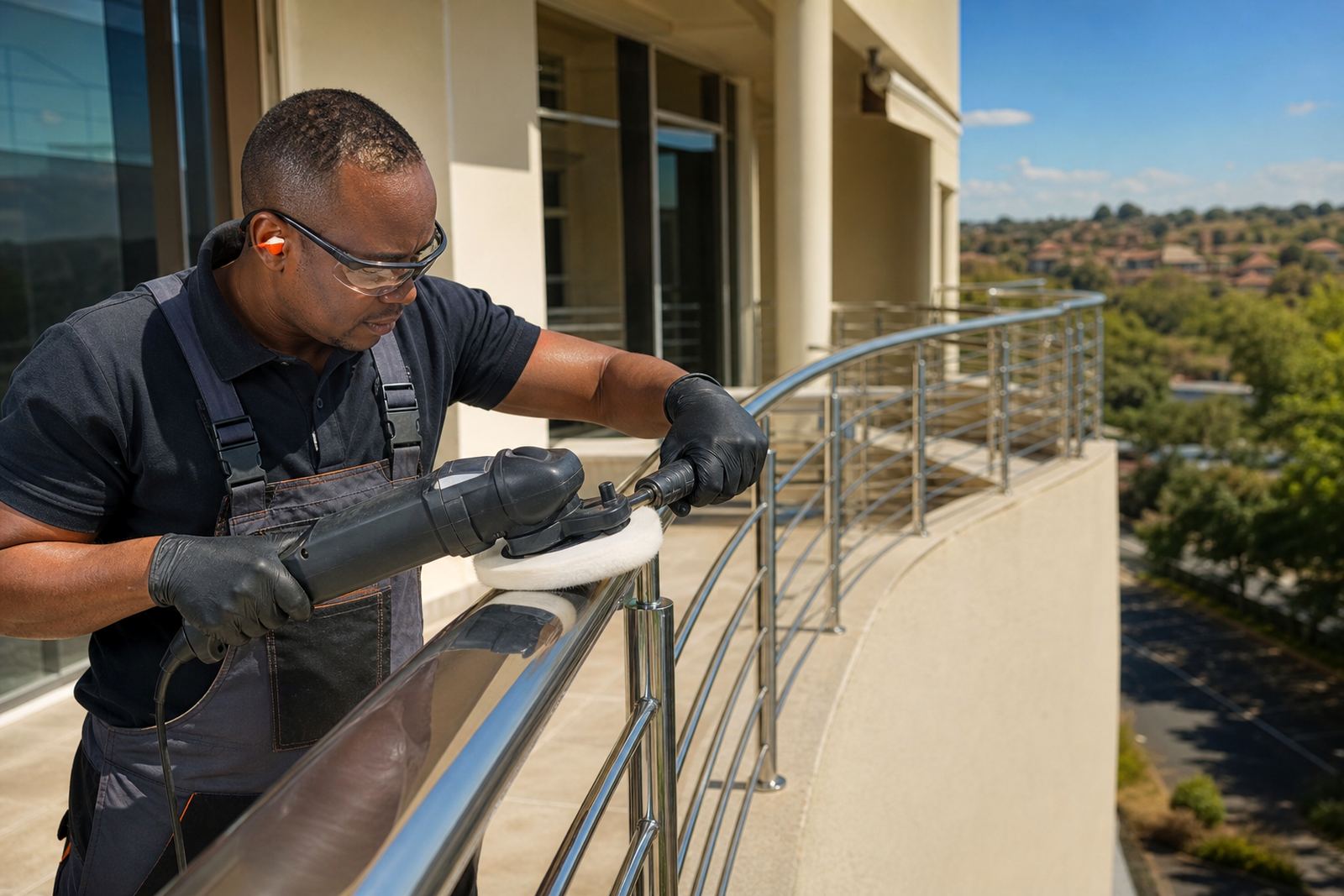
We supplied polishing pads, compounds and finishing products in a staged sequence. The compound choice depended on the panel condition and the expected level of correction. Coarser compound was used only where needed, then stepped down to a finer polish for gloss and clarity. On the metal sections, buffing was done with the correct wheel and compound combination so the finish came up evenly, without leaving patchy marks or heavy haze.
- Rotary polisher for targeted correction on tougher areas
- Dual-action polisher for safer finishing on larger panels
- Cutting, polishing and finishing compounds matched to surface condition
- Buffs selected for aluminium, trim and other metal parts
How we approached the finish
We started with a thorough wash and decontamination step so the machine work would not drag grit across the surface. After drying, the paint was inspected under direct light and with the vehicle pulled into shade at times to see the actual marking. The ute had light oxidation on some exposed areas and a fair amount of swirl from routine washing, so the aim was improvement not perfection beyond the limits of the original paint.
The work was done panel by panel. We masked sensitive edges, worked slower on warmer areas and kept the pad flat to avoid unnecessary strike through. A careful pass on the bonnet, doors and load body brought back a clearer gloss. The metal finish on trim and fittings was also lifted, which made the whole vehicle look more coherent and better cared for. In Krugersdorp, where dust and hard use are part of the day, that kind of refresh makes a real difference to how a vehicle presents.
- Wash and decontaminate before any machine work
- Inspect under strong light to map swirl, haze and oxidation
- Work in sections to control heat and residue
- Finish with a wipe down and final inspection of edges, seams and trims
Training included for the crew
Because the owner wanted the team to maintain the vehicle properly after the refresh, we included a practical training session. This covered basic machine handling, pad and compound matching, safe work speed and how to read the paint before making a choice on cut or finish. We also covered PPE and dust safety because polishing can throw off fine residue and dry contaminants, especially on older vehicles or work vehicles that see gravel roads and site dust.
The crew also got guidance on what not to do. Too much pressure, too much heat and the wrong pad choice can leave marks that are harder to correct later. We went through a simple maintenance method that fits a busy yard: wash properly, dry with clean towels, keep the pads clean, and do not chase one problem area for too long. That keeps the finish looking presentable for longer and reduces extra labour later on.
- Beginner level polishing guidance for the onsite team
- Safety and PPE briefing for machine work and dust control
- Pad and compound matching for paint and metal
- Machine care tips for the rotary and dual-action units
Turnaround, process and working conditions
The job stretched over two weeks, from the first check-through to final handover. The opening week covered planning, product choice and the first round of polishing. The second week was set aside for finer refinement, metal buffing, touch-up detailing and a last inspection after the finish had settled. That timing worked well for the client because the vehicle stayed useful between stages and there was no drawn-out, avoidable downtime.
We also kept the practical realities in mind.Where possible, we kept prep work, masking and inspection steps ready so machine time could be used efficiently. The result was a cleaner handover and less disruption to the working week. It was a solid example of how a simple, well planned polish job can improve appearance without turning into a major rebuild.
- Timeline: 2 weeks from assessment to completion
- Handled in stages so the vehicle stayed useful during the job
- Plan allowed for local working conditions and power interruptions
Results and what we would repeat
The ute left looking sharper and more professional, with improved gloss on the paint and a cleaner look on the metal trim and fittings. The finish was not overdone, which mattered because this was still a working vehicle. It needed to look good at a client’s gate, but also survive jobsite use, dust and frequent washing. The owner had asked for a practical refresh and that is exactly what the result delivered.
If we did this type of job again in Krugersdorp or elsewhere in Gauteng, we would follow the same order of work: assess first, choose the least aggressive method that will do the job, then finish with clear training for the people who will keep using the vehicle. That approach saves time, reduces the chance of damage and gives the best balance between appearance and day to day function. For work vehicles, that balance matters more than chasing an extreme showroom look.
- Better presentation for client visits and daily use
- Cleaner metal finish with more even appearance across the vehicle
- Repeatable process the crew can follow after the job
- Good fit for trade vehicles that need fast turnaround
Key facts
| Project | Krugersdorp ute job |
|---|---|
| Client type | Local trade operator |
| Town | Krugersdorp, Gauteng |
| Timeline | 2 weeks |
| Main services supplied | Rotary polishing, dual-action polishing, metal buffing, training |
| Support included | Pad and compound matching, safety briefing, machine care guidance |