
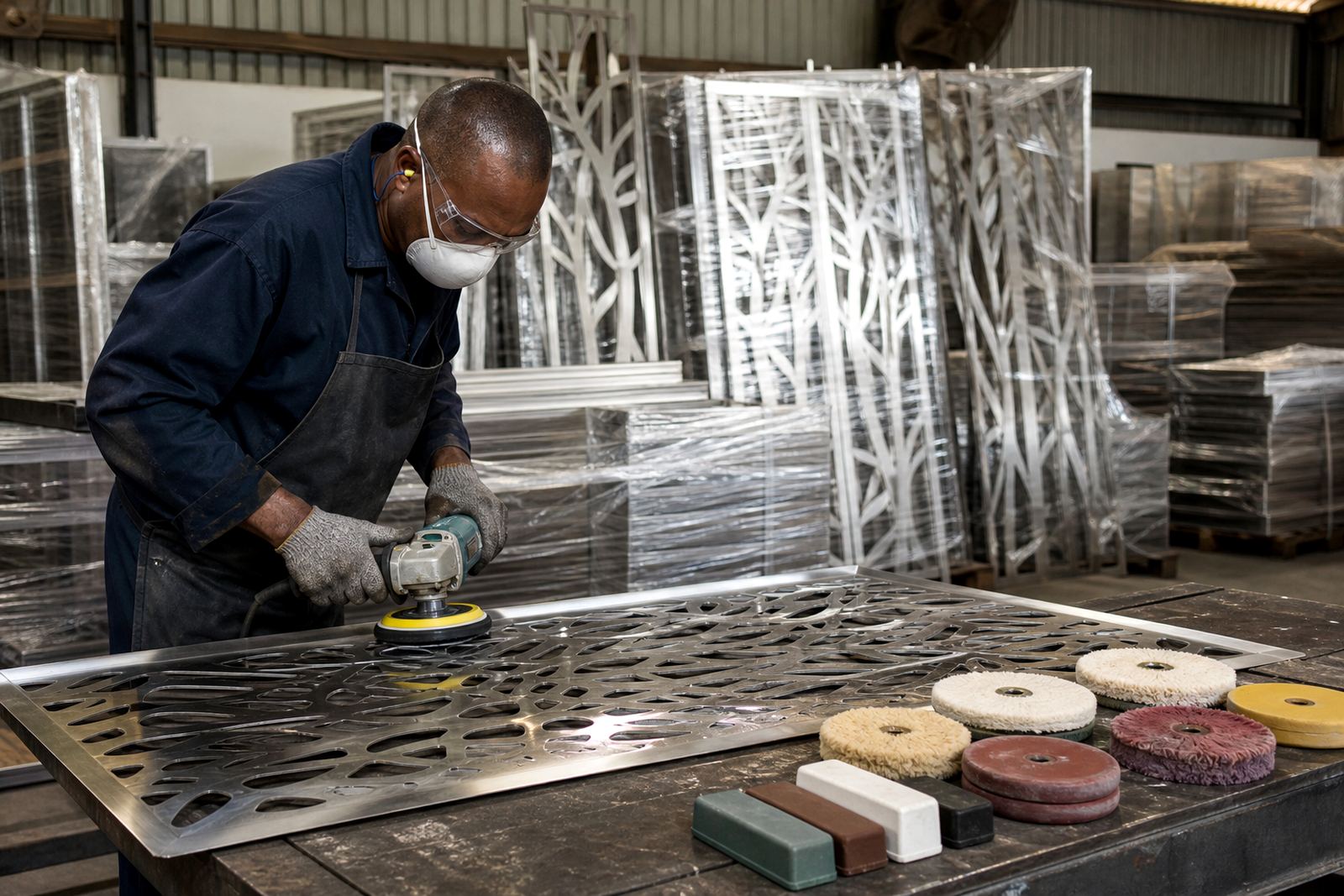
Client brief for a coastal decorative finish
The client was a Cape Town property and fit-out team working on decorative metal features for a high visibility interior and exterior job. The brief was straightforward on paper but demanding in practice: achieve a bright, even finish on metal components that would sit close to the coast, then keep the look stable through handling, cleaning and day to day use.
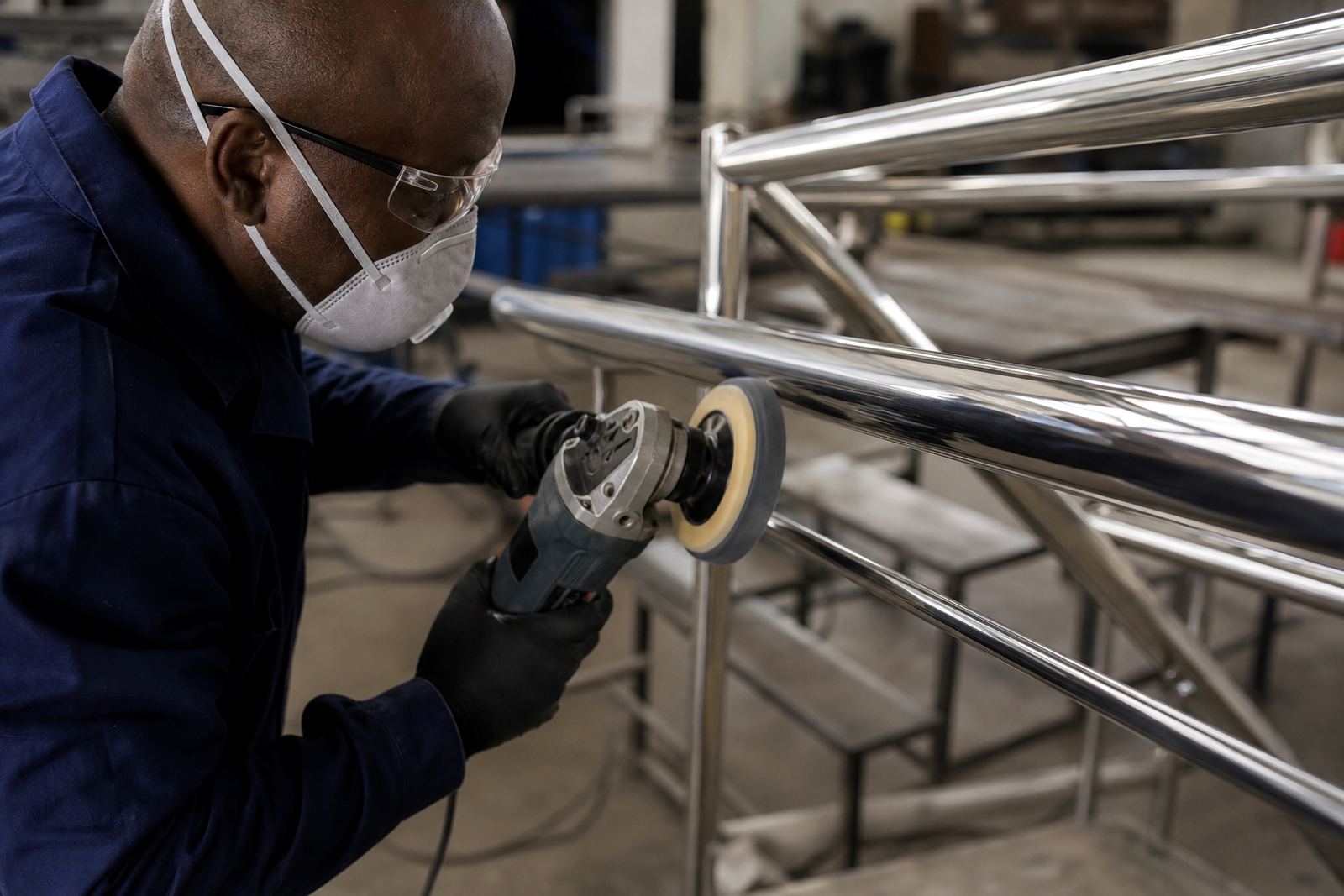
The material mix included polished metal sections with a mix of flat faces, edges and tighter profiles. The team wanted a finish that looked clean in natural light and under indoor lighting, without swirl marks, heat staining or rounded edges from overworking the surface. Because the site was in Cape Town, coastal humidity and fine airborne grit were part of the picture, so we planned the work around controlled prep and sensible protection after polishing.
- Project type: decorative metal finishing
- Location: Cape Town, Western Cape
- Supply point: Germiston, Gauteng
- Use case: installation grade finish for visible architectural metal
Constraints from transport, climate and access
The main constraint was not the polishing itself, but the conditions around it. The gear had to travel from Gauteng, so we packed for safe transit and clear item checking on arrival. The team also needed a finish system that could be repeated by on-site staff without relying on specialist workshop conditions every time.
Coastal work brings its own issues. Salt in the air can dull a finish quicker than inland conditions, and if the area is exposed to wind you end up fighting dust sticking to pads and compounds. In this case the site also had limited space for setup, so we kept the system simple enough to run in sections, with cleaning between passes and careful control of compound loading.
- Limited working space on site
- Coastal humidity and fine grit exposure
- Need for repeatable method for staff use
- Power planning for stop-start site conditions
What we supplied and how it matched
We matched the job to a mix of rotary and dual-action polishers, then paired those machines with buffs and compounds suited to the metal condition and the level of finish required. Rotary machines were used where controlled cutting and faster correction were needed. Dual-action units were used where the surface needed a softer touch, especially on final refining and on areas where heat build-up could cause trouble.
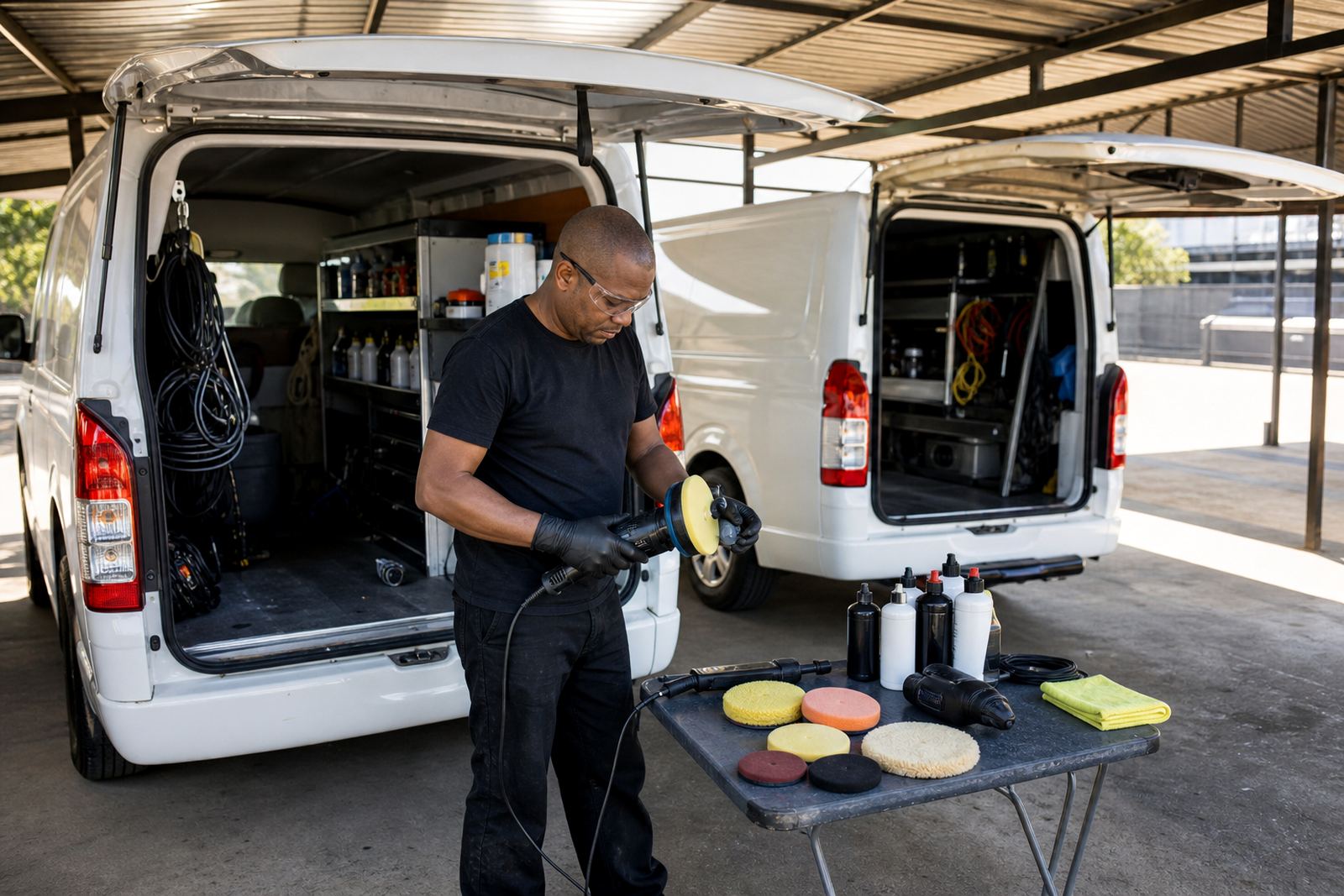
The consumables included cutting, refining and finishing compounds, along with a selection of wool and foam buffs for different stages. For this kind of work, pad and compound matching matters more than people think. A heavy cut pad with the wrong compound can leave haze. A soft finishing pad used too early will only polish over scratches instead of removing them. We set the kit up so the team could move from correction to finishing without changing the whole process every few minutes.
- Rotary polisher for correction and controlled cut
- Dual-action polisher for safer finishing passes
- Buffs selected by stage and surface shape
- Compounds matched to metal condition and target sheen
Training for safe polishing on metal and paint
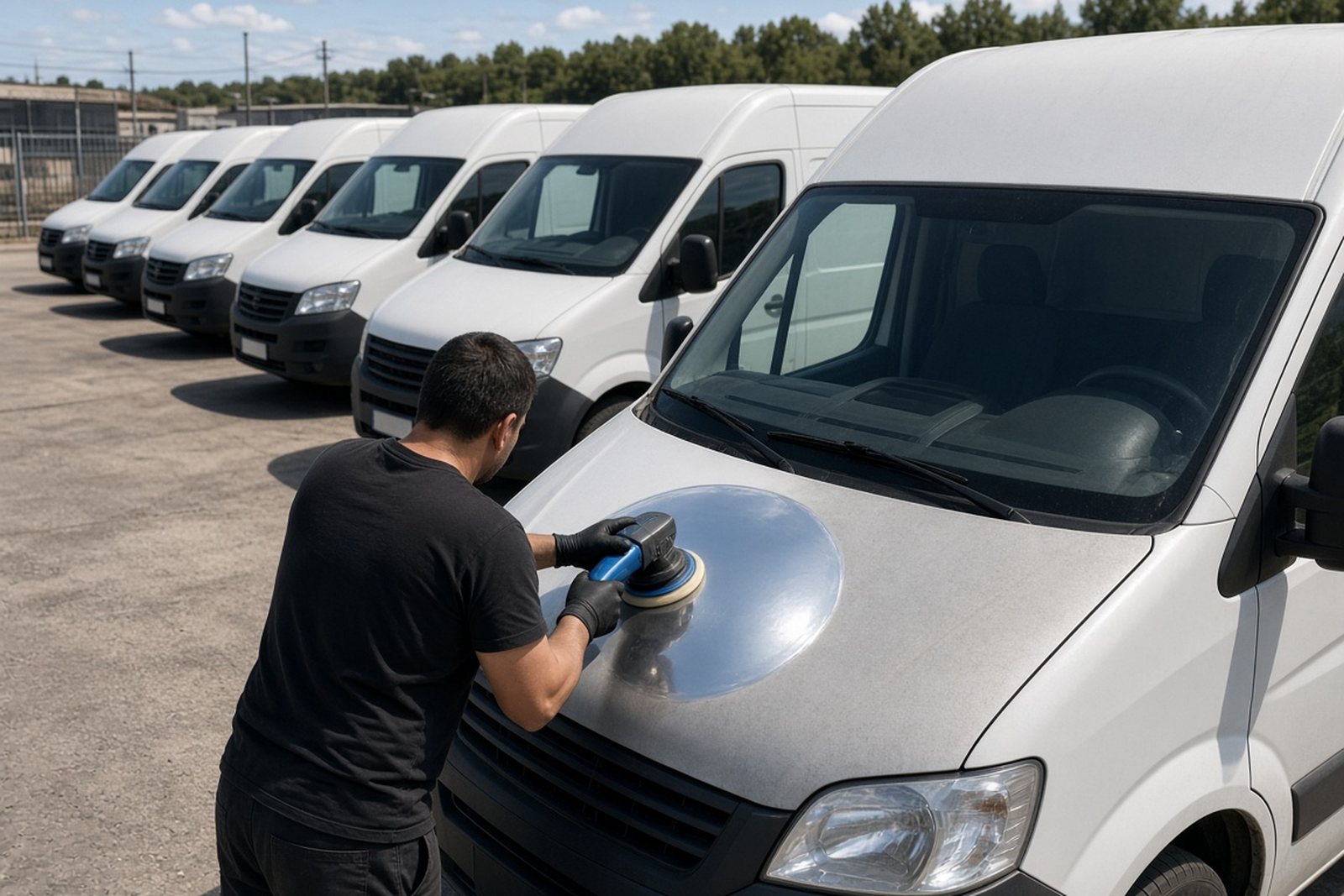
The client asked for practical training alongside the supply, so we ran a short skills session focused on technique rather than theory alone. The team covered surface prep, machine handling, keeping pads clean, checking progress under direct light, and knowing when to stop before the metal starts heating up. We also covered the difference between polishing metal and refining painted surfaces, since the pressure, speed and product choice are not the same.
PPE and dust safety were part of the session from the start. Even a clean-looking polishing job creates residue, and fine dust plus spent compound should not be brushed into the air or blown around the site. We covered gloves, eye protection, hearing protection where needed, and simple housekeeping to keep residue out of walkways and drains. On a coastal site, that matters even more because moisture can turn residue into a sticky mess fast.
- Surface prep before any compound touches the panel
- Pad speed control and pressure control
- Heat management on edges and corners
- PPE, dust control and cleanup routine
Timeline from setup to final handover
The project took three weeks from first enquiry to final handover. Week one covered assessment, kit selection and initial training. Week two focused on polishing the main sections, checking finish consistency and refining the method for the site team. Week three covered final touch work, a check of the exposed faces after installation movement, and a refresher on maintenance cleaning so the finish could be kept in good condition.
That timeframe worked well because it gave the client enough room to learn the process without rushing the finish. For decorative metal, rushing usually shows up later as haze, patchy gloss or visible circles under light. Taking the time to step through the process properly gave a cleaner result and less rework. It also gave the team confidence to handle smaller follow-up jobs on their own.
- Week 1: assessment and starter kit consultation
- Week 2: polishing and method correction
- Week 3: final handover and maintenance guidance
Site results and lessons learned
The finished metal presented with a more even sheen, cleaner reflections and fewer visible marking lines after handling. The client got a practical setup they could keep using, not just a one-off finish. Because the supply and support came from Germiston, the replacement consumables and advice chain stayed simple for future restocking across South Africa.
If we were doing the same job again, we would use the same staged approach: assess the base condition properly, match the pad and compound to the material, keep the machine speed under control, and build in a brief training step before the main polishing starts. For coastal installations, we would also repeat the maintenance advice, because a bright finish only stays that way if people wipe it down correctly and avoid aggressive cleaners.
- Cleaner visual finish under natural and artificial light
- Better repeatability for the on-site team
- Simple maintenance method for coastal conditions
- Easy restocking path through our Gauteng base
Key facts
| Project location | Cape Town, Western Cape |
|---|---|
| Supply base | Germiston, Gauteng |
| Project duration | 3 weeks |
| Surface type | Decorative metal with visible edges and flat panels |
| Equipment used | Rotary and dual-action polishers with matched buffs and compounds |
| Support included | Training, PPE briefing, pad and compound matching, maintenance guidance |