
Centurion Tank And Cover Brief
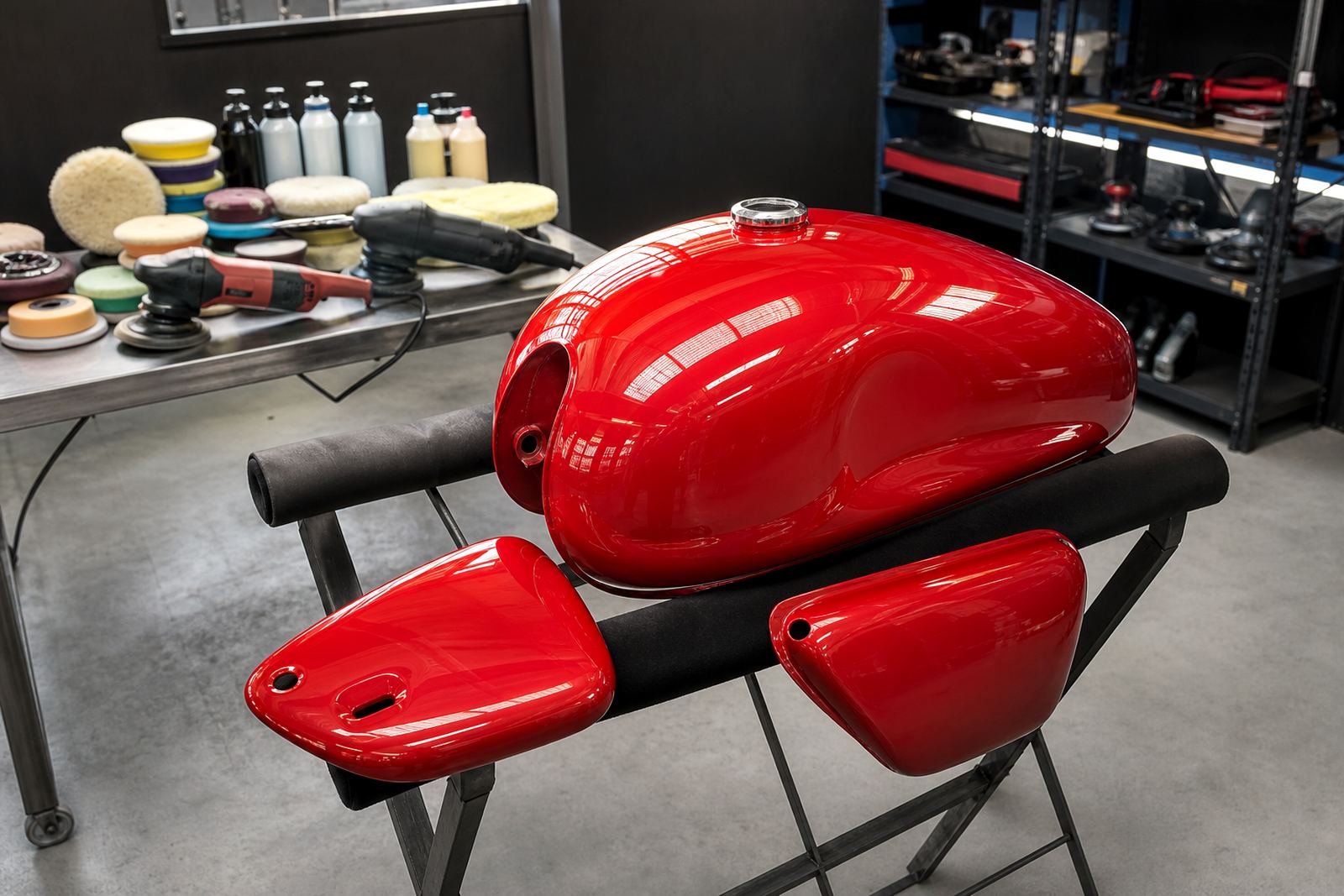
The client was a private motorcycle owner in Centurion, Gauteng, looking to freshen up a tank and side covers that had dull patches, light haze and a few marks from regular use. The aim was not a full restoration, but a neat presentable finish for weekend riding and show-day use, with the metal kept safe and the painted sections protected where needed.
The main challenge was access. Motorcycle panels have curves, seams and narrow cut lines that make larger machine heads awkward. We planned the job around compact pads, low pressure passes and a slow approach on edges, because one heavy pass can quickly mark through clearcoat or leave heat marks on bare metal.
What We Supplied For The Job
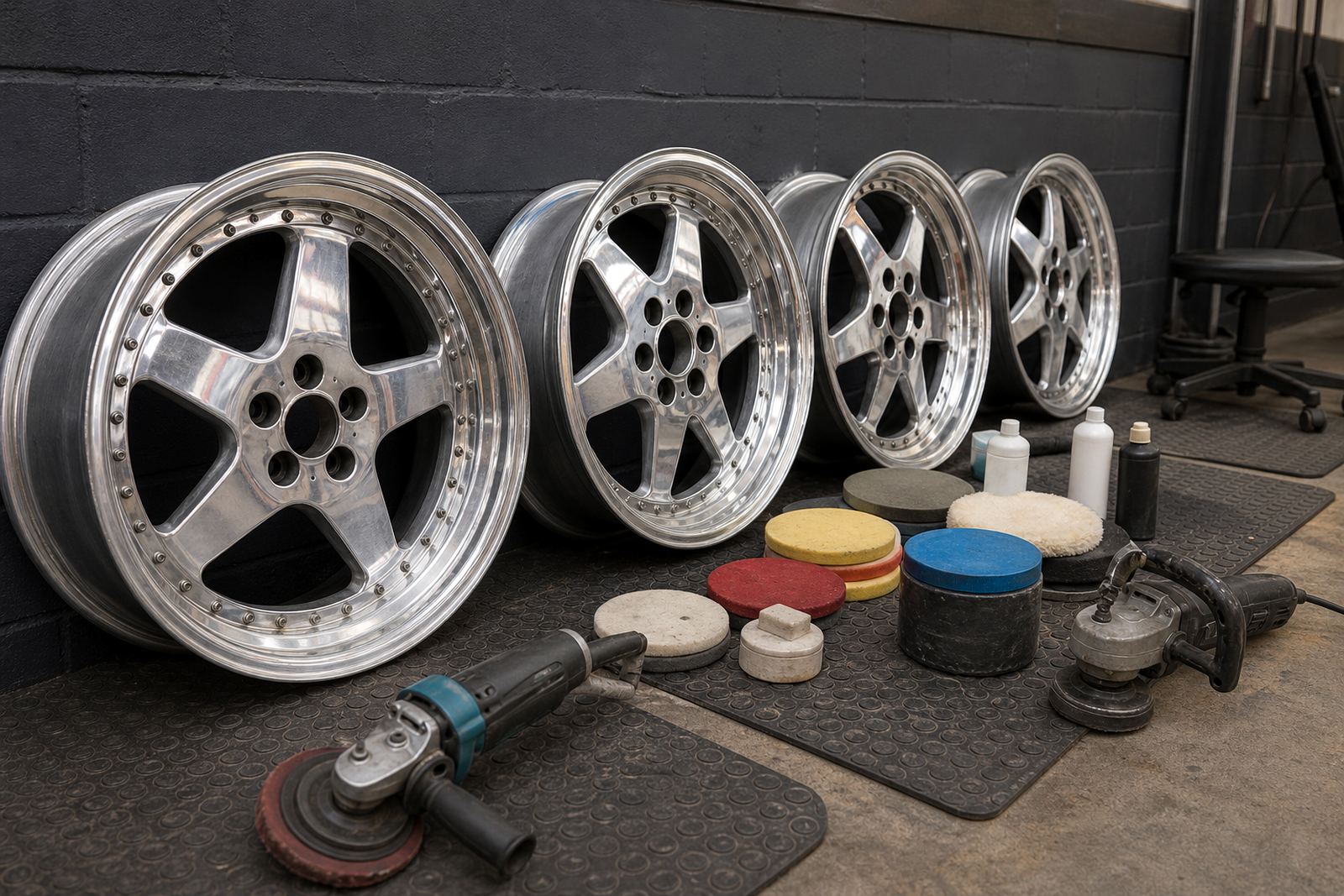
For this project we supplied a small polishing setup suited to bike work rather than large body panels. The setup included a rotary polisher for controlled correction on metal areas, a dual-action polisher for safer finishing on coated sections, compact foam pads, microfibre towels and compounds suited to light oxidation and fine finishing.
- Compact foam cutting and finishing pads for curved surfaces
- Medium cut compound for first-stage correction
- Fine finishing compound for gloss and clarity
- Pad cleaning tools for clearing spent compound from the foam
- Safety and PPE briefing, including eye protection and dust control
Because the job involved a mix of painted and metal surfaces, we also discussed pad and compound matching before any machine work began. That matters on motorcycles, where one panel may respond well to a firmer pad while the next section needs a softer touch. Getting that match right saves time and keeps the finish more even.
Method Used For Tight Motorcycle Surfaces
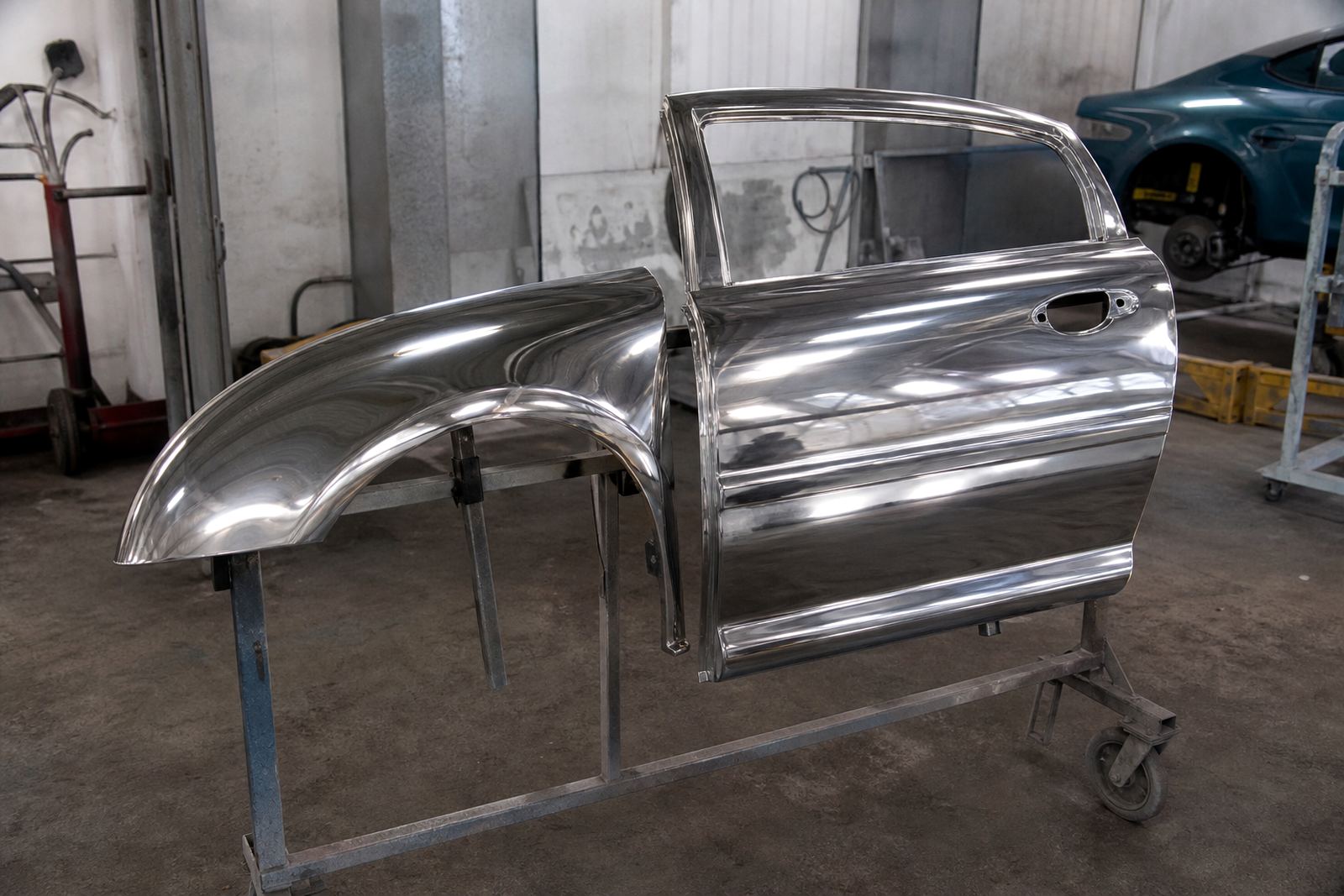
We worked in small sections and kept the machine moving to avoid heat build-up. On the bare metal areas the rotary was used with light, even pressure and short passes, then followed with a finer polish to improve clarity. On the painted covers, the dual-action machine was the safer choice because it reduces the risk of holograms and makes edge work less aggressive.
Edge work was the most important part of the job. Tank lips, badge recesses and mounting corners were handled with reduced speed and a careful hand position. No one wants to chase a quick shine only to mark the panel at the seam. We also reminded the client that polishing dust and spent compound should be wiped away often, especially on a bike where small particles can settle into crevices and around fasteners.
- Work in 30 to 40 cm sections where possible
- Keep pad face flat, especially near raised edges
- Use lower speed settings on corners and curves
- Wipe down between stages to check true finish, not just compound residue
Timeframe And Workshop Flow
The project ran over 1 week from first check-through to final handover. The first stage was inspection and product matching, then the actual polishing work was done in controlled workshop time so the client could avoid rushing the finish. For a bike like this, that slower pace is worth it because the small surfaces show every mistake.
We also used the job to talk through machine care and cleaning habits. Pad loading, residue build-up and dirty towels can spoil a finish very quickly. In Gauteng dust and road grime get into everything, so good wipe-down practice after each stage is part of the method, not an afterthought.
Result On The Tank And Covers
The finished tank and covers showed a cleaner gloss, sharper reflections and a more even look across the panels. The haze was reduced, the surface felt smoother to the touch and the transition around the edges was kept neat. The main win was not just shine, but control: the bike looked cared for without looking overworked.
For motorcycle finishes, that balance matters. Too much machine pressure can leave trails or thin the coating at the edges, while too little effort leaves the dull patches in place. This result sat in the middle, which is where most proper polishing work should land. The client left with a clear idea of how to maintain the panels between washes, including soft cloths, gentle drying and avoiding harsh abrasives.
What We Would Repeat For Similar Work
If we were doing the same job again, we would use the same approach: start with inspection, separate the painted and metal areas, and choose pad and compound combinations to suit each surface. Motorcycle work rewards patience, and compact tools are the right choice for tank shoulders, side covers and small fitted parts.
- Use a two-machine plan: rotary for controlled correction, DA for final finishing
- Keep separate pads for metal and paint to avoid cross-contamination
- Check heat often on thin panels and around seams
- Do a final wipe with clean microfibre and inspect under strong light
We would also keep the safety talk in place from the start. Polishing dust, loose compound and machine vibration are easy to ignore until they cause trouble. PPE, decent lighting and a tidy bench are part of proper finishing work, whether the job is in Centurion, Johannesburg or anywhere else in South Africa.
Key facts
| Project type | Motorcycle tank and cover polishing |
|---|---|
| Town | Centurion, Gauteng |
| Surface types | Painted panels and metal finishing areas |
| Tools used | Rotary polisher and dual-action polisher |
| Consumables | Compact foam pads and polishing compounds |
| Timeline | 1 week from inspection to handover |