
Why a smaller section often gives a better finish
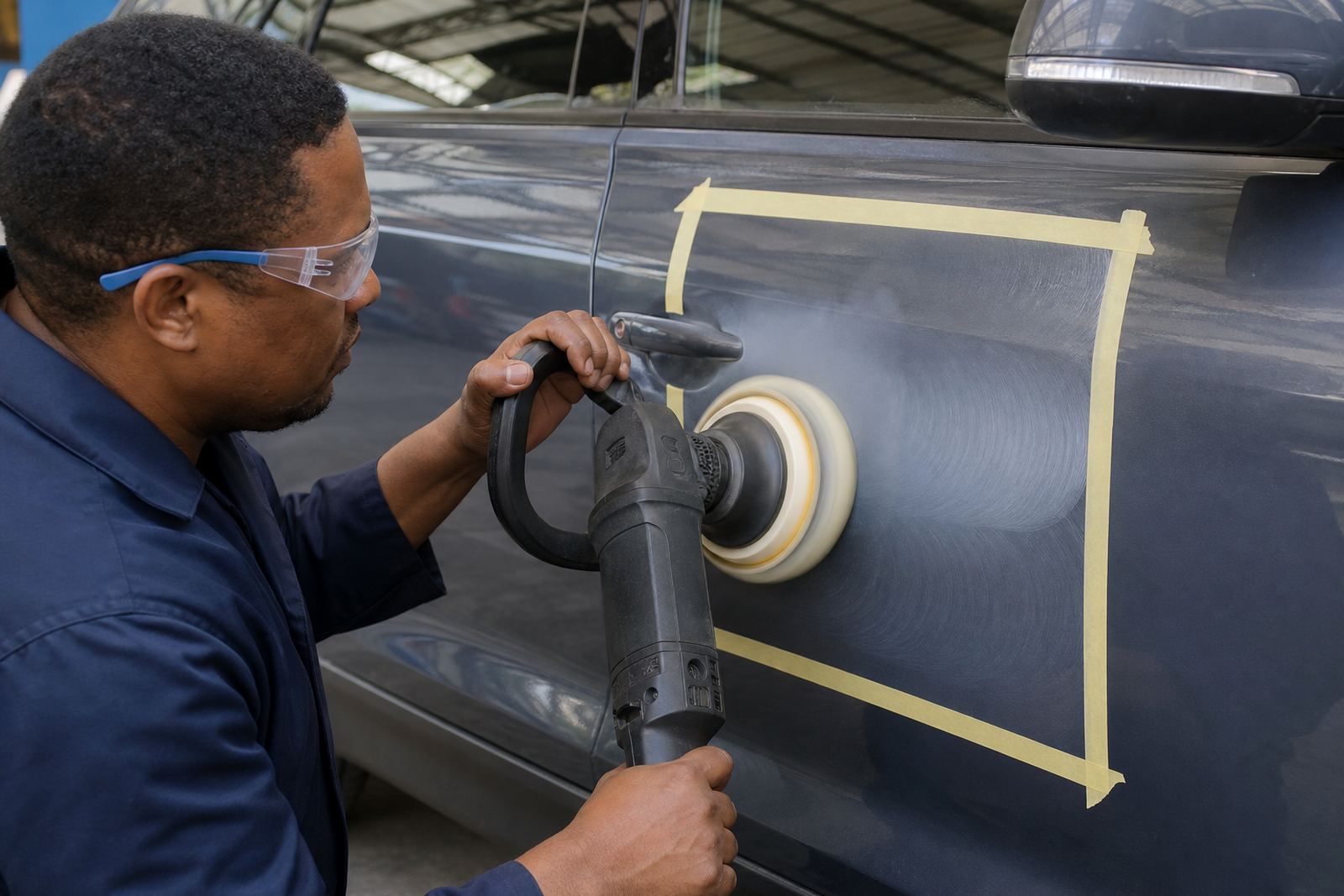
When you break a panel, bonnet or metal surface into smaller working sections, the machine stays easier to control and the compound has more time to do its job before it dries out. That matters on both paint correction and metal polishing, because a pad that is overloaded or pushed too far can leave haze, swirls, sling or uneven shine.
On a car, a smaller section helps you keep overlap consistent and see the true correction in the light. On stainless steel, aluminium or mild steel, it helps you track the grain, avoid hot spots and work out the marks in a steady way. You are not trying to cover more ground in one pass, you are trying to get a repeatable result.
How to size your section for rotary and dual-action polishers
The right section size depends on the tool, pad diameter, product cut and the condition of the surface. A dual-action machine is forgiving, but it still performs best when the pad can move freely across a manageable area. A rotary polisher gives more direct cut, so smaller sections help you keep the pad flat and prevent edge damage.
- For a small DA pad, work on an area roughly the size of a door mirror or half a bonnet at a time.
- For a rotary with a medium pad, keep to a section that lets you make controlled passes without forcing the machine.
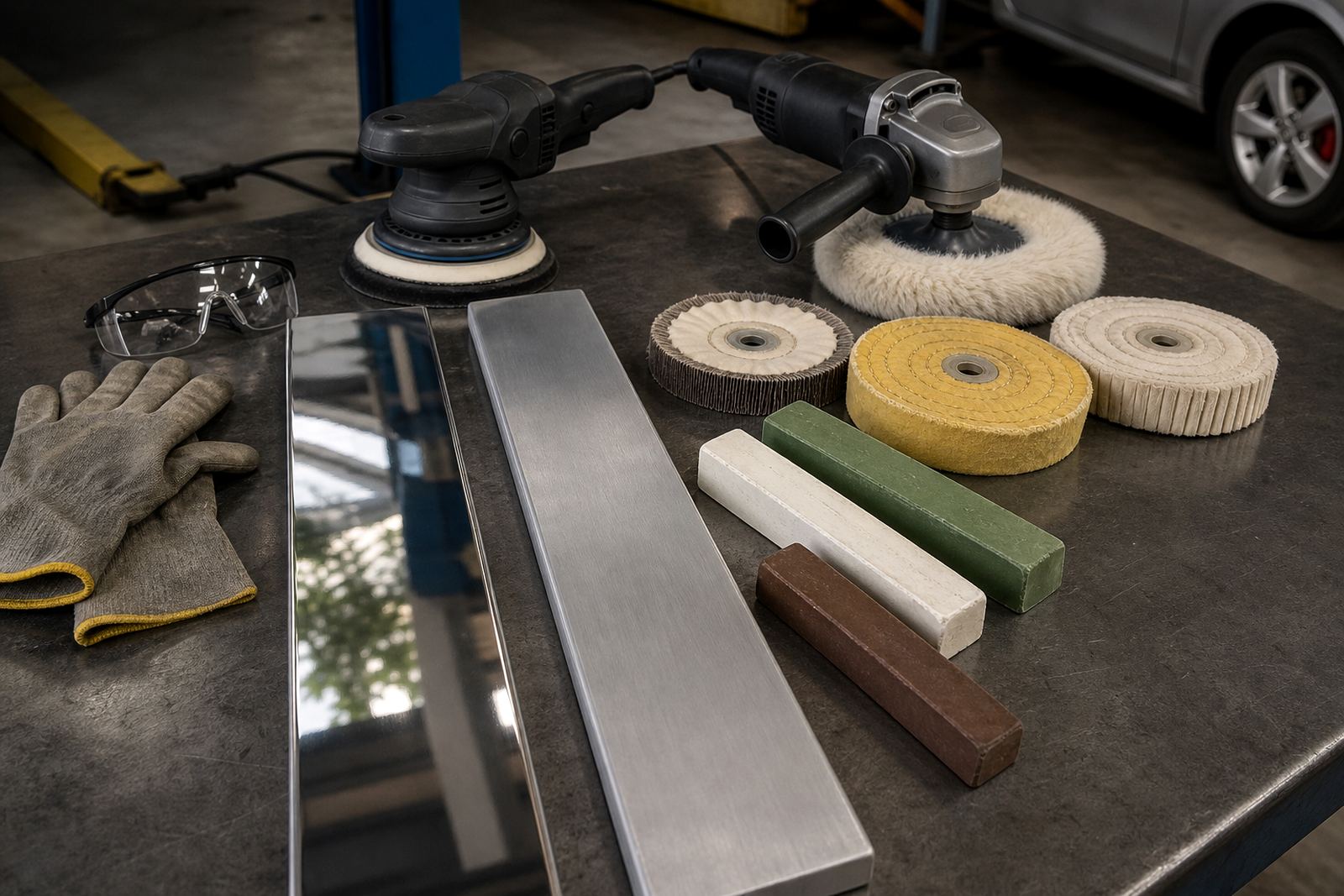
- For metal buffing, match the section to the shape of the item, such as one panel, one pipe length or one section of trim.
- If the surface is badly marked, start smaller and increase only when the product and pad are working cleanly.
If you try to polish a whole door skin, bumper or fender in one go, the product can dry unevenly and the pad can lose bite. That is when people start pressing harder, which usually makes the finish worse not better.
Signs that your section is too big
Most polishing problems show up early if you know what to watch for. A section that is too large will make the machine feel like it is dragging, and the pad may stop breaking down the compound properly. On humid coastal days, especially in places like Durban or Cape Town, product can behave differently and stay wet longer, so section size becomes even more important.
Watch for these signs:
- The polish is drying patchy before you have completed your passes.
- The machine starts hopping, chattering or bogging down.
- The pad leaves inconsistent marks across the panel.
- You cannot maintain even pressure from one end of the section to the other.
In Germiston workshops, where dust from nearby yards and traffic can settle quickly, a smaller section also makes it easier to control contamination. If grit gets into the pad, it is simpler to stop, clean and continue without spreading the problem over a large area.
A practical method for cars, trucks and metal parts
A useful rule is to divide the job into sections that you can finish confidently before the compound changes behaviour. On a car bonnet, that may mean working one quarter at a time. On a bakkie canopy or truck panel, the size may depend on the reach of the pad and your ability to keep the machine flat. On metal, the shape of the part matters as much as the area.
Use this approach:
- Inspect the surface in good light and mark out the area mentally before switching on.
- Prime the pad correctly so you do not need to overload the first section.
- Apply compound sparingly and spread it before increasing speed.
- Use overlapping passes, keeping the pad moving at a steady pace.
- Wipe down and check the result before moving to the next section.
That method saves time in the long run because you avoid reworking sections that were rushed the first time. It also helps when training new staff, since they can learn a repeatable routine instead of chasing the whole panel at once.
Heat, dust and are part of the job
In South Africa, polishing work is often affected by conditions that people do not mention enough. Summer heat in Gauteng can make compounds flash faster. Dust from open yards, road work and workshop floors can mark freshly prepared surfaces.
That is one reason smaller working sections are practical. If the power goes off, you can stop after completing a controlled area instead of leaving a half-polished panel with dried residue across the whole surface. It is also easier to keep PPE habits consistent, especially when you are using compounds that create fine residue or working near sharp edges on metal parts.
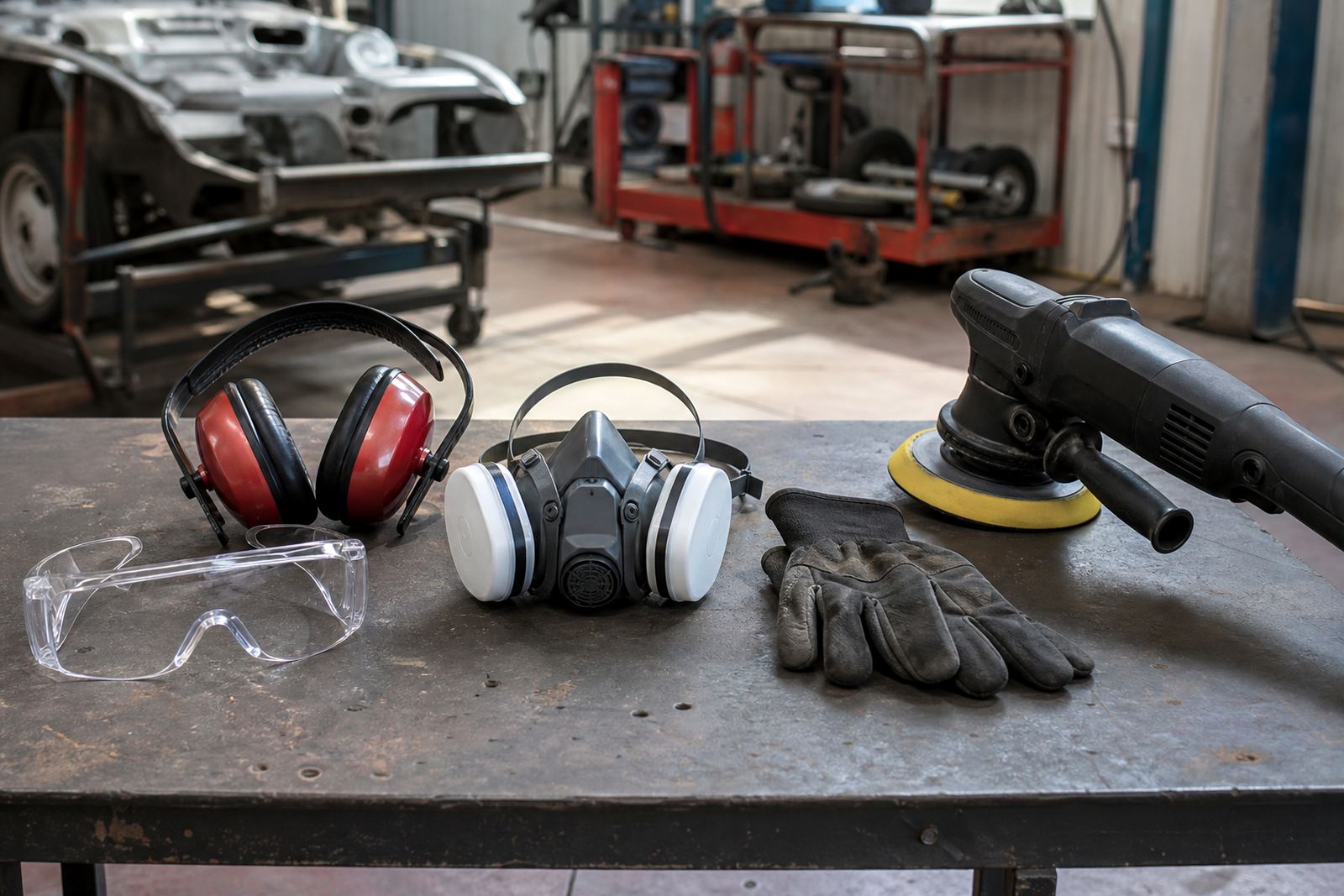
Wear eye protection, a proper dust mask where needed, and gloves suited to the task. Keep the area tidy, use a clean pad for each stage and make sure the workpiece is stable before you start. If a section is awkward to reach, adjust the setup rather than stretching your arms and losing control.
Training clients to judge section size by feel and finish
Beginners often want to start with a big area because it feels quicker, but good polishing is usually more about discipline than speed. In training, we show customers how to read the machine, the pad and the surface so they can decide when a section is just right. The aim is not to memorise one fixed size, but to learn how paint, metal, pad density and compound all work together.
For example, a Pretoria motor dealer may need a fast correction on used stock before photography, while a Bloemfontein workshop may be focused on machine marks, oxidised trim or metal brightwork on a fleet vehicle. Those jobs do not use the same section size, yet the same principle applies: start smaller, keep control and only widen the area when the product is behaving correctly.
When a section is sized well, the machine feels calmer, the finish is more even and the last wipe-down takes less effort. That is why starter kits, pad and compound matching, and hands-on guidance are so useful. The right section size is not guesswork, it is part of the technique.