Why PPE Matters Before the First Pass
Polishing looks simple from a distance, but once a rotary or dual-action machine starts moving, the work area changes fast. Compound mist, metal dust, pad fibres and tiny particles from paint or surface contamination can end up in your eyes, on your skin, or in your breathing zone.
PPE is not only for heavy industrial jobs. A hobbyist working on a bonnet in a Germiston garage or a technician restoring aluminium trim in Bloemfontein needs the same basic protection. The goal is simple: stay safe enough to keep working accurately. If you are squinting, coughing or flinching from heat and dust, your finish suffers as much as your health does.
- Eye protection keeps compound splatter and grit out of the eye.
- Hearing protection reduces fatigue during long polishing sessions.
- Respiratory protection helps when fine dust and residue are in the air.
- Gloves and close fitting clothing reduce irritation and snags.
Eye Protection For Spinning Pads And Flying Residue
Eye protection is the first item to get right. Pads can pick up dried compound, sand residue and loose grit, then sling that material at speed. A rotary machine throws residue in a tighter, more direct path, while a dual-action machine still sends mist and dust into the air, just a bit less aggressively. Either way, plain sunglasses are not enough.
Choose wraparound safety glasses or a sealed goggle style that sits comfortably under a cap or face shield if needed. Clear lenses suit indoor work and darker tints can help outdoors, but the fit matters more than the colour. If you wear prescription glasses, use over-glasses protection that seals well at the sides. In coastal areas like Durban, humidity can make lenses fog up, so anti-fog care and a clean cloth on hand is worth having.
- Wash or wipe lenses before each session so trapped grit does not scratch them.
- Check that the frame does not slip when you lean over a panel.
- Replace damaged lenses rather than trying to polish out deep scratches.
- Keep spare eye protection in the kit, especially for team work.
Hearing Protection For Rotary And DA Machines
Polishing is not as loud as grinding, but noise builds up over time. A machine running against paint edges, curved panels, trim sections and metal surfaces can create steady high pitched sound that tires the ears before the job is done. Add vacuum extractors, compressors and workshop chatter, and the noise level becomes a real concern.
Hearing protection is often overlooked because the noise does not feel extreme in the first ten minutes. By the end of a full correction or buffing day, though, concentration drops and mistakes become more likely. Ear plugs or earmuff style protection are both useful, depending on the job. For short sessions, plugs are easy to keep in the kit. For longer work, earmuffs are usually more comfortable and can be worn over plugs if the workshop is especially loud.
- Use hearing protection when working for long periods with machinery running nearby.
- Keep the seal snug around the ear without pinching the head.
- Replace worn cushions and cracked plugs before they stop fitting properly.
- Train new staff to wear protection from day one, not after the first complaint.
Breathing Safely Around Compound, Metal Dust And Paint Mist
Respiratory protection matters whenever the job produces fine airborne material. That can be dried compound, sanding dust, residue from oxidised metal, or fine paint related particles after correction work. Even if the dust is not visible for long, it can still hang in the air and move through the workshop. In a small space this becomes more serious, especially when there is limited airflow during a power cut or the doors are kept closed for security.
A well fitted dust mask or particulate respirator is useful for polishing and buffing, but it must match the task. For dusty prep work or heavy residue, use proper filtration and make sure the seal is close to the face. Facial hair can interfere with the fit, so that is something to plan for. Good ventilation helps too. Open doors, extractor fans and regular cleanup reduce the amount of material in the air before anyone even puts on a mask.
- Vacuum or wipe down nearby surfaces before starting, not after the dust has spread.
- Keep masks dry and clean, then replace them when they no longer seal well.
- Do not rely on breathing protection alone if the workshop air is stagnant.
- Separate wet polishing from dry sanding where possible to limit airborne residue.
Hands, Clothing And Workshop Habits That Stop Small Injuries
Polishing work can cause small injuries that are easy to ignore until they become a problem. Compound can dry out skin, sharp edges can catch cuffs, and a loose sleeve can get too close to a spinning pad. Gloves are useful for handling metal parts, cleaning residue and moving panels, but they must not be so loose that they reduce grip or snag on the machine. Tight fitting workwear is often safer than bulky clothing.
Good habits help as much as PPE. Keep jewellery off, tie back long hair and check that cords, leads and extension cables are clear of the pad. In workshops around Germiston, Johannesburg and the East Rand, many jobs happen beside other machines, so a tidy working space matters. If a floor is dusty or oily, it also increases the chance of slips while carrying panels or moving around a vehicle.
- Wear clothing that covers exposed skin without hanging loose.
- Use gloves for handling hot parts and sharp metal edges, then remove them for machine control if needed.
- Keep pads, towels and bottles within easy reach to avoid unnecessary stretching.
A Local Workshop Example From Germiston To Bloemfontein
A practical example is a small workshop in Germiston preparing a fleet bakkie for delivery to a client in Bloemfontein. The team may start with metal trim buffing, then move to paint correction on the cab and doors. If the same people are also cleaning residue from the workshop floor and handling components, they face dust, noise and splatter all in one shift. Without PPE, the job becomes tiring quickly and the finish can suffer when concentration drops.
In that sort of setting, the right approach is straightforward. Eye protection stays on from start to finish, hearing protection is used for the full run of machine work, and a suitable respirator is worn when dry dust or fine residue is present. Add proper lighting, clear airflow and a clean staging area, and the work becomes safer and more controlled. That is the difference between a rushed result and a finish that looks even in daylight.
For teams working across Johannesburg, Pretoria, Cape Town, Durban and Bloemfontein, the same principle applies. Polishing training should cover the machine, the pad and compound choice, and the PPE that supports the job. Safety is not a side issue. It is part of professional technique.
What To Include In A Basic PPE Kit For Polishing
A basic polishing PPE kit does not need to be complicated. It should be practical, comfortable and ready for daily use. When the kit is set up properly, technicians are more likely to wear it every time, not only when a job looks dusty.
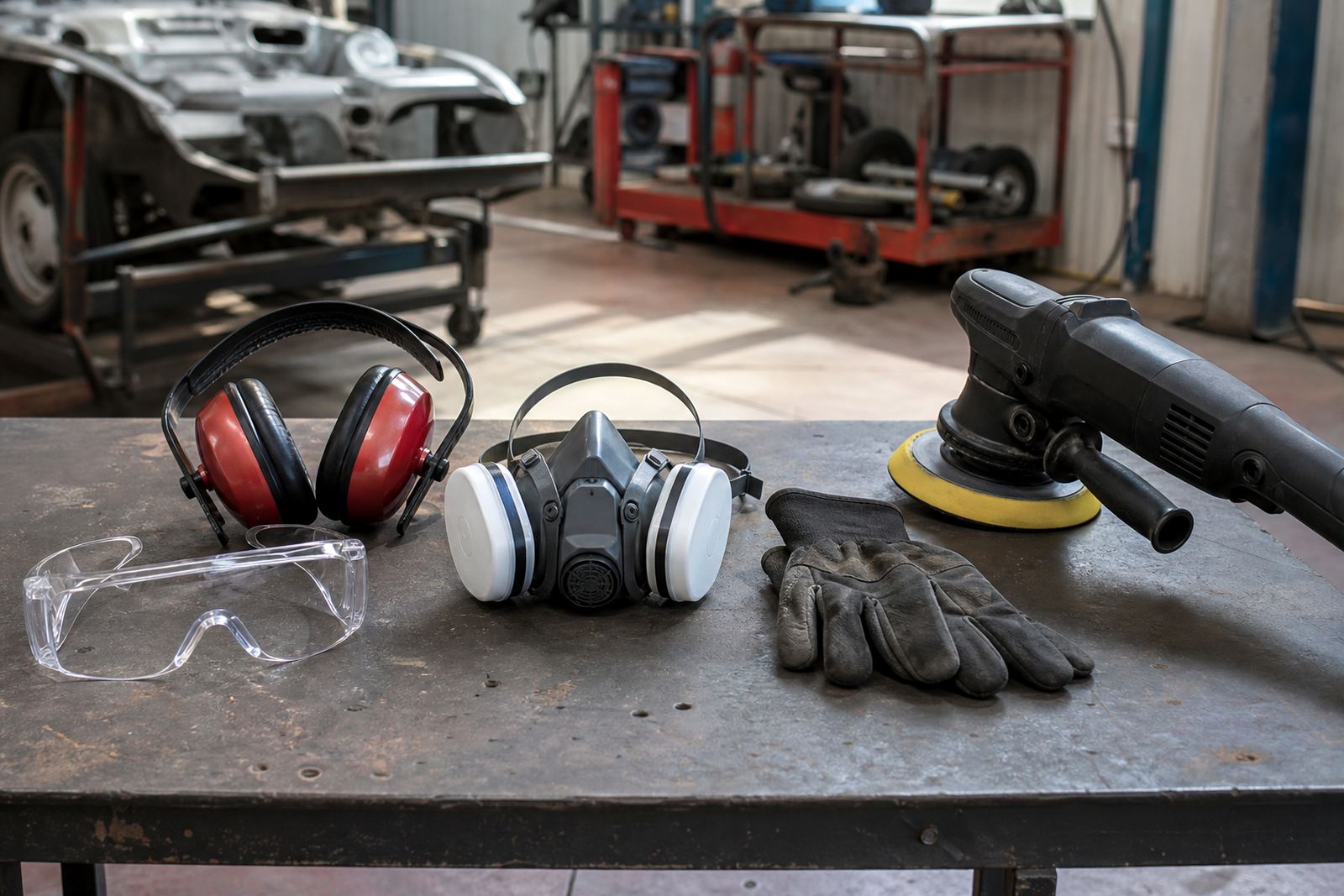
- Wraparound safety glasses or sealed goggles.
- Particulate respirator or dust mask suited to the task.
- Ear plugs or earmuffs for machine work and workshop noise.
- Close fitting workwear with no loose cuffs or dangling ties.
- Work gloves for handling parts, plus clean microfiber towels for residue.
If you are setting up a workshop, or training a new team, build PPE into the first lesson. It saves time later and supports better finishing habits from day one. For advice on starter kits, machine care, pad and compound matching or onsite team demos, use the enquiry form on our contact page and we will help you plan the right setup for your work.