
Start by reading the surface before you touch a machine
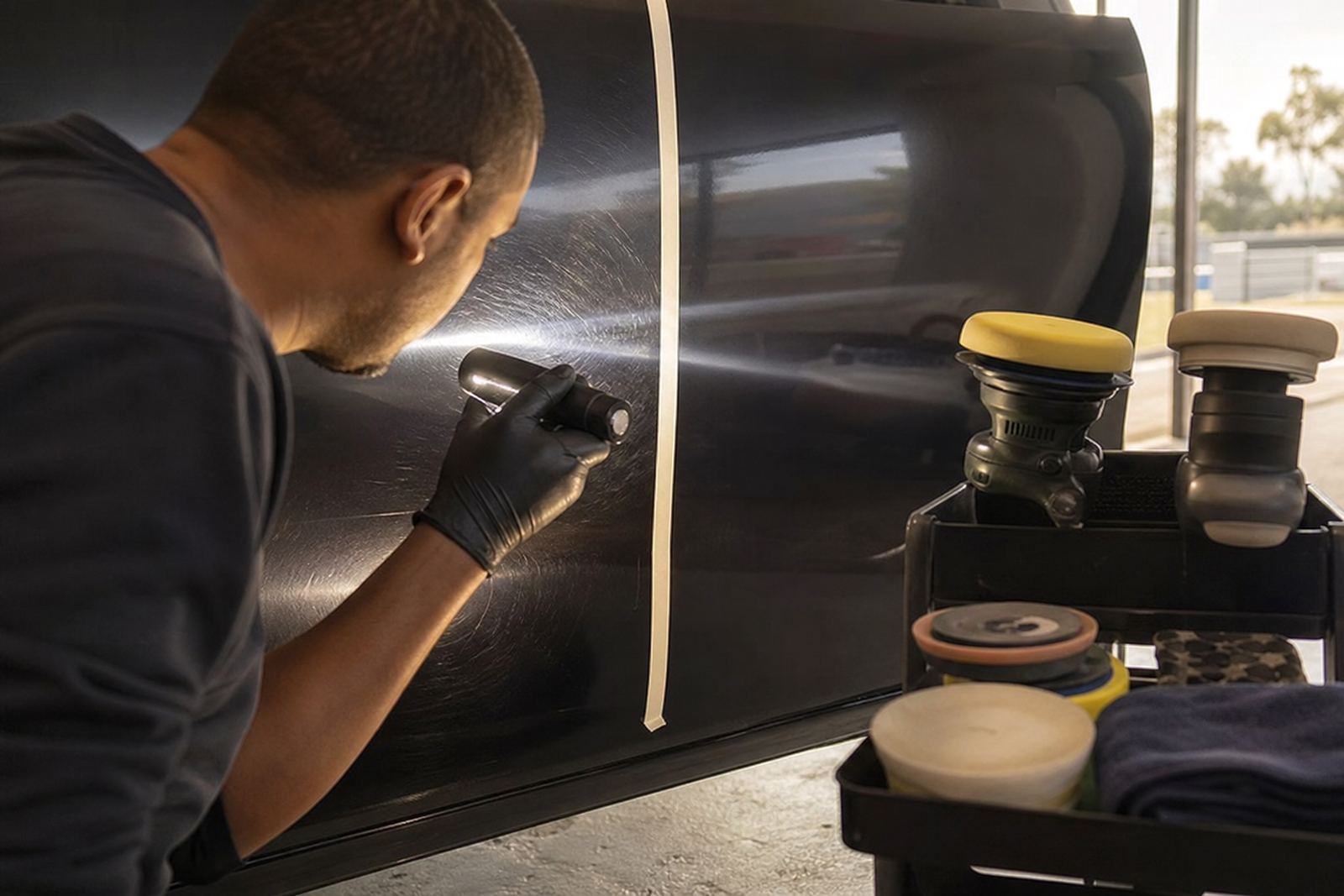
Oxidation does not always mean the same thing on every job. On painted panels it often shows as fading, dull patches, or a rough surface that has lost gloss. On metal it may appear as a light bloom, deeper rust staining, or a powdery film around welds, edges and fasteners. Before you start, wash the area properly and dry it so you can see what you are dealing with.
In Germiston and other parts of Gauteng, dust and brake residue can settle quickly on a vehicle or machine part. That film can make oxidation look worse than it is, so clean first then inspect under good light. If the surface is thin paint, repainted before, or already scratched through to primer, you need a lighter approach and a lot more patience.
Do a small test spot before committing to the full panel. This helps you check how fast the oxidation lifts, how much residue the pad leaves behind and whether the surface gets too hot. A quick test can save a lot of rework later.
Choose the right machine for the job
Rotary polishers cut faster and suit experienced users who understand heat control and pad movement. They are useful on stubborn oxidation, heavy metal polishing and certain paint correction tasks where you need firm cut. Dual-action polishers move in a different pattern and are better for beginners, fresh paint care and lighter oxidation removal. They spread heat more evenly and give you more time to react if the surface starts to build temperature.
For car paint, many operators start with a medium pad and a moderate compound, then step down to a finishing pad if needed. For metal, a firmer buff may be used with the correct compound to lift tarnish and marks. The mistake many people make is starting too aggressive. That can load the pad, raise heat too fast and leave swirls or haze behind.
- Use a rotary when you need faster cut and you can keep the machine moving steadily.
- Use a dual-action machine for safer correction on paint and for learning good technique.
- Match pad firmness to the surface condition, not just to the amount of shine you want.
- Keep a clean pad nearby so you can swap out if residue starts to clog the working face.
Work in short passes and watch the heat
Heat is the main risk when removing oxidation. If a panel gets too warm, the compound can dry out, the paint can smear and the metal can mark. Work in short passes and lift the machine often to inspect the surface. Never hold the tool in one spot. Keep moving in controlled overlaps and let the compound do the work.
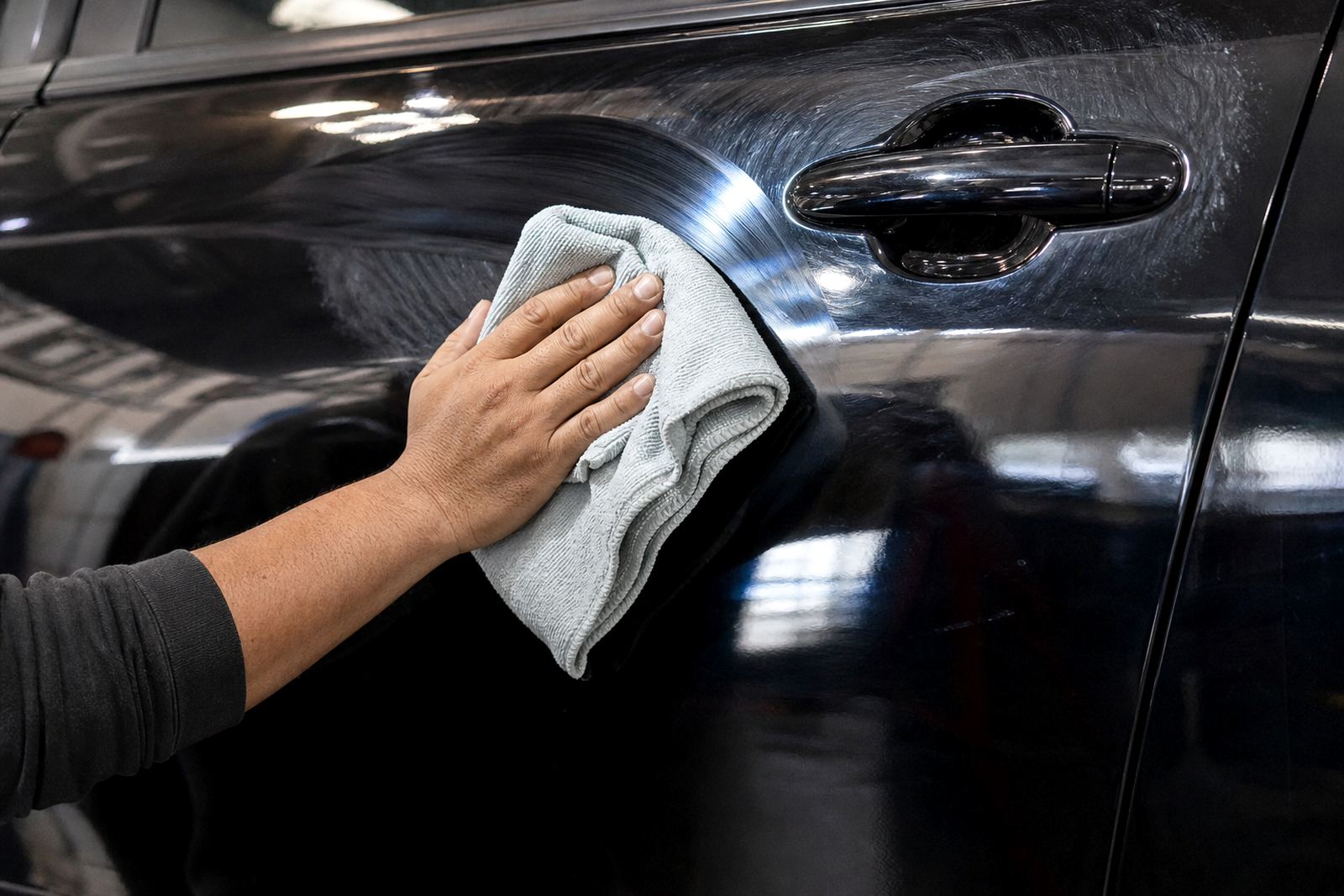
After each section, wipe away residue with a clean microfibre cloth and feel the surface with the back of your hand. Warm is normal, hot is not. On large sheet metal panels, bonnets and doors, heat can rise faster than you think especially in summer or in an enclosed workshop with little air flow. If the panel feels too warm, stop and let it cool before continuing.
- Break the job into small sections so you can control the finish.
- Use light to moderate pressure and reduce pressure as the shine comes through.
- Keep the pad flat where possible to avoid edge marks.
- Clear spent compound before it dries hard on the surface.
On older vehicles in the East Rand, you may find oxidation mixed with stone chip repair, sanding marks or thin clear coat. In that case the safest route is usually a more conservative polish rather than trying to chase a perfect gloss in one pass.
Why residue build-up can undo the finish
Residue build-up happens when spent compound, paint dust or oxidised metal starts clogging the pad. Once that happens the pad stops cutting evenly and can begin to smear the surface instead of refining it. You might see grey paste on the pad face, a sticky film on the panel or a dull patch that does not improve with more passes.
The answer is to clean the pad often and use only enough product to keep the surface working. Too much compound creates mess, too little can make the pad drag. A quick pad brush, compressed air where available, or a fresh pad can make a big difference. If the residue turns gritty, stop and inspect. You do not want to grind loose material back into the finish.
When working on bare metal, especially aluminium or mild steel, keep an eye on the colour of the residue. Dark residue can mean burnt compound or removed oxidation, while a rusty tone can signal that the surface needs more prep before you polish further.
Metal and paint need different finishing habits
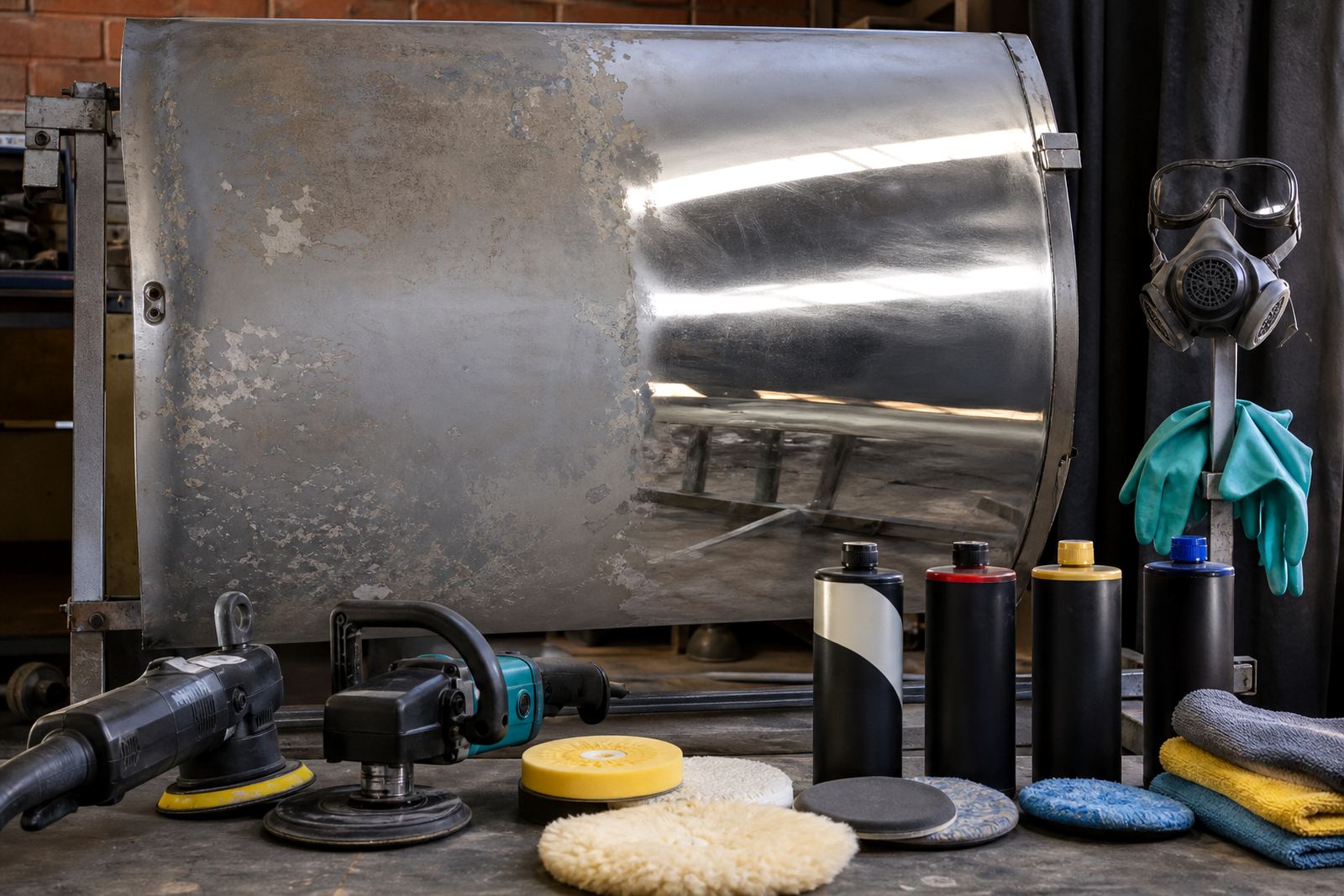
Metal polishing and paint polishing share the same basic discipline, but the finish goals are different. Paint needs correction without thinning the clear coat too much. Metal needs oxide removal, refinement and protection against moisture returning. That means the polishing sequence and finishing products must be chosen carefully.
For paint, begin with a wash, decontamination and a small test area. If the oxidation is mild, a dual-action machine with a medium polish may be enough. For metal, use the correct buff and compound combination for the alloy or steel type, then wipe thoroughly and seal the surface where appropriate. In coastal areas such as Durban, humid air can bring oxidation back quickly if the surface is left unprotected.
- Paint correction relies on controlled removal of the damaged top layer, not heavy abrasion.
- Metal polishing often needs a more deliberate cut followed by a cleaner finishing step.
- Both surfaces benefit from good lighting so you can see haze, swirls and missed patches.
- Final protection matters, otherwise the oxidation can return sooner than expected.
PPE and dust safety should be part of every session
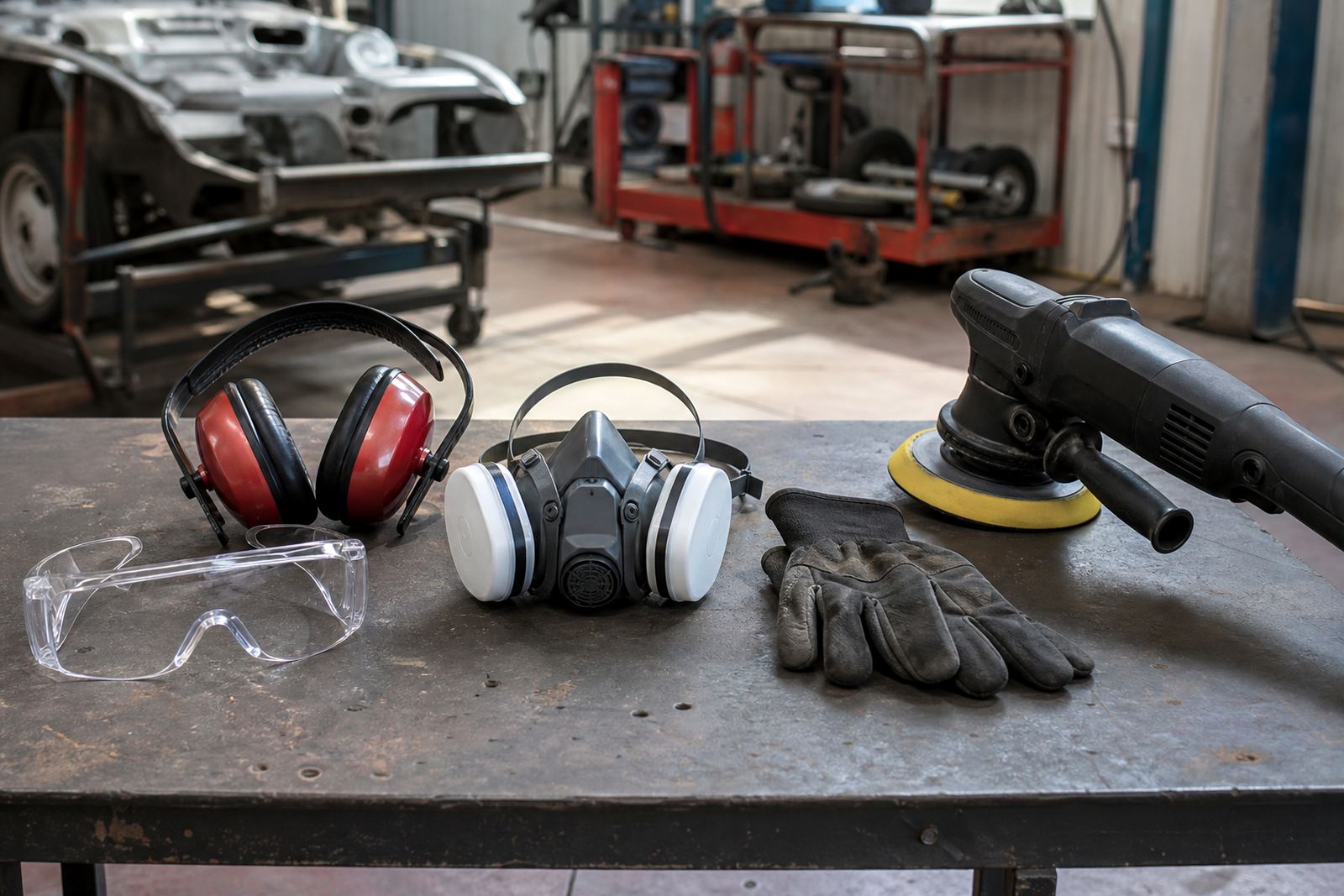
Polishing throws off dust, residue and fine particles. That is why personal protective equipment matters on every job, whether you are working on a bonnet in Pretoria or a machine casing in Bloemfontein. Wear eye protection, a suitable mask or respirator for fine dust, and gloves that allow a secure grip. Keep loose clothing away from the machine and tie back long hair.
Ventilation matters too. If you are polishing inside a workshop, open doors or use extraction where possible. Some compounds produce a fine airborne residue that you do not want sitting in your lungs or settling back onto the panel. Clean the work area regularly so dust does not get picked up by the pad or dragged across the finish.
- Check cords, backing plates and accessories before you start.
- Do not use damaged pads that can tear or throw off fibres.
- Keep a fire safe area around the machine if you are working near flammable cleaners or solvent based products.
- Wash hands after handling used compound and dust.
A practical local approach for busy South African workshops
In a Germiston workshop, time is often tight and the weather can change the way a polish behaves.That is why a steady routine matters more than chasing speed. Start with inspection, test a small area, work in sections, clean as you go and finish with proper protection.
For a local example, think of a fleet vehicle that has spent months on the road between Johannesburg and Pretoria. The bonnet may have faded paint, while the side trim carries light metal oxidation around fasteners and badges. Trying to solve everything with one heavy pass often makes the result worse. A better method is to separate the tasks, use the correct pad and compound for each area, and stop often to check your progress. That approach gives a more even finish and less risk of burning edges or leaving haze behind.
Once the oxidation is removed, do not leave the surface exposed. Apply the right protective product for paint or metal and advise the owner on washing, drying and storage. That final step is what keeps the effort from being wasted a week later.