Why Normal Room Light Misses the Problem
A workshop bay, shaded driveway or garage with mixed lighting can make a panel look better than it really is. Fluorescent tubes, weak LEDs and daylight from one side only can flatten the surface and hide fine defects. That is why a bonnet, tank, door or stainless panel may appear finished at first glance, then show marks again when the vehicle or metal job moves outside.
In polishing work, the eye should be trained to spot the difference between reflection and correction. A bright ceiling light can make a surface look glossy even if there are rotary trails, pad marks or haze left behind. The answer is not more polish on the pad. It is better inspection under controlled light so you know what still needs attention.
What Proper Inspection Light Reveals
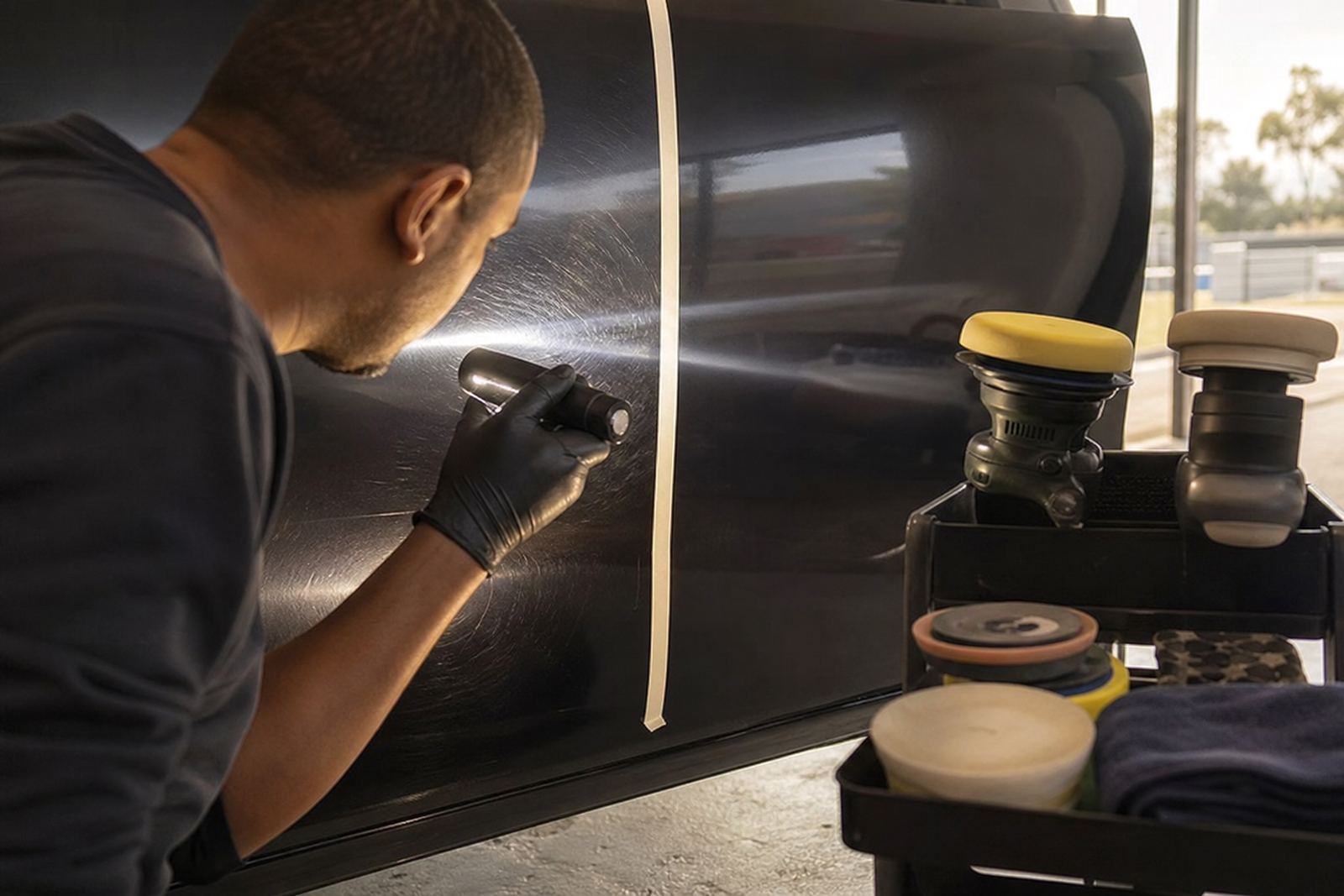
A focused inspection light helps you see the surface in a way normal room light cannot. It shows the fine pattern left by a machine, the cloudiness that comes from cutting too hard, and the uneven finish caused by missed areas. On automotive paint, that can mean swirls around curves, dried compound near badges, or a patch that was not fully refined. On metal, you may see a grey film, a cloudy section from overheating, or lines where buffing pressure changed.
- Swirl marks from incorrect pad movement or dirty pads
- Haze left behind after compounding or aggressive cutting
- Rotary trails on edges and body lines
- Missed spots near handles, seams and curved sections
- Residual compound in joints, trims and panel gaps
In South African workshops, this matters even more. Coastal humidity can slow drying and make residue harder to judge, while Gauteng dust can settle quickly on a fresh finish and cloud the eye. If you inspect before the surface is properly clean, you may chase marks that are only dust or lint.
How to Set Up a Sensible Inspection Area
You do not need a fancy booth to inspect properly, but you do need consistency. Choose one area with enough shade and reduce other light sources where possible. Switch off glare from overhead tubes if they are washing out the surface, then use a handheld light or a fixed inspection lamp at a low angle across the panel. That side angle is what reveals texture and marks best.
Work panel by panel and keep the surface wiped clean before checking it. A clean microfibre and a proper finishing wipe help remove polishing oils that can hide defects. On metal work, let the surface cool first, because heat can make haze look worse or trick you into thinking the job is done. On paint, avoid inspecting a dusty panel in direct sun, since heat and glare make it harder to judge the finish accurately.
- Inspect after each correction step, not only at the end
- Use a side light, not just overhead light
- Wipe away residue before checking
- Look from different angles, not one fixed position
- Keep pads, cloths and the panel clean
Rotary and DA Machines Need Different Eyes
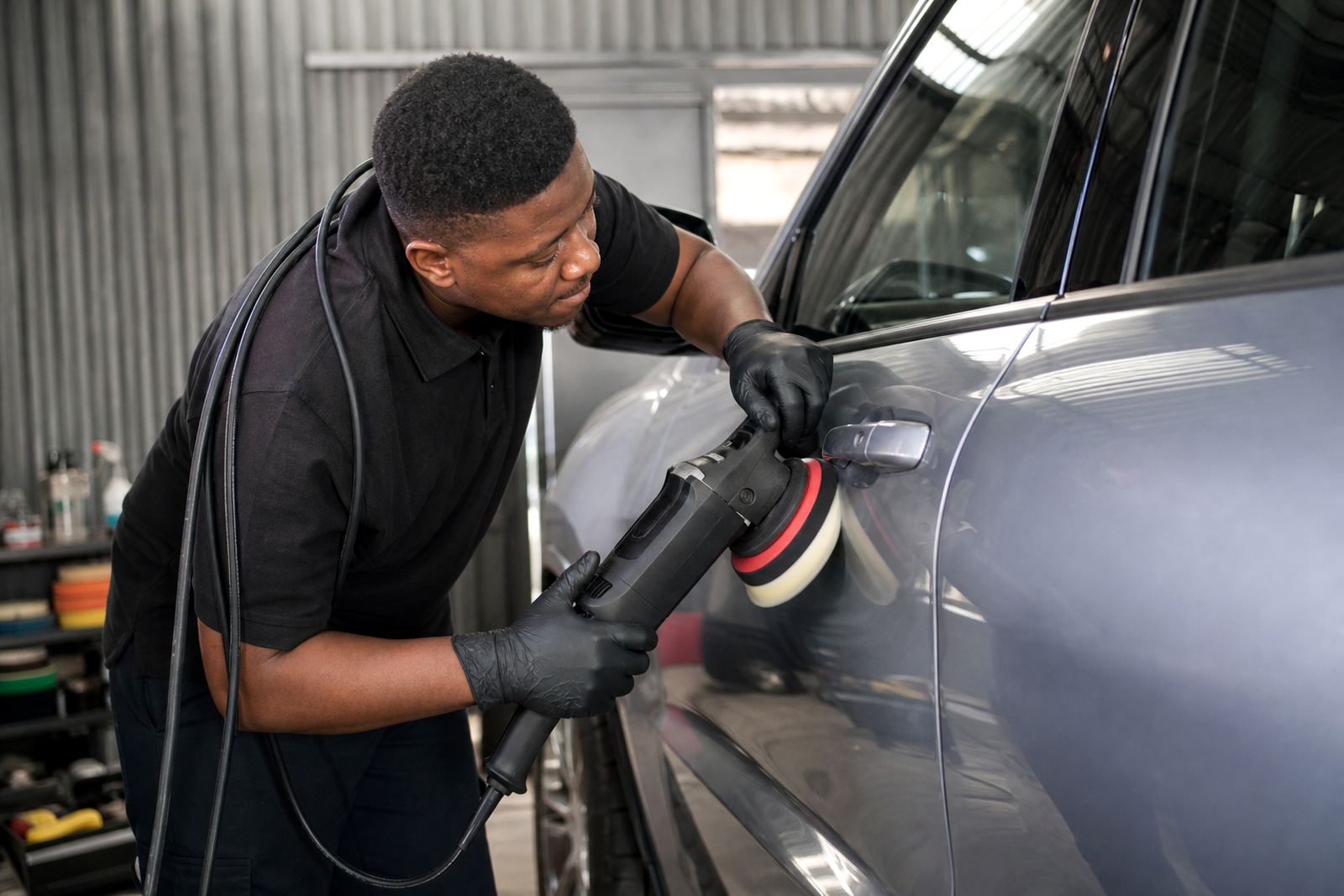
A rotary polisher and a dual-action machine do not leave the same finish, so inspection has to match the tool used. A rotary can cut quickly and is useful on stubborn marks or metal finishing, but it can also leave trails if the pad angle or pressure is wrong. A DA machine is safer for many paint correction tasks and usually leaves a more forgiving finish, though it can still haze a surface if the pad and compound are not matched correctly.
When inspecting rotary work, check edges, ridges and curved sections first because those areas often show the earliest signs of heat build-up or uneven pressure. With a DA, inspect for uniform correction and for any patchy finish where the orbit may have stalled from too much pressure or an overloaded pad. If the light shows a dull patch next to a glossy one, that is a sign the section needs a better finishing pass rather than more force.
A Practical Check After Compounding and Finishing
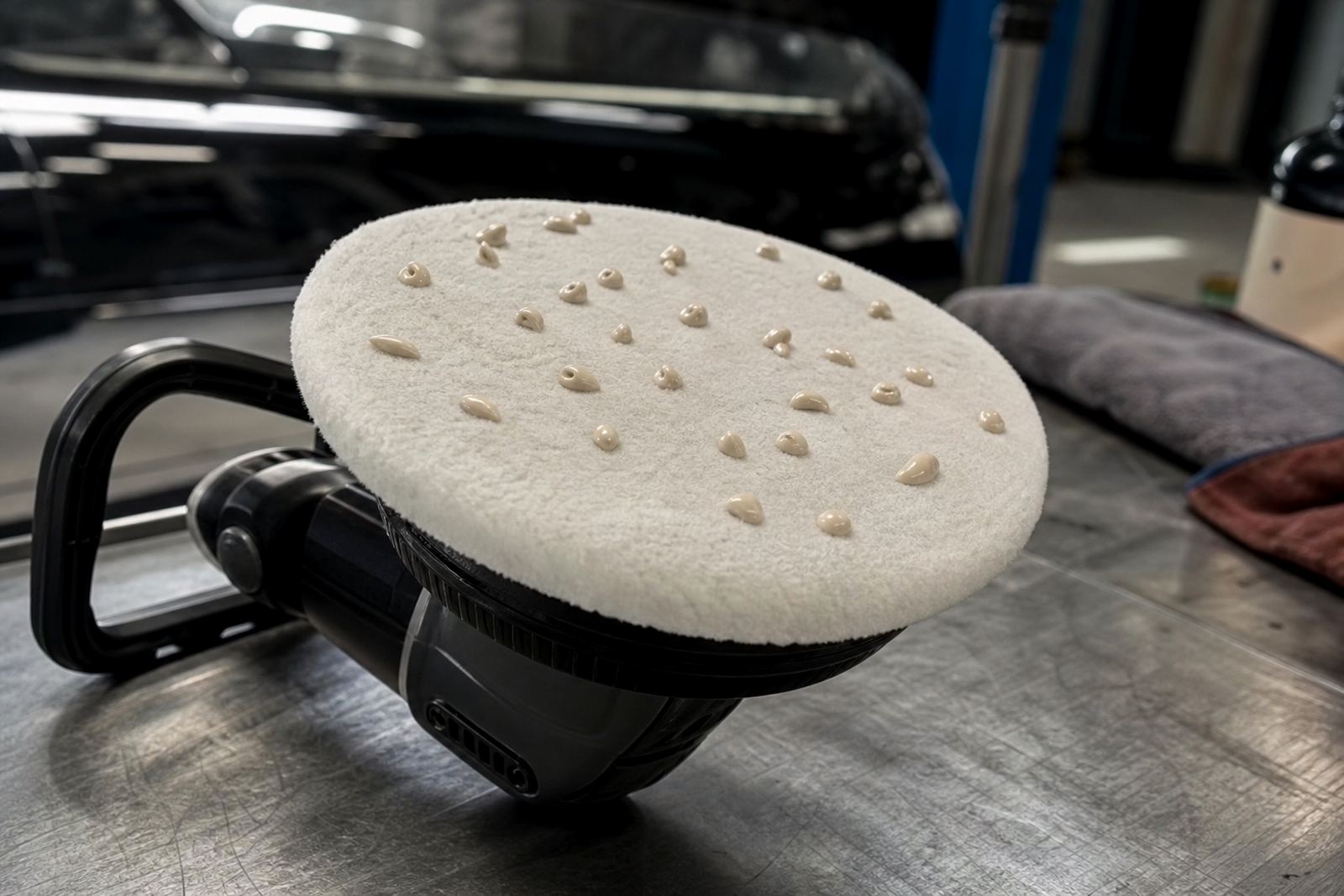
A proper check after compounding helps prevent rework later. Once the heavy defects are reduced, clean the surface and inspect again before changing to a finer pad or compound. This is where many jobs improve. A surface can look acceptable from a distance, but the inspection light may show micromarring, ghost lines or leftover residue in corners.
For paint, move the light slowly across the panel and watch how the reflection behaves. If the light bends, breaks or appears fuzzy, the finish still needs refining. For metal, the same test helps you see whether the buffed section is even and clean. If the result changes from one end of the panel to the other, the pressure, pad condition or compound choice should be adjusted.
- Check panel edges separately from flat areas
- Inspect after cleaning off compound residue
- Compare one section with the next for consistency
- Use fresh pads when the current one starts loading up
- Keep separate pads for cutting and finishing
Safety, Dust Control and PPE Still Matter
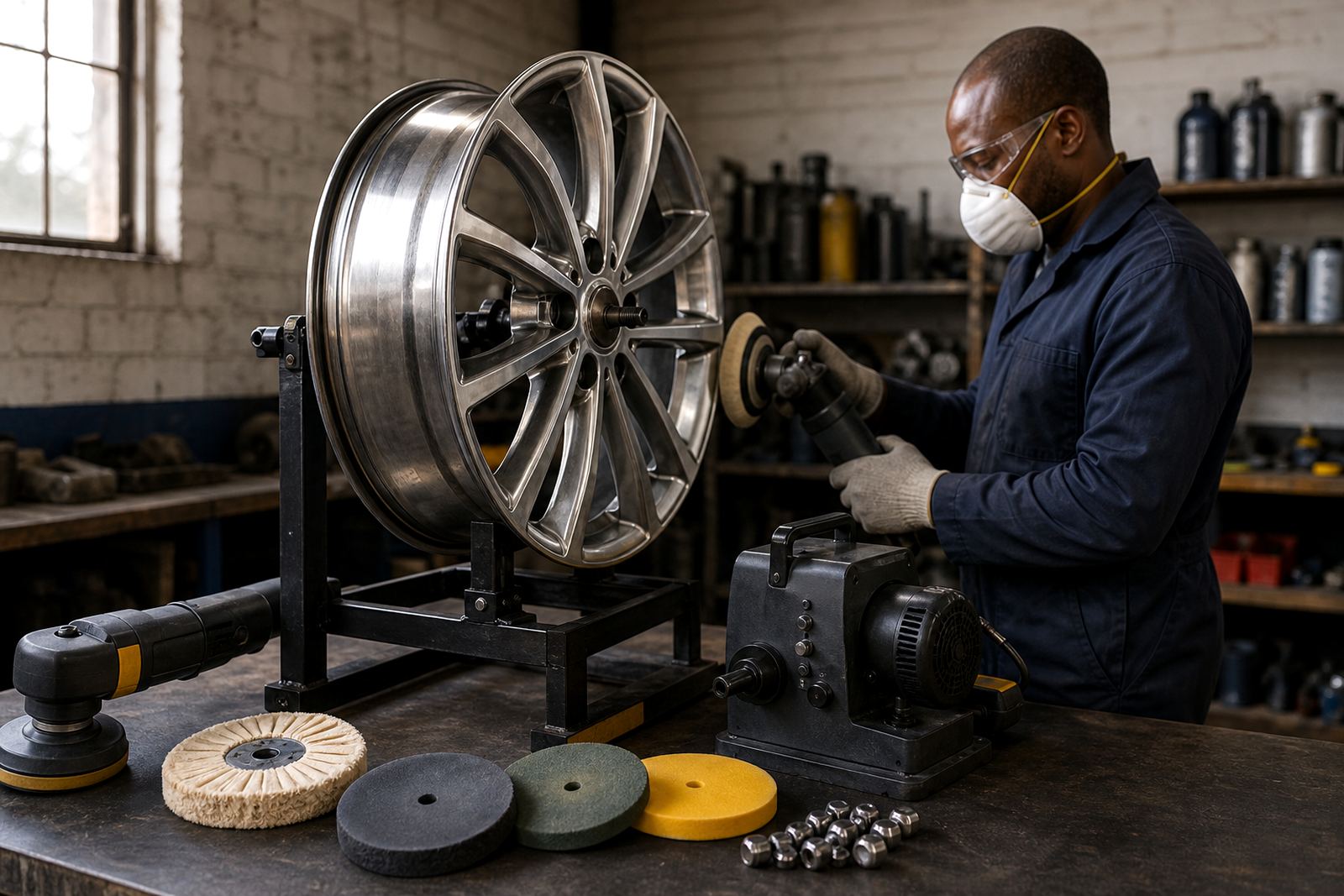
Good inspection is not only about appearance, it is also about safe working. Fine dust from paint, metal residue and spent compound should not be ignored. Wear eye protection when checking close to the panel and use a mask where dust is airborne, especially when working indoors with poor ventilation. If you are polishing metal, keep in mind that hot residue and sharp edges can cause problems that the light will not show on its own.
Vacuum or wipe the work area regularly so dust does not settle back onto the finish.In a workshop, it also keeps inspection more reliable because the surface stays clearer between steps. A clean area makes it easier to see defects and easier to correct them properly.
A Germiston Example That Saves Rework
In Germiston, a customer may bring in a black sedan that looked fine in the shade outside the gate, but under inspection light the bonnet shows swirls and a few missed arcs near the edge. A metal panel on a bakkie canopy may also show patchy buffing that only becomes visible once the surface is wiped and the light is moved across it. This is common in Johannesburg and Pretoria too, where mixed workshop lighting can hide enough to waste time later.
The practical lesson is simple. Inspect early, inspect properly and inspect from more than one angle. Whether you are finishing automotive paint or polishing metal, the light tells you what the machine cannot. It shows where to refine, where to clean and where to stop before you remove too much material.
At Polisher in Germiston, Gauteng, we work with polishers, buffs, compounds and polishing training for customers across South Africa, including Cape Town, Durban and Bloemfontein. If you need help with pad and compound matching, starter kit advice, or a safety and PPE briefing for your team, use the enquiry form on our contact page and we will guide you through the next step.