
Keep the cable behind your body, not across the panel
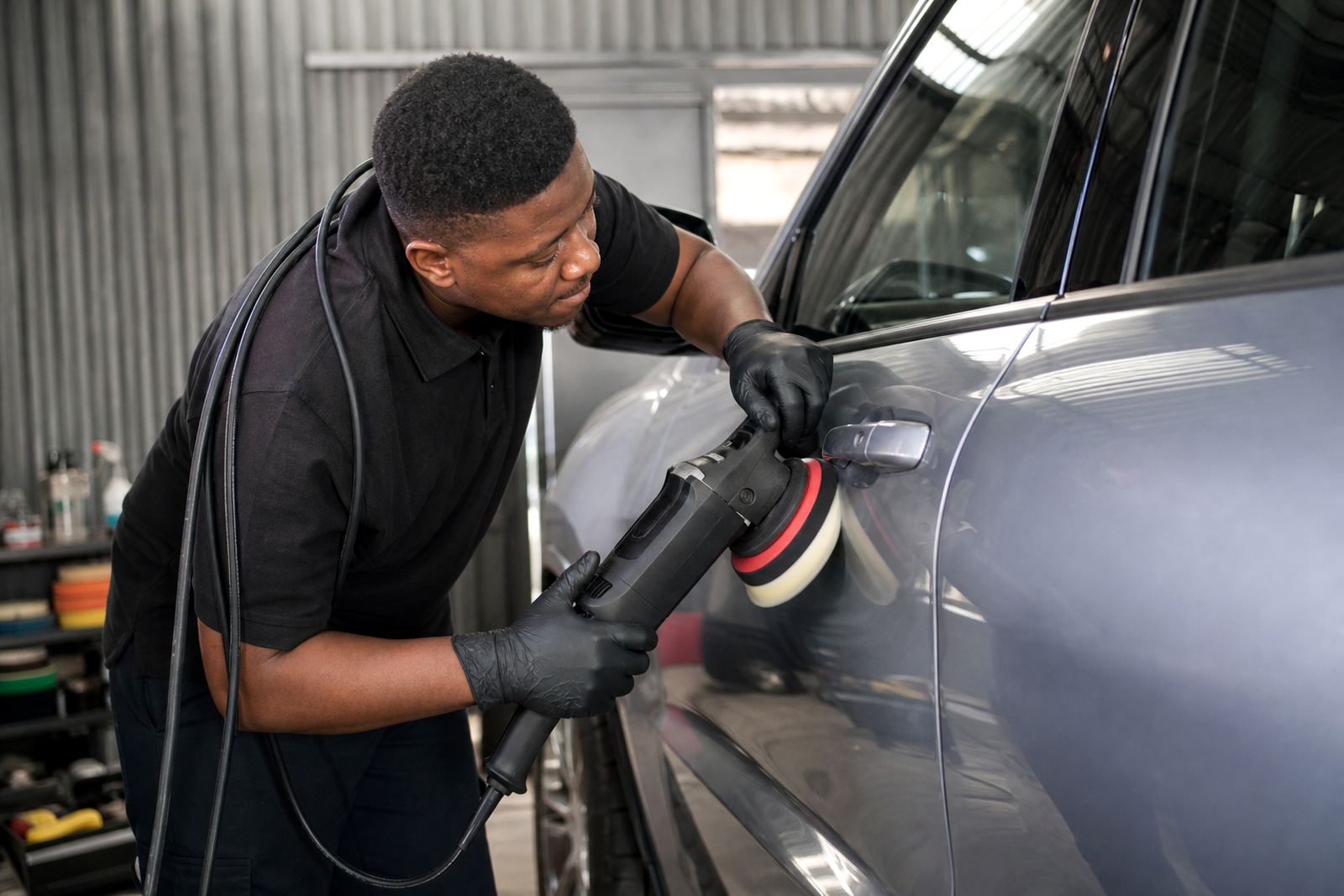
One of the easiest habits to learn is to keep the cord running behind your shoulder or elbow, then down and away from the work area. When the cable hangs over the bonnet or door, it can brush fresh compound across the surface or catch on edges and trims. On a rotary polisher, that moment of snagging can also change your hand position and mark the panel if you are not paying attention.
In Germiston workshops and mobile jobs across Gauteng, the same rule helps in tight bays where cars are parked close together. Keep the cord route simple and you will spend less time stopping to untangle it. If you are right handed, try to work from left to right so the cable stays away from the finish. For left handed users, the same idea applies in reverse.
- Start with the plug end routed away from the panel before switching on.
- Let the cable rest on your forearm if you need extra control.
- Pause and reset the cord before moving to the next section.
Use a proper hook-up point and take strain off the plug
Good cord control starts before the machine is even in your hand. Use a hook-up point high enough to keep the cable clear of wet compound, dust and foot traffic. In a home garage, that may be a sturdy ceiling hook or a safe overhead line. In a workshop, it could be a fixed gantry point. The idea is simple: reduce drag so the machine moves freely and the plug is not yanked loose mid-pass.
Do not let the cable lie in a puddle, across a sharp edge or under a tyre. That is especially important in coastal areas like Durban or Cape Town where humidity can make cords and plugs wear faster if they are stored damp. Before you start, check for cuts, exposed wire, loose plugs and heat damage near the extension joint. If you use an extension, make sure it is the right length for the bay so you are not pulling it tight every few seconds.
- Keep extension joints off the floor where possible.
- Use a cable that is long enough for the vehicle side you are working on.
- Uncoil the full lead to reduce heat build-up.
Match cord handling to the machine and the task
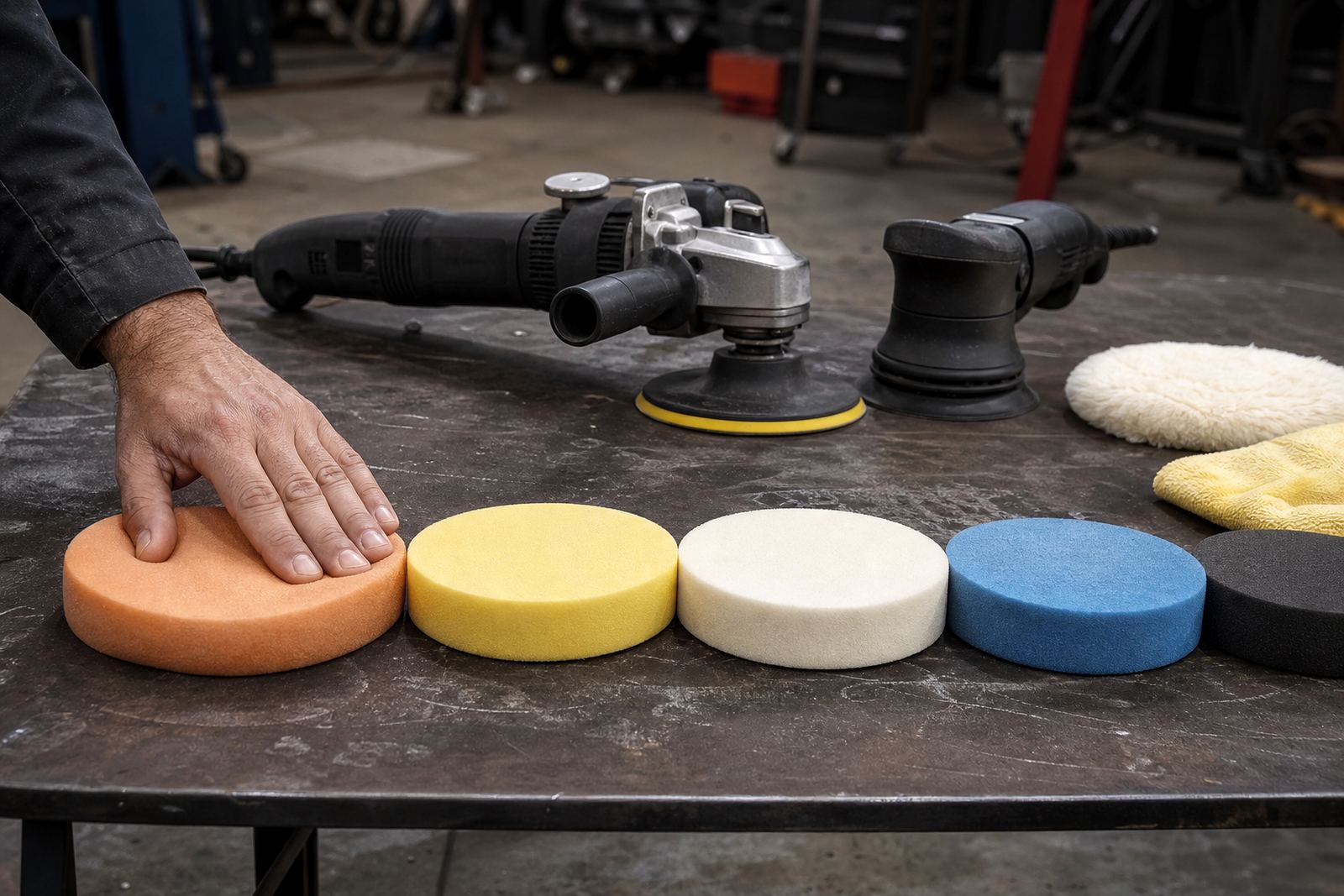
Rotary polishers and dual-action polishers behave differently, so the cord has to be managed differently too. A rotary machine can move faster on edges and curves, which means the cord should be watched more closely around mirrors, grilles and bumpers. A dual-action unit is usually more forgiving on paint, but the cable can still rub through dust and slurry if it drags across the panel. Either way, the goal is to keep the lead loose enough for free movement, but not so loose that it falls into the working area.
When working on metal, especially stainless, aluminium or chrome parts, tiny abrasive particles can travel with the pad and line the cord with grime. Wipe the cable down during breaks so the dirt does not get transferred from one job to another. For paint correction, keep the cord away from fresh product on the panel because a dirty lead can make a clean area look hazy again. On hot days in Pretoria or Bloemfontein, a stiff cable can also steer the machine unexpectedly, so check flexibility before starting.
As a simple rule, every time you change pad or compound, check the cord route too. It takes ten seconds and can save a panel.
Use restraint devices and sleeves where they help
Some polishers benefit from a small restraint, but only if it still allows natural movement. A soft cord sleeve or wrap can reduce scuffing on trim and painted edges, especially on dark vehicles where any mark shows quickly. The point is not to bind the cable tightly, but to make it easier to control when you are reaching across a bonnet or working around door handles.
In a busy workshop, colour coding helps too. Keep separate leads for different work areas if you can, and store them on hooks rather than in a heap on the floor. That reduces trip risk and keeps compound dust from settling into the plug ends. When you pack up, coil the cord in broad loops, not tight bends, so it lasts longer and does not twist every time you start a job.
- Use a soft sleeve where the cable touches sharp trim.
- Keep cords off the floor during breaks.
- Store machines with a loose coil, not a tight figure-eight.
Keep your hands, posture and pace steady
A cord can only be managed well if your body position is steady. Stand with your feet planted and move around the panel instead of reaching too far across it. If you overreach, the cord tends to follow your shoulders forward and then falls onto the work surface. That is when accidental marks happen, especially with fresh compound on the pad. A calmer stance also helps with pressure control, which matters just as much as cable control.
For beginners, the best habit is to work in smaller sections. On a bonnet, divide the area into clear zones and reset the cord at the end of each one.If the power changes or the machine slows, switch off before adjusting the lead rather than trying to catch it while the pad is still spinning.
Protect panels, people and the workshop floor
Cord management is not only about the finish. It is also about keeping people safe around a moving machine. A trailing lead can catch on a trolley, a polishing stand or someone walking past with a bucket. In tight spaces, one small tug can pull the machine across the paint or drop it onto the floor. That is why a clear work path matters, especially where teams are sharing space during a busy day.
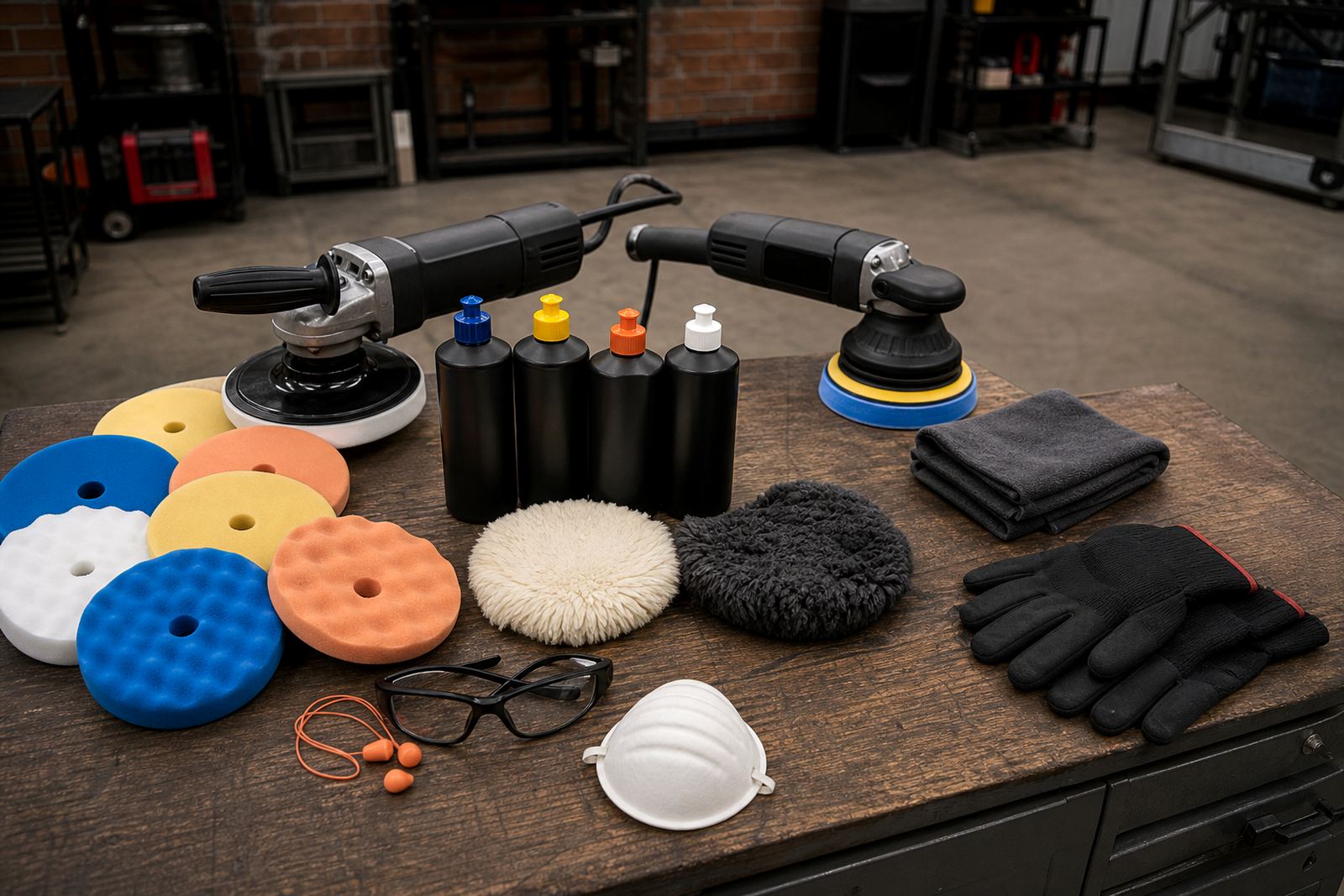
Wear suitable PPE as part of the routine. Eye protection helps with flying residue, a dust mask or respirator is sensible when dry residue is present, and snug work gloves can improve grip when moving leads around. If you are polishing in a body shop, remember that grinding dust and compound residue should be cleaned up before the cable is laid down again. A clean floor makes it easier to see where the cord is, which sounds basic but saves a lot of trouble.
For local teams in Johannesburg, Pretoria, Cape Town, Durban and Bloemfontein, a short safety briefing before each job helps everyone keep the same habits. The best cord management is boring in the right way: predictable, tidy and out of the way.