Why Dark Paint Shows Every Small Mistake
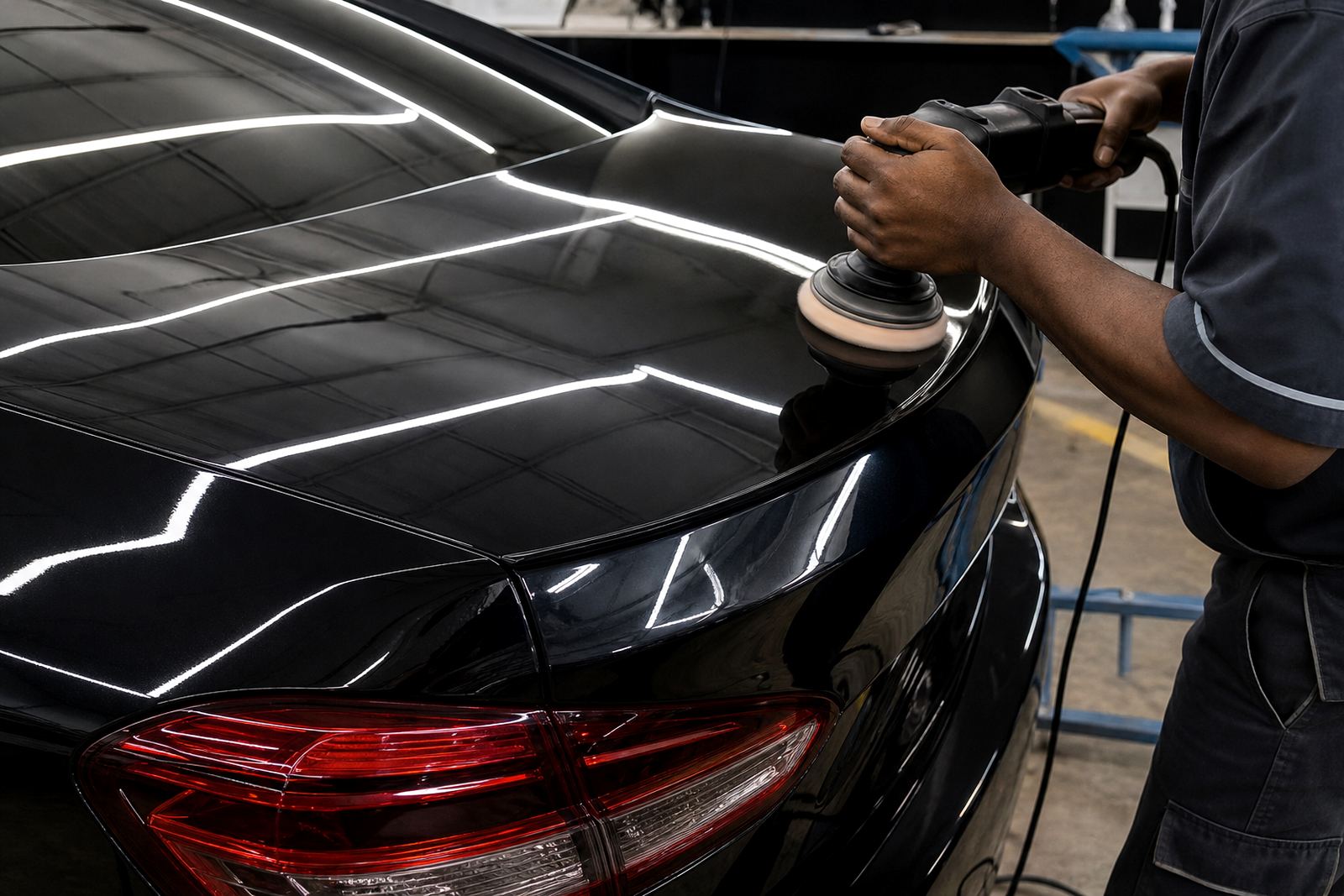
Black, navy, charcoal and other deep colours tend to expose light scratches, buffer trails and micro haze more quickly than lighter finishes. That is because the surface reflects light strongly, so any unevenness in the clear coat stands out, especially under direct sun or workshop lighting. In places like Germiston and the East Rand, a panel may look fine in the morning and then show marks once it moves outside into hard midday light.
Heat also matters. On warmer days, or when a bonnet has sat in the sun, the paint can soften a little and respond faster to the machine. If the pad is too aggressive, or the compound too heavy for the step, the finish can end up looking dull instead of clean. Dark paint usually rewards a slower more controlled approach.
Rotary and Dual-Action Machines Each Have Their Place
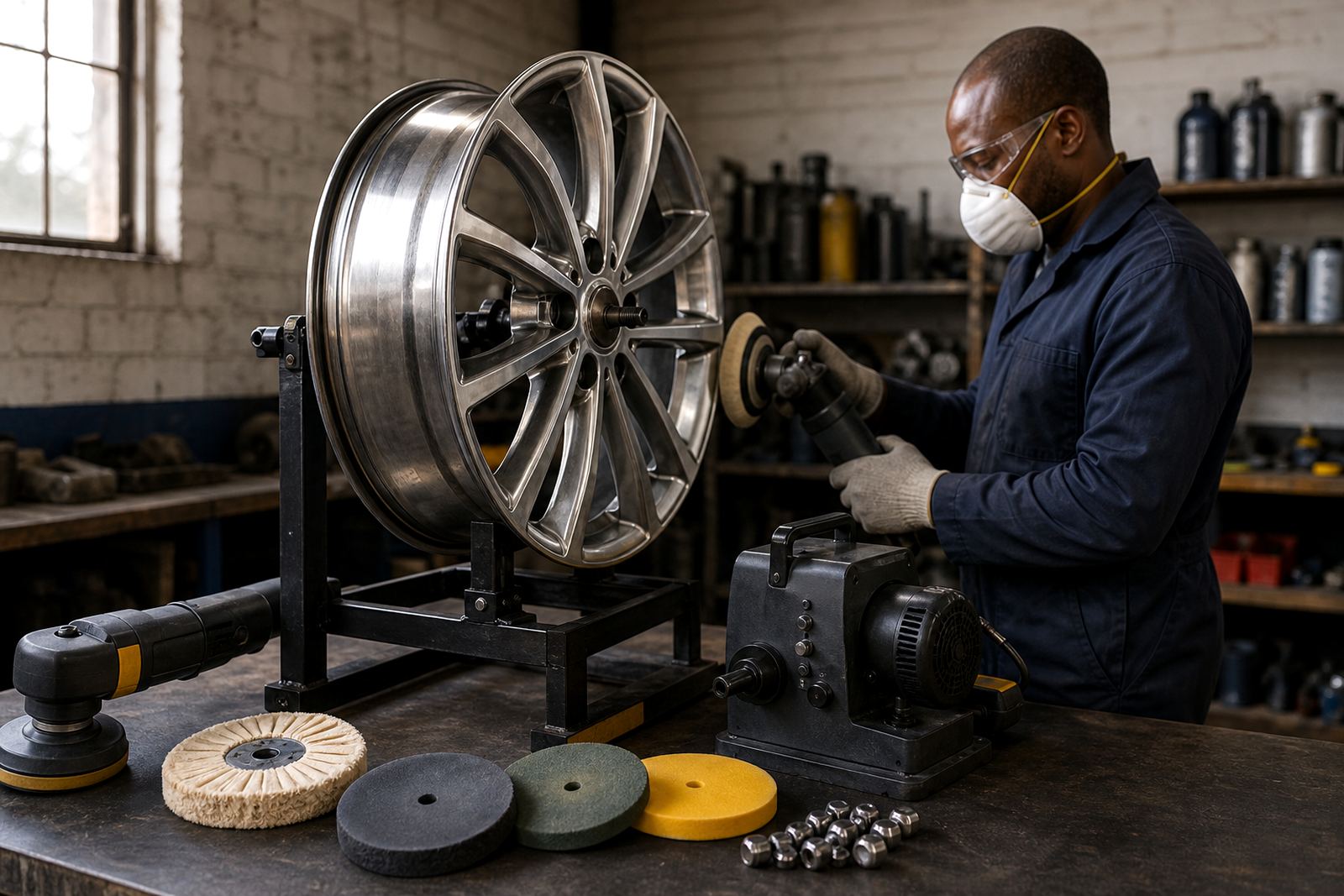
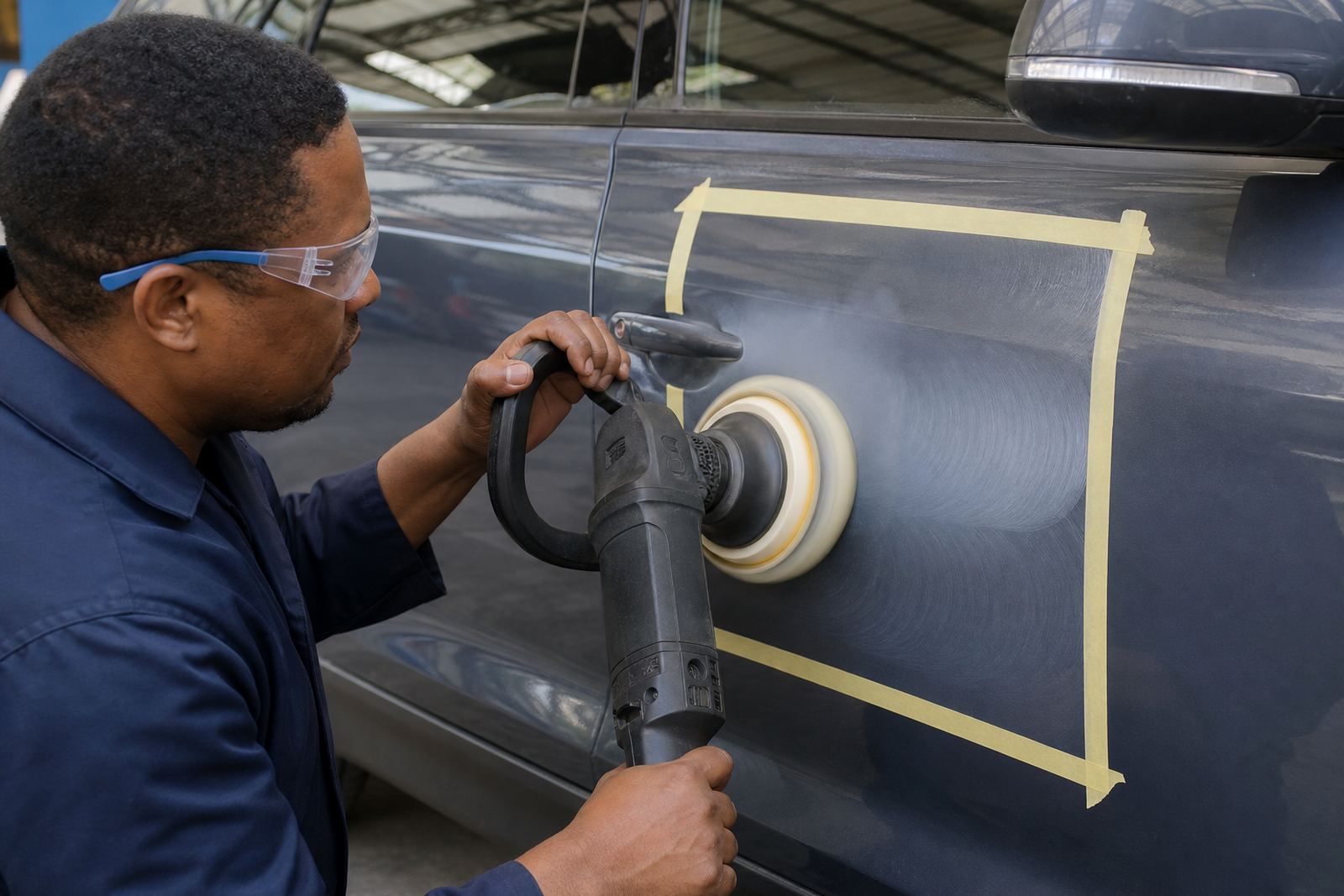
A rotary polisher cuts fast and is useful for heavier defect removal on painted metal, clear coat and properly prepared panels. It can also generate more heat, so it needs careful pad control and a steady hand. A dual-action machine moves in both rotation and orbit, which generally makes it easier to refine the finish and reduce the chance of visible holograms on dark panels.
For final finishing, many technicians will move from a cutting stage to a softer pad and a finer compound, then finish with a cleaner pad and a light pass. On dark cars, that last stage is often where the result is won or lost. If the machine is rushed, the surface may still look clean indoors but show haze in the sun.
- Use a rotary for controlled correction when the panel needs stronger cutting
- Use a dual-action machine for refining and final finishing on dark paint
- Keep pads clean so spent compound does not scour the surface
- Work small sections and inspect under strong, angled light
Pad and Compound Choice Must Match the Paint
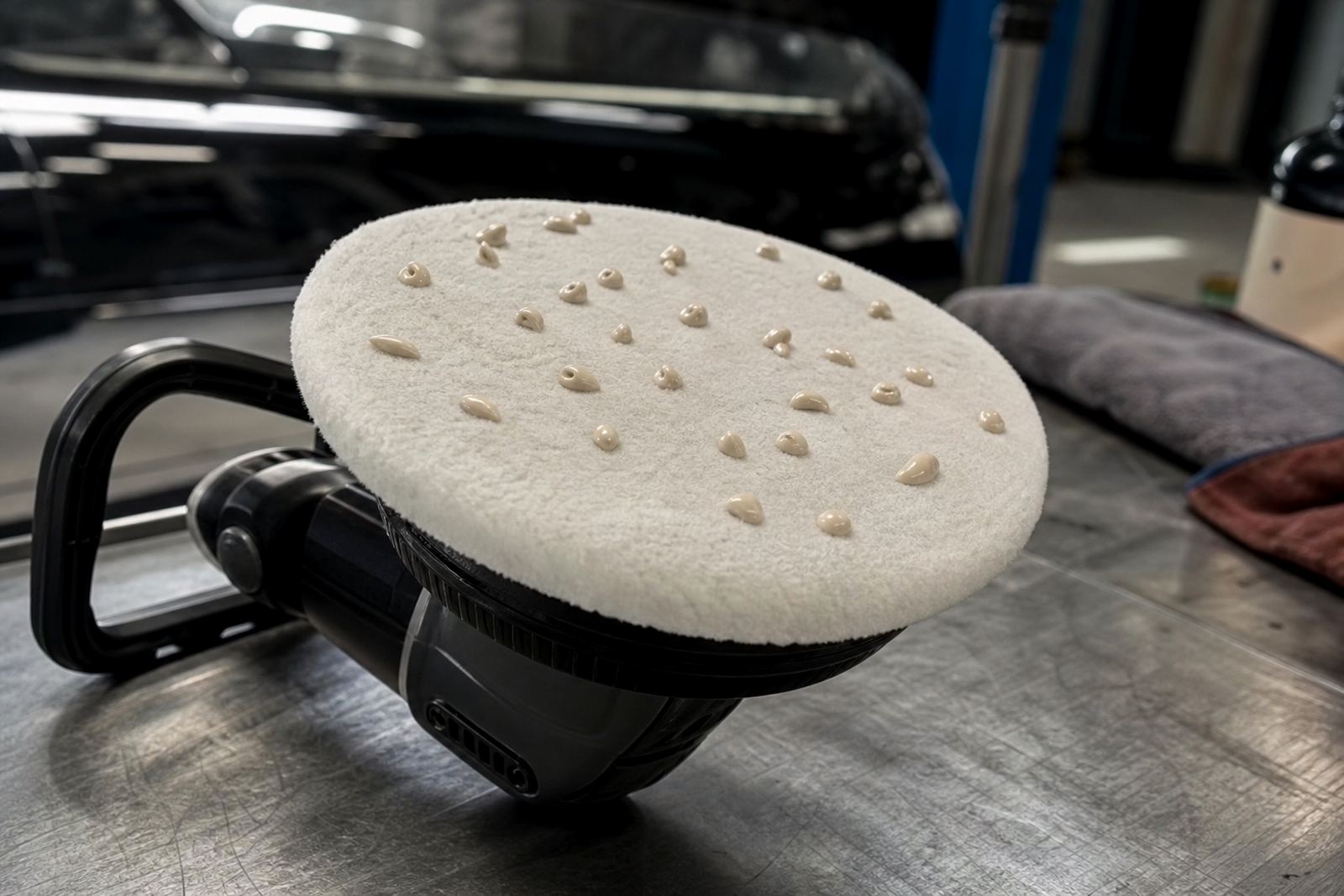
There is no single pad that works on every vehicle. Foam pads, microfibre pads and wool-style buffs all behave differently, and the compound must suit the level of correction required. A coarse compound can remove marks faster, but it may leave a faint cloud on dark paint if the finishing step is skipped or done with the wrong pad.
For many local workshops, the safest routine is to test a small area first. Start with the least aggressive combination that still gets the job done. If the panel clears well, there is no need to jump straight to a heavy-cut setup. That saves time, reduces heat and gives the paint a better final gloss. Our team in Germiston sees this often with work from Johannesburg, Pretoria and surrounding areas where vehicles come in after a quick wash and need proper correction rather than another layer of polish.
- Choose the pad by defect level, not by habit
- Match compound strength to the finish you need
- Inspect the pad often for dust, dried product and contamination
- Replace worn pads before they start dragging or leaving lines
Final Finishing on Black Cars Needs Discipline
The final polish on a dark car is about restraint. Too much product can clog the pad. Too much pressure can create new marring. Too much speed can leave heat marks, especially around edges, pressed lines and repaired areas. The best results usually come from a clean machine, a light touch and short overlapping passes with proper wipe-downs between stages.
After compounding, use a finer finishing step to clear any haze. Keep the panel cool, check your work from different angles and use lighting that shows the truth, not just what looks shiny. If you are working near the coast, such as in Cape Town or Durban, humidity can slow the wipe-down and make residue more noticeable, so panel prep and clean towels matter even more.
Dark paint also shows dust from the workshop easily. A tidy bay, good extraction and a controlled environment help, but the finish still depends on the last pass you make with the pad.
Safe Practice Keeps the Job Neat and the Crew Protected
Polishing produces fine dust, spent compound and airborne residue, so personal protection should be part of the process. Wear suitable eye protection, a dust mask where needed and hearing protection if the machine is loud. Keep hands away from hot panels, and be careful around edges, badges and rubber trims that can catch the pad.
Before starting, check the cable, backing plate and pad condition. If you are training a new operator, the first lesson should always include safety and PPE briefing. That is part of good workshop discipline, whether the job is a single bonnet in Bloemfontein or a full correction on a fleet vehicle in Pretoria.
- Use PPE suited to dust and machine noise
- Keep cords clear of the pad and moving parts
- Mask delicate trim where needed
- Allow panels to cool before the next polishing step
A Practical Example from a Germiston Workshop Bay
A black saloon arrives after a wash and inspection in Germiston. The owner wants the gloss improved before weekend travel up to Johannesburg. Under the lights, the bonnet shows light haze from a previous polishing attempt, while the doors still carry fine swirl marks from drying cloths. In that case, the job is not to chase every mark with a heavy pad. It is to correct the main defects, refine the finish, then stop before the paint gets overworked.
A sensible process might be a short test area, a medium cut with a suitable pad, then a finer finishing step with reduced pressure. If the result is clean, the operator moves on. If not, the combination changes. That is the method we teach in our Beginner Polishing Training, Rotary Skills Session and DA Skills Session, along with pad and compound matching, starter kit consultation and workshop setup advice for teams across South Africa.
For businesses in Johannesburg, Pretoria, Cape Town, Durban, Bloemfontein, the East Rand and the Vaal Triangle, the main lesson is simple: dark paint is not difficult, but it does punish shortcuts. Careful selection and patient technique always pay off.
When to Ask for Training or Setup Advice
If your team is getting inconsistent results, or if dark vehicles keep showing haze after polishing, it is usually a process issue rather than a product issue. The right machine, the right buff and the right compound still need a controlled method. That includes panel prep, pad care, machine speed, section size and final wipe-down.
Polisher, based in Germiston, supports customers through practical training, consumables restocking and machine care guidance. Clients reach us through the enquiry form on our contact page for help with metal and car finishing, whether they need a workshop demo, onsite team session or advice on getting cleaner final results on black paint. The goal is straightforward: a better finish, fewer reworks, and safer work practices.