
Start with the right machine for the job
The first choice is the polisher itself. For beginners, the decision usually comes down to rotary or dual-action. A rotary machine turns in one direction and cuts faster, which makes it useful for heavier oxidation, sanding marks and metal work, but it can also build heat quickly and leave swirl marks if the pad stays in one spot too long. A dual-action machine moves in a more varied pattern and is generally more forgiving on paint, especially for people learning panel control on cars in Germiston, Johannesburg or Pretoria.
If you are doing mixed work, choose a machine that suits the smaller jobs first. A compact body helps when polishing around mirrors, handles, curves and badges. Check that the machine feels balanced in your hands and that you can hold it comfortably for 10 to 15 minutes without strain. On site in a busy workshop, that matters just as much as power. For a beginner, it is better to learn controlled passes and steady pressure before chasing speed.
When you set up your kit, make room for a clean extension lead, a stable plug point and a working area that does not get in the way of other tasks.
Pads, buffs and what each one actually does
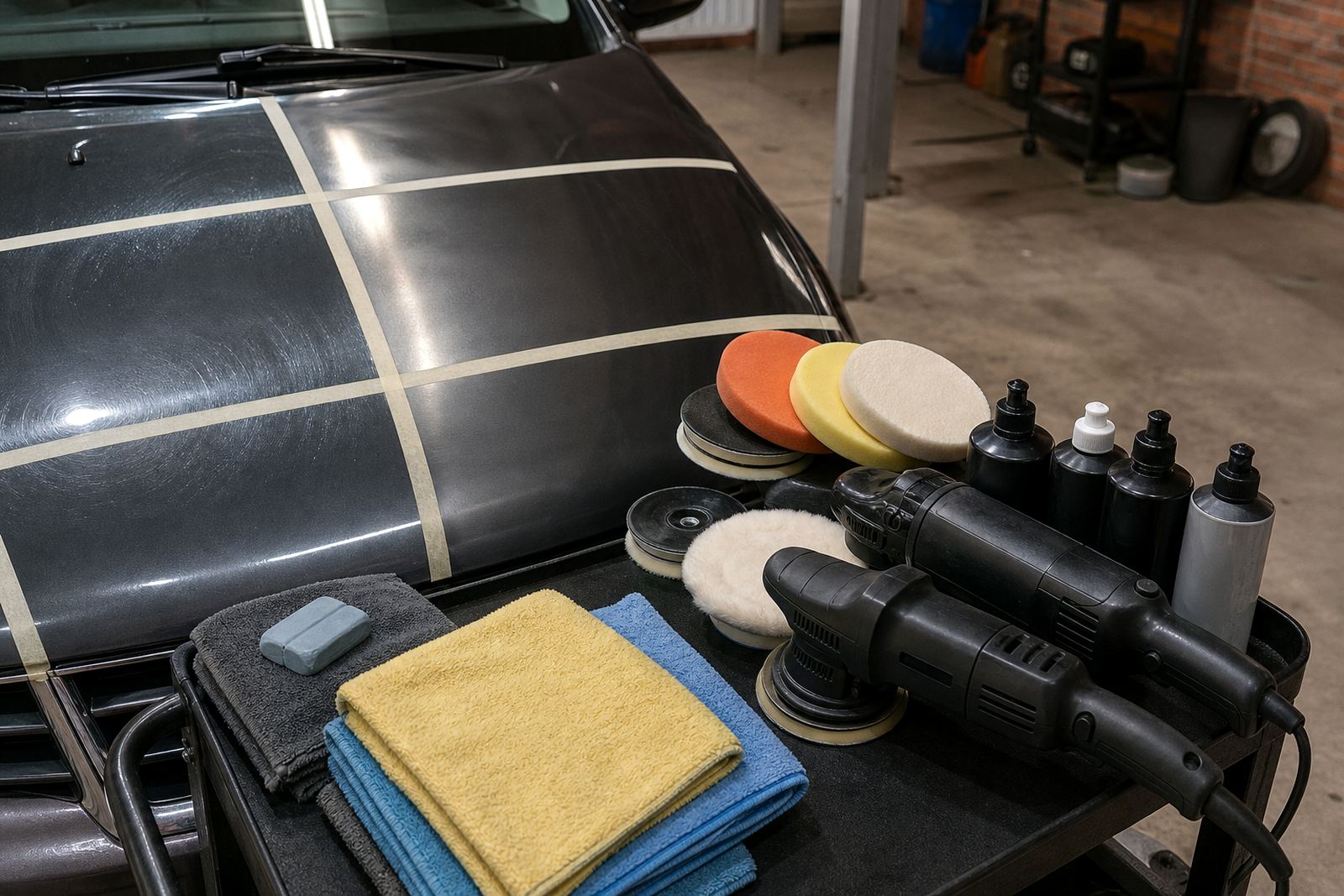
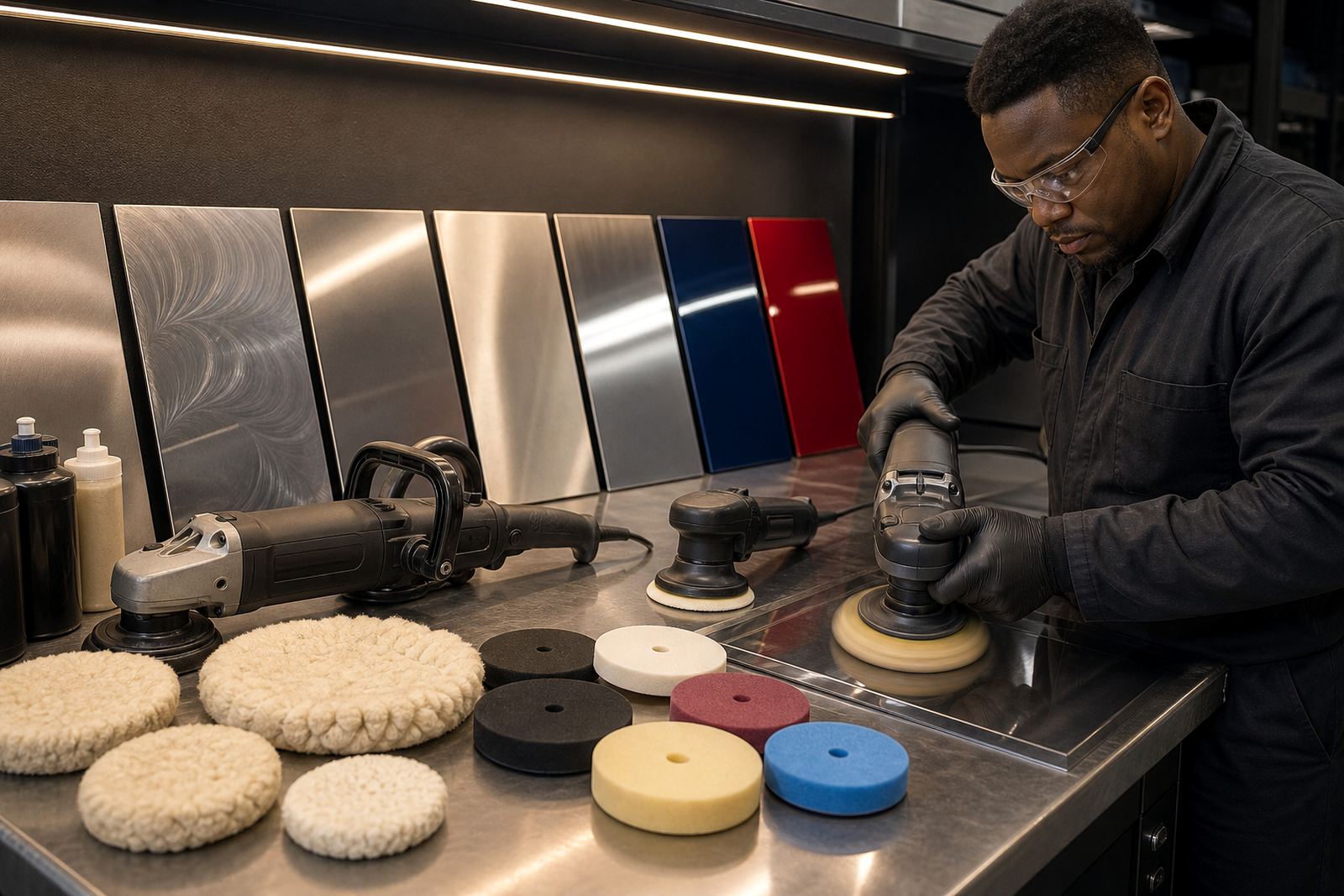
The pad or buff is where the work happens, so it is worth choosing a small range instead of buying too many options at once. Foam pads are common for paint correction because they are available in different densities. Softer foam is better for finishing and bringing out gloss, while firmer foam helps with cutting. Wool buffs and stitched pads are often used on metal, stainless steel and heavily oxidised surfaces where more bite is needed.
Keep the set simple at the beginning. A beginner kit can cover most starter jobs with a cutting pad, a polishing pad and a finishing pad. If you are working on aluminium or mild steel, the pad choice should match the compound and the condition of the surface. Too aggressive a pad can remove material too quickly, while a pad that is too soft may just move residue around.
- One cutting pad for heavier defects or oxidation
- One polishing pad for refining the surface
- One finishing pad for final gloss and light machine marks
- One dedicated pad for metal work if you are also doing alloys or stainless steel
- Label pads clearly so they do not get mixed up on the shelf
Compounds and polishes should match the surface
Compound selection is often where beginners get stuck. A compound has a cutting action that removes oxidation, marks or dullness. A polish is normally finer and is used to improve clarity and finish after the cutting stage. For paint, start with a medium cutting compound and a finer finishing product. For metal, use a compound that suits the material and the level of staining or surface marking. The same product does not always work the same way on clear coat, bare aluminium or chromed trim.
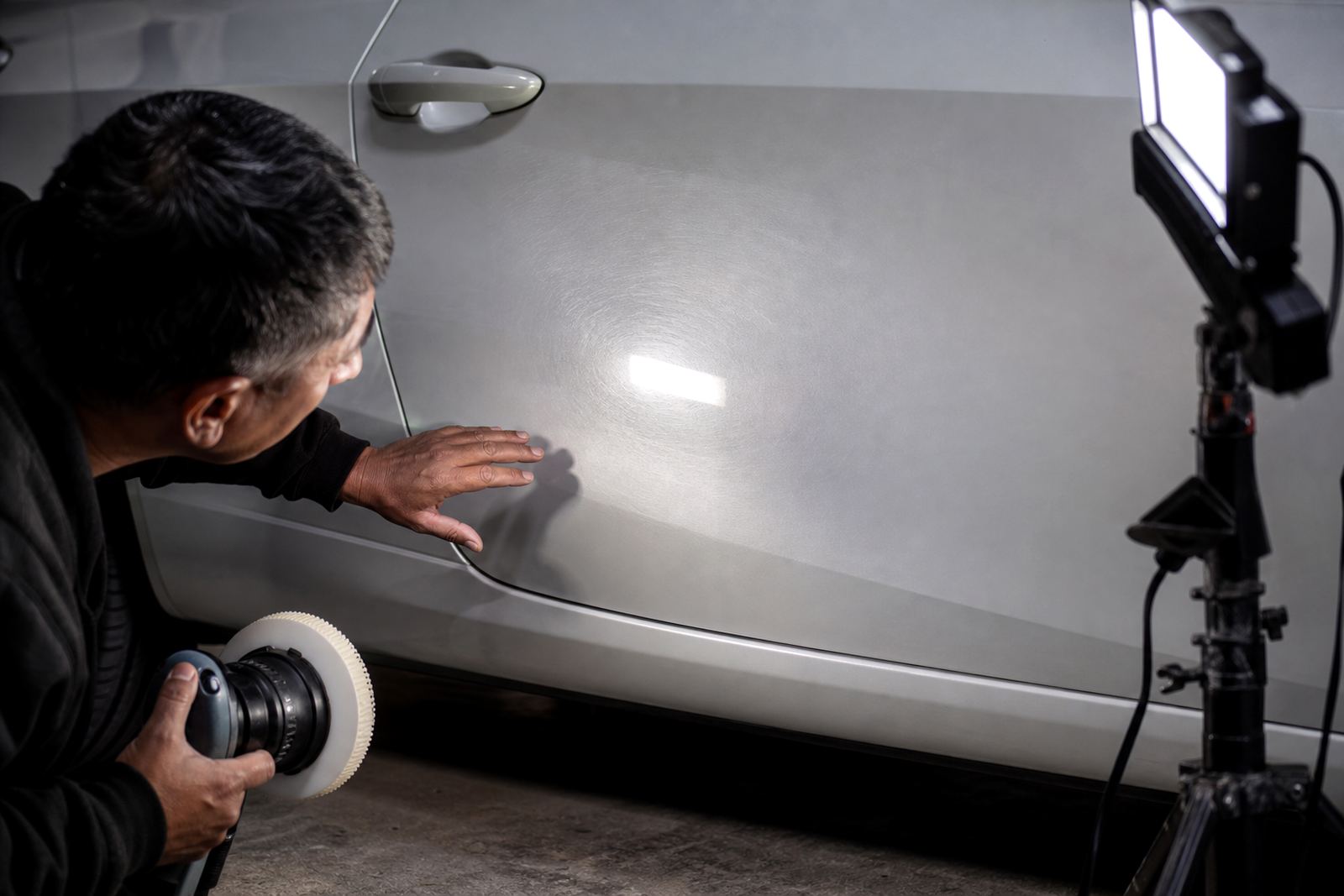
It helps to keep the process in stages. Test a small area first, then adjust the pad and compound before moving to the whole panel or part. On a bonnet or door, work in sections about the size of a forearm. On metal handrails, parts or fittings, use shorter passes and wipe residue often so you can see what the surface is doing. In Durban’s humid conditions and coastal air, residue can hang around longer, so a clean wipe down between steps is important.
If you are unsure, do not jump straight to the most aggressive product. A lighter approach saves time in the long run because it reduces the risk of haze, swirls and unnecessary rework. That is a practical lesson for anyone starting out in Bloemfontein or the East Rand where workshops often need to move from one material to another in the same day.
Safety gear belongs in the kit from day one
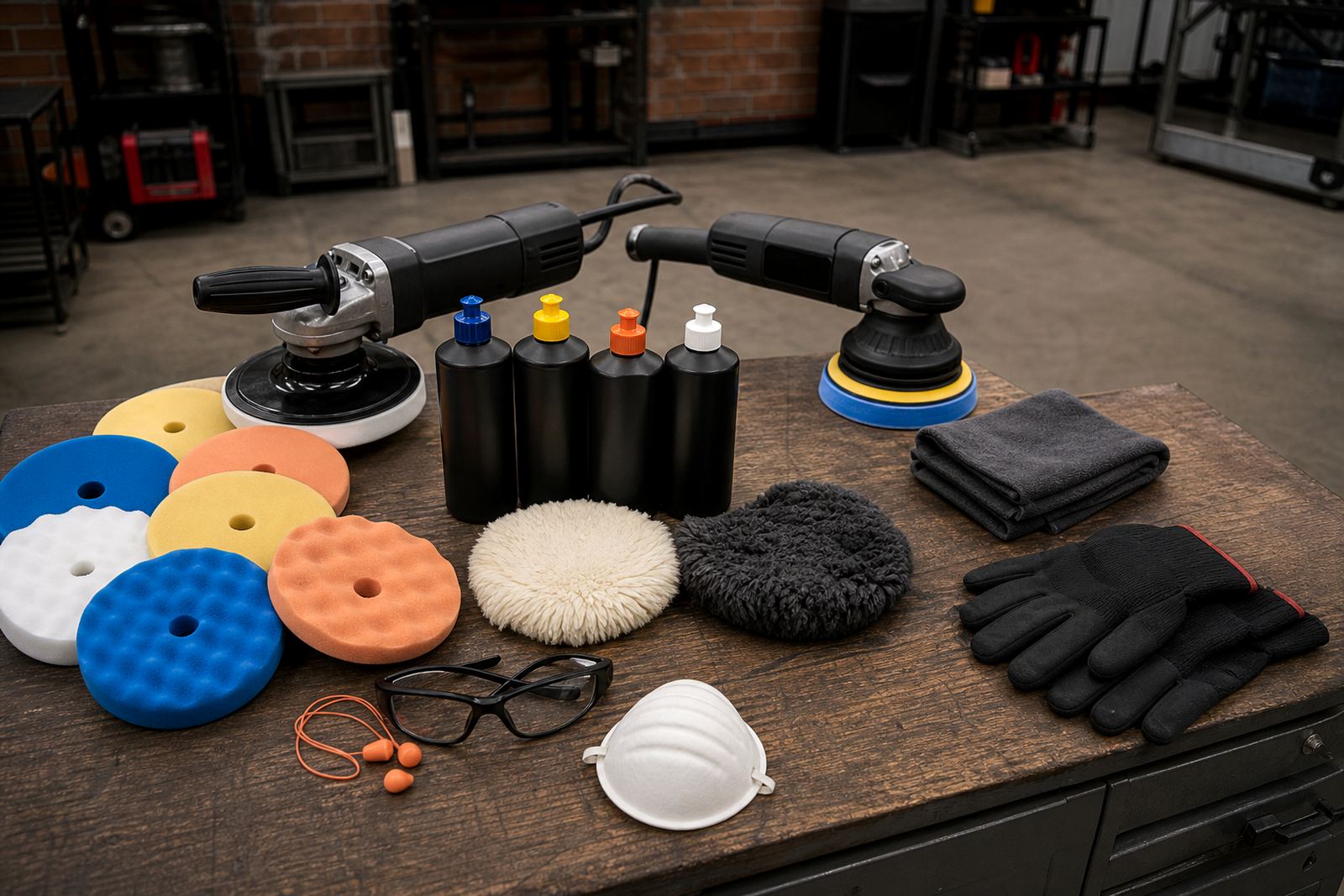
Polishing creates fine dust, spent compound and in some cases residue from old coatings. A proper kit must include PPE and basic dust control. Wear eye protection, gloves that allow good grip, and a mask or respirator rated for fine particles when you are working on dry surfaces or breaking down old finish. If you are polishing near edges, brackets or sharp metal, hand protection is not optional. It is part of the job.
Keep the workspace clean before you begin. Blow off loose dust carefully, then wipe the surface and surrounding area so grit does not get pulled into the pad. A contaminated pad can scratch paint in seconds. If you are working indoors, try to keep extraction or ventilation running, especially when using dry compounds. Do not leave polishing residue on the floor because it becomes a slip risk.
- Eye protection for flying residue and splatter
- Respiratory protection for dust and fine particles
- Gloves with a secure grip
- Ear protection if the machine runs for long sessions
- Microfibre cloths for clean wipe downs
Small accessories that save time and mistakes
A starter kit is not only the machine and the pad box. A few basic accessories make the work cleaner and easier to control. You will need microfibre cloths, a pad cleaning brush, a spray bottle for light misting where suitable, masking tape for trim and edges, and a marker or label system for keeping track of what has been used on each surface. A simple detail tray or storage case also keeps products from rolling around in the bakkie or workshop shelf.
Masking is especially useful around rubber seals, plastic trims and sharp panel edges. These areas heat up quickly, and once an edge is burned through there is no easy fix. A beginner who takes 10 minutes to tape off the job often saves an hour of correction later. For metal finishing, keep separate cloths for cutting and finishing so you do not carry coarse residue from one stage into the next.
If you move between Germiston, the Vaal Triangle and Pretoria for site work, pack the kit so it travels neatly. A loose bottle or unprotected pad can become a mess by the time you arrive. Good packing is part of good workmanship.
How to practise before taking on paid work
Before you work on a customer vehicle or a finished metal item, practise on a scrap panel or an offcut. Start with a clean surface, a small amount of product and a moderate speed. Learn how much pressure the machine needs before it bogs down. Learn how the pad feels when it is loaded correctly. Learn how to tell the difference between a surface that is improving and one that is getting too hot.
A useful beginner habit is to follow the same order every time: inspect, clean, mask, test spot, polish, wipe and inspect again. This gives you a repeatable process whether you are doing a family car in Johannesburg or a steel gate in Cape Town. It also makes training easier because the steps are clear and the results are easier to compare.
Polisher supports beginners and working teams with starter kit consultation, machine care guidance, pad and compound matching, Safety and PPE Briefing and polishing training for both paint and metal finishing. If you are unsure what belongs in your first kit, start with the basics, then add only what you know you will use.