Where Wool Usually Fits In
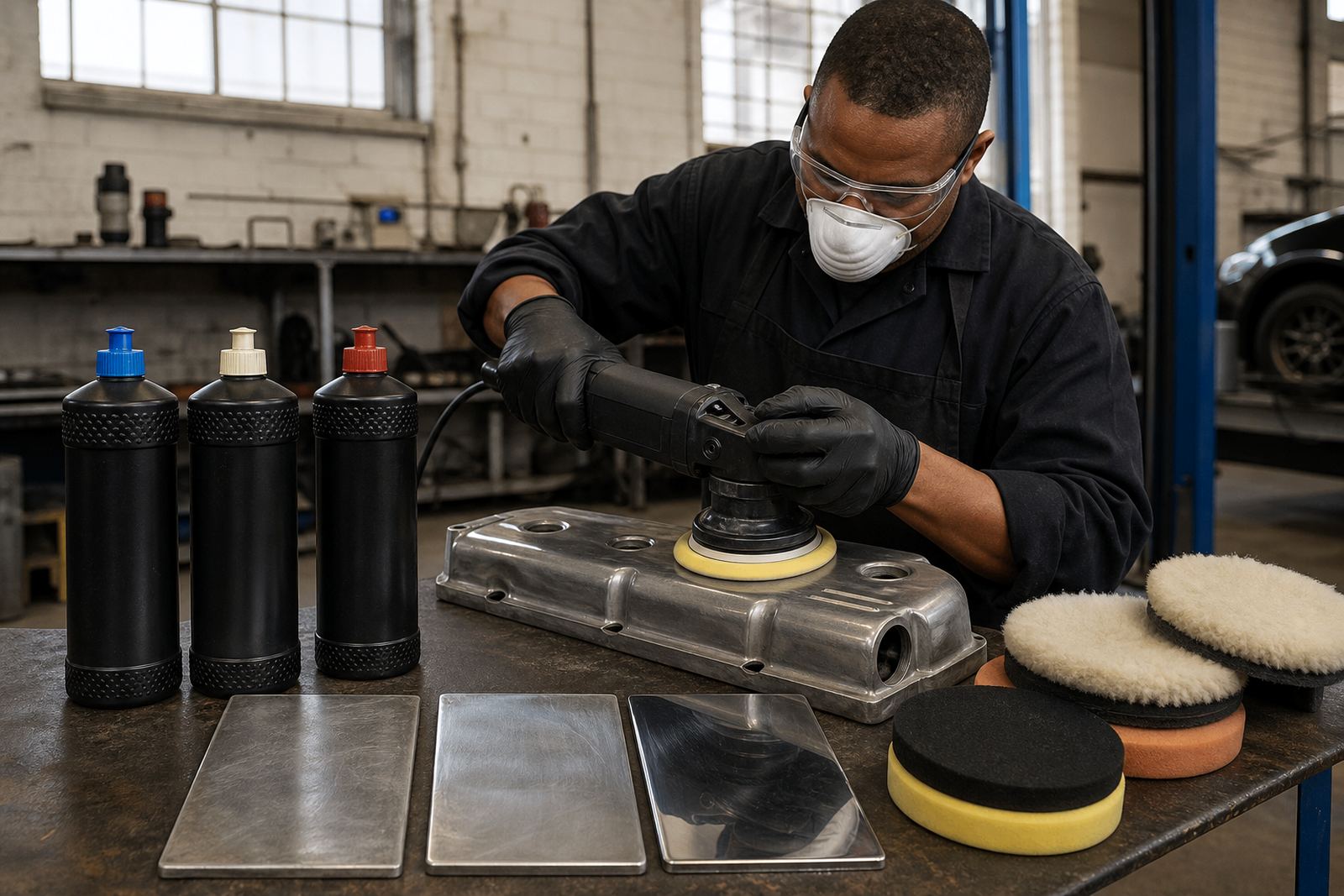
Wool pads are often chosen when the job needs stronger cut. On metal, that can mean removing oxidation, light sanding marks, haze or old compound residue before moving to a finer step. On paint, wool is commonly used in the first correction stage when the surface has deeper swirl marks, weathering or sanding lines that need more bite.
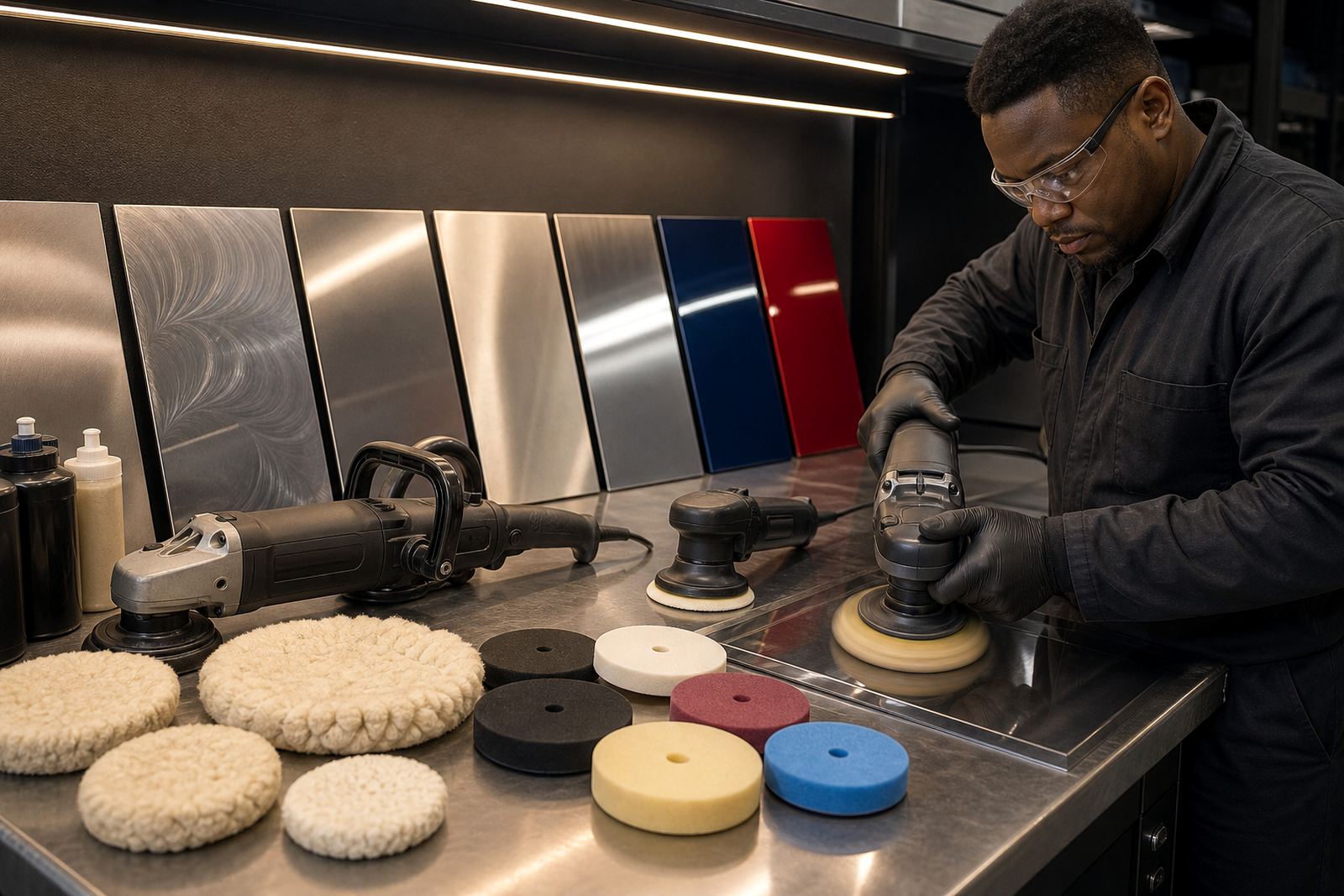
A wool pad has fibres that move a lot as the machine runs, so it can clear defects faster than a soft foam pad. That speed is useful on flat panels, but it also means the operator must watch heat and keep the machine moving. In Germiston workshops, you will often see wool used on panels, trims or metal parts where there is enough space to work carefully and check the finish between passes.
- Best for heavier cut and quicker defect removal
- Useful on oxidised metal, harder paints and rougher surfaces
- Needs close attention to heat, edge pressure and sling control
- Usually followed by a finer pad and finishing compound
When Foam Gives Better Control
Foam pads are usually the better choice when the job moves from cutting to refining. They come in different densities, from firm cutting foam to soft finishing foam. That gives the operator more control over the amount of bite, which matters on modern clear coats, fresh paint, and polished metal where you want clarity without extra marks.
Foam also helps when working around curves, badges and panel edges. It tends to hold compound more evenly and can leave a cleaner finish with less risk of dry buffing. For a new user learning rotary or dual-action technique, foam is often easier to manage because it is less aggressive and gives more feedback through the machine.
- Good for finishing and refining after a cut stage
- Helpful on clear coats, softer paint systems and delicate areas
- Available in firmer and softer grades for different stages
- Often preferred for final gloss work and reduced micro-marring
Rotary or Dual-Action: The Pad Choice Changes
The machine matters as much as the pad. A rotary polisher spins in one direction and gives direct cut, which suits wool and firmer foam when you need stronger correction. It can build heat quickly, so the user must keep pressure sensible and avoid staying too long on one spot. A dual-action machine moves in a combined orbit and rotation, which usually makes it safer for general finishing and less likely to leave heavy haze.
In practice, many jobs start with a rotary and wool pad for the first pass, then move to foam on a dual-action machine for refining. Other jobs need only dual-action with a medium foam pad and a suitable compound. The right answer depends on the condition of the panel, the thickness of the coating and the finish you want at the end.
- Rotary plus wool: stronger correction, faster cutting
- Rotary plus foam: controlled cutting and refining
- Dual-action plus foam: safer for learners and final finishing
- Always test on a small area before committing to the full panel
Compounds Must Match the Pad, Not Just the Problem
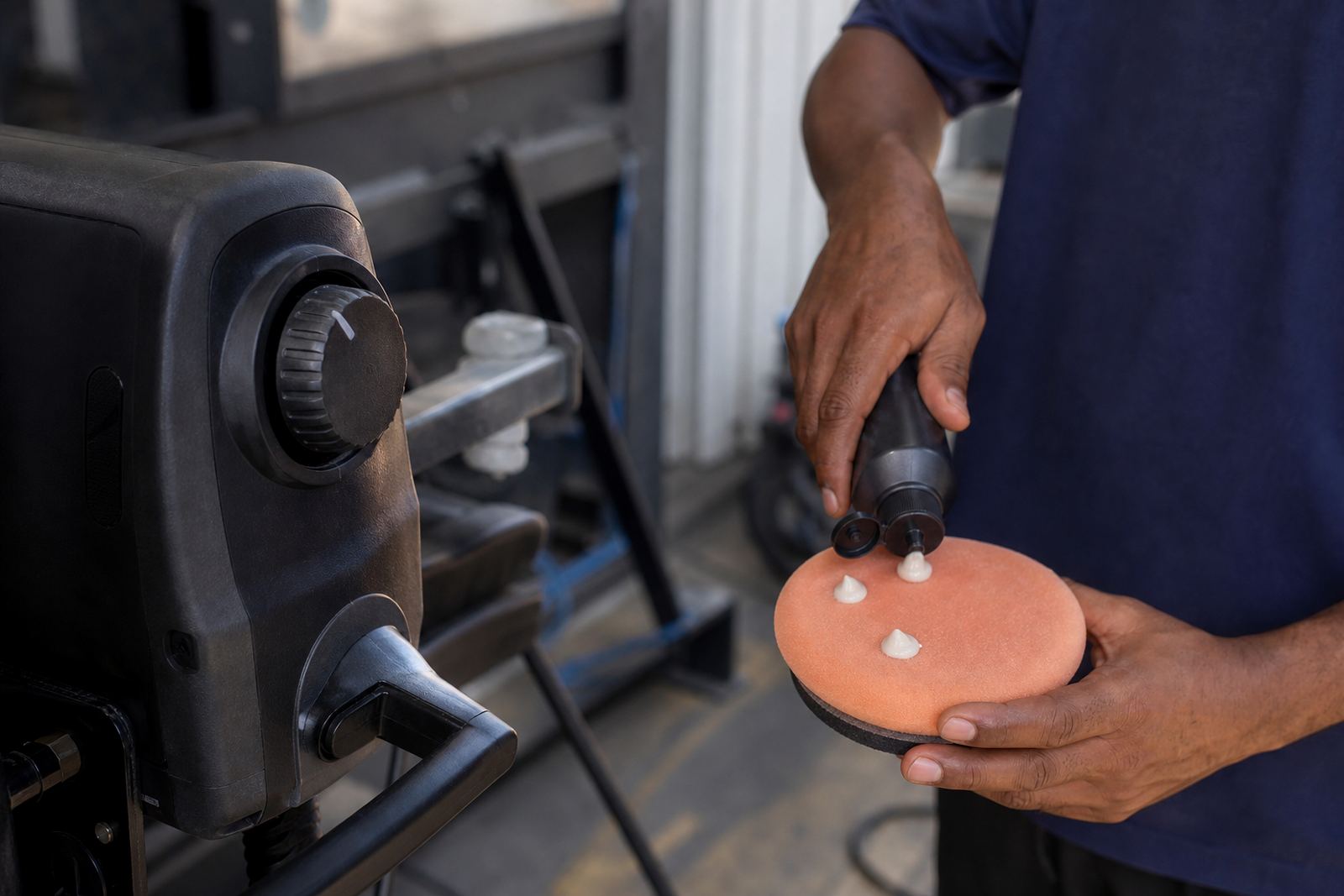
Pad choice is only half the job. A heavy compound paired with wool can cut hard, but it may also leave marks that need another stage. A milder compound on foam may take longer, yet it can leave a neater finish with less follow-up. Matching the abrasive level to the pad is what keeps the process under control.
On metal finishing, the aim is often to remove dullness and bring up a clear reflection without burning the surface. On paint correction, the aim is to remove defects without thinning the clear coat more than necessary. That is why many experienced operators work from aggressive to fine, step by step, instead of trying to get everything done with one combination.
- Use stronger cut only where the defect really needs it
- Step down to finer compounds as soon as the surface allows
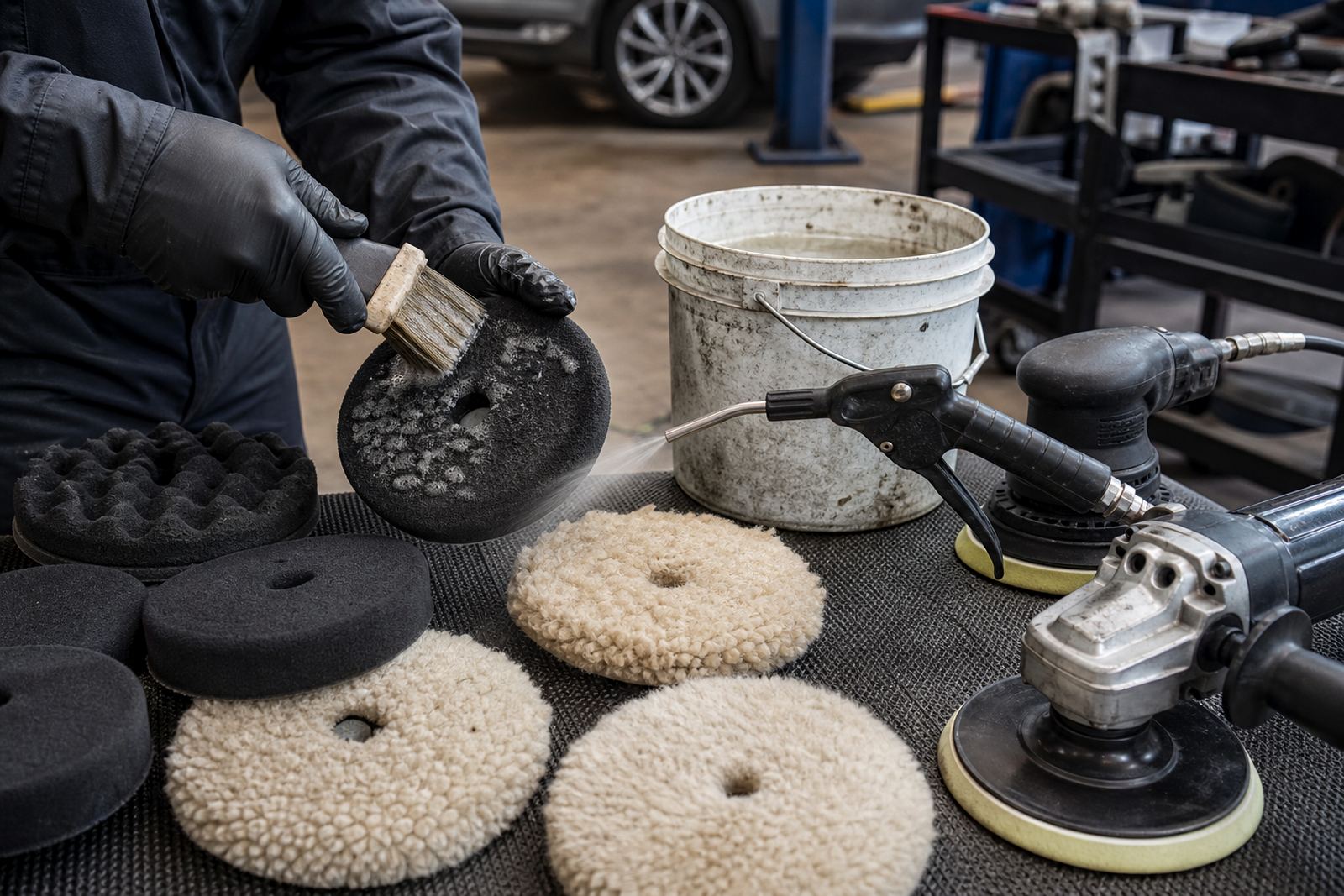
- Clean pads often to keep them from clogging
- Swap pads before they become matted or overloaded
Local Conditions Change the Way Pads Behave
South African conditions matter. In Gauteng, dust can load a pad quickly if the workshop floor is dry or the vehicle has been parked outside. Near the coast, humidity can change how compounds spread and how long a panel stays workable. In Durban or Cape Town, a pad that feels fine in the morning may behave differently later in the day if moisture and temperature shift.
If the machine is used in short working windows, it helps to keep pads cleaned, compounds capped and the work area organised so you do not waste time resetting between passes. For fleet vehicles, classic cars or gate and railing work, the same basic rule applies: keep the surface clean, use the least aggressive setup that does the job, and check your finish under good light.
- Dust control matters in open yards and industrial areas
- Coastal humidity can change working time and pad behaviour
- Good lighting helps spot swirl marks, haze and missed sections
- Keep extension leads, plugs and machines safe during outages
Safe Technique Matters More Than Pad Preference
Whether you use wool or foam, safe technique is non-negotiable. Wear eye protection, a dust mask where needed and gloves when handling compounds or metal dust. Keep loose clothing away from the rotating pad, and never press hard enough to stall the machine. On painted panels, work on a cool surface and avoid edges and sharp body lines unless you know exactly how the paint is responding.
For metal, dust and residue should be removed often so you can see what is happening. For paint, wipe downs between stages help confirm whether the marks are gone or only hidden by leftover residue. This is where training makes a real difference. A beginner often thinks one pad will do everything, but proper correction is usually about choosing the right sequence and not skipping steps.
- Use PPE and keep the work area clear of loose dust
- Do not overheat panels or hold the pad in one spot
- Check results between stages with a clean cloth and good light
- Use different pads for cutting, refining and finishing
A Practical Starting Point for Workshops and Hobby Users
If you are setting up in Germiston, Johannesburg or anywhere else in South Africa, a sensible starter kit usually includes one cutting pad, one finishing pad, a medium compound and a finer finishing product. That gives you enough range to learn without buying unnecessary items. A small trial section on a bonnet, door or metal rail often tells you more than a long theory discussion ever will.
For a local example, a used vehicle brought in from Kempton Park with moderate swirl marks may need a dual-action machine, a medium foam pad and a light compound first. If the paint still shows deeper defects after that, a wool pad on a controlled rotary pass might be used only on the worst areas, then followed by foam for the final finish. That measured approach saves time and reduces the risk of overworking the surface.
- Start with a simple pad and compound set you can learn from
- Test on one panel before deciding on the full process
- Choose wool for cut, foam for control and finish
- Ask for advice on machine care, pad matching and training before you commit