Why compound is more than just a rubbing paste
Compound is a controlled abrasive, not a magic liquid. It works by taking off a very thin layer of material so the surface becomes flatter and the marks become finer. On paint, that can mean reducing sanding marks, swirl marks and light oxidation. On metal, it can mean removing tarnish, machining haze and fine scratches left behind by earlier steps.
The key is matching the compound to the job. A heavy-cut compound can level defects quickly, but it will leave its own haze if the pad, machine speed or pressure is wrong. A finishing compound removes less material and is used to restore clarity after the cutting stage. If you skip steps, or use one compound for everything, you often end up chasing defects instead of removing them properly.
For customers in Germiston and across Gauteng, that difference matters because local work ranges from everyday car paint correction to stainless steel, aluminium and mild steel finishing in workshops. Different surfaces need different pressure, pad types and working time.
Cut, refine, finish: the three stages that matter
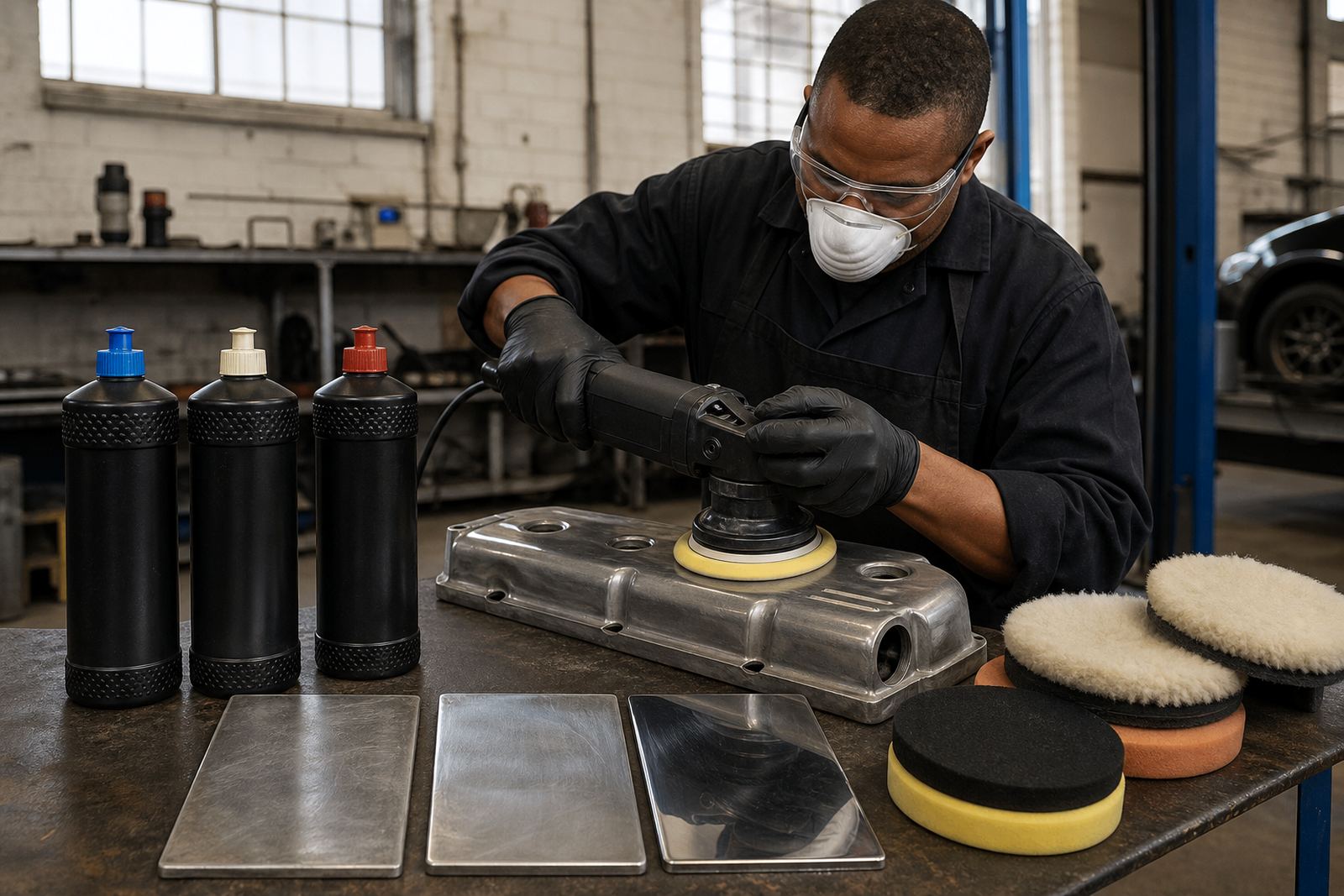
Good polishing is usually done in stages. The first stage cuts. The second stage refines. The final stage brings out clarity and gloss. Each stage uses a different approach, and the compound changes with it. A rotary polisher can move faster through heavier defects, while a dual-action polisher is often easier to control on sensitive paint and curved panels.
For a paint correction job, the cut stage may start after a wash, decontamination and, where needed, wet sanding. The compound removes the sanding haze and levels the surface. The refining stage then reduces micro-marring and improves reflection. The finish stage may use a softer pad and a finer compound to give the panel that clear, sharp look people want on black or dark-coloured vehicles.
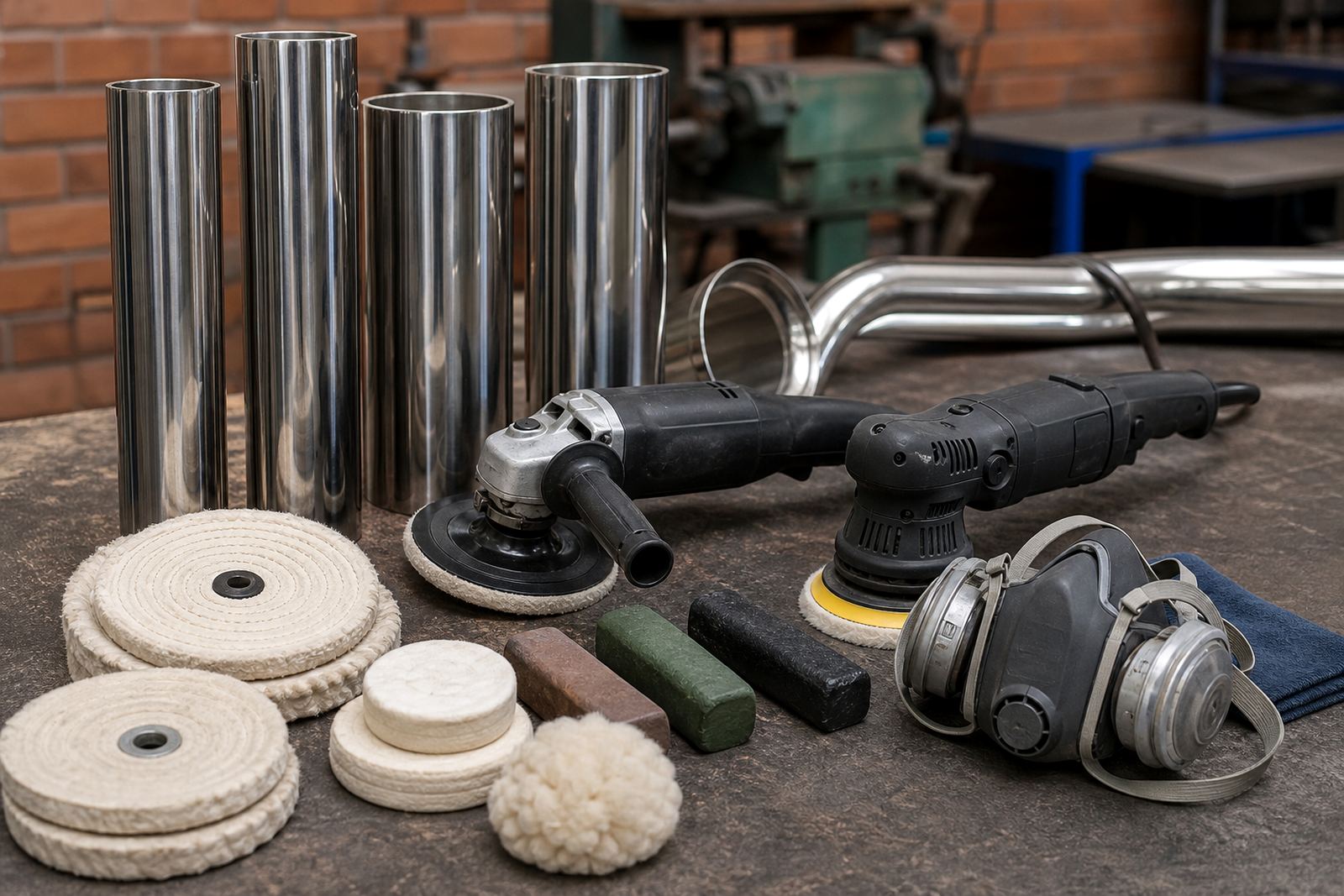
On metal, the same logic applies but the result is more about reflection and evenness than clear coat gloss. Polished aluminium can show every mistake, so clean pads, careful technique and consistent passes matter a lot.
- Cutting compound for heavier defects, sanding marks and oxidation
- Medium compound for refining after the first pass
- Finishing compound for clarity and final gloss
How pads and compound work together
Compound does not work alone. The pad changes how aggressively the product cuts and how the finish comes out. A firm foam or wool pad will cut faster, while a softer foam pad will usually leave a cleaner finish. On metal, buffing wheels and stitched buffs can move material quickly, but they need careful handling because edges, corners and welds can heat up fast.
The trick is to match pad density, machine speed and pressure to the surface. Too much speed or too much pressure can cause heat build-up, pigtails or surface distortion. Too little pressure can leave the compound sitting on top of the panel without doing useful work. The right balance lets the abrasive break down properly, which is what gives the smooth finish at the end of the pass.
At our Germiston base, this is one of the first things covered in starter kits and practical training. A beginner often thinks the compound is not working, when in fact the pad choice or technique is the issue. Once those three elements are matched properly the job becomes much easier.
- Firm pad, heavier compound, more cut
- Medium pad, medium compound, balanced correction
- Soft pad, fine compound, clearer finish
Rotary and DA machines need different handling
A rotary polisher spins on one axis. It is direct, fast and effective on metal work and heavier correction, but it can build heat quickly and leave holograms if the user moves too fast or works the panel badly. A dual-action machine moves in a random orbit as well as spinning, which makes it more forgiving on paint and better for many newer users.
Neither machine is automatically better. It depends on the surface, the defect level and the operator. A rotary is useful when you need strong correction and tight control on hard surfaces. A DA is better when you want safer correction on clear coat and a lower chance of burning edges. Many jobs use both: the rotary for the cutting stage and the DA for refining or finishing.
For the person learning on a weekend at home in Boksburg or a workshop team in Pretoria, the main rule is simple: let the compound and pad do the work. Do not force the machine across the panel, and keep the pad flat where possible. Watch corners, handles and body lines because those areas can polish through quickly.
Safety, cleanliness and decent results start before the machine
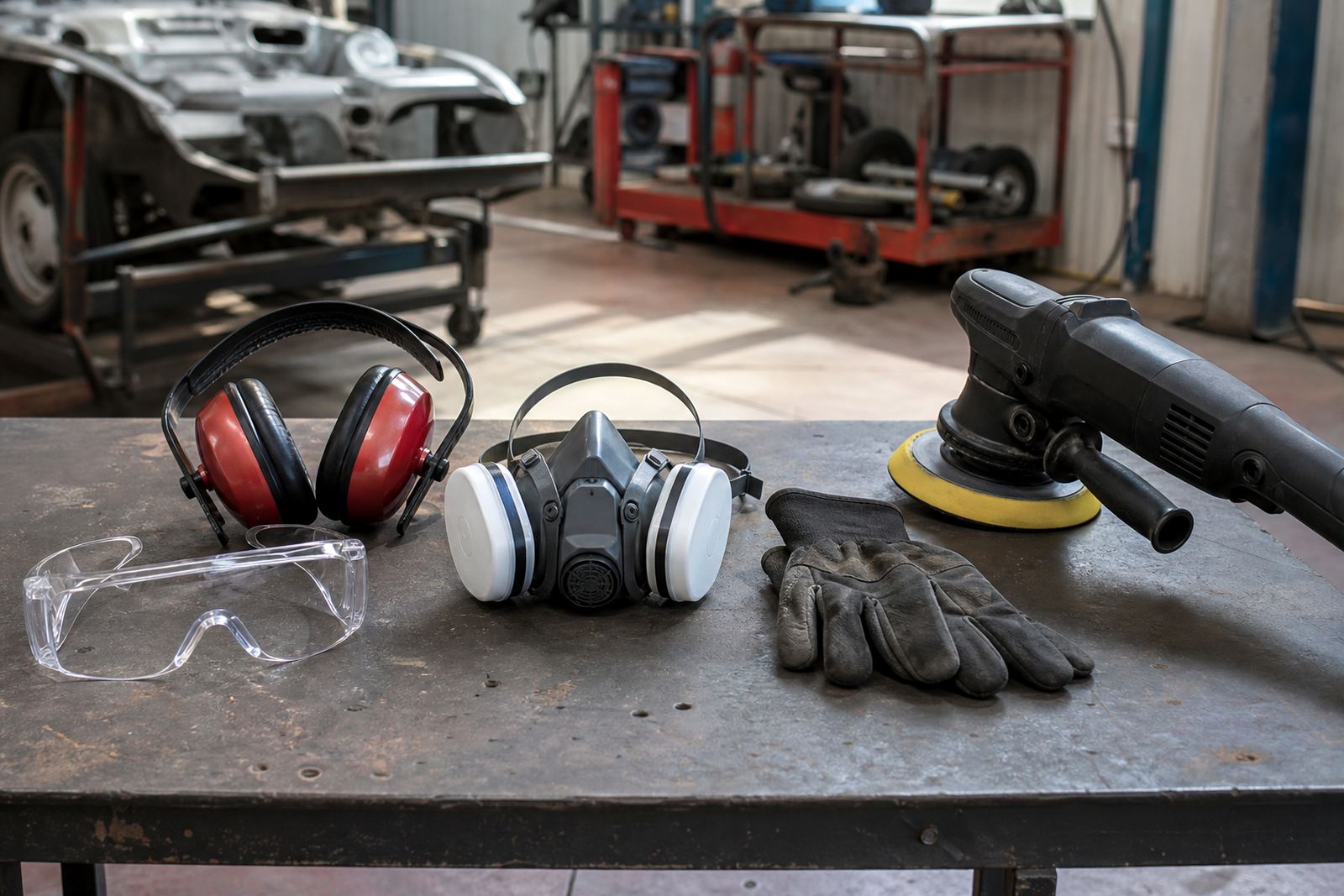
Compound work creates dust, residue and fine airborne particles. That means PPE is not optional. Use eye protection, a proper mask where dust is present, gloves when needed and good ventilation. In enclosed workshops, especially when buffing metal, the build-up from old compounds and oxidised residue can be unpleasant and unhealthy if you are not managing it properly.
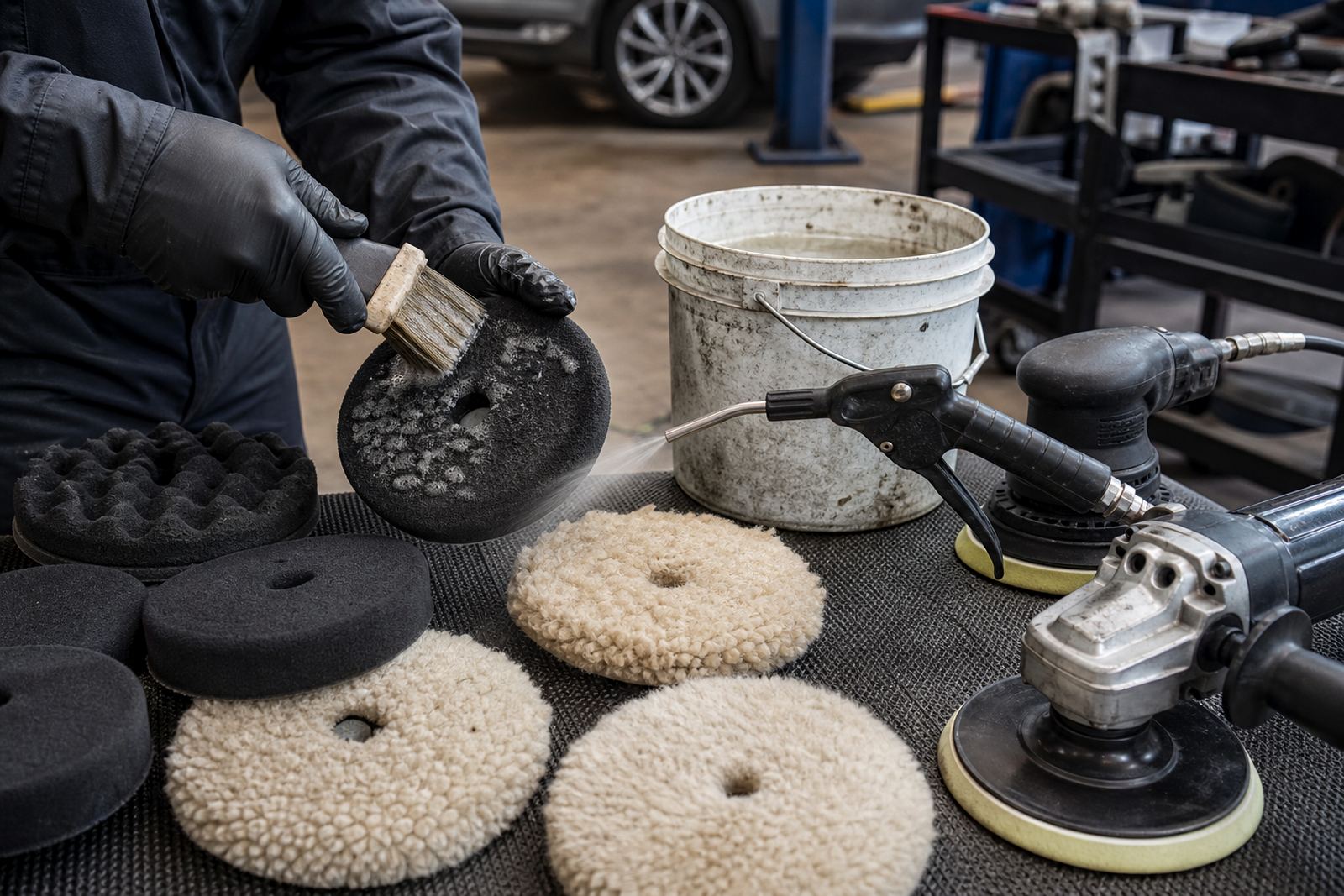
Keep pads clean, change them when they load up and do not use a contaminated pad on a fresh finish. A dirty pad can reintroduce grit and scratch the surface you just corrected. Wipe panels down between stages and inspect the finish under good light, because fluorescent workshop lighting can hide haze that becomes obvious outdoors.
- Wear eye protection when compound can flick off the pad
- Use dust control and decent airflow in the workshop
- Keep separate pads for cutting, refining and finishing
- Stop and inspect the panel before moving to the next stage
For coastal customers in Durban or Cape Town, moisture and salt can make contamination worse, so panel prep and final wipe-down matter even more. In Gauteng, dust and dry air can leave residue on the surface quickly, so cleanliness between passes saves time later.
A practical Germiston example: faded bonnet, dull trim, better plan
Take a common job in Germiston: a faded vehicle bonnet with swirl marks and light oxidation, plus some dull metal trim. The first step is to clean and inspect. Then choose the compound based on the amount of damage. If the paint is heavily marked, start with a stronger cut and a suitable pad. If the damage is light, a medium compound may be enough.
After the first pass, wipe the panel and check the result in proper light. If the defects are reduced but the surface has a light haze, move to a finer compound and softer pad. On the metal trim, use a careful buffing method that avoids dragging compound into seams or rubber edges. That may sound simple, but it is where many jobs go wrong because people rush the last 10 per cent.
That final stage is where our team often advises customers through the enquiry form on our contact page, whether they are setting up a small home workshop in the East Rand or preparing a fleet vehicle in Bloemfontein. A good result is not just about shine, it is about working in the right sequence and leaving the surface stable, not overworked.
Choosing the right compound for your job
If you are not sure where to start, think about the surface and the finish you need. Paint correction often needs a measured progression from cut to finish. Metal finishing may need stronger initial cut, then finer buffing to remove haze and bring up reflection. A starter kit should include the basics needed to test combinations without buying the wrong products for the job.
At Polisher in Germiston, we guide customers on pad and compound matching, machine care, workshop setup advice and beginner training. That includes rotary skills sessions, DA skills sessions, metal buffing training, paint correction coaching and a safety and PPE briefing. The aim is simple: help you use the right compound, in the right order, for the right surface.
If you are polishing for the first time or trying to improve a workshop process, start with one panel, one pad and one compound, then build from there. That approach saves money, reduces mistakes and gives a finish you can trust.