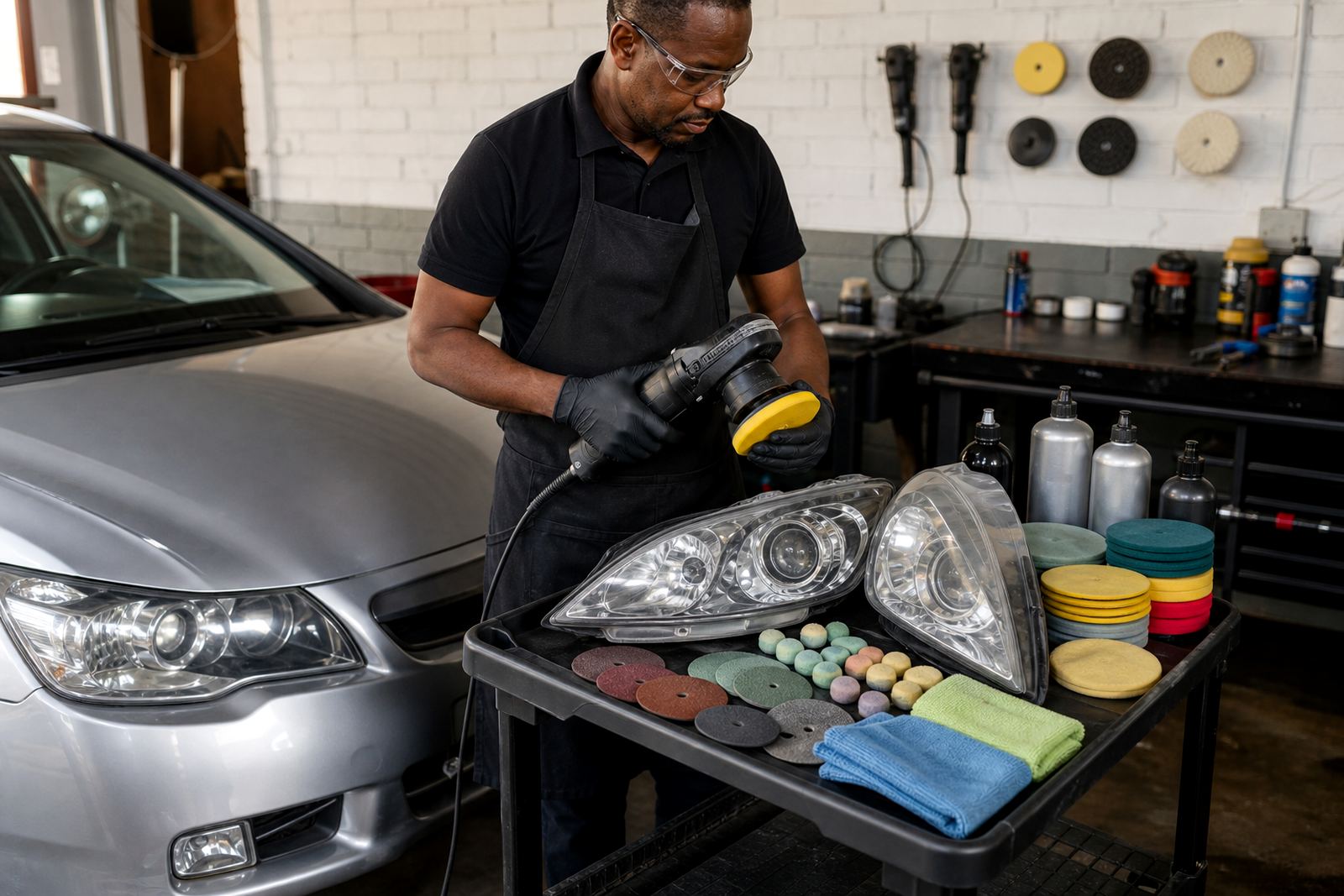

Why pad cleaning changes the finish
When a pad loads up with residue, it stops behaving the way it should. The face becomes clogged with spent compound, fine dust, oxidised paint, metal residue or polishing oils, and that changes how the pad moves across the panel. Instead of cutting cleanly, it can drag, grab or smear. On softer paint that often means fresh haze or marring. On metal it can leave a dull patch where the residue has been dragged back over the surface.
The difference is easy to see in real work. A workshop in Germiston doing bumper correction on a family hatchback may notice the pad starts leaving light trails after only a few sections if the pad is not cleaned often enough. The same happens on aluminium trims, stainless panels or motorcycle parts. The cleaner the pad face, the more consistent the finish and the easier it is to judge whether you need more cut or a lighter polish.
Pad cleaning also helps with heat. A clogged pad holds heat in the face and transfers more of it to the workpiece. That matters on clear coat, thin metal and anything near edges or body lines. If the pad is getting warm too quickly, it is usually telling you that it needs cleaning or a change of pad before you push further.
Match the cleaning method to the pad type
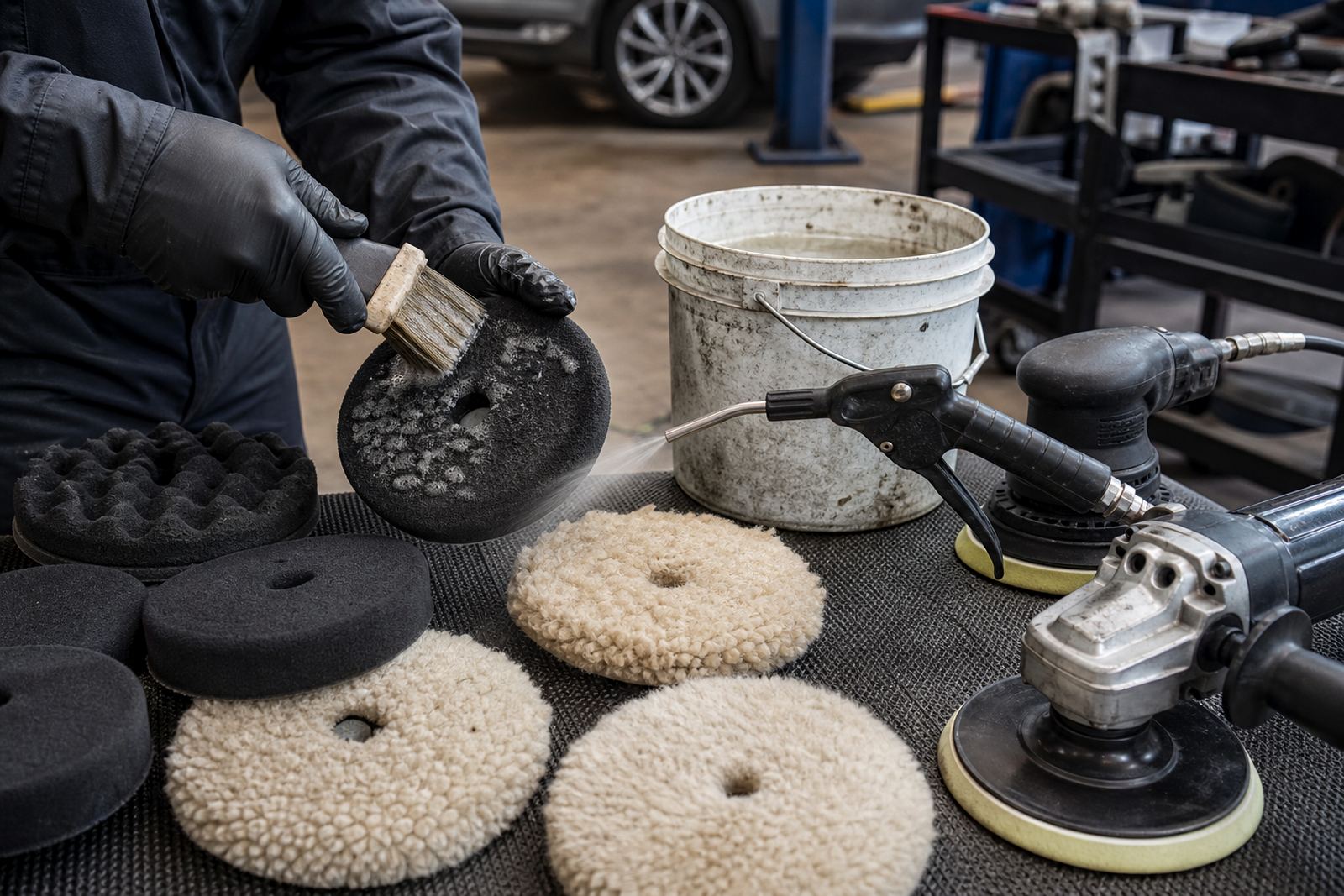
Different pads need different care. Foam pads can be cleaned while the machine is running, but they should be handled gently so you do not tear the face. Microfibre pads need a bit more attention because their fibres trap residue deep down. Wool pads for metal work can hold a lot of compound and oxidation, so they often need brushing out more often. The point is not to scrub hard, it is to keep the working face open and free moving.
- Foam pads: Use a pad cleaning brush or a clean towel to remove build-up between passes.
- Microfibre pads: Brush the fibres lightly and tap out residue often.
- Wool pads: Fluff the fibres and remove packed compound before the pad hardens.
- Hand applicators: Wash and dry fully before the next session so residue does not transfer back to the panel.
Rotary polishers tend to pack residue into the pad faster because they generate more direct friction. Dual-action machines can load pads as well, especially on softer paints, but they are often a bit more forgiving. Either way, the pad should never be left to cake over. If the face is full of dried compound, you are not polishing properly anymore, you are just moving grit around.
Clean often enough to stop marring
One of the simplest habits is to clean the pad every few sections, not only when it looks dirty. By the time the pad looks filthy, the residue has already started affecting the finish. For paint correction, a quick clean after each panel or after a couple of slow passes usually keeps the cut steady. For metal finishing, especially on stainless or mild steel with heavy oxidation, you may need to clean even more often because the pad can load fast.
A good rule is to inspect the pad face at every change in sound, feel or finish. If the machine starts to bog down, the pad begins to chatter or the residue is leaving a grey smear, stop and clean it. This is especially important on black vehicle panels, where even fine dust can show up as light marring under direct sun. In places like Cape Town, where coastal humidity can make compounds behave differently from a dry inland workshop, a pad can also stay tacky longer and pick up more debris.
- Use a pad brush on the fly if the pad is only lightly loaded.
- Blow out loose residue only in a controlled area, and keep dust off fresh paint.
- Wipe the pad face with a clean microfibre only if the pad maker and material allow it.
- Swap to a fresh pad when cleaning no longer restores performance.
Technique matters as much as the pad
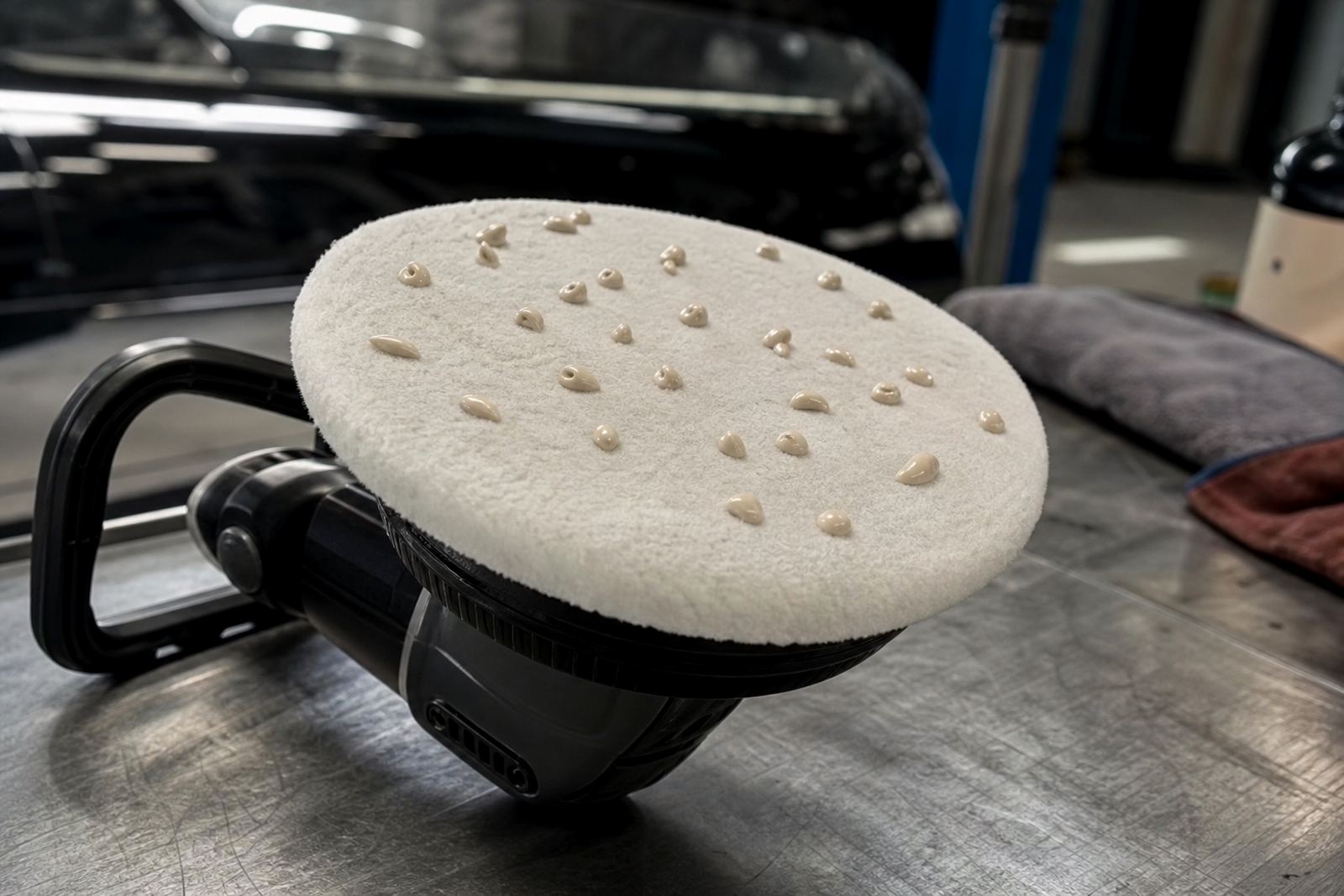
Pad cleaning works best when the polishing technique is controlled. Too much product, too much pressure or too many passes in one spot will load any pad faster. Start with the least aggressive pad and compound that can do the job, then step up only if needed. That reduces residue build-up and makes cleaning easier throughout the job.
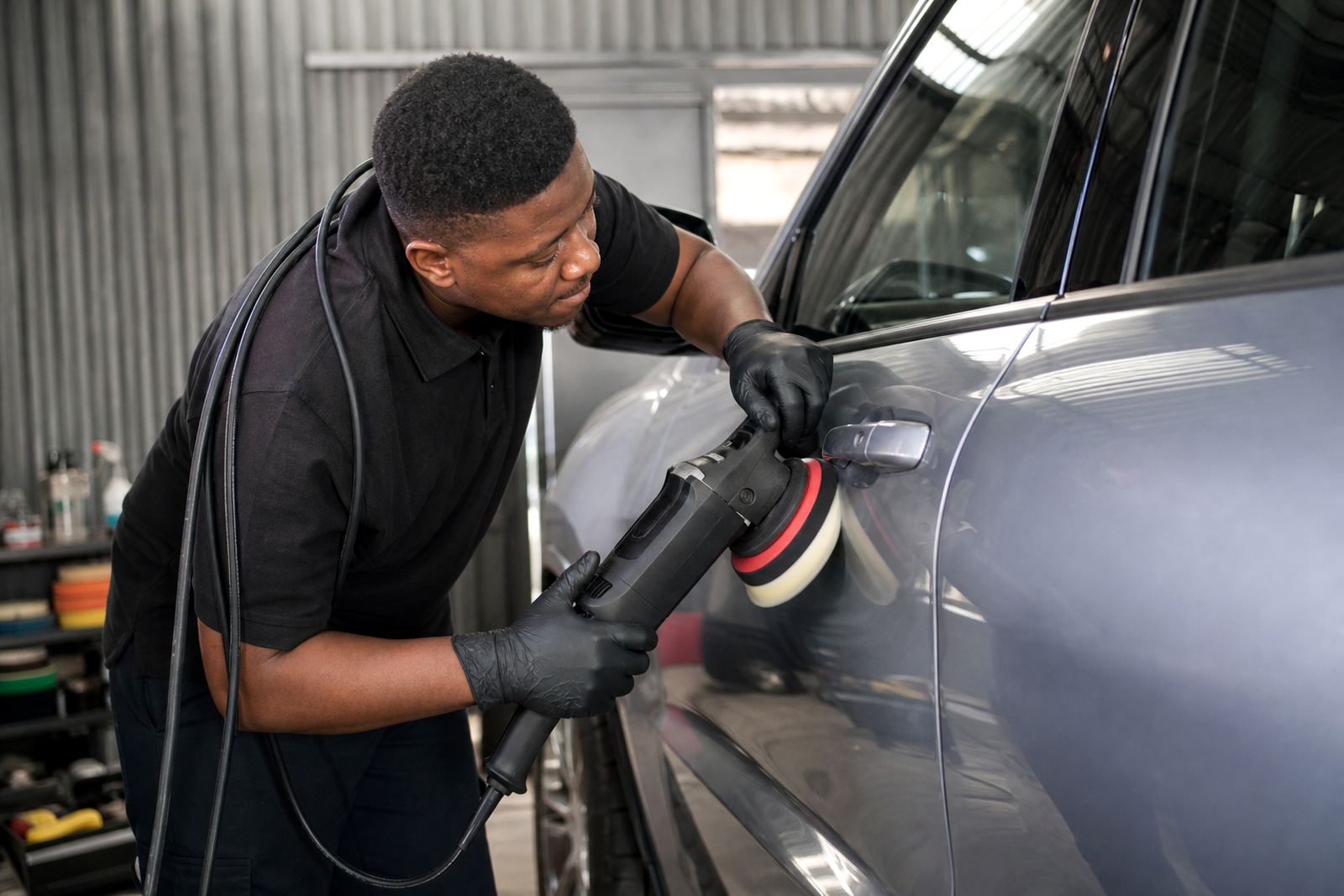
Keep the machine moving at a steady pace and do not tilt the pad on an edge unless the job really calls for it. Edges load pads unevenly and can cause uneven wear. On vehicle paint, use short, overlapping passes and stop before the pad becomes saturated. On metal, keep the surface prepped and free from loose dust before you start, because particles on the panel end up in the pad face.
For anyone learning rotary or dual-action work, this is one of the first habits worth building. A clean pad helps you feel the difference between a compound doing real work and residue simply skating over the surface. It also makes training sessions more productive because you can actually see what each step is doing.
Wash, dry and store pads properly
Cleaning during the job is only half the story. Pads also need a proper wash after use, otherwise dried compound hardens in the face and the pad starts from a bad state next time. Wash them soon after use if possible, especially after heavy correction work. If you leave them in a kit bag for a week in Johannesburg heat, or in a damp garage in Durban, residue can set hard and the foam can stay moist longer than you expect.
Use a gentle cleaner that suits the pad material and rinse until the water runs clear. Do not twist foam pads too hard. Press them out instead. Lay them flat or stand them so air can move through them, and keep them away from direct sunlight that can make some pads brittle. Once dry, store them where dust cannot settle into the fibres before the next job.
- Separate used pads from clean ones so residue does not transfer.
- Allow pads to dry fully before placing them back in a kit.
- Keep compound lids shut and caps clean to prevent contamination.
- Mark pads used for heavy cut, medium polish and finishing so they are not mixed up.
What cleaner habits mean on real jobs
Cleaner pads save time because you spend less effort chasing problems caused by residue. They also give a more predictable result, which matters when a customer wants a consistent gloss on a bonnet, a gate panel, a metal tank or a classic car trim piece. In a local workshop in Germiston, a technician may be working on a company bakkie in the morning and polishing stainless handrails after lunch. Different jobs, same principle: keep the pad open, fresh and matched to the task.
Good pad care also supports safety. Worn residue can create extra dust, and dry compound particles are not something you want floating around while you are leaning over a panel. Wear eye protection, a suitable mask where dust is present, and gloves if the product or surface calls for it. If you are teaching a team, build pad cleaning into the routine so it becomes part of the standard method, not a reminder you have to repeat every time.
At Polisher, we often remind customers that a polished finish is not only about the machine or the compound. It is about keeping the whole system in order. A clean pad is a simple habit, but it is one of the fastest ways to improve cut consistency and reduce marring from spent residue.