
What Pad Density Means On The Tool
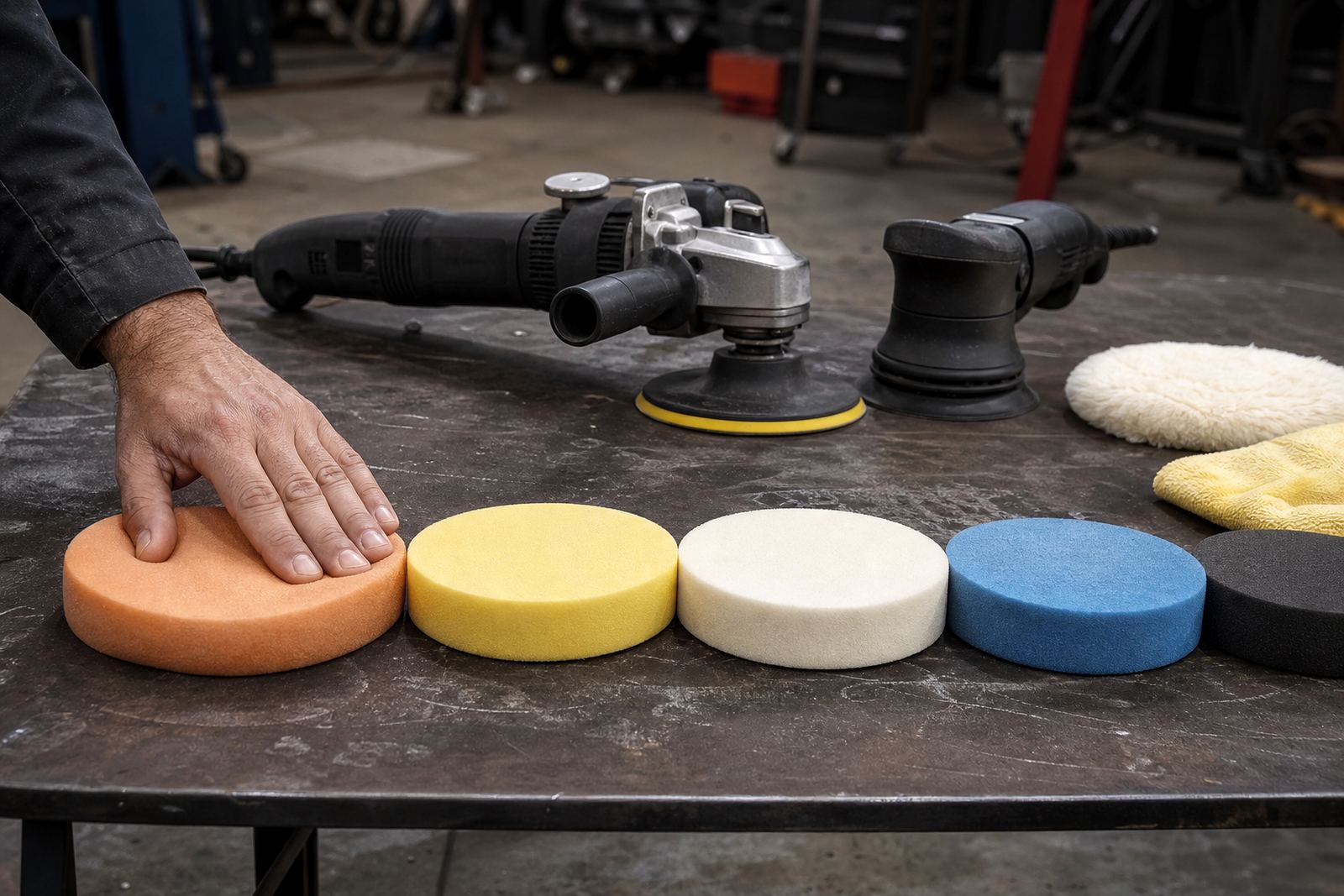
Pad density is the firmness of the foam, wool or fibre face that sits between the machine and the surface. A firmer pad keeps more shape under pressure, so it tends to cut faster and hold its line better on flat panels, while a softer pad compresses more and follows curves with less bite.
In practical terms, density changes how the pad transfers pressure, heat and abrasive action. On a rotary machine a dense pad will feel more direct and can remove oxidation, sanding haze or heavier swirl marks quicker. On a dual action machine, pad density still matters, but the random orbit helps spread the load and reduce the risk of digging in, which is useful for beginners and for work on modern clear coat.
Firmer Pads When You Need More Cut
A firmer pad is usually the first choice when the job needs stronger correction. Think of weathered metal railings, stained stainless trim, or paint that has been neglected through summer heat and dust. The pad holds its shape, keeps the compound working, and gives you a cleaner bite on harder finishes.
That extra bite comes with a trade off. Firmer pads can build heat more quickly, especially on sharp edges, curved guards and small panels. If you stay too long in one spot you can mark the surface or dry out the compound before it finishes breaking down.
- Best for heavier oxidation and deeper haze
- Useful for initial cut on hard paint systems
- Good for flat sections where pressure stays even
- Needs careful movement and regular pad cleaning
Softer Pads For Refining And Lifting Gloss
Once the heavy work is done, a softer pad helps refine the finish and improve gloss. It compresses more, which makes it kinder on thinner paint edges and more forgiving on curved body lines. On metal, a softer pad can help bring up a cleaner shine after the main cut stage, especially when you are chasing a neat final reflection rather than removing serious damage.
Soft pads are also useful for finishing stages with a finer compound or polish. They do not remove material as quickly, but they help reduce micro-marring and improve the look before final wipe down. In hot weather around Gauteng, that slower action can be an advantage because it gives you more time to work without flashing off too fast.
- Better for final finishing and gloss work
- Lower heat build-up than firmer pads
- Safer on edges, curves and thin panels
- Pairs well with finer compounds and light pressure
Matching Pad Density To Compound And Surface
Pad density should never be chosen on its own. It needs to match the compound, the machine and the surface you are working on. A heavy compound on a soft pad may not cut enough, while a fine finishing polish on a very firm pad can leave the panel looking clean but slightly duller than it should.
A simple way to think about it is this: the pad gives the pressure and the compound gives the abrasive action. On hard clear coat you may need a firmer pad and a medium cut compound at first, then a softer pad with a finishing polish. On metal, especially polished aluminium or stainless, the sequence may change depending on how oxidised the part is and whether the surface has sanding marks to remove.
- Hard surface plus heavy defect usually needs more cut
- Soft surface or thin clear coat needs a lighter touch
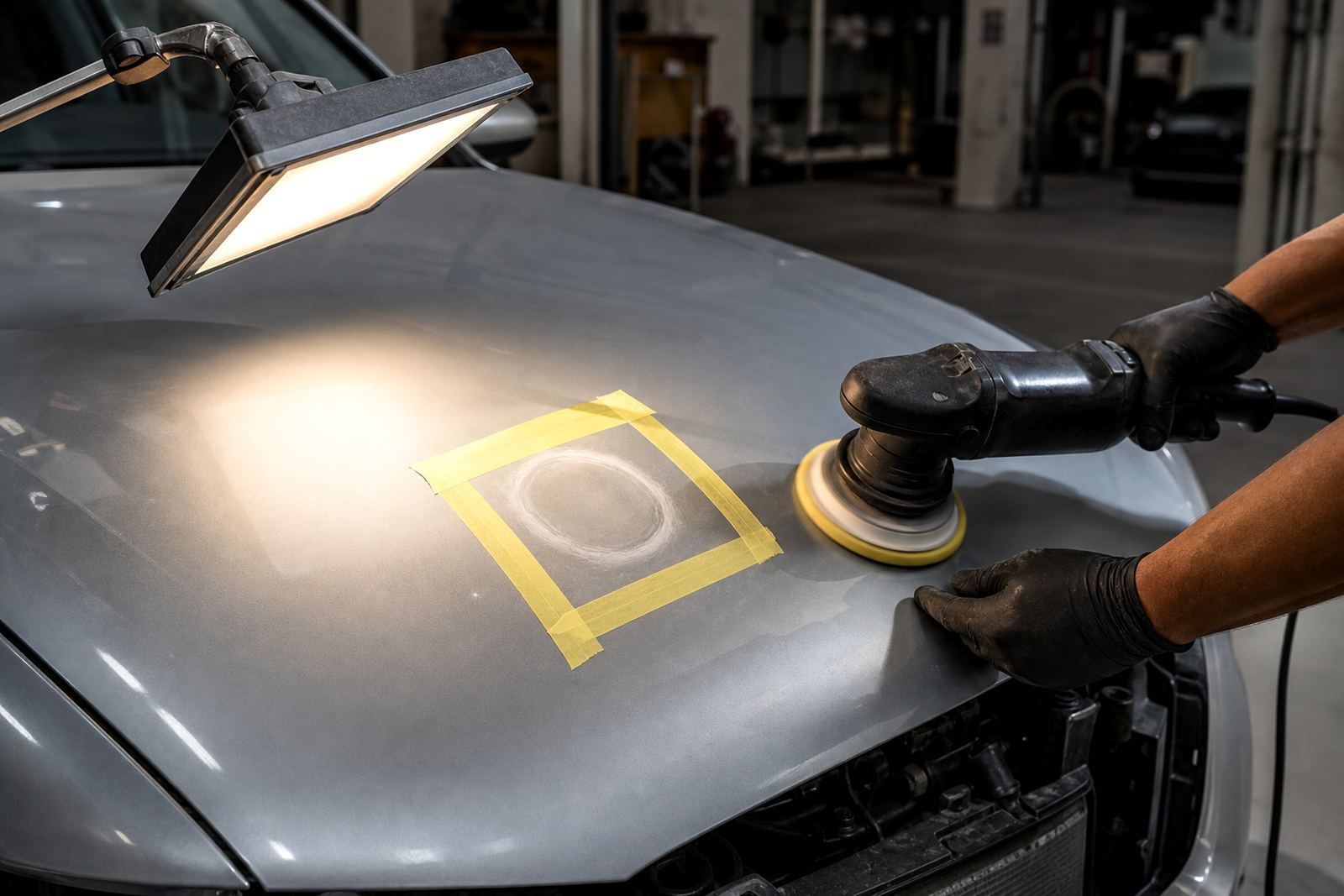
- Always test a small area before committing to the whole panel
- Clean pads often so spent compound does not reduce cut
Heat Control Matters On South African Jobs
Heat is one of the biggest reasons pad choice matters. In places like Johannesburg and Pretoria, a black bonnet in full sun can get hot quickly and compound will behave differently by mid morning. Near the coast in Durban or Cape Town, humidity can change how long the product stays open, while dust in the air can load a pad faster than expected.
When heat rises, a firmer pad can become too aggressive if you stay on it too long. That is where slower passes, lighter pressure and regular breaks to check the panel make a real difference. If you are polishing near body lines, badges or repaired areas, keep the machine moving and avoid leaning on one spot. On a rotary machine this is especially important because the direct action can raise temperature fast if the operator is not careful.
A Germiston Example From Machine To Finish
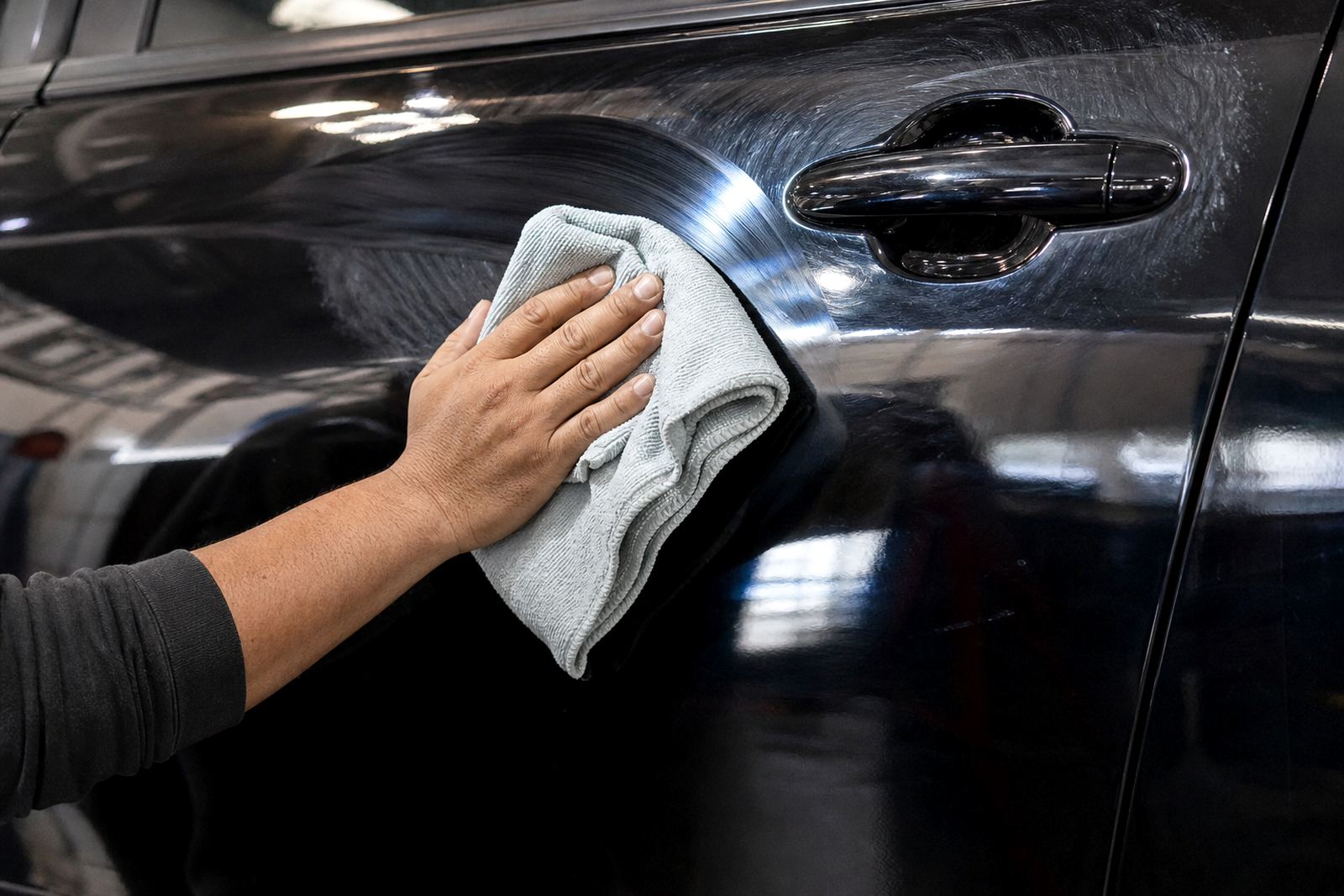
A local workshop in Germiston might start with a dual action machine, a medium firm pad and a medium cut compound on a faded door panel. That first stage removes the heavier haze without making the job too aggressive. After that, the operator can switch to a softer pad and a finer finishing polish to improve clarity before the final inspection under bright shop lights.
If the same job were a metal tank or guard, the sequence would still depend on condition. A firmer pad may be needed to bring back the surface, then a softer pad for the final sheen. The main point is to let the pad do the level of work it was made for, instead of forcing one pad to handle every stage. That saves time, lowers risk and gives a more consistent result.
- Start with the least aggressive pad that can still do the job
- Step up only when the surface needs more correction
- Finish with a pad that refines rather than cuts hard
- Inspect under strong light before moving to the next stage
Safer Technique And Better Pad Care
Polishing should always be done with proper PPE, especially eye protection, a dust mask where needed and gloves when working with compounds or contaminated panels. Keep loose clothing clear of the machine, and make sure the work area is free of grit that can be dragged across the surface.
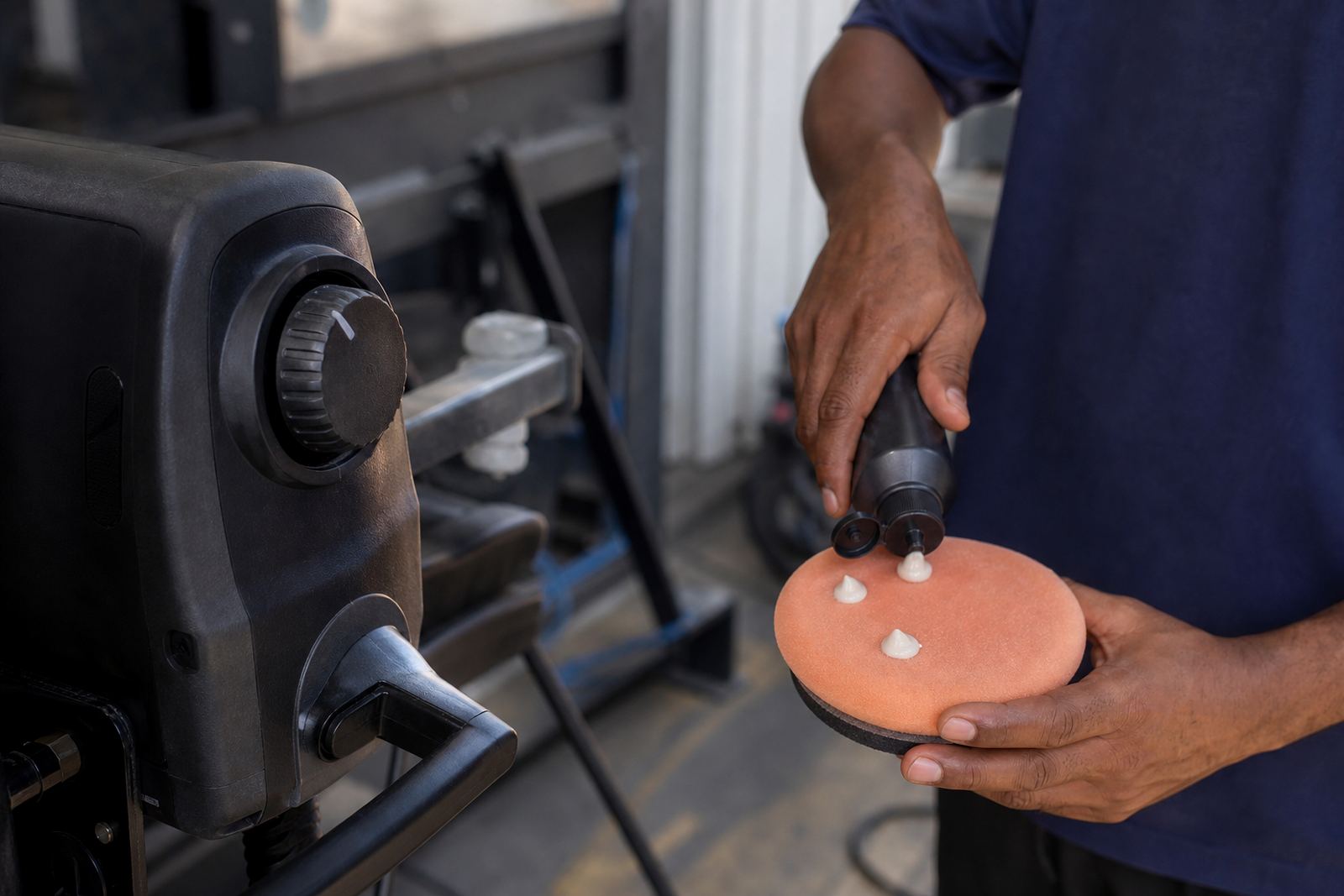
Pad care also affects density and performance. A clogged pad feels harder than it really is, so it may cut unevenly and leave a rough finish. Brush or clean the pad often, use the right amount of product and store pads dry so they keep their shape. Good technique, good cleaning and the right density will always beat overworking one pad until it stops behaving properly.