
Why aluminium needs a different approach
Aluminium is softer than steel and it marks easily, so the first step is understanding what you are working on. A wheel rim, a motorcycle part, a trailer trim strip or a machine cover may all look similar at a glance, but each one can carry different levels of oxidation, scratches, brake dust, road film or old coating. That is why aluminium polishing is never just a quick wipe and a buff.
In workshop terms, the aim is to remove contamination first, then level the surface, then refine the finish. If you skip the early stages, the pad can push dirt back into the metal and leave swirl marks or dull patches. On coastal jobs in places like Durban, salt and humidity can speed up oxidation, so preparation matters even more. In Gauteng, fine dust from roads and yards can do the same job in a different way, leaving a gritty film that must be washed off properly.
For many people, the challenge is not the polishing itself, but knowing when the surface is ready for the next stage. A clean panel gives you a better reading of scratches and pitting, and that saves time later. It also reduces the risk of overheating a small section while chasing a mark that should have been sorted during cleaning.
Stage one: wash, decontaminate and inspect
Before any compound comes out, wash the part with a mild cleaner and plenty of clean water. Remove tar, grease, old wax and any road grime. For heavily used parts, a non-acidic degreaser is safer than going in with a harsh chemical. Once the part is clean, dry it fully and inspect it under good light. Look for deep scratches, pitting, oxidised patches and any clear coat that may still be on the surface.
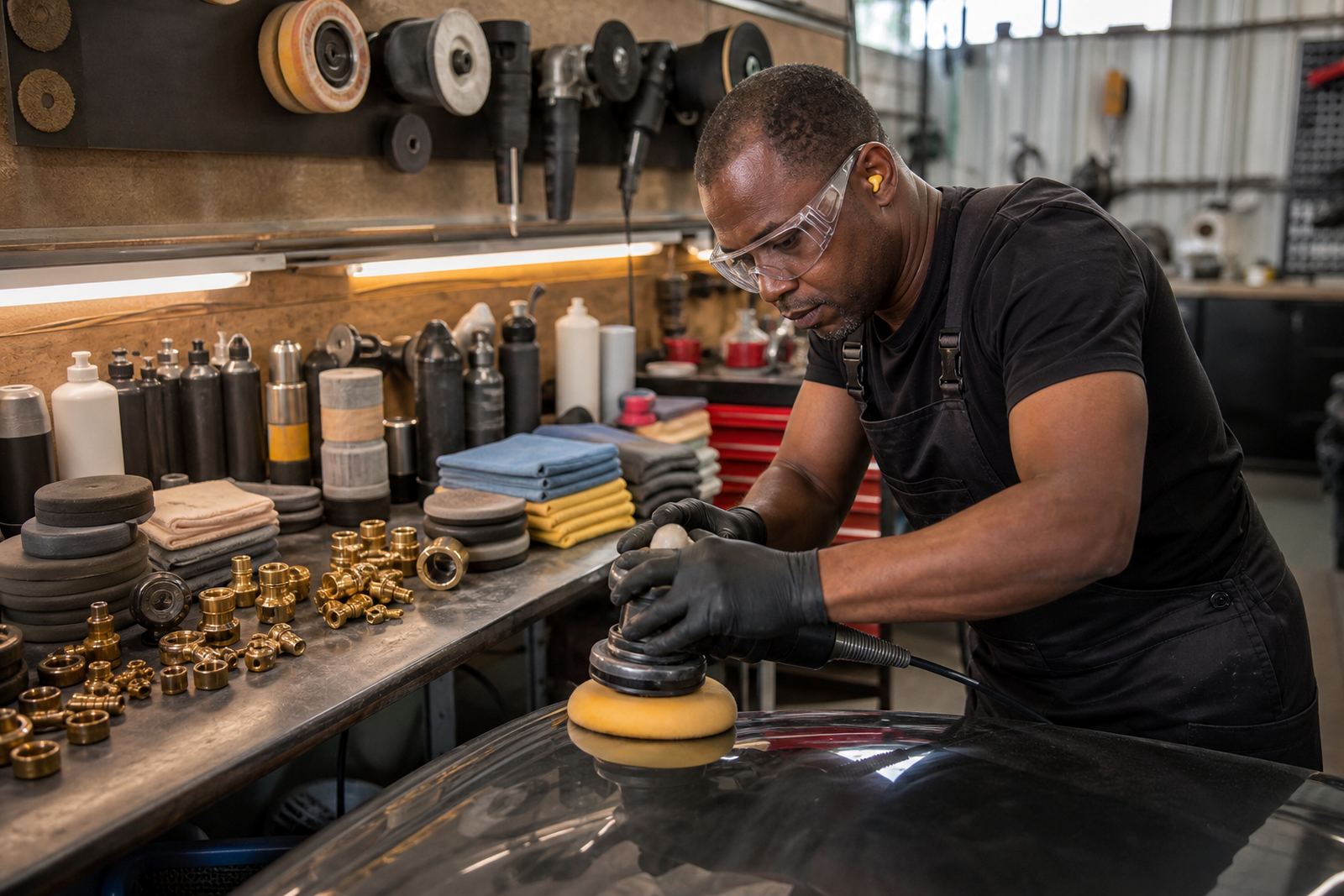
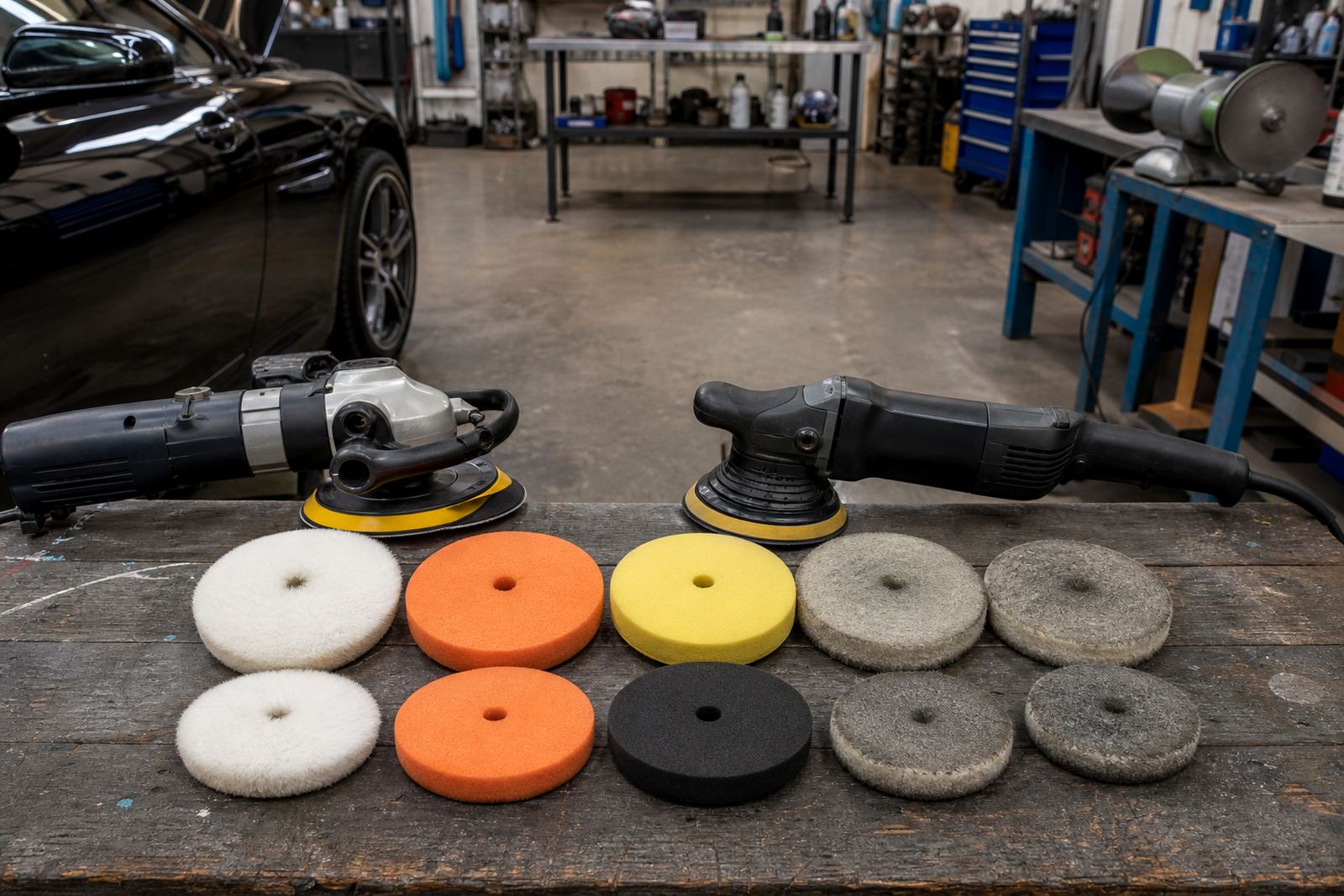
Inspection tells you whether you need a light restoration or a more serious cut. It also helps you decide which tool will suit the job. A rotary machine gives direct cutting action and is useful on stubborn marks, but it can create heat quickly if the operator stays in one place. A dual-action machine is more forgiving and works well for refining, lighter correction and beginners learning hand pressure and movement.
- Use clean microfibre cloths for drying, not shop rags that hold grit.
- Check edges, corners and spoke areas because they burn up fast.
- Mask rubber, plastic and adjacent painted areas where needed.
- Never start polishing over sand, mud or brake dust.
Choosing the right cut for the surface
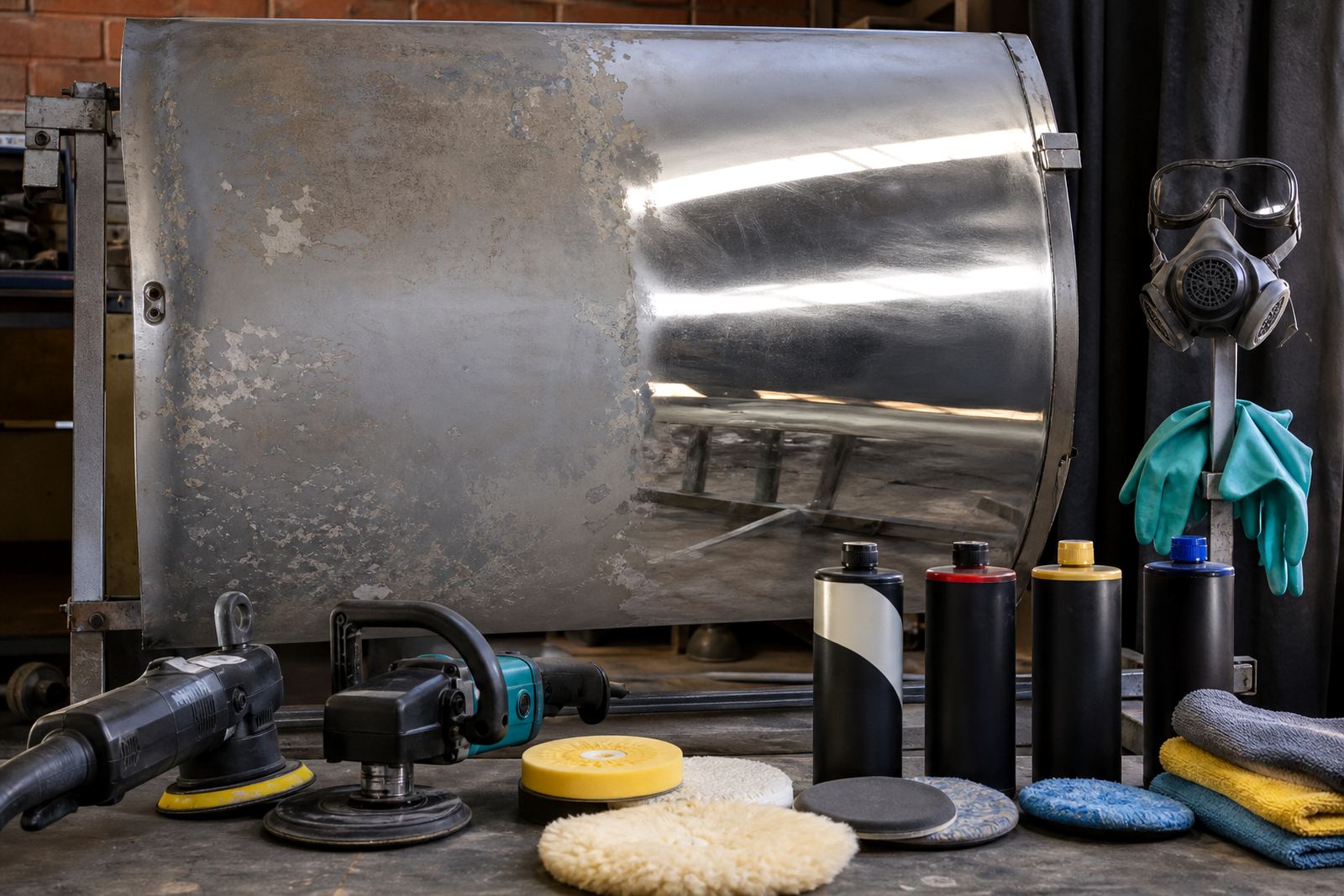
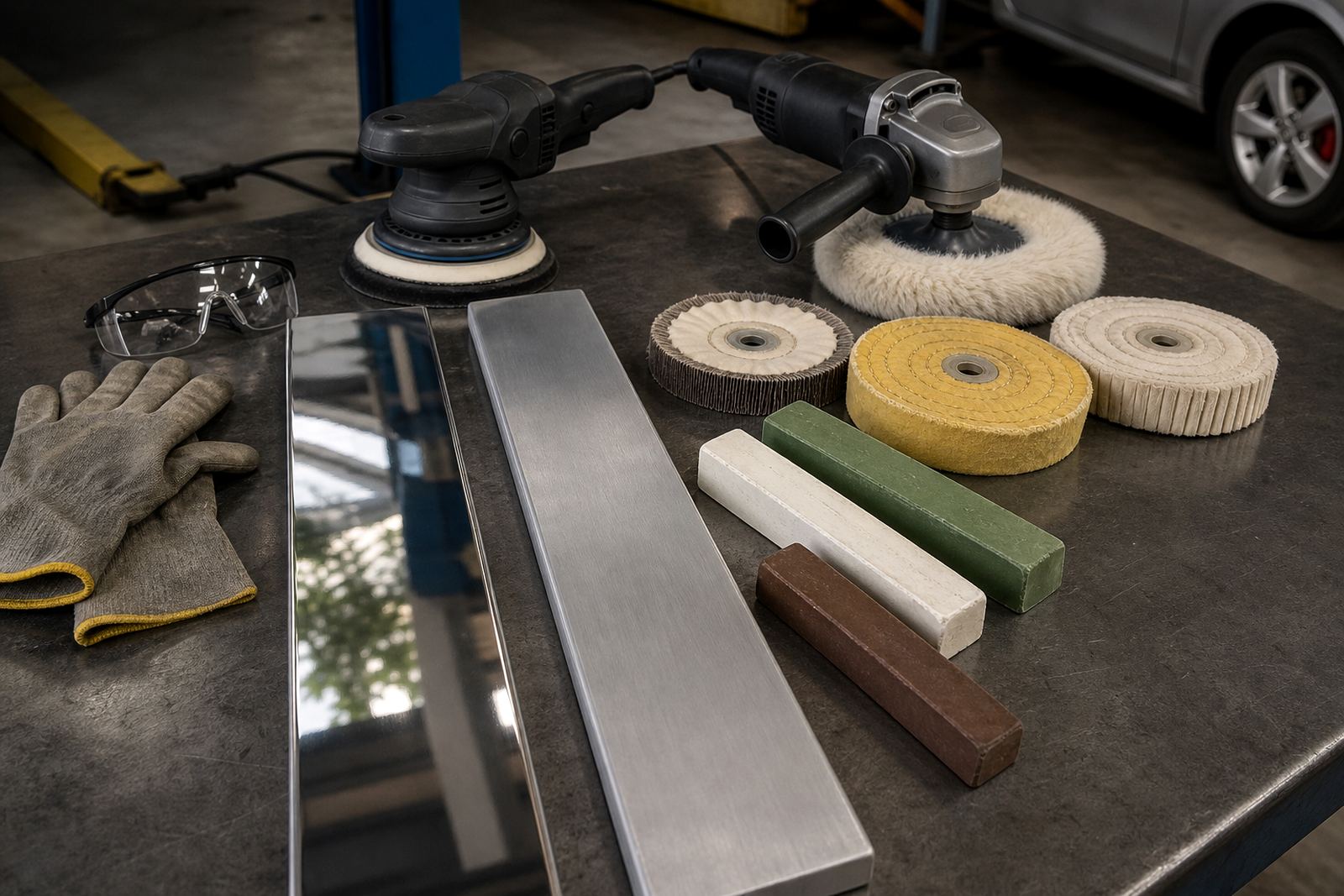
The next stage is matching the pad and compound to the condition of the aluminium. A coarse compound with a firmer buff will remove heavier oxidation and marks, but it can leave haze that needs a second pass. A finer compound and softer buff are better for bringing up clarity after the heavy work is done. This is where pad and compound matching makes a real difference, especially when you are working on mixed surfaces or parts that have been repaired before.
Hand polishing still has a place for tight corners, trim strips and small decorative parts. It gives more control on delicate areas and reduces the chance of overworking one spot. For larger jobs, a machine is usually faster and more even, but only if the operator keeps the tool moving and checks the panel often. Aluminium is fussy work, and it shows quickly if you skip a step.
Good technique is about pressure, speed and overlap. Keep the pad flat where possible, use moderate pressure, and work in small sections. If the product starts to dry out or dust heavily, stop and reapply rather than forcing it. Dusty residue can scratch the finish, so wiping between passes matters as much as the machine settings.
Refining the shine without overworking the metal
Once the heavier marks are reduced, move to a finer compound and a cleaner pad. This stage is where the surface starts to show depth and reflect light properly. On some parts, one refining pass is enough. On older aluminium with years of weathering, you may need a second pass to bring the finish up evenly.
Heat control is critical. Too much heat can soften residue, stain the metal or leave a patchy finish that is hard to correct. If the part feels too hot to touch, give it a break. Work around the piece instead of staying in one area, and keep the pad clean by removing spent compound regularly. In a busy Germiston workshop, this is the difference between a clean result and a part that needs to be redone.
- Use shorter passes on curved sections and edges.
- Stop often to inspect the reflection and look for remaining haze.
- Change pads when they clog with oxidised material.
- Keep compounds sealed and free from grit between jobs.
Why cleanliness protects the finish
Surface cleanliness is not just about appearance, it affects how long the finish holds. Leftover grease, sanding dust or polishing residue can attract grime again, and in coastal or industrial areas the part may dull sooner than expected. Clean metal also lets protective products bond more evenly, whether you are leaving the aluminium bare or applying a suitable sealant afterwards.
For workshop owners, cleanliness also protects machines and pads. Contaminated pads wear out faster and can scatter residue onto nearby parts. A tidy bench, clean cloth stack and separate containers for used and unused consumables make the job more consistent.
If the part will be used on a vehicle, remember that road film, brake dust and wash chemicals will build up again. Regular maintenance washing and light touch-ups are far easier than waiting for heavy oxidation to develop.
Training, safety and the practical side of the job
Aluminium polishing is one of those skills that improves quickly with the right guidance. A beginner benefits from learning how to hold a machine, how to read the surface and how to choose a compound without overcomplicating the process. A more experienced operator may need help with rotary control, dual-action technique or matching products to a specific metal finish. That is where proper training and starter kits help, because they take the guesswork out of the first few jobs.
Safety matters every time. Wear eye protection, gloves where appropriate and a mask when dust or dried compound is in the air. If a part has old coating, sanding residue or flaky oxidation, treat it as a dust risk and clean it properly before you start. Keep loose clothing, cables and hands clear of moving parts, and do not work near an unstable setup on a bench or trolley.
We work from Germiston, Gauteng and supply across South Africa, including Johannesburg, Pretoria, Cape Town, Durban and Bloemfontein. Customers often use the enquiry form on our contact page to ask about beginner polishing training, rotary skills sessions, DA skills sessions, metal buffing training, paint correction coaching, pad and compound matching, starter kit consultation, workshop setup advice, consumables restocking, machine care guidance, onsite team demos and safety and PPE briefings. For many small shops and hobbyists, that support makes the difference between trial and error and a finish they can stand behind.