
Set the batch before the first machine starts
A proper fleet job begins with planning the order of work. Do not mix heavy correction, light machine polishing and final glaze work on the same vehicle line unless the sequence is set out first. The team should know which panels are being corrected, which vehicles only need a maintenance polish, and which surfaces need a softer touch because of repaints, decals, plastic trims or thin clear coat.
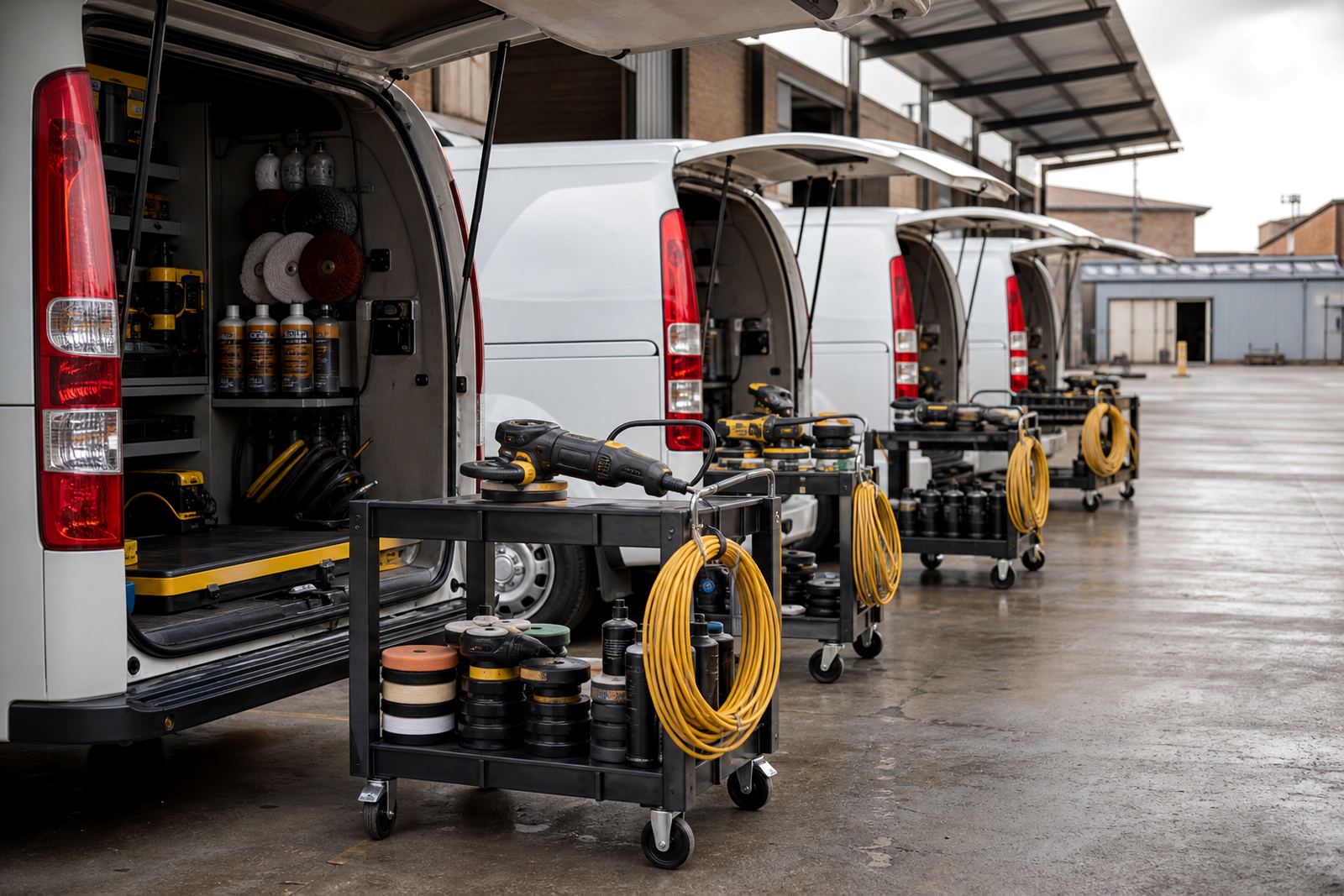
In Germiston and other busy Gauteng yards, space is often tight and dust can blow across vehicles quickly. Park the batch in a clean line, allow enough room for cables and air hoses, and keep one vehicle at the wash stage while another is at machine polishing. That reduces cross contamination and stops compound dust moving from one bonnet to the next.
- Inspect all panels in daylight before any correction starts
- Group vehicles by paint condition, not by model
- Mark damaged trims, chipped edges and resprayed panels
- Assign one person to wash, one to machine work, and one to final wipe-down where possible
Wash, decontaminate, then dry without rushing
Good polishing starts long before the pad touches paint. A fleet workflow should include a proper wash, tar and fallout removal where needed, followed by a careful dry. If grime is left on the surface, the pad will drag it around and cause unnecessary marring. On commercial bakkies and panel vans, lower panels often hold the worst contamination, so pay attention to door bottoms, load area edges and around fuel fillers.
For vehicles that have seen road salt, coastal spray or heavy motorway use, decontamination matters even more. Durban and Cape Town jobs often need extra attention on lower panels and badges. Dry the vehicle fully, blow out mirror housings and grilles if you have compressed air, then mask sensitive trims and sharp body lines. That few extra minutes saves rework later.
- Use separate wash media for lower and upper panels
- Remove loose grit from badges, seams and handles
- Dry mirrors, grilles and fuel recesses thoroughly
- Mask edges, emblems and textured plastic before machine polishing
Choose the right machine for the job at hand
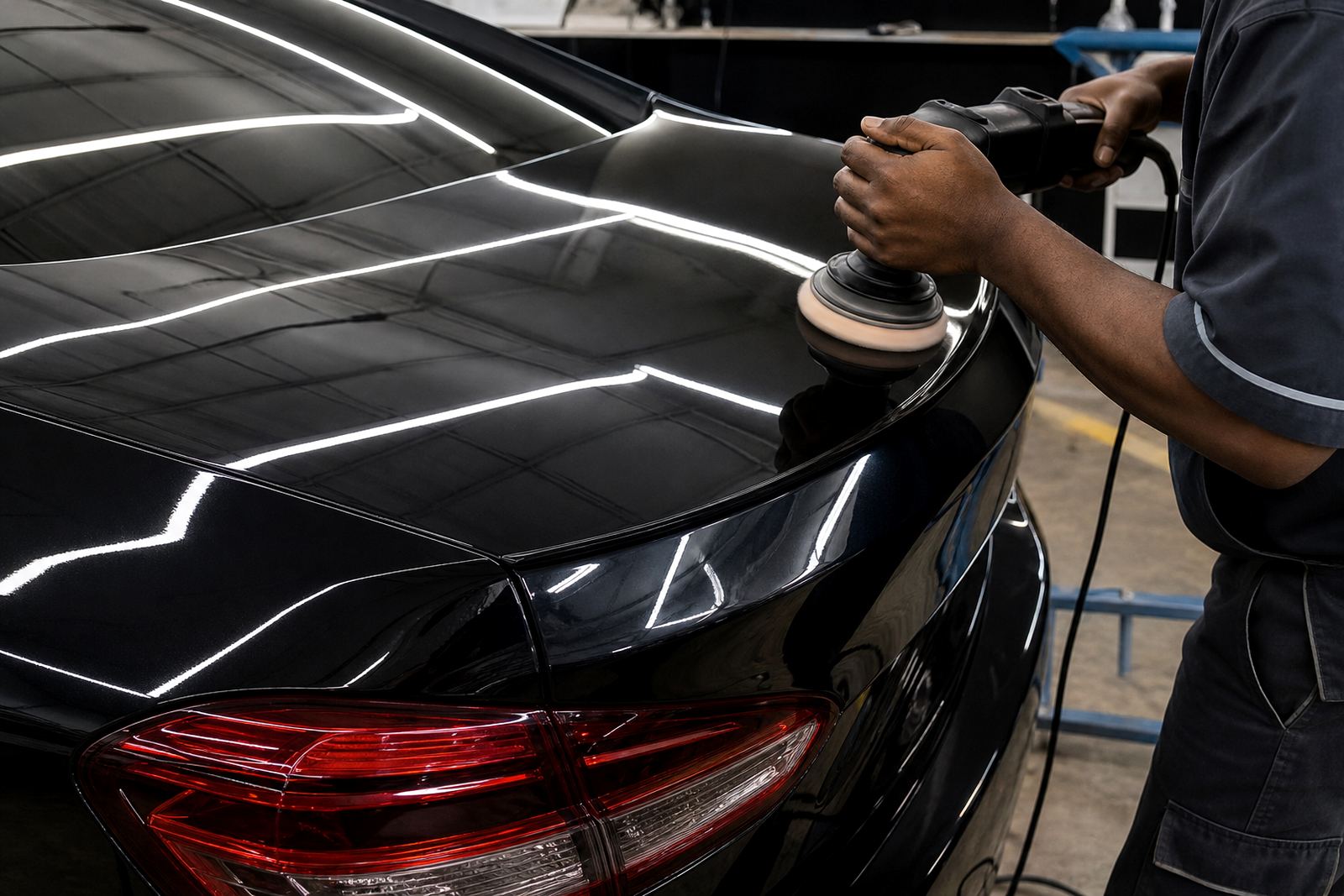
Rotary polishers and dual-action polishers both have a place in fleet work. A rotary machine removes defects quickly and is useful on harder paint or heavier oxidation, but it needs control and practice. A dual-action machine is usually the better choice for safer all-round correction, finishing work and repeatable results across multiple vehicles. In a batch process, the best workflow often uses both, with the rotary reserved for problem panels and the dual-action used for finishing and uniform gloss.
Pad and compound matching should be decided before the first section starts. A cutting pad with a medium or heavy compound may be needed for older paint or oxidised commercial bodies, while a lighter polishing pad and finishing compound may be enough for newer fleet cars. If the team changes pads halfway through the job, keep the used pads cleaned and labelled so the correction step stays consistent from vehicle to vehicle.
- Use rotary machines for targeted correction, not blanket coverage
- Use dual-action machines for safer finishing and consistency
- Keep pad sizes matched to the panel size and vehicle type
- Have one pad set for cutting and another for finishing
Build a repeatable panel sequence
A fleet polishing workflow works best when every operator follows the same panel order. Start with roof and upper panels, move to the bonnet and boot, then work down the sides in a fixed pattern. This reduces missed sections and helps the light reflect the same way across the batch. On sedans, hatchbacks, SUVs and light commercial vehicles, the panel order can stay the same even if the shape changes.
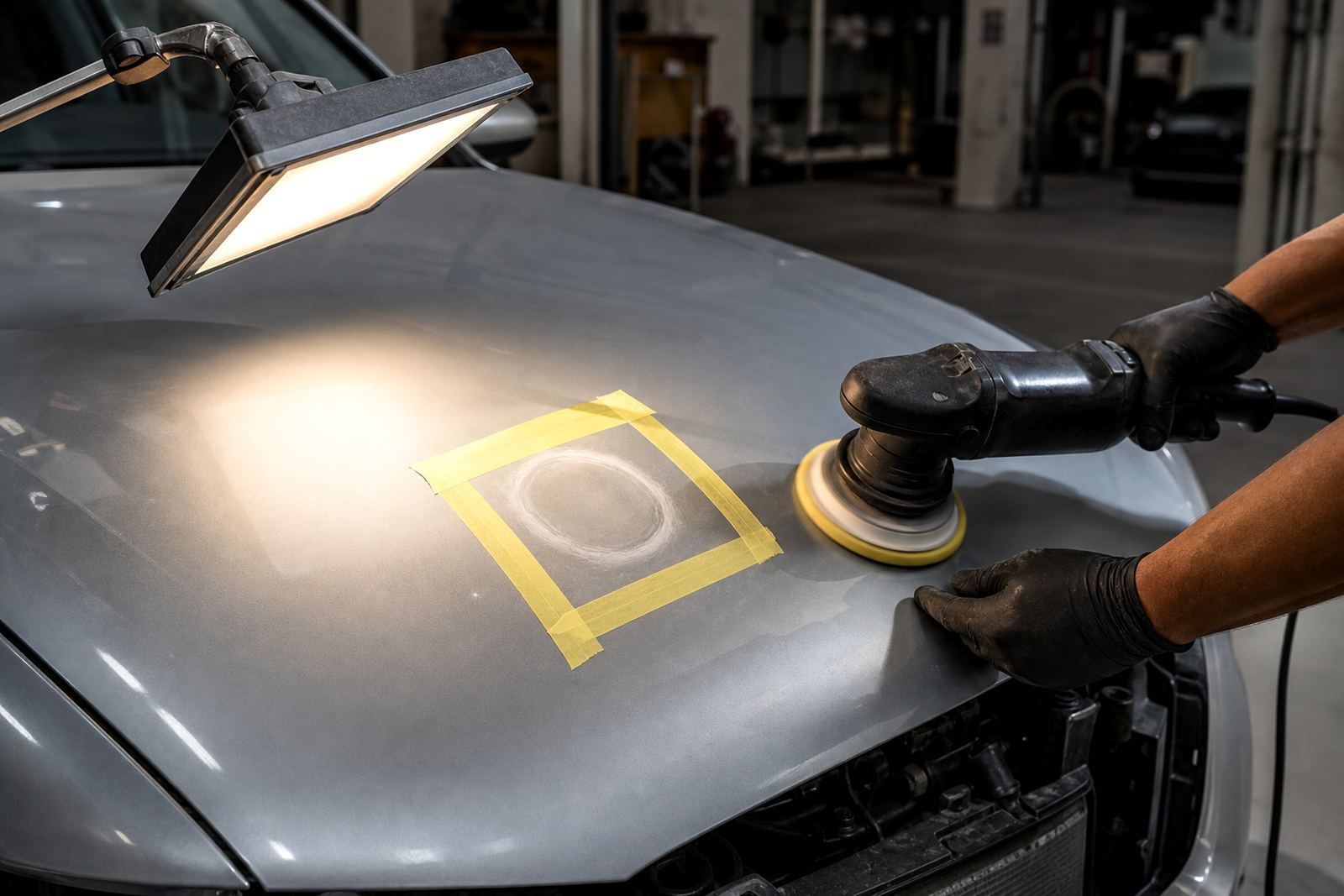
Use a small test spot on the first vehicle to confirm the combination of machine, pad and compound. Once that combination gives the finish you want, keep it for the rest of the batch unless the paint changes. Consistency is the goal, not speed at any cost. If the surface starts to haze, reduce pressure, slow your passes and step down to a finer pad or finishing compound.
- Follow the same order on every vehicle
- Set a test spot before committing to the whole fleet
- Use overlapping passes and keep the machine flat
- Check your finish under both shade and direct light
Protect the team while the work stays moving
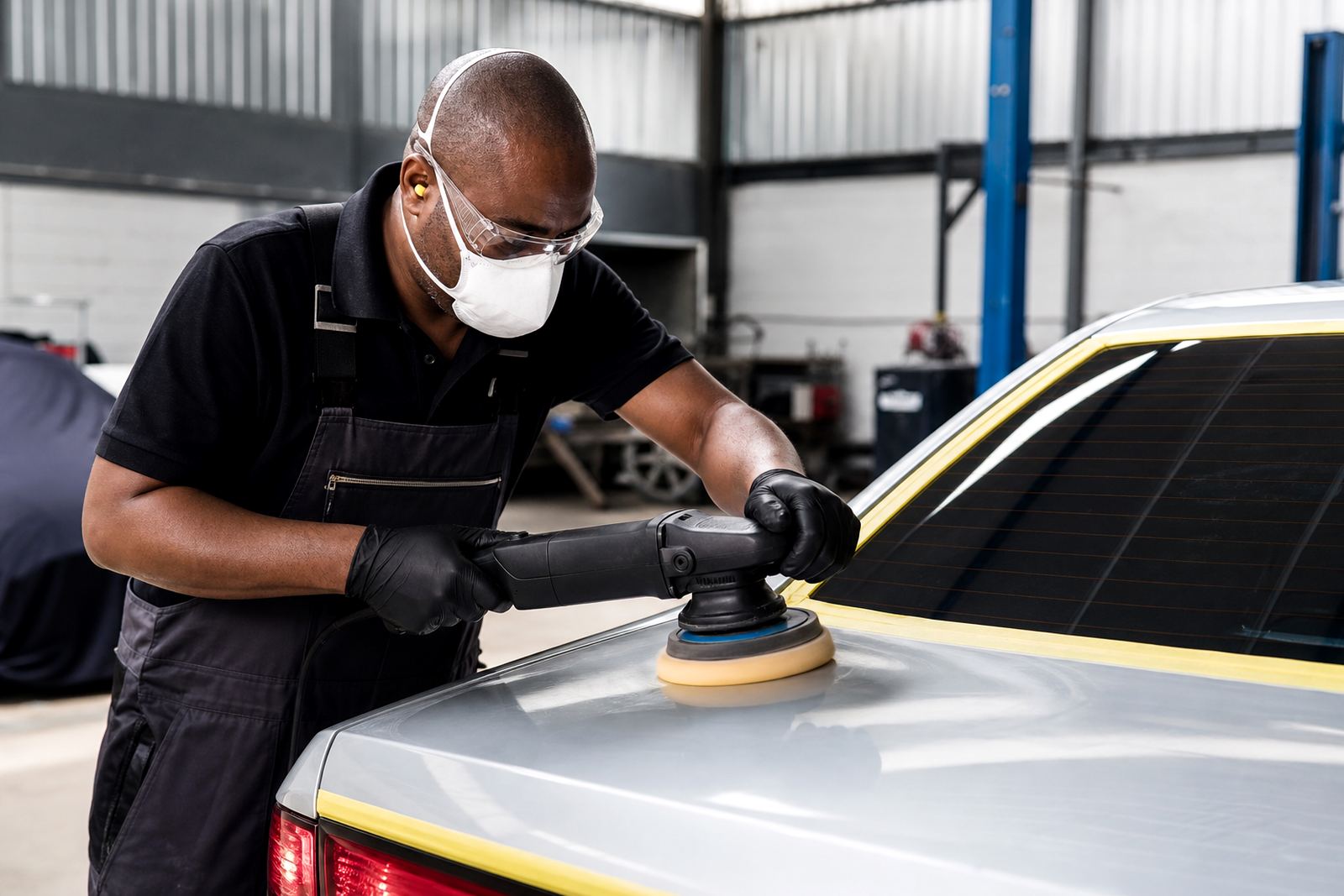
Polishing throws off fine residue, and that means PPE is part of the workflow, not an afterthought. Safety glasses, a suitable dust mask, gloves and closed footwear should be standard in any workshop. When compounds are used indoors, especially in winter with doors partly closed, keep airflow moving so the team is not breathing in fine particles all day.
Machine care also affects safety. Check power cords, backing plates and pad condition before each shift. A damaged pad can sling compound onto glass and trims, and a worn backing plate can create vibration that slows the whole batch. Keep cables away from wet floors and make sure extension leads are rated for the tools being used. That is practical workshop discipline, not paperwork for its own sake.
- Wear eye protection and a proper dust mask during compounding
- Inspect cords, pads and backing plates before each session
- Keep floors dry and cables routed safely
- Use extra lighting if municipal power cuts disrupt the bay
Finish, inspect and reset for the next vehicle
Once the correction is done, switch to a clean finishing pad or a softer dual-action setup for the last pass. Wipe each panel with a clean microfibre cloth, then inspect for holograms, missed spots or compound dust in edges and panel gaps. If the batch includes black, red or silver vehicles, the final check matters even more because each colour shows defects differently.
After every vehicle, clean the pads and separate any that are loaded with residue. Top up compounds in measured amounts so the next vehicle starts the same way. A good batch system should leave the team ready to move from one unit to the next without confusion. That is what keeps output steady for dealership prep, municipal fleets, logistics vehicles and privately owned cars coming through the same bay.
- Change to a finishing pad for the final gloss pass
- Wipe residue from trims, badges and rubber seals
- Inspect under strong light before release
- Reset pads and compounds before the next vehicle enters the bay
What a Germiston workshop learns from a mixed fleet day
A local example is a Germiston workshop handling a small batch of company vehicles before delivery day. One bakkie arrives with oxidation on the bonnet, two hatchbacks need only light paint correction, and a panel van has matte compound marks from a previous attempt. If the team starts with a single machine setting for all three, time gets wasted and the result will differ from vehicle to vehicle. A better approach is to separate the job into stages, use the right pad and compound for each surface, then keep the final finish standard across the whole batch.
That same logic applies across Johannesburg, Pretoria, Cape Town, Durban and Bloemfontein. Whether the work is in a workshop yard, a body shop or a fleet prep bay, the workflow should stay practical and repeatable. For support with machine choice, pad and compound matching, starter kits, or polishing training for metal and paint, customers can reach out through the enquiry form on our contact page.