
Know where burn through starts
Burn through does not happen by accident. It usually starts when an operator leans on the machine, runs it too fast, or keeps the pad on one edge for too long. On paint, the danger is greatest on corners, edges, body lines, fuel flaps and panel ridges where the coating is already thin. On metal, the heat can show up as discolouration, distortion or a dull patch that takes extra work to recover.
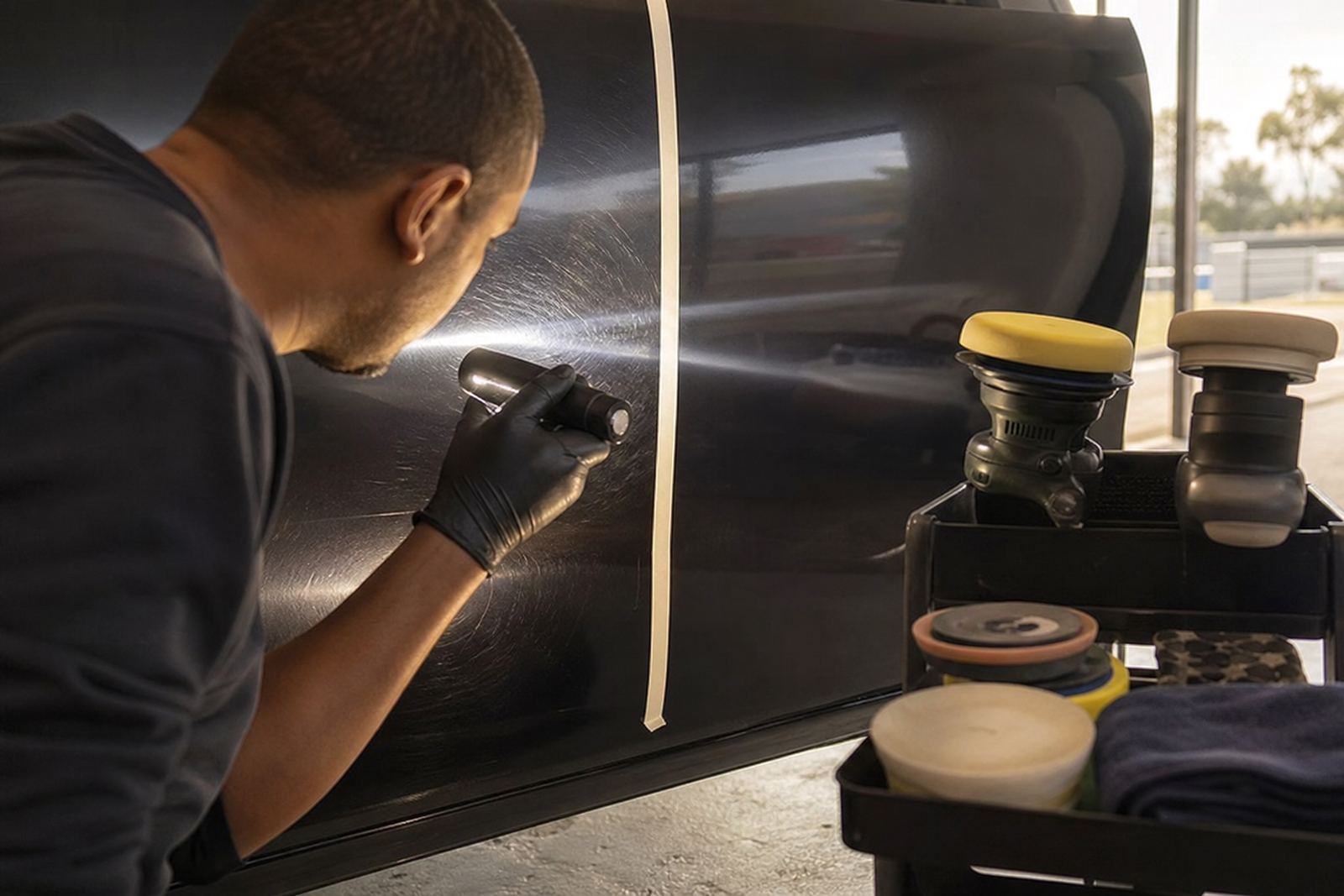
Before you switch on, look over the panel under strong light. Check for previous body repairs, repaints, sharp edges and any soft filler areas. If you are working in Germiston or anywhere in Gauteng during summer, the panel can warm up quickly in a closed workshop. On a hot day, it helps to start early and keep the surface as cool as practical. A cool panel gives you more control and a cleaner finish.
Choose the right machine for the job
Rotary polishers cut fast and are useful for deeper defects on metal or harder paint systems, but they also create heat quickly. Dual-action machines are slower to correct, but they spread heat more evenly and are often the safer choice for newer users and for final finishing. The key is not to rely on speed alone. Good results come from matching the machine to the surface and the amount of correction needed.
A common mistake is using a rotary where a DA would do the job more gently. Another is fitting a heavy cutting pad and coarse compound when a medium setup would be enough. The least aggressive method that gets the job done is usually the one that protects the surface best. If the finish only needs light haze removal or a final gloss step, there is no need to chase it with heavy correction.
- Use a rotary for controlled cutting on suitable surfaces, not for every job.
- Use a dual-action machine when you need a safer first pass or final finishing.
- Start with the mildest pad and compound that will work.
- Test a small area before committing to the full panel.
Keep your pad flat and your movement steady
Heat builds up when the pad tilts, stalls or sits still. Keep the face as flat as possible and move at a steady pace. Overlapping passes are better than one long lingering pass. If you are polishing a bonnet, roof or door skin, divide it into smaller sections so you can control the working time and watch how the surface responds.
When you reach an edge or crease, reduce pressure and slow the machine down rather than trying to force correction through the corner. That is where burn through often starts. If the machine begins to grab, chatter or leave a dusty trail very quickly, stop and check the surface. The pad may be dry, the compound may be breaking down, or you may simply be working too hot. A small adjustment now can save a panel later.
- Work in small sections, especially on curved panels.
- Keep the pad moving with overlapping passes.
- Ease off near body lines, corners and panel edges.
- Stop if the surface feels hot to the touch.
Match pad and compound to the surface
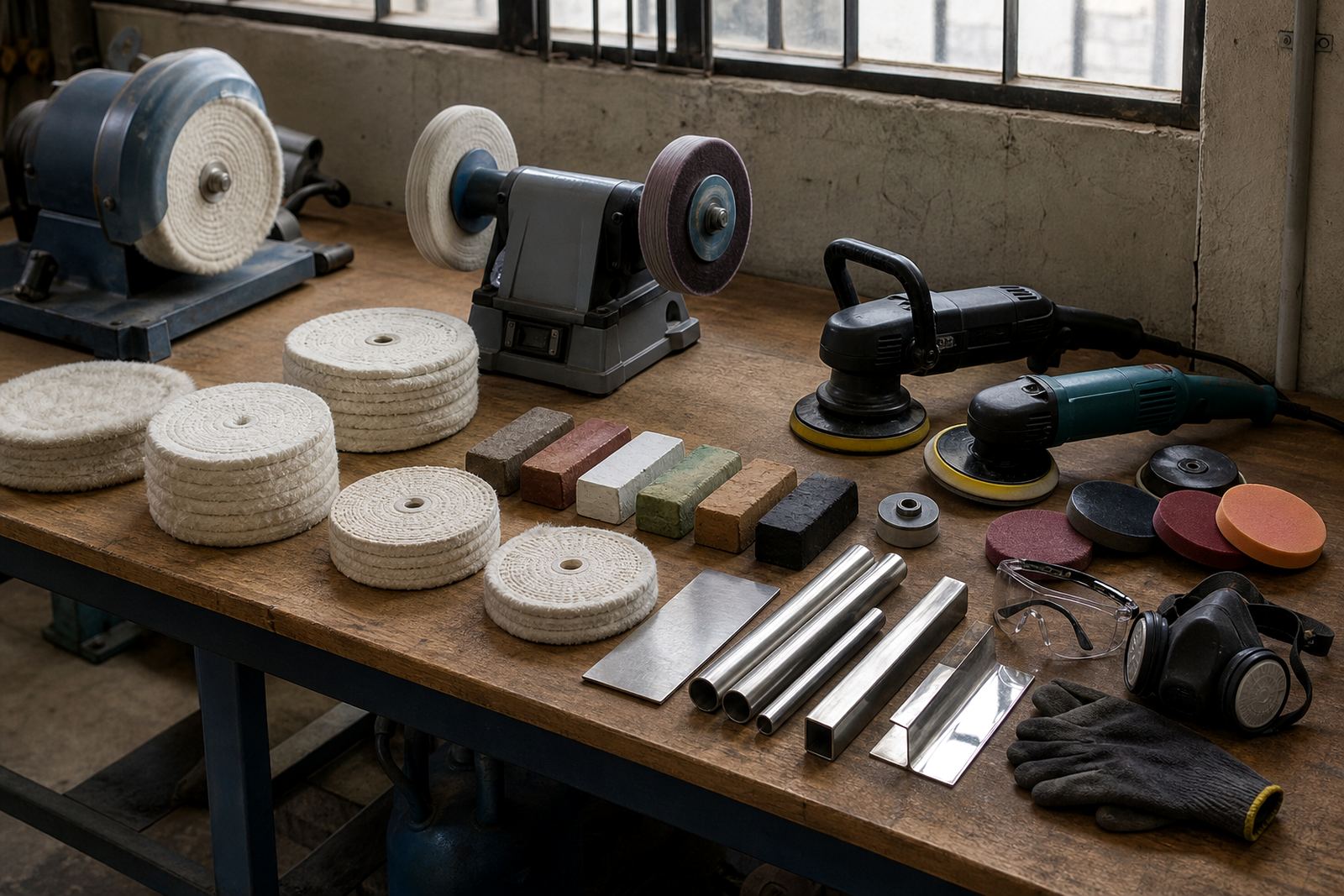
Pad and compound choice is one of the easiest ways to avoid damage. A heavy wool or aggressive foam pad can remove material quickly, but it also raises the risk of heat and haze if the technique is poor. Softer pads and finer compounds are better for finishing stages and for delicate areas. On metal, the goal may be to remove oxidation and bring back reflection without thinning the surface too far. On paint, the aim is to remove defects while leaving enough clear coat for future correction.
Keep your pads clean. A loaded pad runs hotter and can leave uneven marks. Blow out or brush the pad often and change it when it stops cutting evenly. If you are polishing in the East Rand or Vaal Triangle where dust can build up fast, a dirty pad can start dragging grit across the panel. That is bad for finish quality and it raises the risk of scratches and extra passes.
- Use aggressive pads only when the defect level calls for it.
- Switch to finer pads for refining and final gloss.
- Clean pads often to reduce heat and contamination.
- Replace worn pads before they start to run unevenly.
Control heat on busy workshop days
If the machine stops and starts, your attention can shift and you may return to the same area without checking temperature or pad condition. Build a simple routine. Inspect the panel, set your section size, check the pad and compound, then work methodically before moving on.
In a place like Germiston, where many operators work on fleet vehicles, trade-in repairs and enthusiast projects in the same week, it helps to keep one rule: do not polish tired. When you are rushing, the chances of pressing too hard go up. Take short breaks, wipe the surface often and use good lighting to see whether the finish is improving or just getting hotter. Good lighting is part of control, not just presentation.
For an example, imagine a sedan bonnet with light oxidation and a few swirl marks. A beginner might try to remove everything in one aggressive pass. A safer approach is to test a medium pad and compound first, then check the result before increasing cut. That one habit often prevents the kind of thin spot that becomes visible only after the panel cools down.
Use PPE and dust control every time
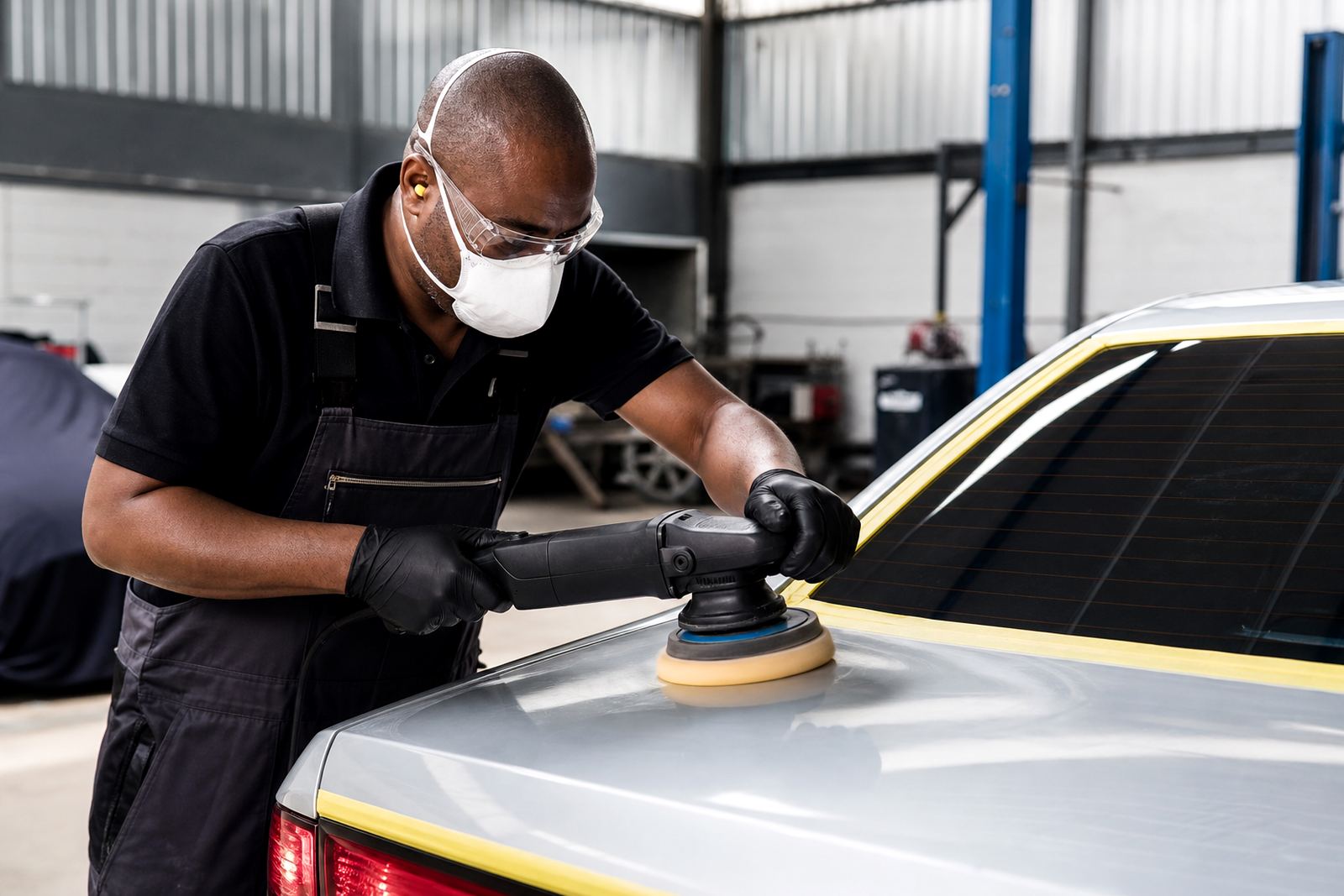
Polishing creates residue, spent compound and airborne dust, especially on older paint, oxidised metal and buffed seams. Wear eye protection, a suitable mask or respirator for fine dust, and gloves if the machine or surface gets hot. If you are working on metal, take extra care around sharp edges and trimmed sections. The safest finish is the one completed without a trip to the clinic.
Keep the work area tidy and give the dust somewhere to go. Wipe surfaces before polishing, vacuum residue after each section and avoid letting dry compound build up around trim or badges. On coastal routes such as Durban, humidity can make residue behave differently on the pad, while inland dust in Pretoria or Bloemfontein can make the surface load up faster. The answer is the same in both cases: stay clean, stay observant and do not rush the final passes.
- Wear eye protection and breathing protection suited to fine dust.
- Use gloves where heat, sharp edges or chemical residue are present.
- Keep trim, seams and badges clean during the job.
- Ventilate the space and remove dust between stages.
Build safer habits through training and support
Burn through is easier to prevent when the operator understands why a panel reacts the way it does. That is why beginner polishing training, rotary skills sessions, DA skills sessions and paint correction coaching are useful for both hobbyists and workshop teams. Good instruction teaches pressure control, pad selection, machine movement and when to stop and inspect instead of chasing a problem until it becomes a bigger one.
From Germiston Supply and our other service areas across Johannesburg, Pretoria, Cape Town, Durban, Bloemfontein, the East Rand and the Vaal Triangle, customers often ask the same practical question: how do I get a better finish without ruining the panel? The answer is usually a steadier hand, a more suitable pad and compound, and better judgement at the edges. That is the kind of support that saves time and material on real jobs, not just on test panels.
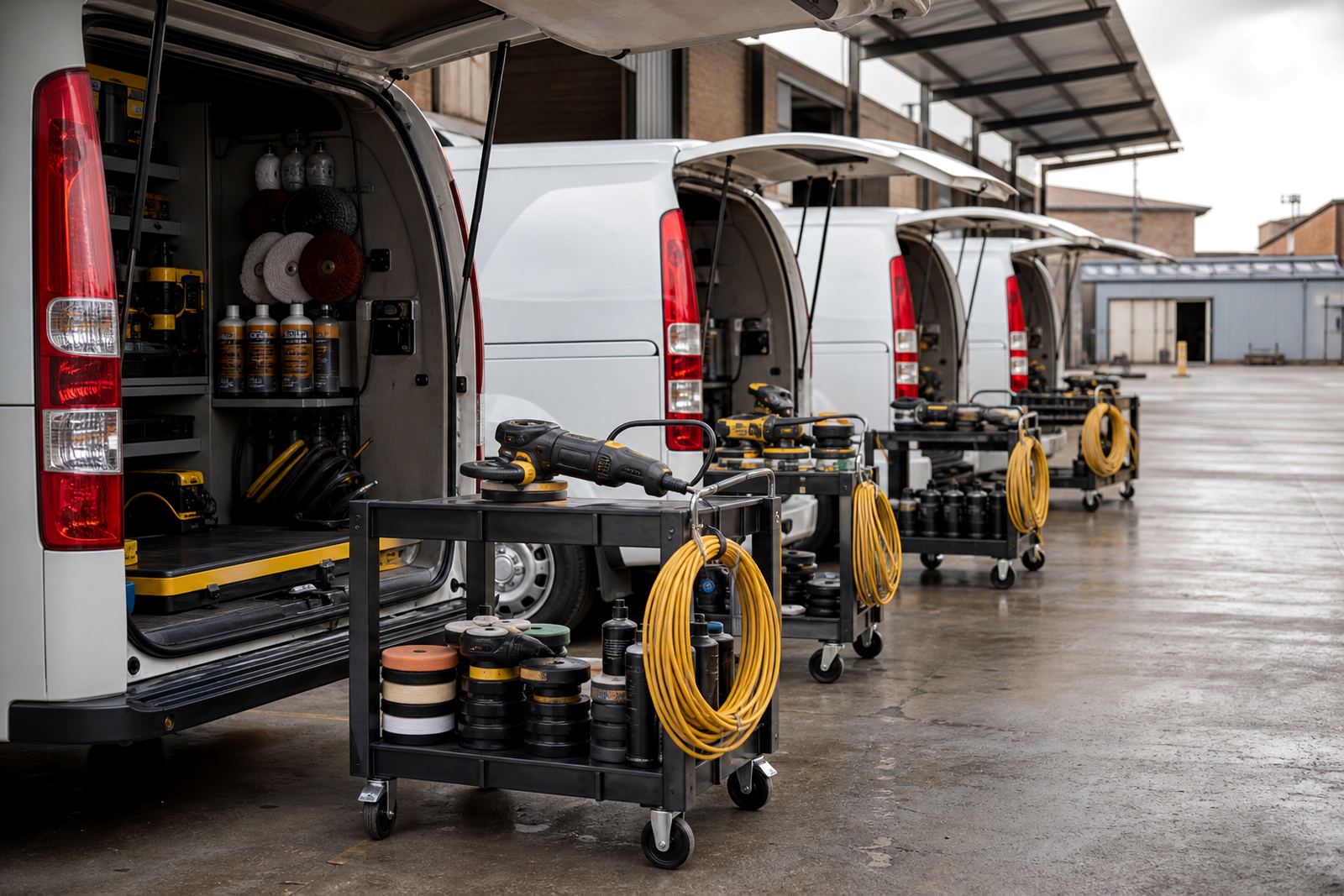
If you are setting up a workshop, restocking consumables or choosing a starter kit, keep safety and control at the centre of the setup. A good polishing system should help you work cleaner, cooler and with fewer mistakes. That is how you protect the panel and the person behind the machine.