Start With the Metal, Not the Machine
Good buffing starts before the machine is switched on. Steel, stainless steel, aluminium and brass all respond differently, and each one needs a surface that has been cleaned, keyed and checked for defects first. If the part is still oily, rusty, pitted or covered in old polishing residue, the buff wheel will only spread the problem around.
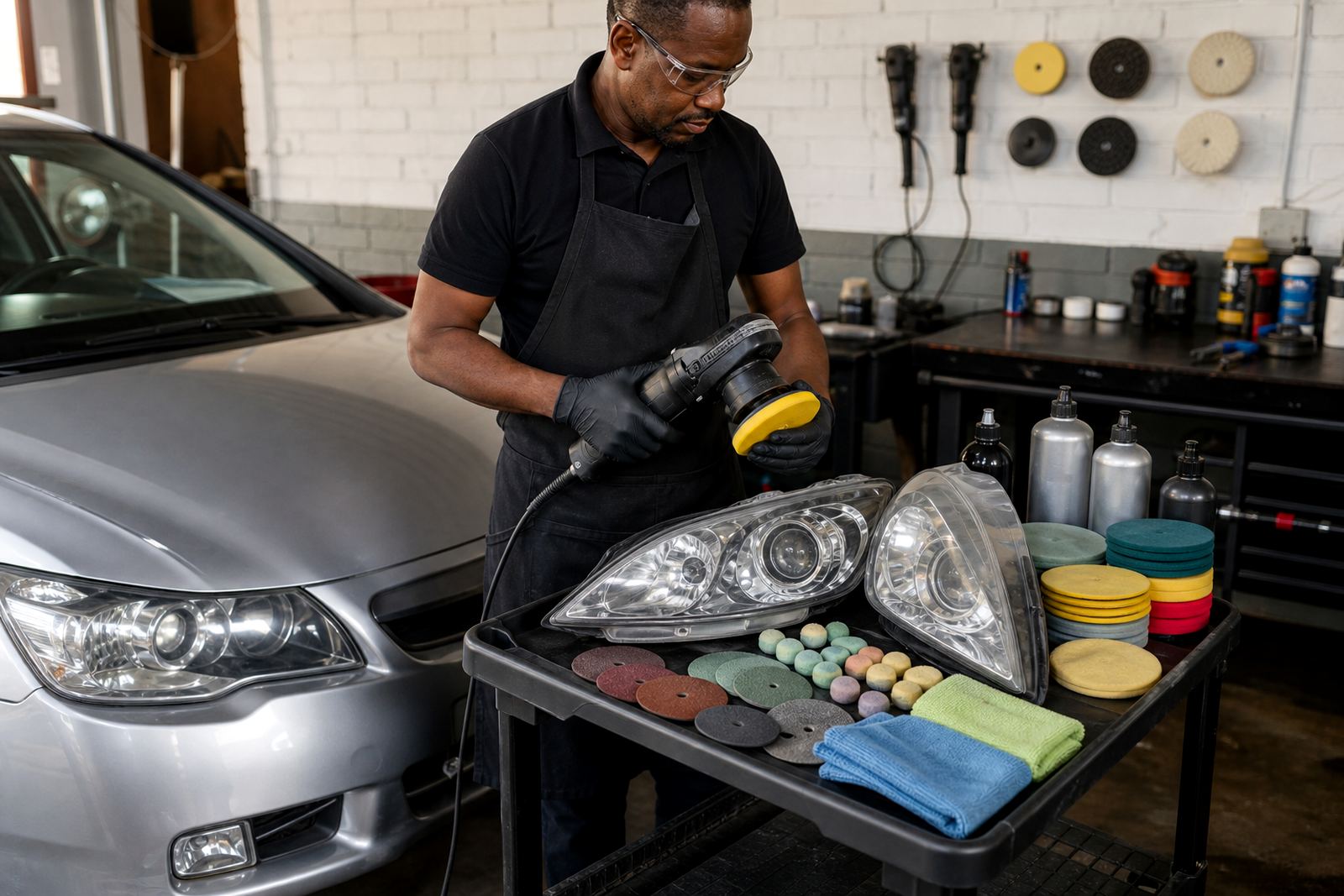
For common metal jobs, begin with a full wash to remove grease and dust, then dry the surface properly. On painted work, make sure the panel is fully cured and free from contamination. On bare metal, use the right abrasion stage before you move to compound. Deep scratches usually need sanding first, often through a sequence of grits rather than trying to hide them with a heavy compound. That step saves time and gives a more even finish.
In Germiston and the East Rand, a lot of workshop work involves gates, trims, tanks, decorative panels and vehicle parts that have sat in dusty spaces. That dust can clog pads quickly, so surface prep is not a nice extra. It is the first real polishing stage.
Rotary and Dual-Action Polishers Explained
Two machine types come up most often in metal and car finishing. A rotary polisher spins on one fixed axis and gives direct cutting power. It works well for heavier correction, shaping compound work and more aggressive metal finishing, but it also builds heat faster, so the operator must keep the machine moving. Too much pressure in one spot can mark the surface or burn an edge.
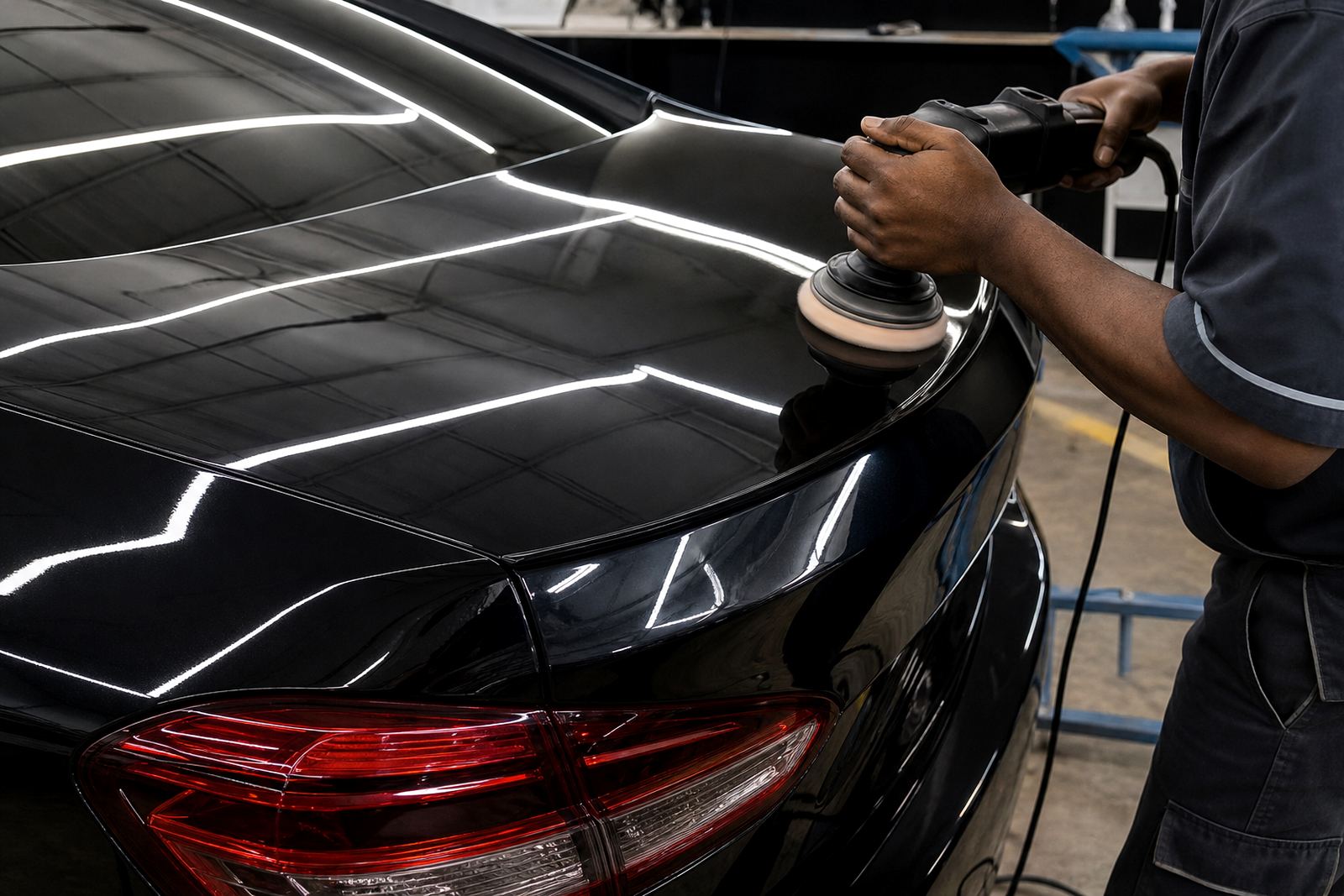
A dual-action polisher moves in a combined rotation and orbit. It is generally gentler, more forgiving and easier for beginners to control. It is often a better choice for paint correction, lighter finishing and users who want a safer learning curve. On some metal jobs it can be used with the correct pad and compound, though it will usually remove material more slowly than a rotary.
- Use a rotary when you need stronger cutting and you can control heat and pad movement.
- Use a dual-action machine when you want less risk and a smoother learning process.
- Match the pad size to the panel or part so you can work edges and curves properly.
- Do not overload the pad with compound, because excess product reduces bite and creates mess.
How Buff Wheels Work on Common Jobs
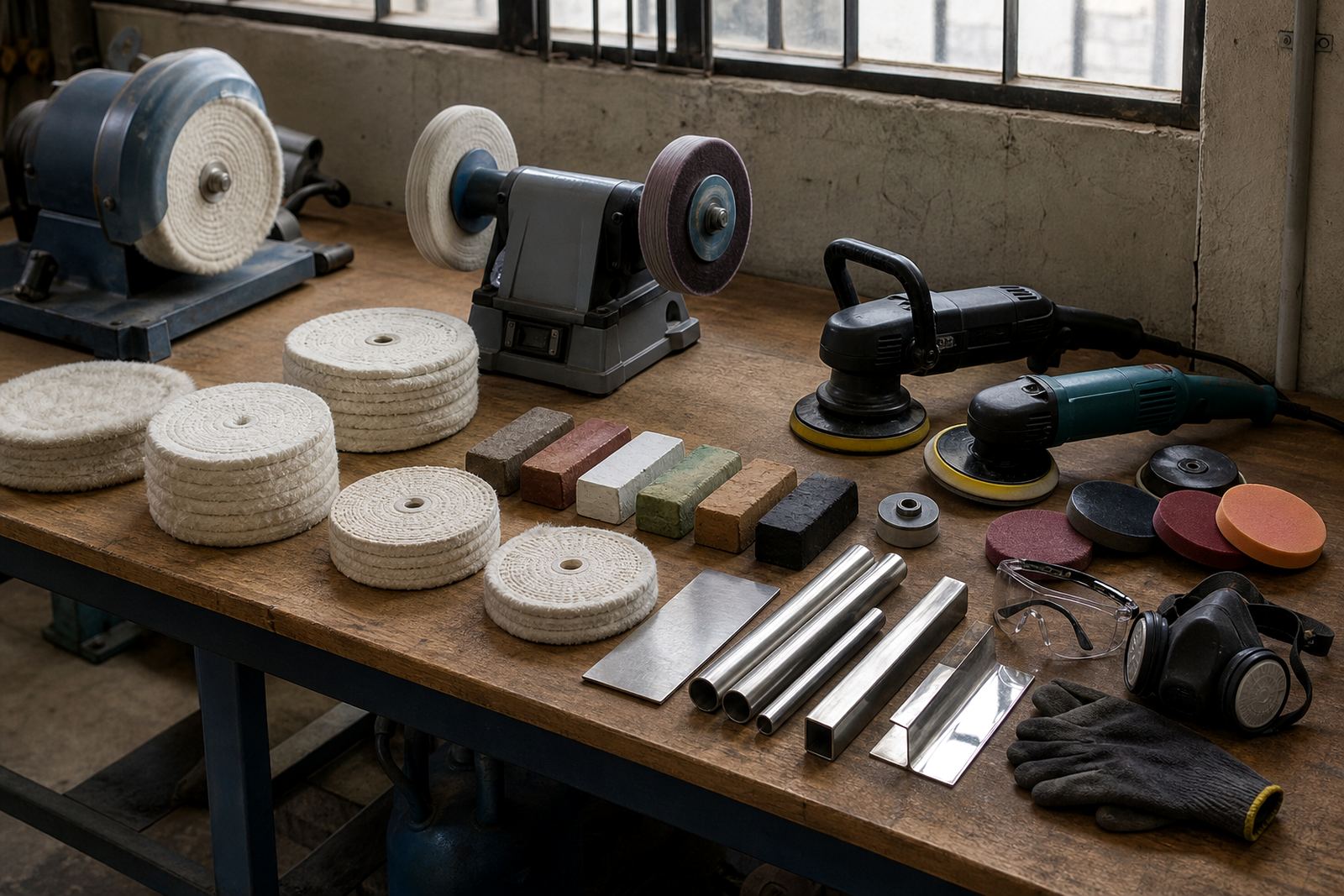
Buff wheels are not all the same. Some are firmer for cutting, while others are softer for colour and final finishing. Loose folds, stitched wheels and layered wheels each create a different level of pressure on the workpiece. The wheel choice matters just as much as the machine speed.
For a typical metal job, the sequence is usually cutting first, then refining and finally finishing. A firm wheel with a stronger compound can remove oxidation, light sanding marks and old dullness. A medium wheel with a finer compound brings back clarity. A soft wheel or finishing mop is used to bring up the final sheen without leaving heavy swirl marks.
Here is the practical rule: if the wheel is too aggressive for the stage, it can leave haze, waves or heat marks. If it is too soft, it may only smear product around and waste time. Learning how each wheel behaves on stainless steel, mild steel or aluminium is part of becoming consistent, not just fast.
Compound Stages and When to Change Grit
Compound is chosen to suit the stage of the job. Coarser compounds cut faster and are useful after sanding or on oxidised surfaces. Medium compounds help remove the marks left by the first stage. Fine compounds are used when the main correction is done and you want a cleaner, brighter finish. On vehicle paint, the same basic idea applies, although the surface is softer and much easier to damage if you overwork it.
It helps to think in stages rather than one miracle product. A single compound cannot fix every surface problem. If the metal still shows scratches after the first pass, step back and rework the sanding or cutting stage before moving finer. That is how you avoid chasing defects with more and more polishing time.
- Heavy oxidation or sanding marks: start with a cutting compound and firmer wheel.
- Moderate haze or machine marks: move to a medium compound and cleaner pad.
- Final sheen or colour: use a fine compound with a soft finishing wheel.
- Always clean the surface between stages so grit from the previous step does not scratch the next one.
Surface Preparation Saves Time and Money
Preparation is where many beginners lose time. If you skip cleaning and sanding, the buffer has to fight dirt, burrs and old residue at the same time. That wastes consumables and can leave uneven results. A proper prep job means less compound, less heat and fewer repeat passes.
On vehicle work, remove road film, tar and brake dust before any polishing. On metal fabrication work, remove sharp edges, welding residue and any loose scale. If the surface has been stored in a coastal area such as Durban, be extra careful with salt contamination and moisture spots. If it has come from a dusty site in Johannesburg or Pretoria, inspect the corners and seams where dirt collects.
When polishing near painted sections, tape off trims and edges where the wheel may catch. It is also wise to work in a clean, bright area with enough ventilation. Fine dust and dried compound should not be left in the air, and PPE matters every time.
Safe Working Habits for Hobbyists and Workshops
Buffing looks simple from a distance, but safe technique keeps both the operator and the part in good condition. A face shield or safety glasses should be standard, along with gloves suited to the task and a dust mask or respirator when sanding or handling dry residue. Loose clothing, jewellery and untied hair can catch on a spinning wheel, so keep the area tidy and the setup practical.
Heat is another issue. Metal can get hot quickly under a rotary machine, especially on edges, curves and small parts. Let the machine do the work and lift off often to check the temperature. If you are polishing paint, be even more cautious because clear coat can fail very quickly if the pad stays in one place too long.
For small workshops and home users, good lighting, a stable work surface and the right extension lead or power setup matter.
A Local Example From Germiston to the Wider Market
A common request from the East Rand is for help with a set of older aluminium parts or a vehicle owner wanting the paint to look cleaner before a sale. The best outcome usually comes from a simple plan: wash, decontaminate, sand where needed, test the pad and compound on a small area, then work panel by panel. That approach gives control and stops the operator from over-polishing one section while another stays dull.
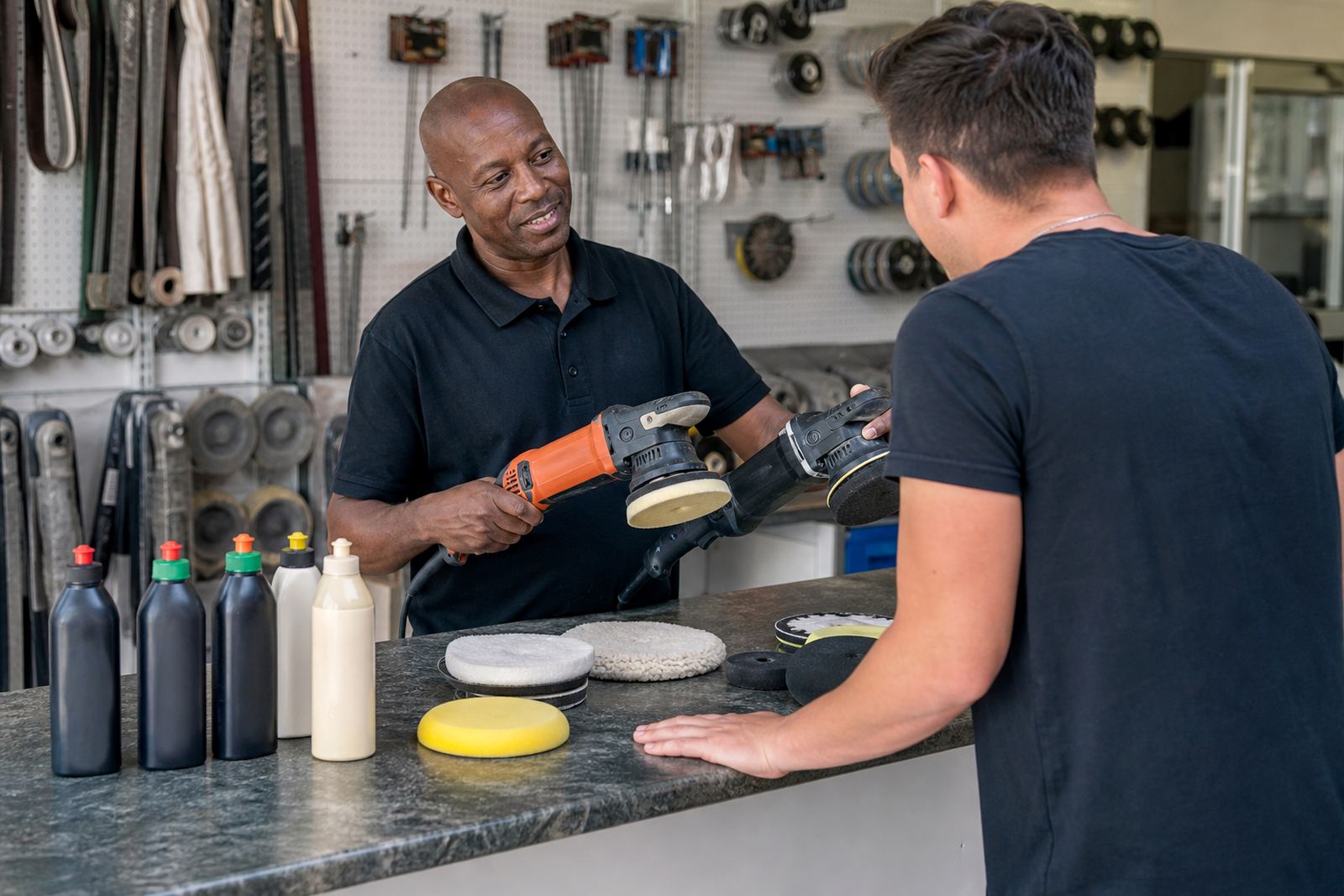
At Polisher in Germiston, that is the sort of practical advice people ask for through the enquiry form when they need to choose between a rotary and a DA machine, or when they are trying to match a buff wheel to a specific compound. The same process applies whether the job is a small bracket, a trailer fitting, a bonnet edge or a full restoration piece. Once the stages are understood, the finish becomes much easier to repeat.
If you are unsure where to begin, start with the least aggressive method that will still do the job. That is usually the safest way to learn, and it often gives the best finish with less waste.