
Start With the Job You Want to Do
Before you pick a machine, be clear on the surface you will be working on most often. A car owner doing weekend paint correction needs a different setup to someone polishing stainless steel handrails, aluminium trim or brass fittings in a workshop. If you are only starting out, choose one machine that is easy to control and learn the basics properly before adding extra kit.
For paint, the aim is usually to remove light oxidation, swirl marks and minor haze without cutting too deep. For metal, the goal may be to restore sheen, remove sanding marks, or bring back a clean, even finish after fabrication. The wrong machine can make the job harder and can leave trails, heat marks or uneven reflections. On a first purchase, simplicity usually saves money in the long run.
In Germiston and across Gauteng we often see first time buyers asking for the fastest machine, then struggling to control it on curved panels, edge lines and tight corners. That is why the first question should be: what am I polishing most days, and how steady is my hand?
Rotary or Dual-Action: Know the Difference
A rotary polisher spins on a single axis and gives strong cutting power. It is useful for experienced users, heavier oxidation and metal work where a firmer cut is needed. It also builds heat quickly, so it needs careful movement, good pad choice and patience. On paint, a rotary can correct faster but it can also leave holograms if the technique is off.
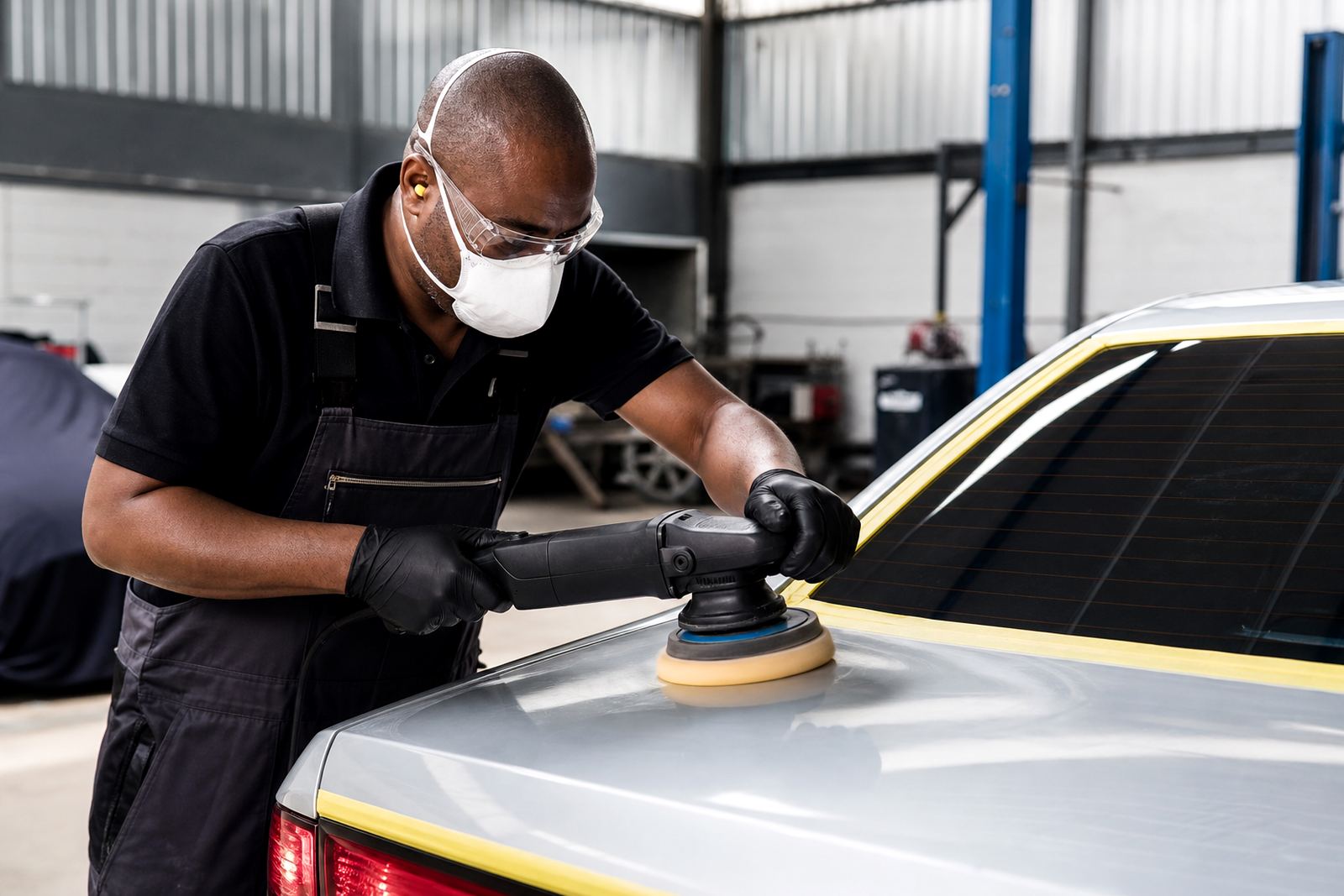
A dual-action, or DA, machine moves in both spinning and orbital motions. It is generally easier for beginners because it is more forgiving on paint and less likely to create heavy marks. It is a good starting point for car care, light correction and finishing work. For many first-time users, a DA is the safer choice while skills develop.
If you are unsure, choose the machine that matches your confidence level not the most aggressive one. A DA can handle a lot of beginner work well, and once your control improves you can decide whether a rotary is needed for more demanding jobs.
- Choose rotary for heavier cut, experienced handling and more demanding metal work
- Choose DA for safer paint correction, easier learning and finishing work
- Choose a machine with variable speed control so you can start low and build up
Look Beyond the Machine Body
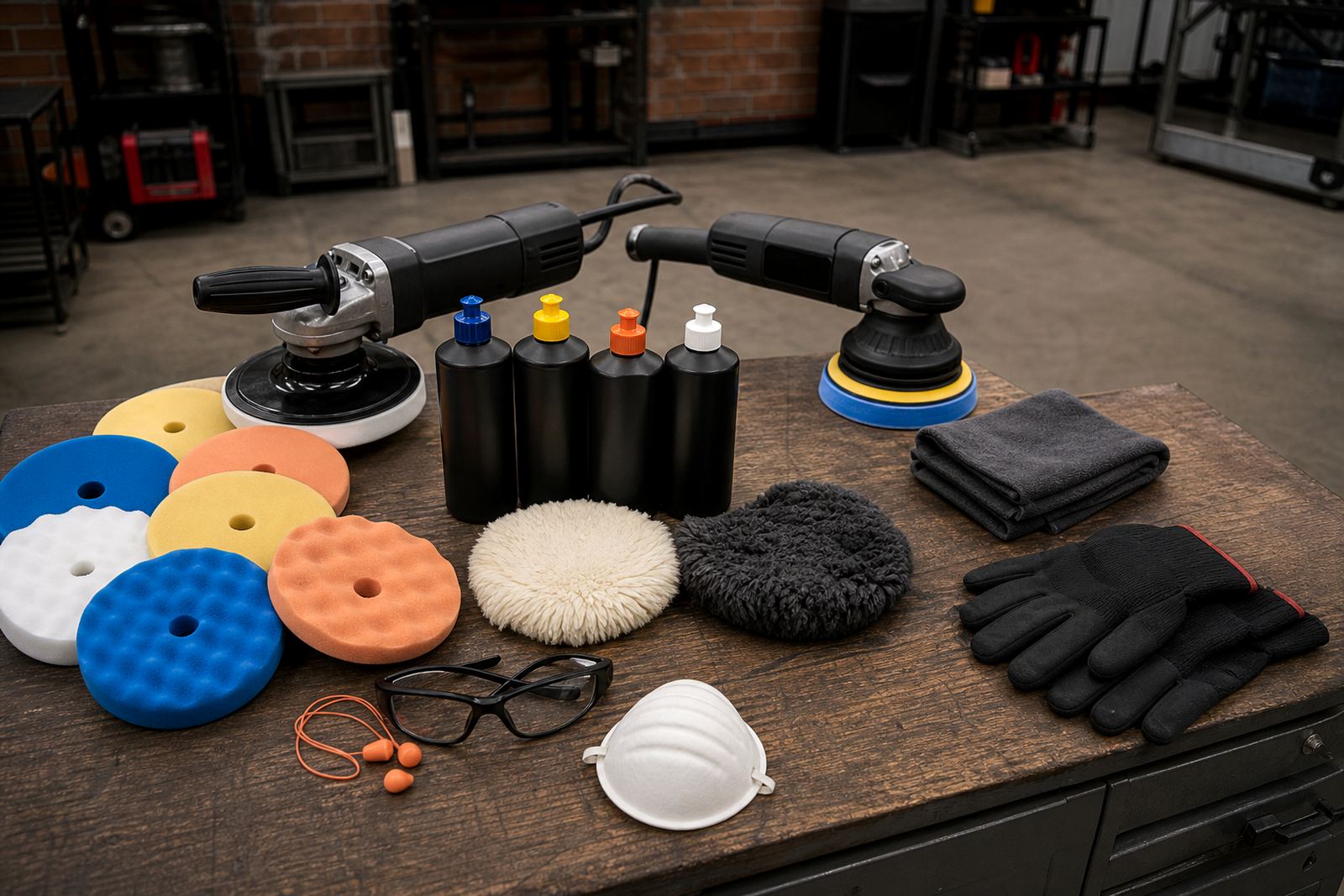
The polisher itself is only one part of the setup. A beginner also needs the correct pads, compounds, backing plate and power supply. A machine with good balance and a comfortable grip is easier to manage over long sessions, especially on larger panels or when working in a warm workshop in summer. Weight matters because a machine that feels fine for ten minutes can become tiring after an hour.
Check whether the handle suits both right and left handed use if possible. Also look at the cord length, trigger feel and whether the speed dial is easy to reach while working.
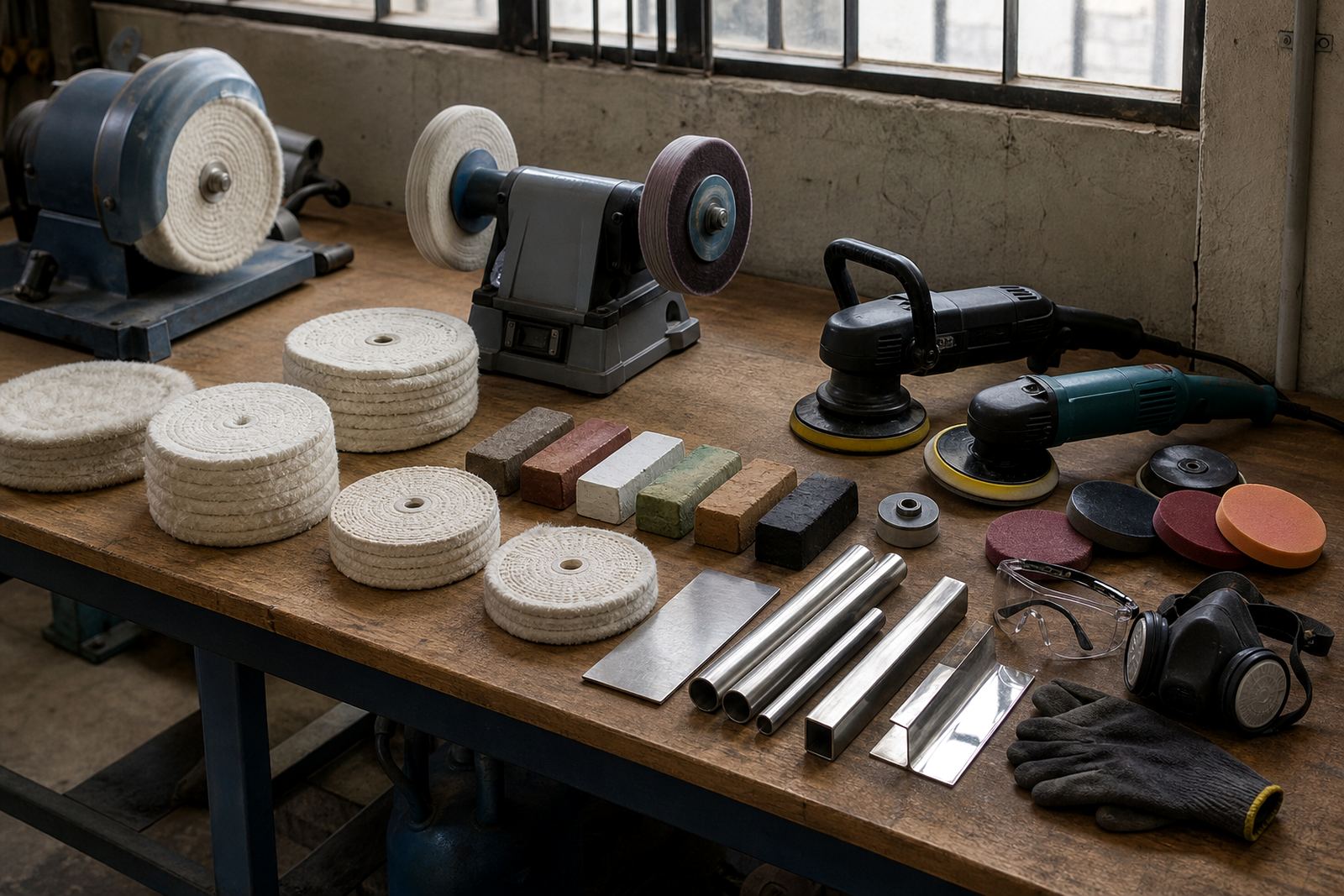
For metal finishing, pad selection matters just as much as machine choice. Some pads are made for cutting, others for refining and some for final gloss. A wrong pad can slow you down or leave a finish that needs rework. Matching the pad and compound to the job is part of learning the craft.
Compounds, Pads and the Finish You Want
Compounds are not all the same. Some are cutting compounds meant to remove heavier marks, while others are finishing compounds for refining gloss. On paint, a beginner often needs one mild cutting compound and one finishing polish rather than a whole shelf of products. On metal, the process usually starts with a more aggressive cut and then moves to finer stages until the surface looks even and clear.
The best first kit is usually simple: one machine, a small selection of pads and compounds, a clean microfibre supply and a place to test on a less visible area first. Always work a small section, check the result and then continue. This avoids wasting product and helps you understand how the surface is responding. It also teaches better control, which is more valuable than brute force.
For beginners, heat management is important. Do not hold the machine on one spot. Keep it moving, let the pad do the work and wipe residue regularly so you can see what is happening. If the surface starts to feel too hot to touch, stop and allow it to cool.
- Use a mild compound first unless the surface is badly marked
- Match pad aggressiveness to the compound, not guesswork
- Inspect the panel in daylight or bright white light after each section
Safety and PPE Should Be Part of the First Purchase
Polishing creates dust, spent compound and fine residue that should not be breathed in. PPE is part of the job, not an extra. Wear eye protection, a dust mask or respirator suitable for the task, and gloves where needed. If you are working on older paint, rusted metal or dry sanding residue, take dust control seriously and clean the area often.
Good ventilation helps, whether you are in a small workshop in the East Rand or a home garage in Pretoria. Keep the work area tidy, remove loose cloths and cables from underfoot, and avoid polishing near open flames or sparks. If you are correcting paint on a vehicle, make sure trims, seals and badges are protected from excess compound build-up.
For metal work, edges can be sharp even after polishing starts. Good gloves and careful handling reduce the risk of cuts. It is also worth learning basic machine care from day one, because a clean pad and proper storage make the machine safer and easier to use.
A Local Example: Picking the Right First Setup in Germiston
A small workshop in Germiston that mainly handles car wash enhancement and light paint correction does not need the same first machine as a fabricator polishing stainless rails for a shopping centre. The car work side may benefit from a DA machine, a mild compound and a finishing pad. The metal side may need a rotary, firmer pads and stronger cut for initial marks. That does not mean buying every tool at once. It means starting with the tool that suits the main workload.
We often advise beginners to buy for the next six months, not the next six years. That keeps the first purchase practical and manageable. Once the user understands pad pressure, arm speed and product behaviour, the second machine or extra pads can be added with more confidence. If a team is starting together, a short skills session and a safety briefing can prevent expensive mistakes and improve consistency across jobs.
Across Johannesburg, Durban, Cape Town and Bloemfontein, the best first choice is usually the one that fits the actual work, the operator and the available time. A simple, well matched setup will produce better results than an overpowered machine that is too difficult to control.
What to Ask Before You Buy
Before choosing a first machine, ask a few direct questions. What surfaces will I polish most often? How much correction do I really need? Am I learning alone, or will a team use the machine? Do I need advice on starter kits, pad and compound matching or workshop setup?
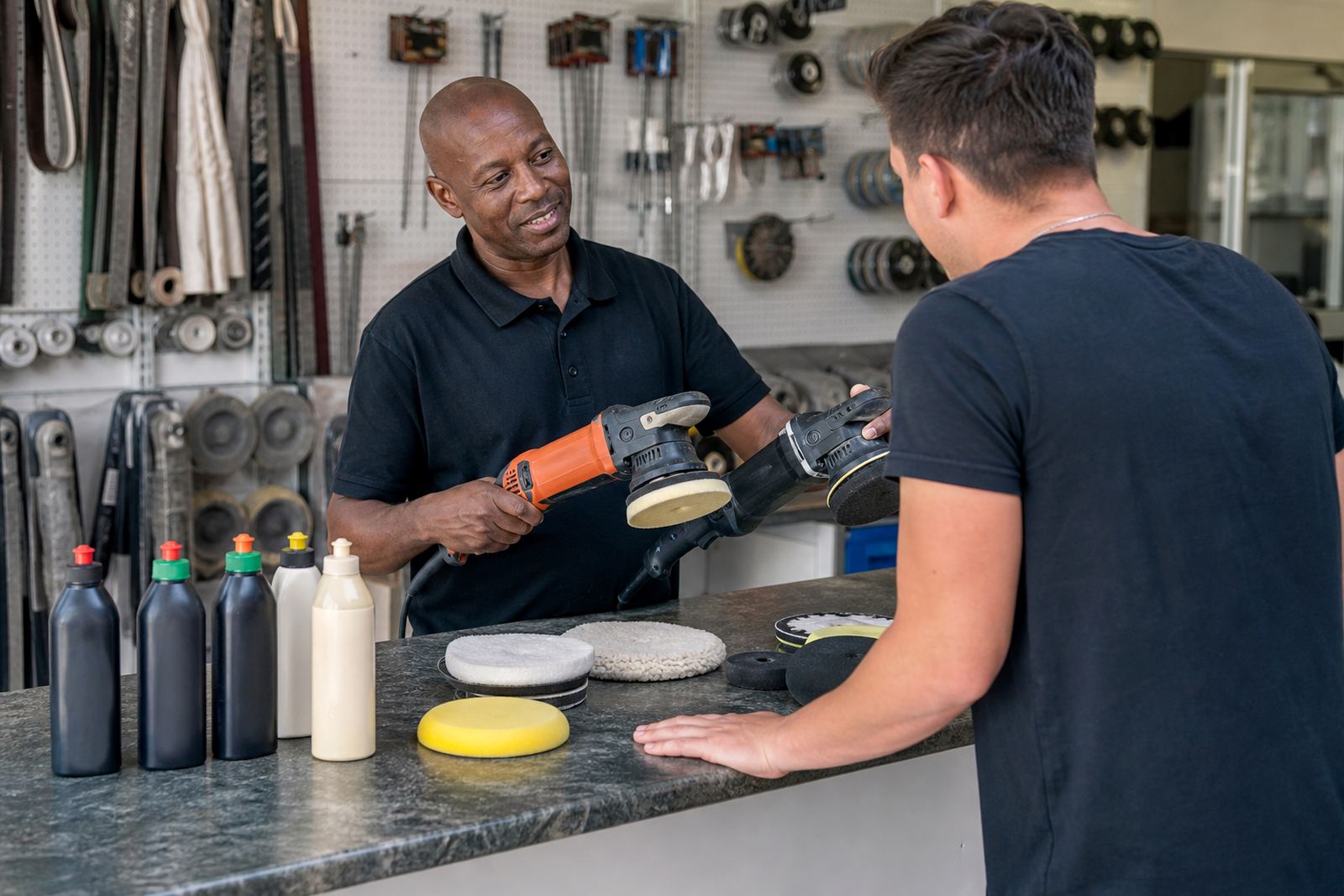
It also helps to think about support after the purchase. Beginners often need guidance on machine care, consumable restocking and technique, especially when moving between paint and metal jobs. A good start includes practical advice, not just equipment on a shelf. If you are unsure, arrange a beginner polishing training session, a rotary skills session or a DA skills session before taking on a customer vehicle or a production job.
For enquiries, clients can reach us through the enquiry form on our contact page. From Germiston Supply to Johannesburg, Pretoria, Cape Town, Durban, Bloemfontein, East Rand and the Vaal Triangle, the aim is the same: help you choose a first polisher that matches your work and builds proper habits from day one.