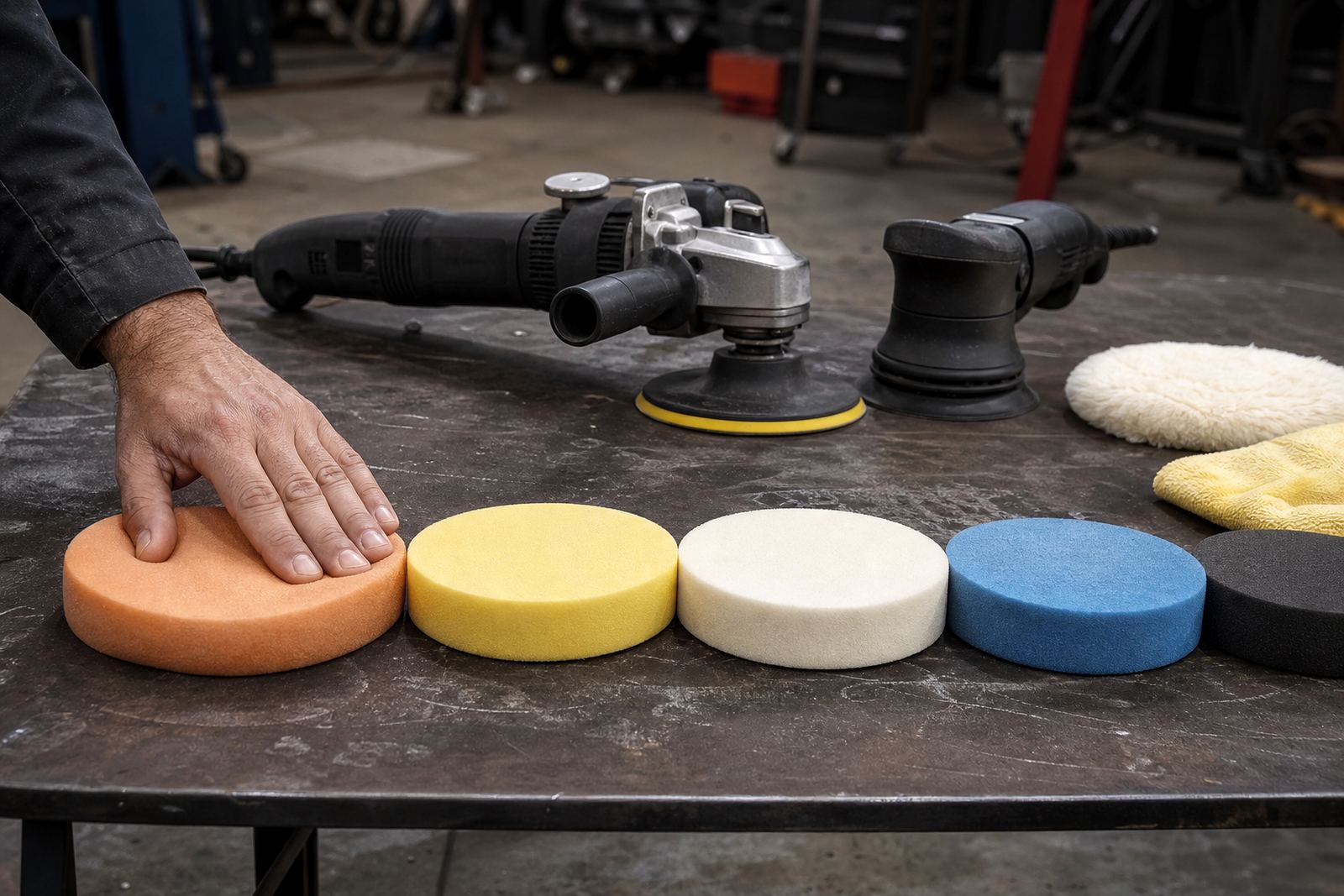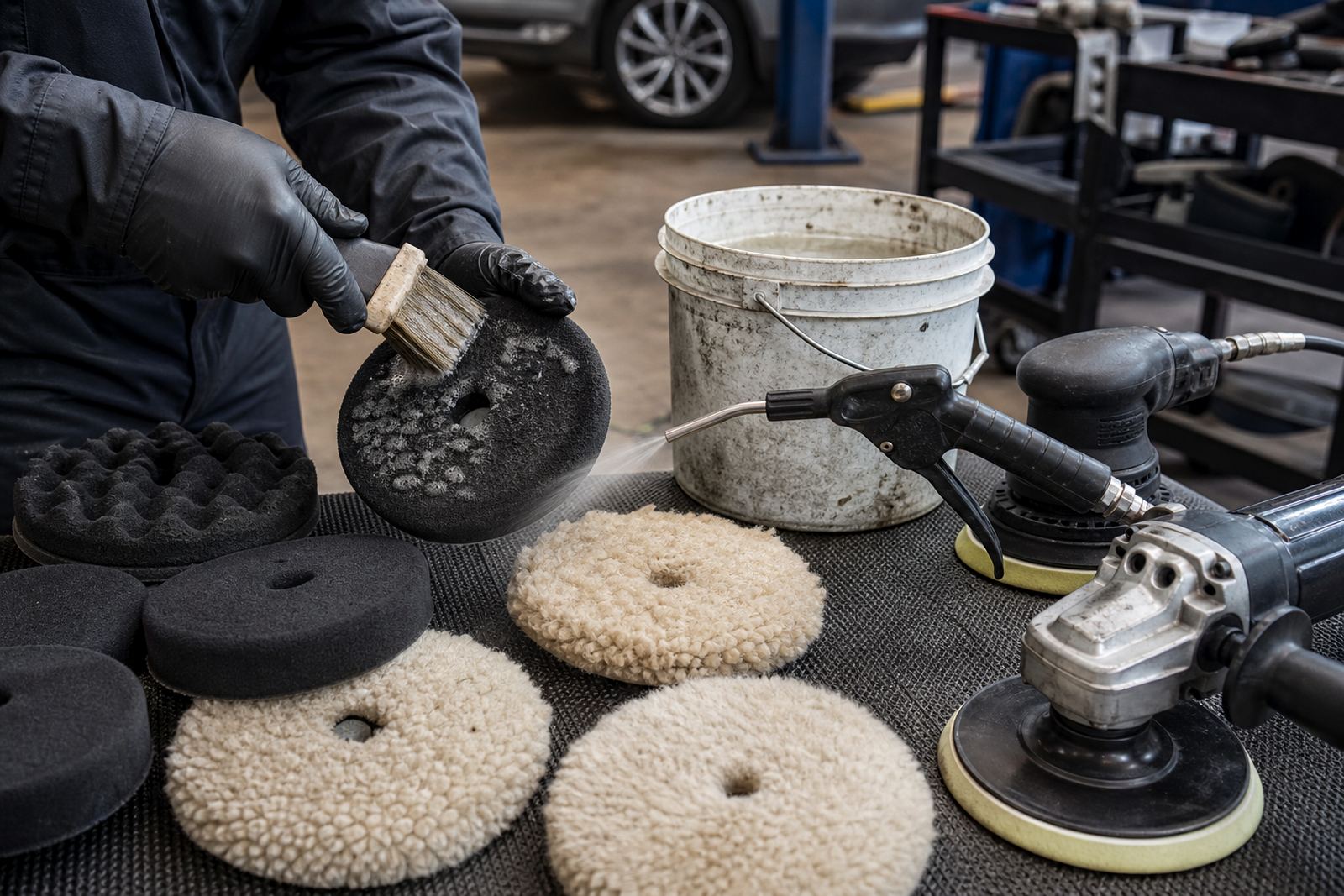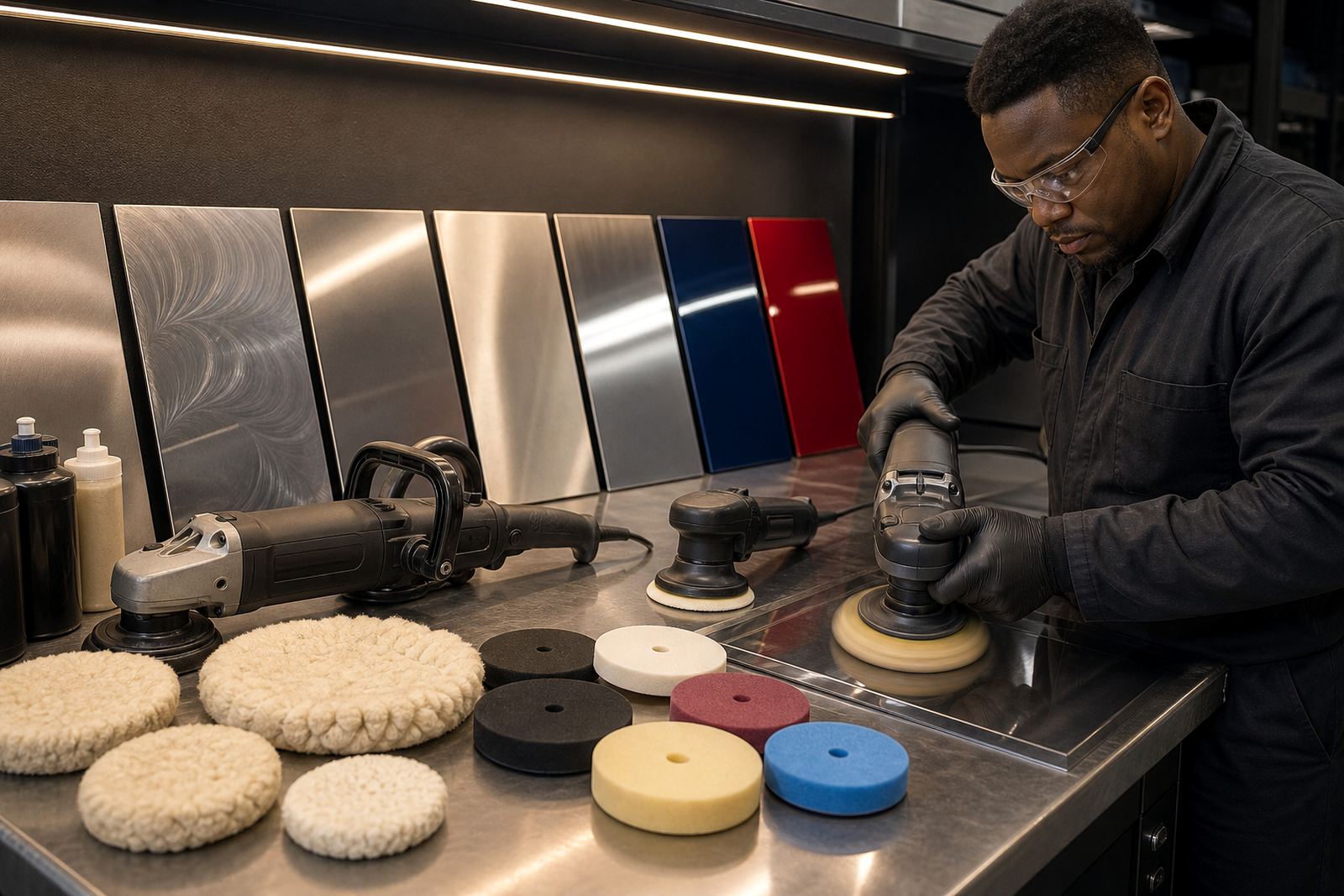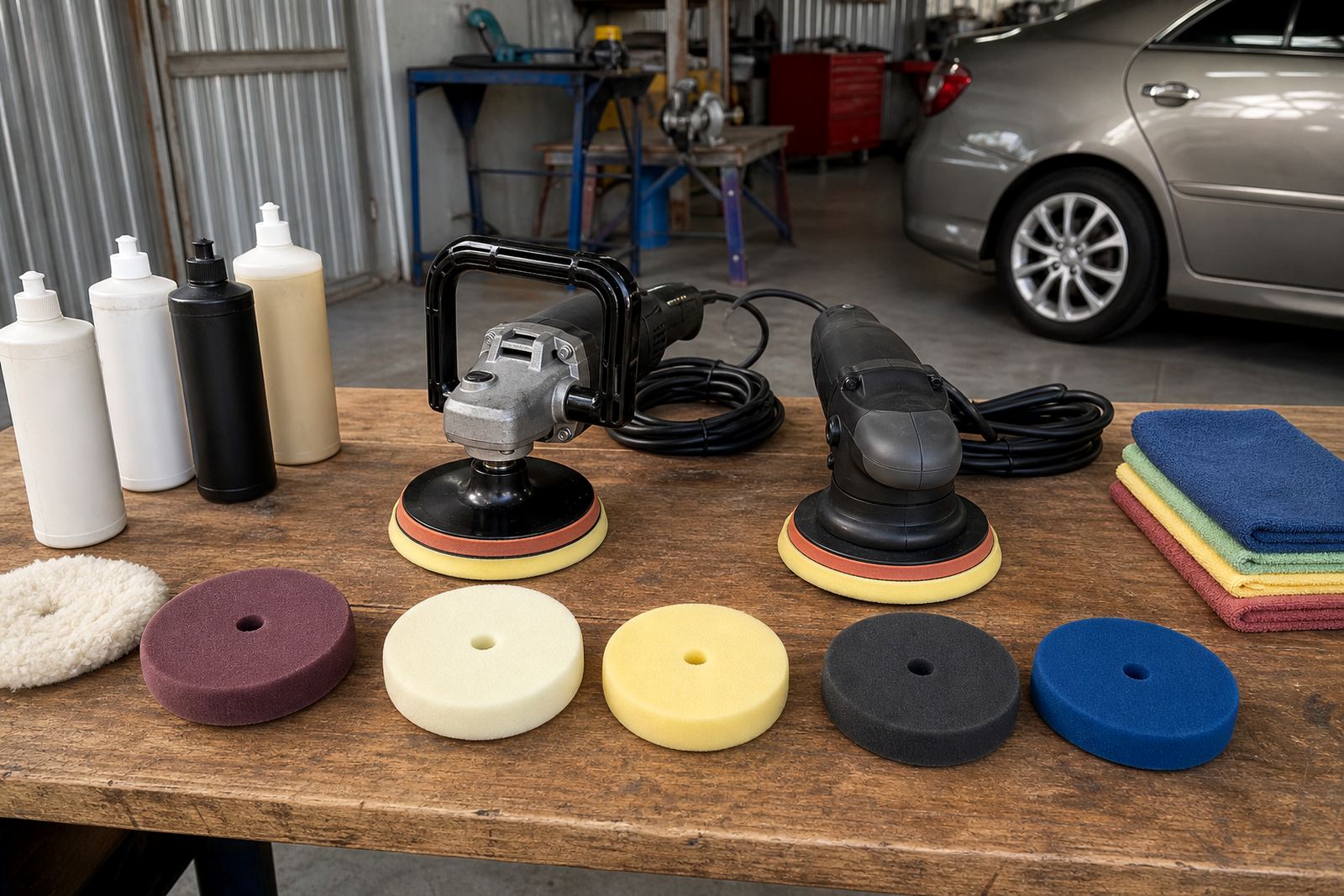
What each machine actually does
A rotary polisher spins on a single axis, much like a drill but with better speed control and proper polishing pads. It moves in a direct circle, so the pad keeps working the same area with every pass. That makes it useful for heavy correction, metal buffing and deep defect removal, but it also means more heat builds up if you linger too long on one spot.
A dual-action, or DA, polisher combines rotation with a free-spinning orbit. The pad still moves in a circle, but it also shifts around in a second motion. This makes it easier to control and less likely to leave strong swirl marks, which is why many first-time users prefer it for paint finishing and lighter correction work.
- Rotary: strong cutting action, best for experienced hands
- DA: safer feel, ideal for finishing and light to medium correction
- Both can be used with foam, microfibre or wool buffs depending on the task
When a rotary makes more sense
Rotary polishers are often chosen when there is stubborn oxidation on metal, sanding marks after surface prep, or heavier paint defects that need firm correction. On stainless steel, aluminium and painted panels, a rotary can remove material faster than a DA if the operator uses the correct pad and compound. That is useful in workshop settings where time matters and the job needs a controlled cutting step before finishing.
The trade-off is heat and skill.A rotary then needs careful movement, moderate pressure and regular checks by hand. If you stop in one place too long, you can burn through clear coat or mark the metal finish.
- Good for heavy correction and metal polishing
- Works well with cutting compounds and firm buffs
- Needs steady movement and frequent inspection
Where a DA is the better choice
A DA polisher is a good all-round option for hobby users and shops that want a safer finishing tool. It is often used for paint correction, light swirl removal, refining rotary marks and applying finishing polish before waxing or sealing. Because the pad does not stay locked in one spinning path, the risk of overheating a panel is lower than with a rotary.
For South African conditions, that extra control matters. On coastal vehicles from Durban or Cape Town, salt and moisture can leave paint looking dull, while inland dust and fallout can create fine marks. A DA is often enough to improve gloss without the same level of aggressive cutting. It is also a sensible choice for curved panels, badges and areas where a rotary can feel too lively.
- Better for beginners and finishing work
- Less likely to leave strong holograms
- Useful for maintenance polishing and final refinement
Pads, compounds and the order of work
The machine is only one part of the result. The pad and compound must suit the surface, the level of damage and the finish you want. A heavy cutting compound with a firm pad can remove deeper marks, while a medium polish and softer pad are better for refining the surface. On soft automotive clear coat, the wrong setup can create haze. On bare metal, the wrong combination can leave drag marks or an uneven sheen.
Good technique usually starts with washing, claying if needed, then testing a small area before working the full panel. You do not want to polish over grit or metal dust because that just drags contamination across the surface. Keep towels clean, inspect the pad often, and change to a fresh pad when it loads up. If you are polishing aluminium or stainless steel, step through the process carefully from cut to finish, otherwise you may chase marks around the panel instead of removing them.
- Cutting pad plus compound for heavier defects
- Medium foam or microfibre for correction
- Soft finishing pad and fine polish for final gloss
- Always test on a small section first
Safety, dust control and workshop habits
Polishing is not just about shine. It also produces fine dust, compound residue and, in metal work, particles that should not be breathed in. Use eye protection, a dust mask or respirator where needed, and gloves when handling sharp edges or hot panels. Keep sleeves fitted and secure loose clothing, because a rotary can catch on a cloth or cable if you are careless.
Ventilation matters in a closed workshop, especially when multiple machines are running. Clean pads are safer than clogged ones, and a tidy floor reduces slip risk when compound or water gets kicked around. If the panel has been sanded, remember that residue from abrasive paper can damage the finish again. Wipe down between stages and keep the work area organised.
- Wear eye protection and suitable PPE
- Use dust control and good airflow
- Keep cables clear and pads clean
- Do not polish a dirty surface
A practical choice for Germiston and beyond
A small body shop in the East Rand may use a rotary for initial correction on a faded bonnet, then switch to a DA for finishing before handover. That same setup works for a detailer in Pretoria, a restoration project in Bloemfontein, or a home user in Johannesburg trying to bring back a tired metal trim strip. The best tool depends on the surface, the level of damage and the skill of the operator, not on habit alone.
If you are setting up a workshop, teaching a new operator or planning a starter kit, it helps to think in stages. Choose a machine that matches the type of work you do most often, then add pads, compounds and training that support that machine. Our team in Germiston works with both rotary and DA users across South Africa, from Cape Town and Durban to the Vaal Triangle, and the same rule applies every time: start mild, test first and only step up when the surface needs it.
- Rotary for faster cut and heavier correction
- DA for safer finishing and easier control
- Match the tool to the panel, not the other way round
How to decide which one to buy first
If you are new to polishing, a DA polisher is usually the better first machine. It gives you more room for error while you learn pad pressure, speed control and compound behaviour. If you already work on metal regularly or need stronger correction on paint, a rotary may make sense as a second machine once you understand heat, pad choice and working time.
There is no single answer for every workshop. A panel shop, metal finisher and weekend enthusiast will all use the tools differently. The right decision is the one that fits your workload, your training level and the finish standard you need to meet. When in doubt, test on a small area and ask for guidance before you start on the full job.