Why Pressure Changes The Cut
Pressure is what turns a spinning pad and compound into real cutting action. Too little pressure and the abrasives may skate over the surface without doing much. Too much pressure and the pad can load up, create extra heat, and leave the finish cloudy or uneven.
On painted panels, the aim is usually controlled contact rather than force. On metal, especially stainless steel, aluminium or mild steel parts, pressure still matters because it affects how quickly the compound breaks down and how evenly the scratches are reduced. The right hand pressure keeps the machine working on the face of the pad, not on the edge.
As a rule, let the tool do the work. A rotary polisher needs steadier hands and lighter pressure as the compound starts to clear. A dual-action machine can tolerate a bit more input, but even then pushing down hard often slows the orbit and reduces finishing quality.
Pass Count And What It Really Means
Pass count is the number of working passes you make over an area before checking the result. It is not just about repeating the same movement again and again. Each pass should overlap the last one so you cover the whole section evenly, with a consistent speed and pad angle.
If you stop after one quick sweep, you may remove the top haze but leave deeper defects behind. If you keep going long after the compound has broken down, you can overwork the panel and start chasing micro-marring. The trick is to find the point where correction has been achieved and then stop.
- Work one section at a time, especially on hot body panels in summer.
- Use overlapping passes so no strip is missed.
- Check the surface under good light before deciding on a second round.
- Change compound or pad before increasing pressure too much.
Rotary And Dual-Action Machines Need Different Hands
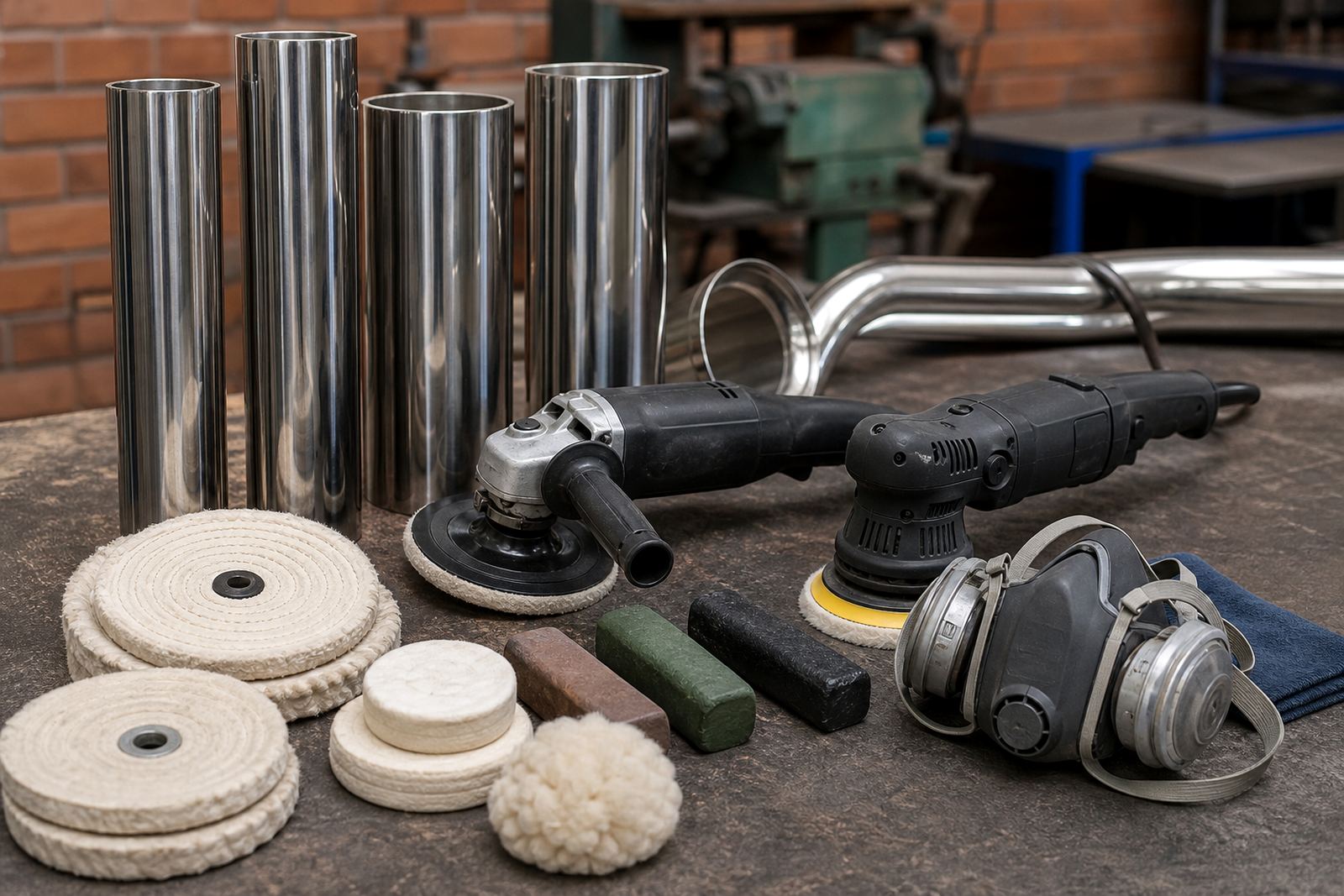
Rotary polishers cut fast and are useful for heavier defect removal on paint and on some metal finishing jobs. They respond strongly to pressure, so the operator must stay alert for heat build-up, edge drag and pad hop. On curved panels and near sharp lines, lightening your hand is often safer than trying to force the correction through.
Dual-action polishers move in a random orbit, which makes them friendlier for beginners and better for finish work on car paint. They are less likely to create severe marks, but they still need the right pass count. If you rush with very short passes, the machine may not fully level the defects. If you keep circling too long with a tired pad, you may just polish dust and residue back into the surface.
- Rotary: use for faster cut, but keep the machine moving.
- Dual-action: use for safer finishing and lighter correction.
- Both: avoid pressing harder near panel edges and badges.
- Both: clean the pad often so spent compound does not scratch back in.
How Pressure Affects Heat, Dust And Clarity
Pressure changes more than the cut. It also changes heat, dusting and residue behaviour. When the pad is overloaded with compound or when pressure is too heavy, the working face can run hot and the residue may dry too quickly. That makes it harder to wipe away cleanly and can leave a greasy or smeared look under inspection lights.
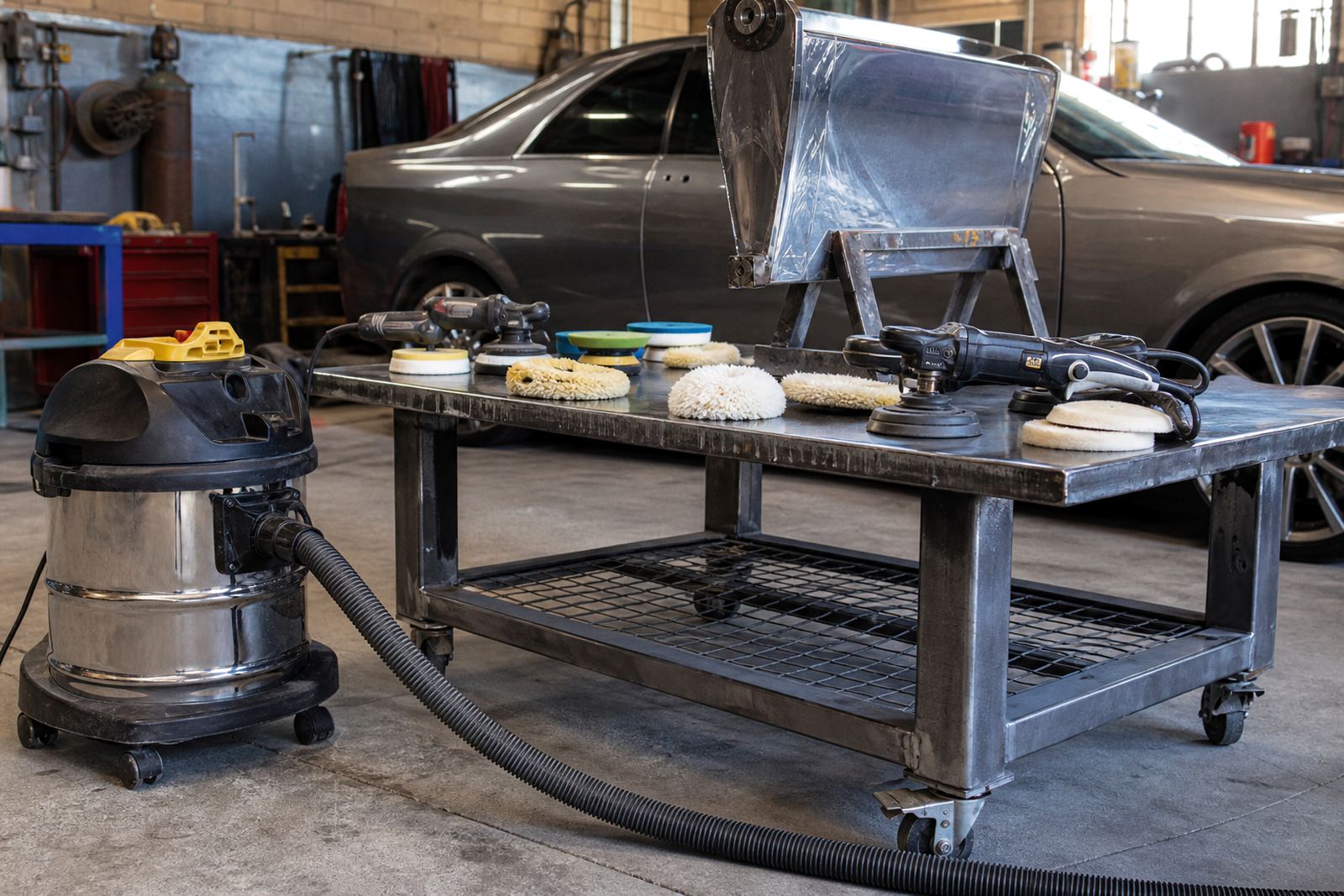
In Gauteng workshops, especially in Germiston where metal work and vehicle detailing often happen in warm, dry conditions, dust control matters as much as pressure control. If the surface is dusty, the pad picks it up fast and then every pass can scratch. Good PPE, a clean workspace and sensible extraction or vacuuming are part of the job, not an afterthought.
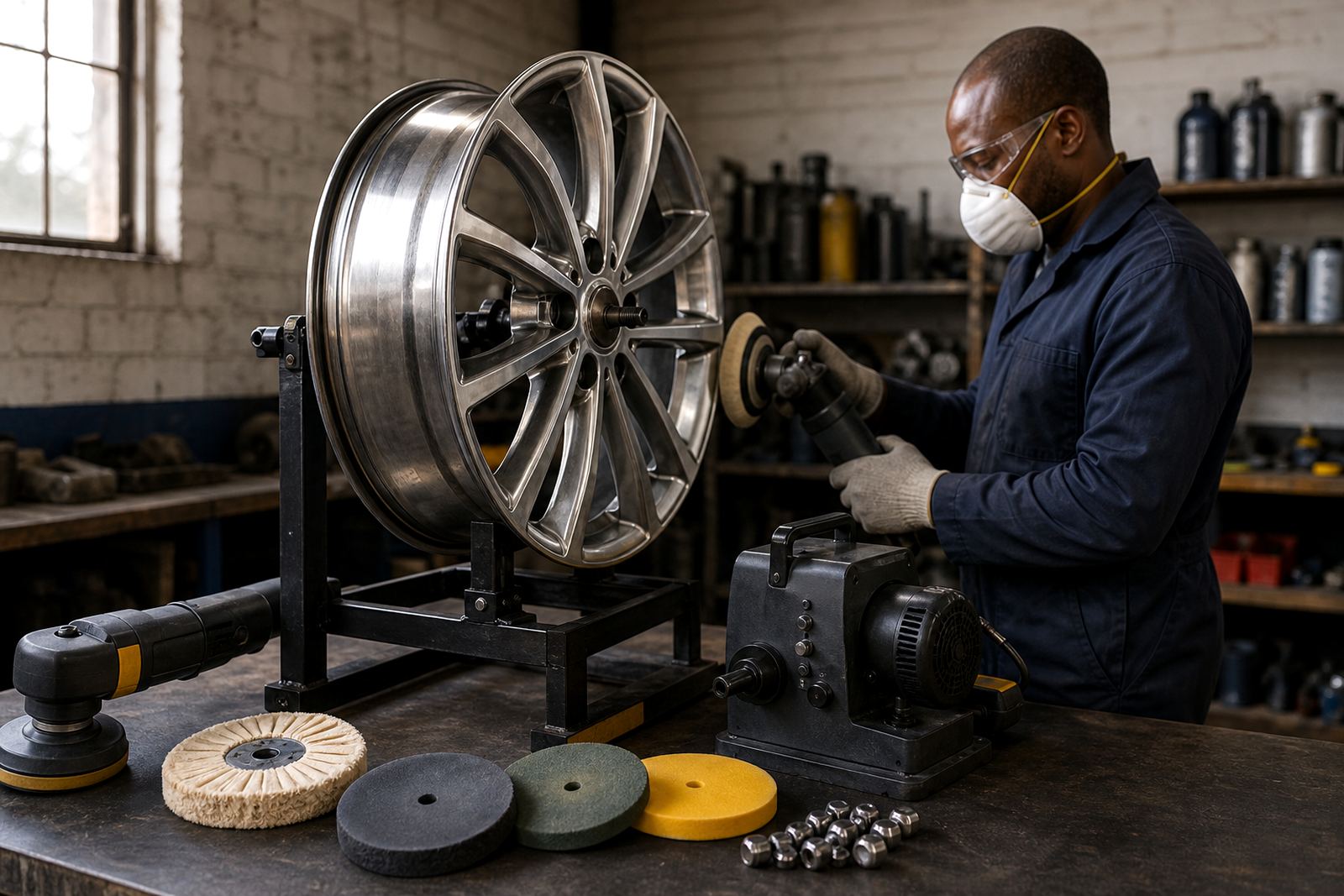
Wear eye protection, gloves where suitable, and a dust mask when dry residue or metal debris may be present. If you are polishing near sharp edges, trim pieces or seam sealer, take extra care because the pad can catch and fling debris. A clean surface always gives better clarity than trying to power through contamination.
A Practical Pass Pattern For Better Results
Good technique is usually simple. Start with a test spot, choose the least aggressive pad and compound that can do the job, then work with controlled pressure. Use slow, overlapping passes in a crosshatch pattern so the surface gets even coverage. Once the compound starts to clear, reduce pressure and make one or two lighter refining passes.
For paint correction, this helps remove oxidation, swirl marks and light sanding haze without overstressing the clear coat. For metal finishing, the same logic applies, although the finish may need a final hand wipe or separate fine polish step to bring out a cleaner reflection.
- Begin with moderate pressure and a small section.
- Make 3 to 5 working passes, then inspect.
- Reduce pressure for the last passes to refine the finish.
- If the pad stalls or leaves uneven marks, stop and reset your method.
Local Example: A Germiston Panel And A Durban Door Skin
A used car panel in Germiston can arrive with oxidation, swirl marks and a thin layer of workshop dust from the East Rand. If the operator goes in heavy on the first run, the paint may clear fast but the finish can stay cloudy, especially under fluorescent light. A better approach is a moderate first set of passes, then a lighter finishing round with a cleaner pad.
On a metal door skin in Durban, the challenge can be moisture in the air and a surface that may have picked up fine residue overnight. There, pass count matters because the compound may behave differently in humidity. Short, tidy sections with a consistent hand usually beat repeated hard pressure. The same job in Bloemfontein may feel drier and faster, so the operator has to adjust the number of passes and watch the surface rather than relying on habit.
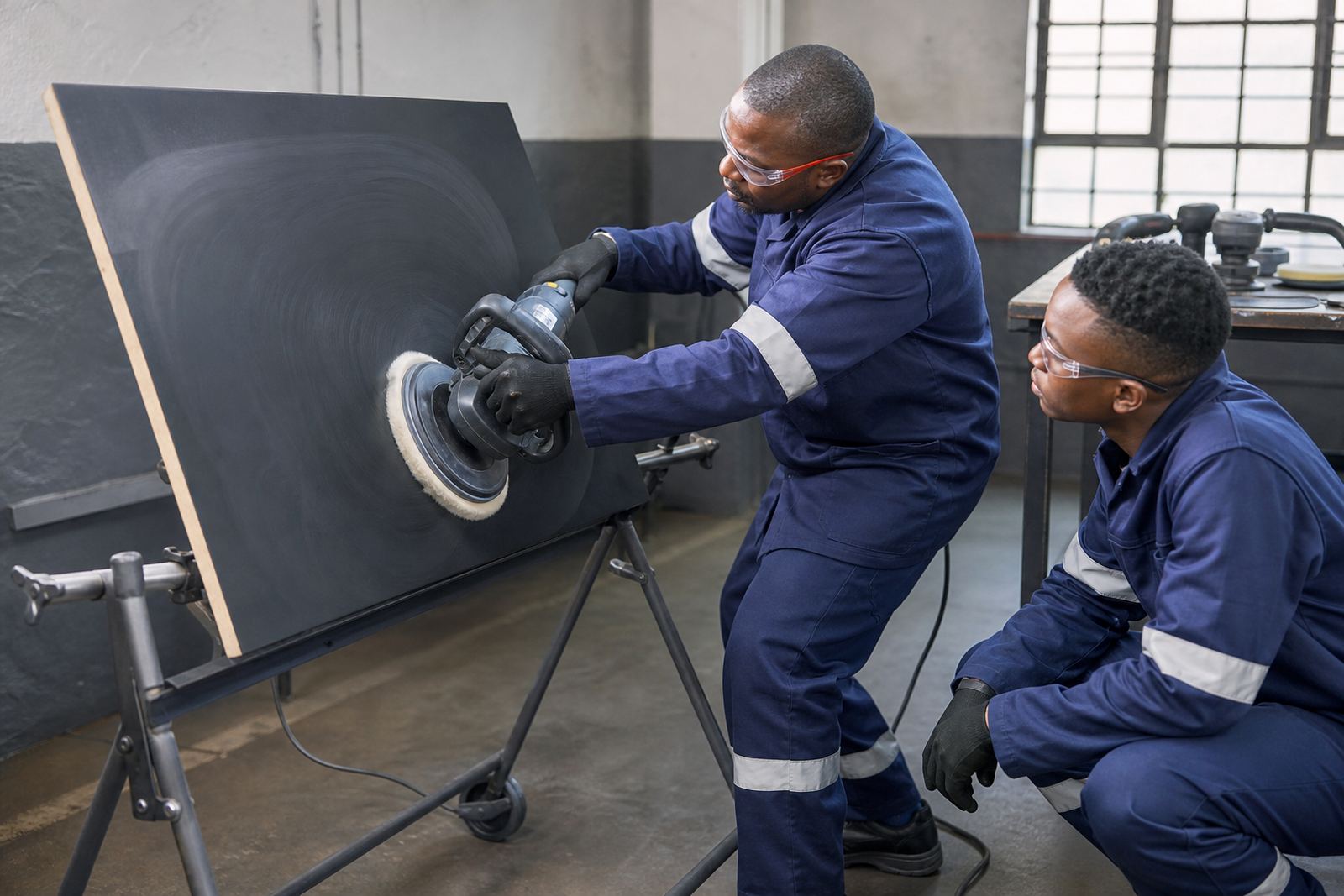
This is why training matters. A good operator learns to read the panel, not just the machine sound. Pressure, speed, pad choice and pass count all work together.
When To Stop And Check Your Work
The hardest skill in polishing is knowing when to stop. If the defect is gone, more pressure or more passes will not automatically improve the finish. It may only add haze, pad marks or unnecessary heat. Stop, wipe the section clean and inspect under direct light from different angles.
If the defect remains, do not simply lean harder. First check the pad condition, compound choice, machine speed and your overlap. Then decide whether a second round is needed. That is the practical way to avoid overworking paint or burning time on metal with little return.
Pressure and pass count are not guesswork. They are the difference between a finish that looks acceptable and one that looks properly done.