Start With Cleaner Abrasive Habits
Most dust problems begin at the point of contact. A pad that is too dry, a compound that is overworked, or a surface that has not been properly cleaned first will shed residue everywhere. For rotary and dual-action polishers, use only the amount of compound needed to cut and refine the surface, then wipe off spent residue before it builds up.
Work in smaller sections and keep a rhythm that lets the pad do its job instead of forcing extra pressure. That reduces sling, lowers heat, and leaves less residue on panels, guards and workshop floors. On metal, especially stainless steel or aluminium, it also helps prevent dust from being pushed into brushed lines and corners.
- Use a clean pad before starting each new panel or section
- Prime the pad lightly, not heavily
- Wipe tools and panels between stages
- Stop and clean up if the pad starts clogging
Match Extraction To The Job
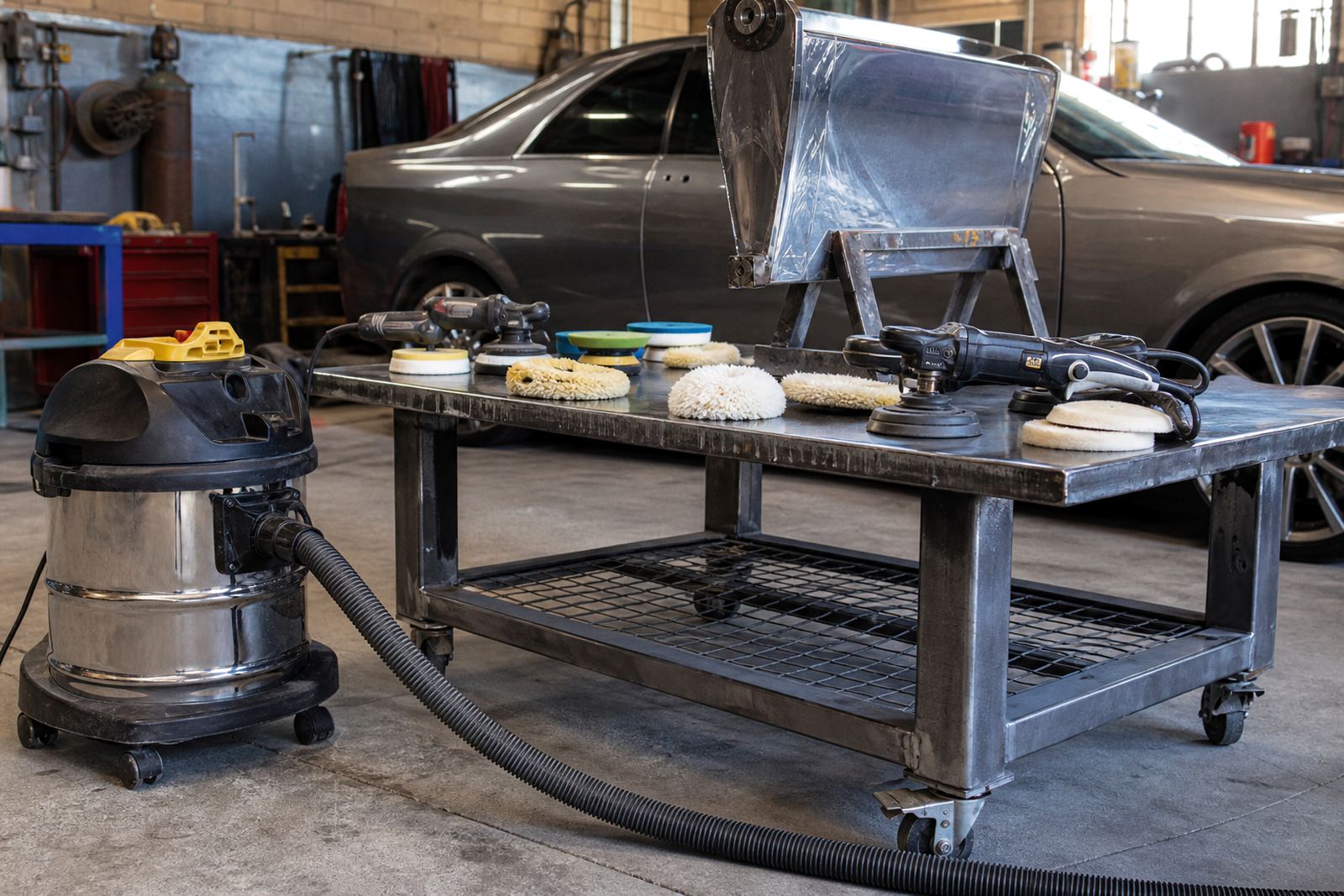
Extraction does not need to be complicated, but it must be practical. A polishing bay in Germiston or Wadeville may be compact, so placing a vacuum, extractor or filtered fan close to the work area can make a big difference. The aim is to pull loose residue away before it settles on fresh work, vehicle paint or clean metal.
For dry dust, use a system that captures the particles close to source. For compound residue on paint, a soft wipe down and controlled airflow often works better than trying to blast everything off with compressed air. Strong air can send dust back into the room and into bearings, switches and open panels.
- Keep extraction points close to the polishing area
- Check filters and bags regularly
- Avoid blowing dust into adjoining bays
- Use enclosed bins for used cloths and pad trimmings
Housekeeping Between Jobs Matters
Good dust control is not only about what happens during polishing. It is also about what gets done after the job. Floors with old compound, sanding residue and loose fibres can be stirred up again with the next vehicle or workpiece. A quick clean after each session is easier than trying to sort out a full shop later.
A broom, vacuum, wipe cloths and a few storage tubs should be close at hand. In coastal towns like Cape Town or Durban, residue can also pick up moisture and stick to surfaces, so regular housekeeping is even more important.
- Sweep or vacuum after each polishing run
- Keep compounds and pads sealed when not in use
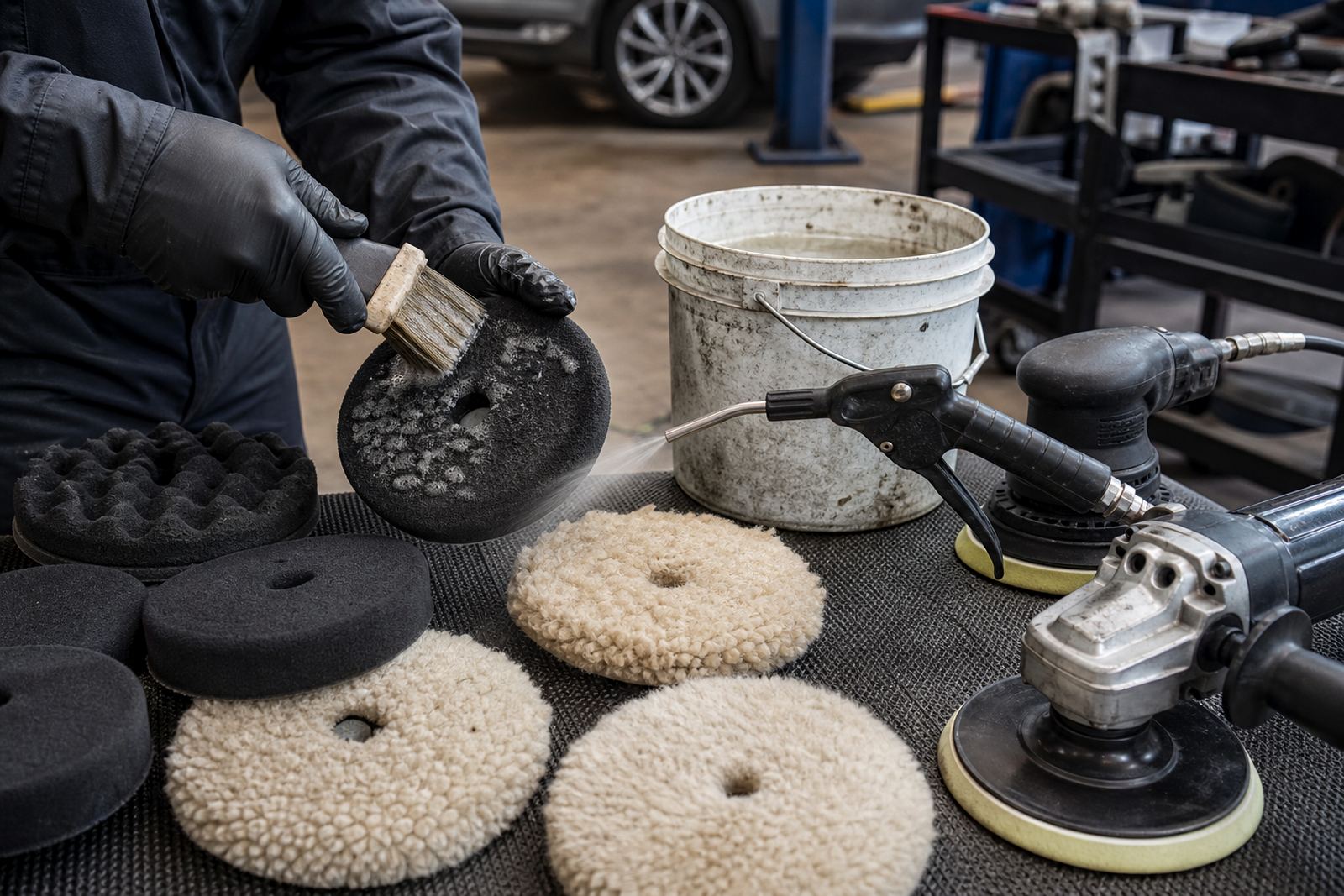
- Wash reusable pads before residue hardens
- Store clean cloths separately from dirty ones
Use PPE And Keep Dust Out Of Breathing Zones
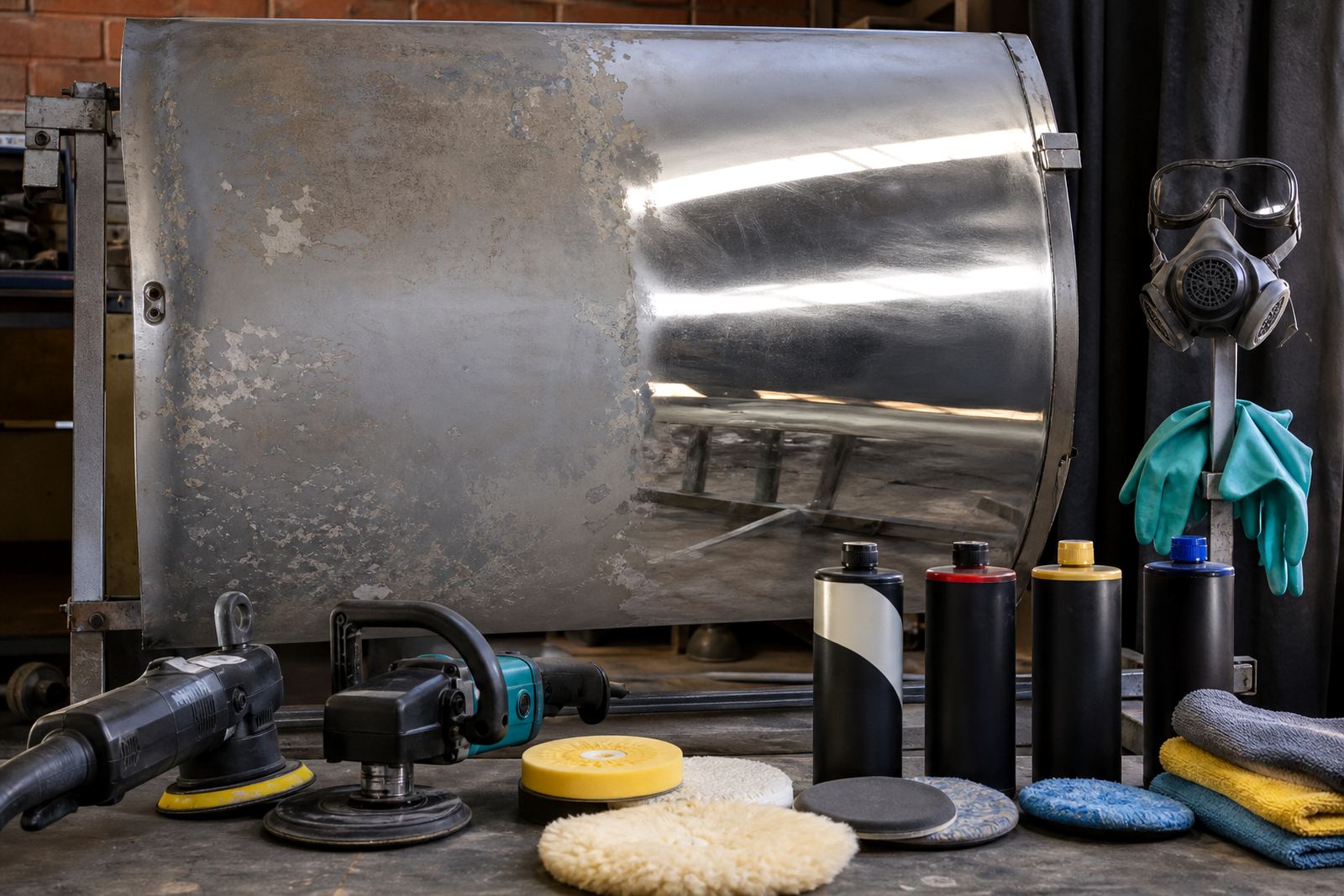
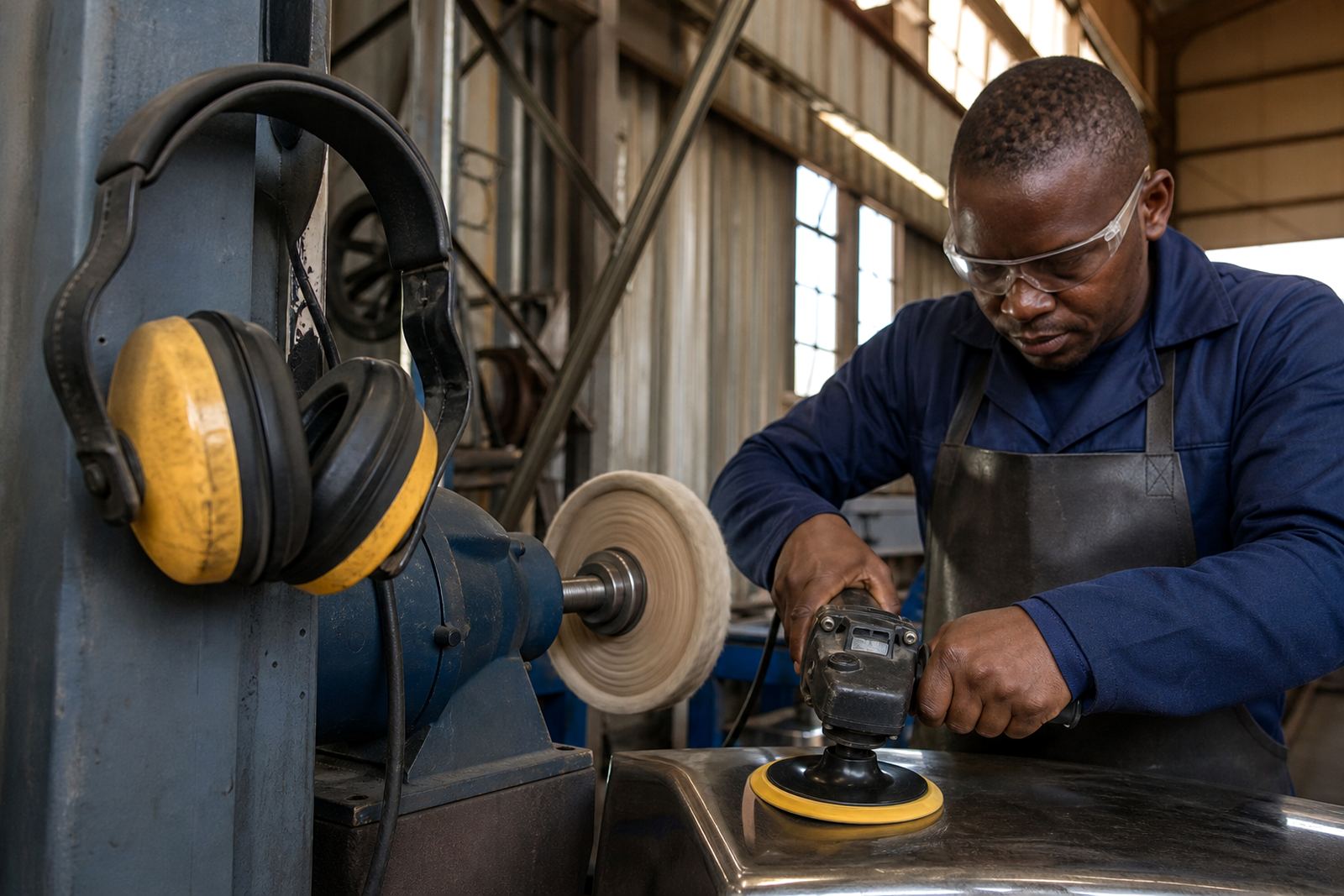
Fine dust from polishing is easy to underestimate because it is often light in colour and hard to see. Even when the work looks tidy, airborne residue can still be present. A dust mask or respirator suited to the task, eye protection and proper gloves should be part of everyday setup, especially when working on oxidised metal or heavily soiled paintwork.
If you are training staff or helping a beginner, make PPE part of the first lesson, not an afterthought. A clear safety routine also lowers the chance of rubbing residue into the skin or eyes, and it helps when working in shared spaces where other trades are close by. It is simple but important.
- Wear eye protection when compounds can flick off the pad
- Use a suitable respirator for dust producing work
- Keep sleeves fitted so residue does not collect on clothing
- Wash hands before eating or touching the face
Control Dust In Metal And Paint Finishing Separately
Metal polishing and paint correction are related, but the dust control method is not always the same. On metal, especially when dealing with oxidation or brushed finishes, the residue can be heavier and more metallic. On paint, the main concern is keeping abrasive residue away from the clear coat and keeping the panel clean between stages. Knowing the difference helps you choose the right pad, compound and clean-up method.
For metal finishing, use dedicated pads and cloths so grit from one job does not scratch the next surface. For paint, avoid cross contamination from metal work because a single contaminated pad can put fine marks back into the clear coat. Keeping jobs separated also makes workshop setup easier when you are doing both on the same day. A little organisation saves a lot of rework.
- Keep separate pads for metal and paint work
- Label containers for each compound type
- Do not mix coarse and fine residues
- Clean the work area before switching from one material to another
A Germiston Example That Saves Time
In a Germiston workshop, a team doing paint correction on a bakkie and buffing alloy parts on the same morning may find dust building up quickly around the bay door. The simplest fix is not more force, but a better sequence: finish the dirty metal work first, clean the area, then move to the painted panels with fresh pads and clean cloths. That keeps residue from travelling onto the finish and it also makes the final wipe down much quicker.
This approach works just as well in Johannesburg, Pretoria, Bloemfontein and across the East Rand. When the workshop floor is clean, the pads are stored properly and the operator slows down at the right moments, the whole job becomes neater. It is not fancy, just solid workshop practice that saves time and keeps the finish cleaner. The extra minute spent on housekeeping pays back later.
Build Dust Control Into Your Training Routine
Dust control should be taught alongside machine handling, pad choice and compound selection. A beginner who learns how to keep residue down early usually develops better habits with every job. Training also helps teams understand how to read the pad condition, when to stop and clean, and how to set up a safer work area before the machine even switches on.
For workshops and mobile teams, a simple routine helps everyone stay consistent:
- Inspect pads before each session
- Clear the floor and nearby surfaces first
- Keep extraction and cleaning tools within reach
- Check PPE before starting
- Close off the area if dust is likely to spread
Good dust control is not only about appearance. It supports safer breathing, better finishes and less downtime. Whether you are polishing a bumper in Durban, restoring trim in Pretoria or refining metal in Cape Town, the same principle applies: keep the residue under control and the work will be easier to manage.