
Why polishing noise adds up faster than many shops expect
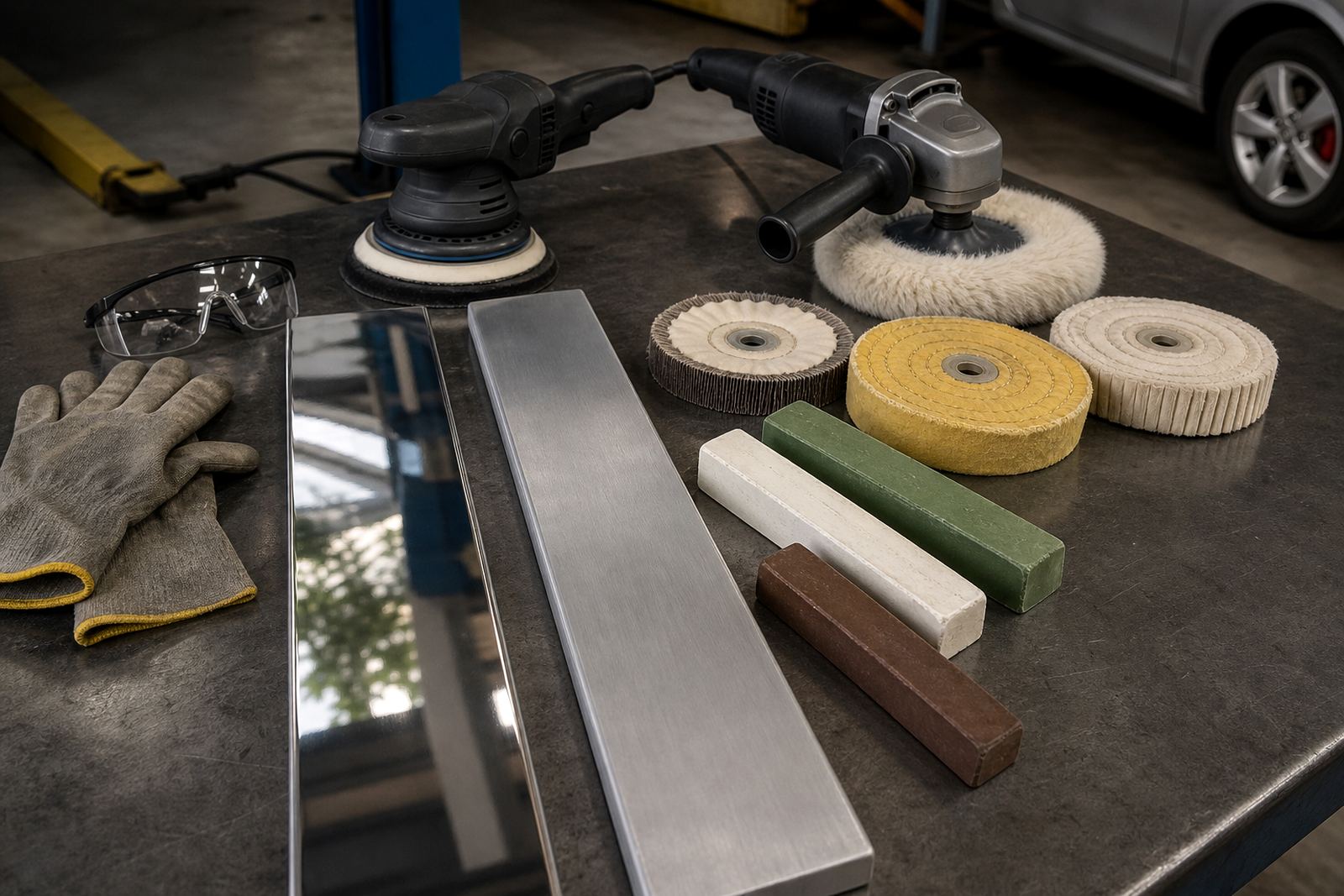
Anyone who has spent a full day around a rotary polisher, a dual-action machine, compressed air and metal buffing wheels knows the sound can become part of the background. That is exactly why it is a problem. When noise becomes normal, workers stop noticing how long they are being exposed. Over weeks and months, that adds up to hearing strain, ringing in the ears and tiredness that can make a careful finish harder to maintain.
In a Germiston workshop, for example, one bay might have a rotary machine on a car bonnet while another is running a buffing spindle on aluminium or stainless steel. Add a vacuum, extractor, grinder or air tool in the mix and the room gets loud very quickly. If the roller door is closed for security or weather, the sound reflects off walls and sheets rather than escaping outside.
The key point is simple: polishing noise is not only about one loud machine. It is about the overall sound level, the length of exposure and the way a person works through the shift.
Where the loudest sound comes from in metal and paint finishing
Rotary polishers are often louder under load than dual-action machines because the pad is spinning with direct drive and the operator is working a tighter line. A heavy cut on a hard clear coat, or a rough metal surface that needs more pressure, raises the noise again. Buffing wheels can be louder still, especially when a wheel is slightly out of balance, the compound is dry or the operator is pushing too hard against the work.
Other noise sources are easy to overlook:
- Compressed air blow-down after sanding and polishing
- Dust extractors and workshop vacuums
- Grinding, flap disc work and edge preparation before polishing
- Metal parts clanging on benches or trolleys
- Echo from concrete floors and bare walls
For car finishing, the machine sound is usually steady but high enough to become tiring. For metal finishing, the pitch can shift as the wheel bites into the piece, which makes it harder on the ears over time. Either way, if staff need to raise their voices at arm’s length, the noise level is already worth attention.
Hearing protection that fits the work, not just the rules
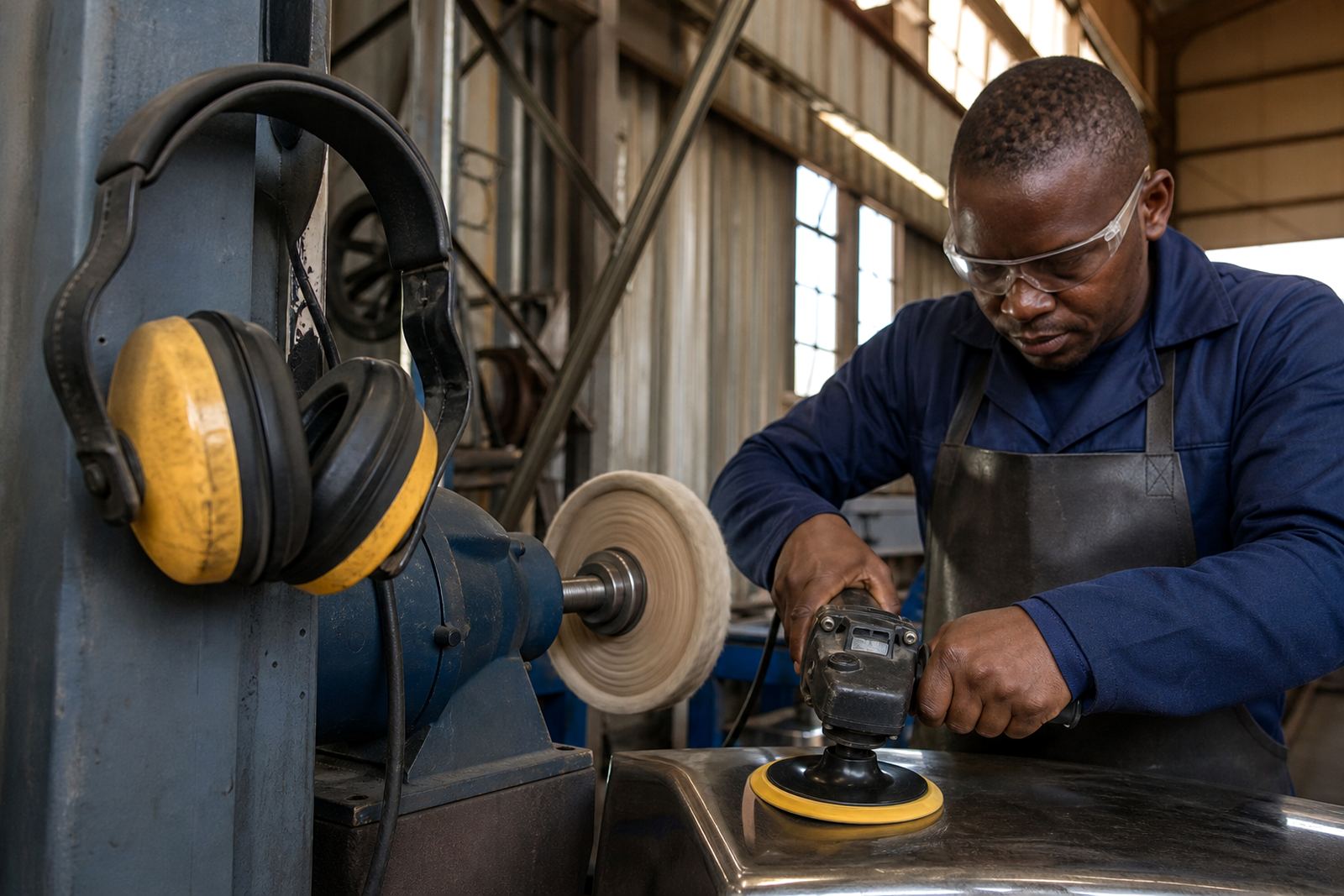
Good hearing protection should be part of the normal kit, not something reserved for the loudest job in the shop. Ear plugs and earmuffs both have a place. Ear plugs can be better where a face shield or helmet gets in the way, while earmuffs are useful for quick fitting and for visitors who move in and out of noisy areas. Some workers prefer both when using buffing equipment for long stretches, especially in enclosed rooms.
What matters is correct use. Protection that is worn loosely, removed every few minutes or left on the bench does very little. A quick briefing at the start of a shift can make a big difference, especially for new staff, casual help and team members who do not realise how long they have been exposed. It also helps to keep a few spare sets in clean condition so no one has an excuse to work unprotected.
- Use hearing protection before the noise starts, not after the machine is already running
- Check that earmuffs seal properly around spectacles, hats or masks
- Replace damaged plugs or cracked earmuff cushions
- Keep a spare set in the workshop for visitors and trainees
- Match the protection to the task, not to convenience alone
In South African workshops, where the same person may move from polishing to admin or from buffing to customer handover, it helps to have a simple rule: if the bay is noisy enough to make conversation difficult, protect the ears.
Training habits that reduce noise before it becomes a hearing issue
Many people think hearing protection is the only answer, but technique matters too. A well-controlled machine is usually quieter than one that is forced. On a rotary polisher, the operator should keep the pad flat enough for contact, use the right speed and avoid leaning on the machine. With a dual-action machine, letting the tool do the work reduces chatter and vibration. On metal, the right buff and compound combination can cut down the need for repeated passes and heavy pressure.
Training should include how to listen to the machine. A change in sound often means the pad is loaded, the compound is drying or the angle is wrong. Fixing that early can make the process quieter and safer. It also saves product and gives a better finish. A noisy machine is often a stressed machine, and stressed tools wear faster.
Workshop setup also plays a role. If the polishing bay is directly beside cutting, grinding or compressor work, try to separate those tasks. Even a small screen, curtain or layout change can reduce the constant mix of sound. In larger premises, a dedicated finishing area helps keep the heaviest noise away from the people who are doing detail work.
A practical hearing routine for busy Germiston workshops
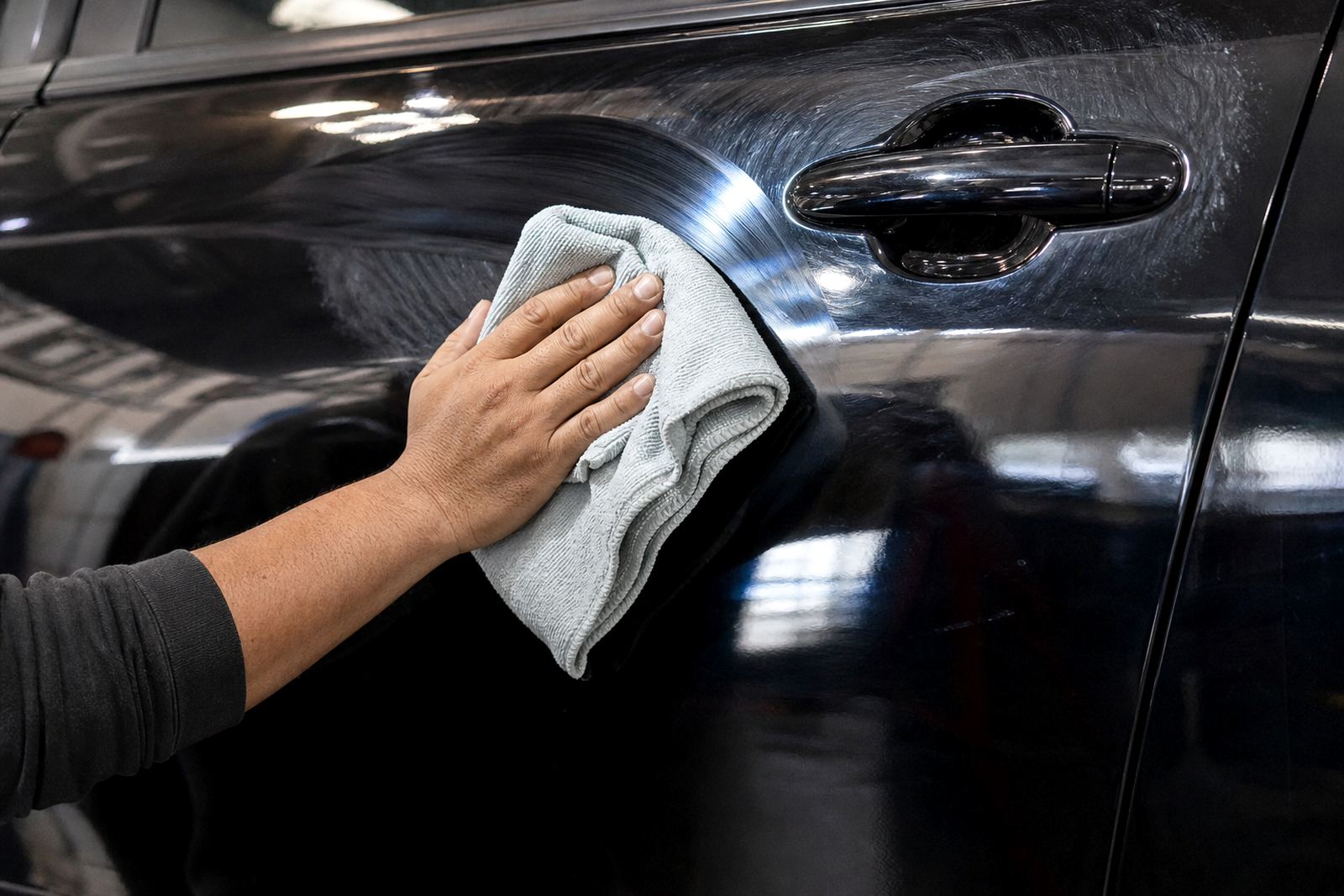
For a workshop in Germiston supplying Johannesburg, Pretoria, Cape Town, Durban and Bloemfontein, the best approach is a routine that is easy to follow every day. The same routine works whether the job is paint correction on a sedan, buffing stainless steel handrails or finishing alloy parts for a trade customer.
- Start the day with a short safety and PPE check
- Identify the loudest task and place hearing protection there first
- Keep doors open where safe and practical to let sound escape
- Take short breaks away from the noise when the shift allows
- Watch for signs of ringing ears, headaches or fatigue after work
A generator, extractor and polisher together can make the space far noisier than expected. Split the workload where you can. That small bit of planning helps the team stay sharper and reduces strain by the end of the day.
When to get help and what to tell your team
Persistent ringing in the ears after work is a warning sign, as is muffled hearing after a shift that never fully clears. If that happens, the person should reduce exposure and check their hearing health. Managers should treat this as part of normal workshop care, not as a complaint that can be ignored. A good shop protects both the finish and the person doing the work.
When training staff, keep the message plain. Noise is part of polishing, but it must be managed. PPE matters, technique matters and the layout of the shop matters too. A few clear habits can prevent long term problems and still keep production moving.
At Polisher in Germiston, the focus is practical support for metal and car finishing work, from starter kit advice to workshop setup guidance and safety briefings. The aim is simple: better finishes, safer habits and fewer avoidable issues in the shop.