Why Edges Cut Through So Quickly
When you polish a panel, the highest points take the most pressure first. That means swage lines, bonnet edges, door corners and body creases warm up faster and lose clear coat quicker than flat areas. On metal parts, the same rule applies with raised seams and folded edges, where the compound can bite harder than you expect.
The main mistake is to treat every section the same. A rotary polisher on a sharp edge can remove material fast, while a dual-action machine may still haze or chase heat if you lean on it too hard. On older vehicles in Germiston or Pretoria, where paintwork may already have been resprayed more than once, the margin for error is even smaller.
Set Up The Job Before The Machine Starts
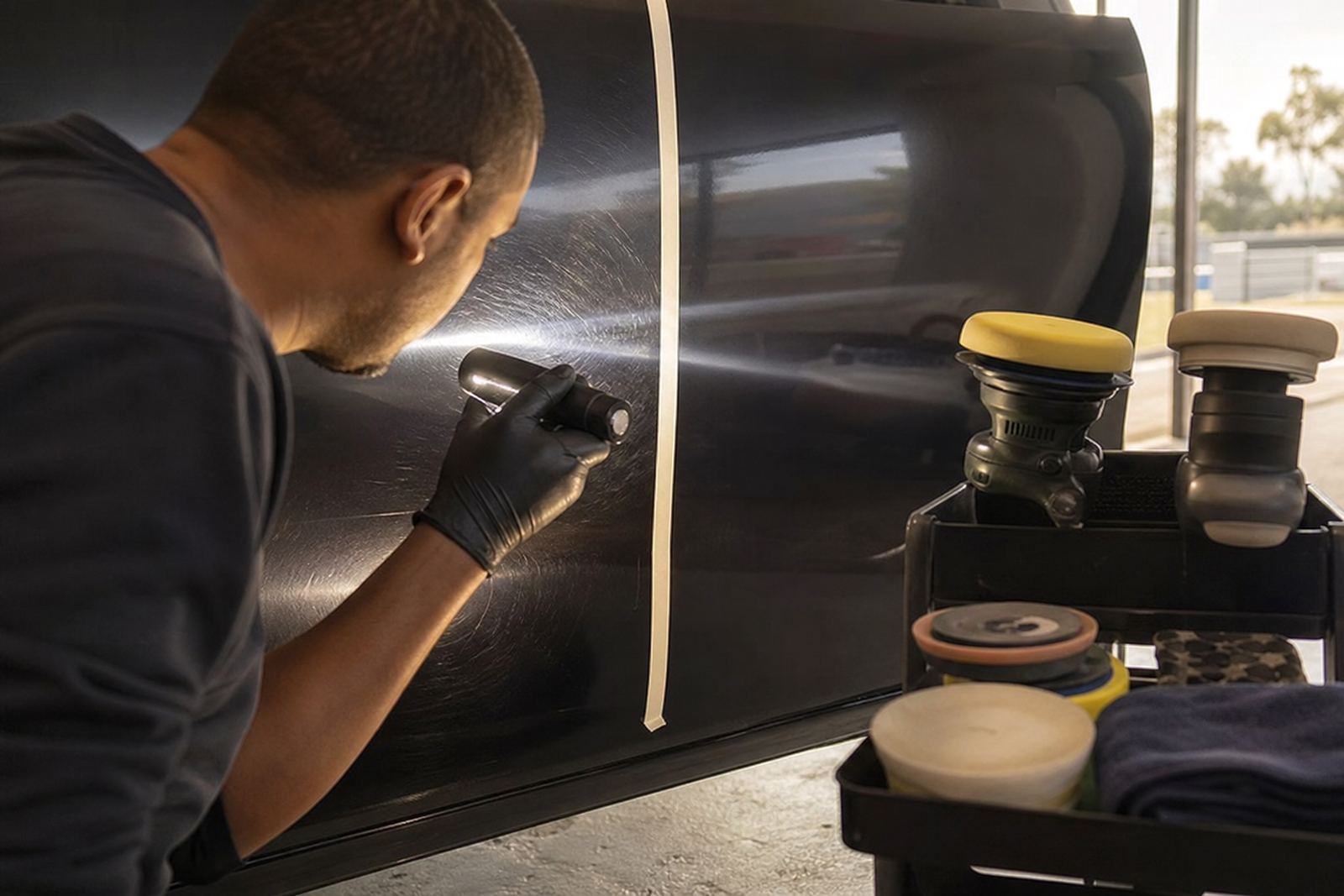
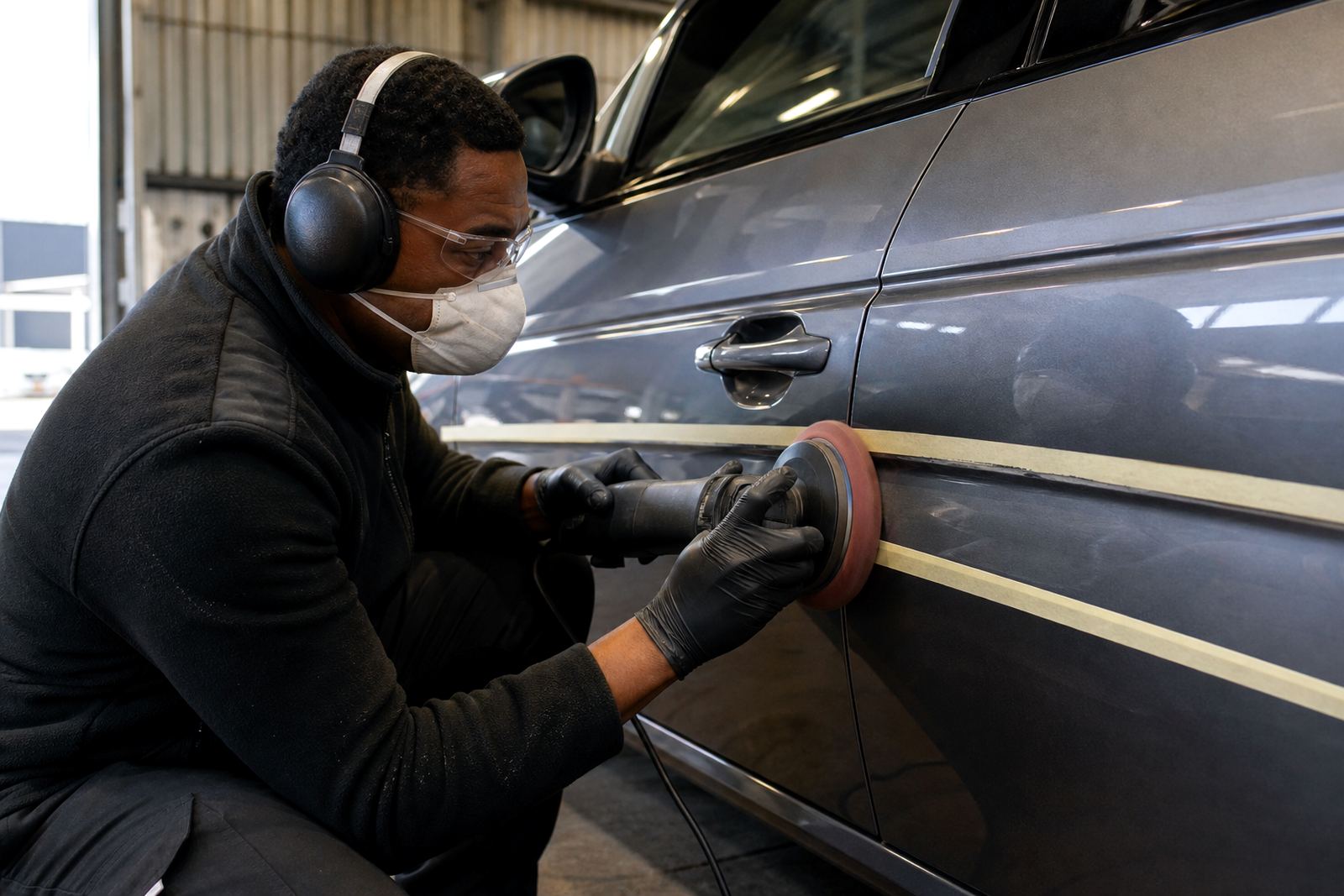
Good edge work starts with preparation. Wash the panel, clay if needed, then inspect under strong light so you can see previous sanding marks, oxidation and thin spots. Mark sensitive areas with masking tape, especially on sharp returns, plastic trim, badges and corners near panel gaps.
- Use clean pads with the right face size for the panel.
- Choose a finer compound first on thin paint, then step up only if needed.
- Keep microfiber cloths separate for compound, wipe down and final inspection.
- Wear eye protection, a dust mask when sanding residue is present, and gloves if the panel is hot.
In coastal jobs around Durban, humidity can keep residue gummy for longer, so it helps to work smaller sections and wipe often. In dry Gauteng conditions, polishing dust can build up quickly around trim and seams, so keep air blow-out and panel cleaning part of the routine.
Rotary And DA Use Around Tight Shapes
Rotary polishers are useful when you need controlled cutting on metal, heavy oxidation or stubborn defects on painted panels. Around edges, keep the pad flat as much as possible and reduce speed before you reach the line. Never let the pad edge dig into a crease. If the pad starts to tilt, stop and reset your angle.
Dual-action polishers are usually friendlier for beginners and for finishing work on paint correction, but they still need care on narrow sections. Use smaller pads where possible and let the machine glide rather than forcing pressure into a corner. If a mirror housing, fuel flap or boot lip is too tight for the machine, finish by hand with a suitable applicator instead of trying to squeeze the pad in there and chasing a burn mark.
- Work from flat to edge, not edge to flat.
- Lower speed before crossing a line or ridge.
- Keep the pad moving in short, overlapping passes.
- Check panel temperature with your hand often.
Matching Pad And Compound To The Surface
Compound choice matters just as much as machine choice. A heavy cutting compound with a firm foam or wool buff can clean up metal quickly, but it can also leave clearer micro-marring on paint if used too aggressively near sharp transitions. For finishing work, a softer pad and lighter compound usually give better control around edges and raised lines.
On polished stainless, aluminium or chrome-like trim, test a small area first. Some metals respond well to controlled cutting, while others cloud up if they get too hot. On vehicle paint, start with the least aggressive combination that can do the job. That approach saves clear coat and gives you more room to finish properly.
Our pad and compound matching advice is useful for hobbyists setting up a starter kit as well as workshop teams doing repeat work. The right pairing reduces extra passes, which is often where edge damage starts.
Technique For Raised Lines, Corners And Curves
Raised body lines and tight shapes need a different rhythm. Keep the machine speed moderate, use short passes, and overlap just enough to avoid patchy results. Do not stay on the same spot to chase gloss. If the panel changes shape quickly, let the pad follow the contour without adding more pressure.
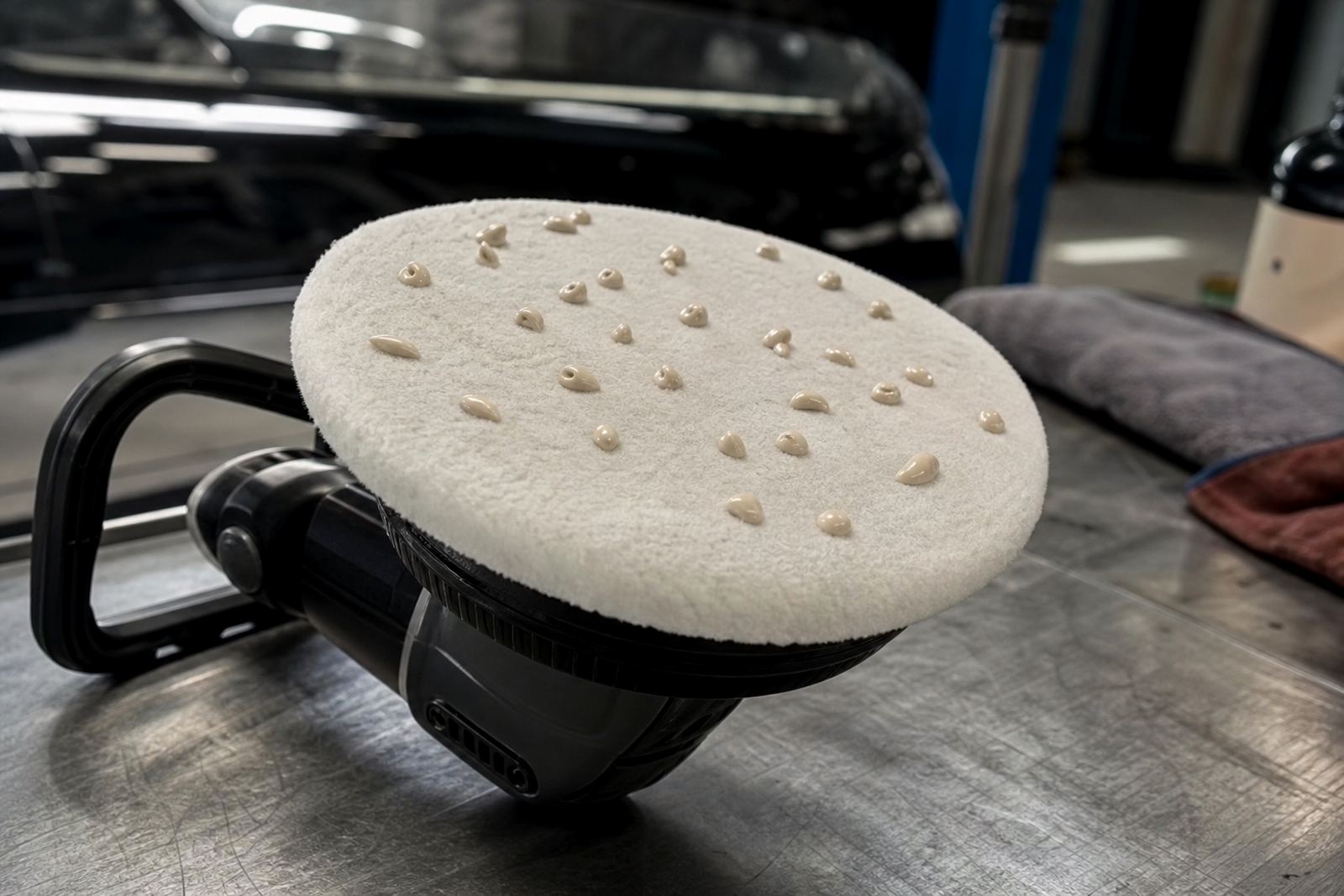
A practical rule is to polish the centre of a panel first, then blend into the harder areas last. On a curved boot edge or bumper return, reduce the amount of product on the pad and keep it well spread before the first contact. Too much compound can sling onto trim, and too much heat can soften plastic inserts or thin clear coat on the edge.
If you are correcting a car in Johannesburg traffic dust or working on a restored panel in Bloemfontein, the finish should be checked under different light angles before you move on. What looks even from one side can still show haze along the line from another angle.
Safety, Dust Control And Workshop Discipline
Edge work is not only about appearance. Fine dust, spent compound and pad fibres can irritate eyes and lungs, especially when sanding marks are being refined before polishing. Keep the area clean, use proper PPE and make sure the machine cord or hose does not snag near the panel while you are working.
Workshop discipline matters too. In a Germiston setting, where space may be shared between polishing, prep and storage, it helps to keep one bench for clean pads and another for used items. That reduces contamination and stops coarse residue from scratching the next panel. If you are training a team, make edge checks part of the final inspection before handover.
- Inspect pads for hard edges, embedded grit and torn backing.
- Do not polish near loose trim or unmasked badges.
- Allow hot panels to cool before applying more product.
- Store compounds sealed so dust does not settle into them.
A Local Example From A Busy Gauteng Bay
A common job in Gauteng is a used sedan with scuffs on the boot lip, oxidation on chrome trim and dullness around the door creases. The temptation is to run a rotary straight across the whole panel, but that can remove too much on the upper edge and leave the crease looking uneven. A better plan is to tape the line, test the paint thickness if possible, then do the main correction on the flat face before touching the edge lightly with a softer setup.
That kind of method saves time later because there is less rework. It also keeps the vehicle looking consistent from panel to panel, which matters on customer cars and on fleet vehicles where the finish has to hold up after repeated washing. For learners, this is usually the point where the lesson clicks: careful edge control is slower at the start, but it avoids burns, haze and costly touch-ups.
Polishing is skill work, not force work. Once you understand how edges behave, you can get a cleaner finish without gambling with the paint.