
Start With Your Regular Work
Before buying anything, list the jobs your workshop handles week by week. A small team that works on alloy wheels, stainless steel, chrome trims and painted panels does not need the same kit as a body shop focused on paint correction or a metal polishing bay doing brackets, tanks and decorative parts.
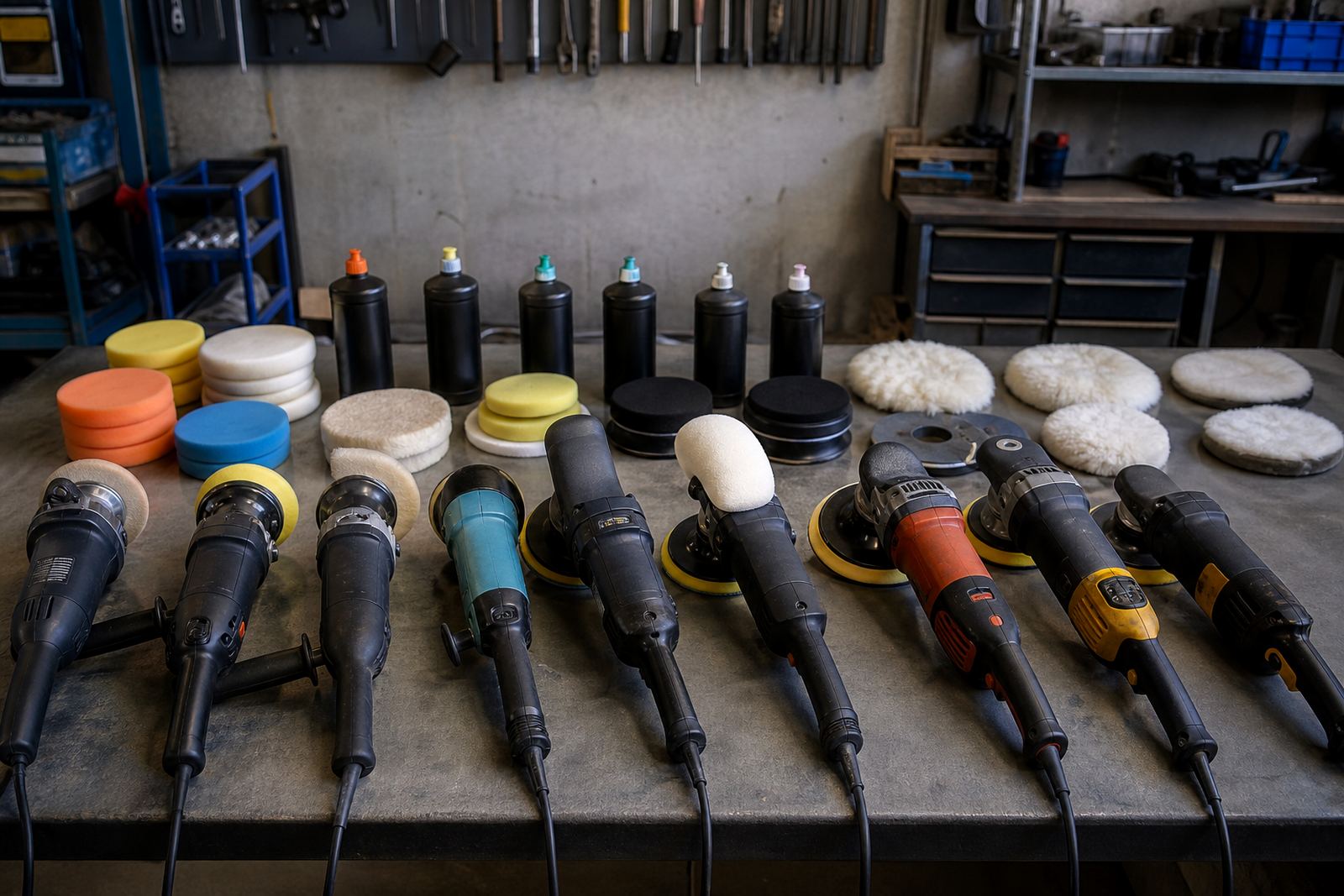
For beginners, a starter kit should cover light defect removal, finishing and maintenance work first. That usually means one rotary polisher for controlled cutting and one dual-action machine for safer finishing on paint. On metal, use the right pad and compound combination for the grade of finish you need, whether that is a working satin surface or a brighter final gloss.
Core Machine Checklist For Daily Use
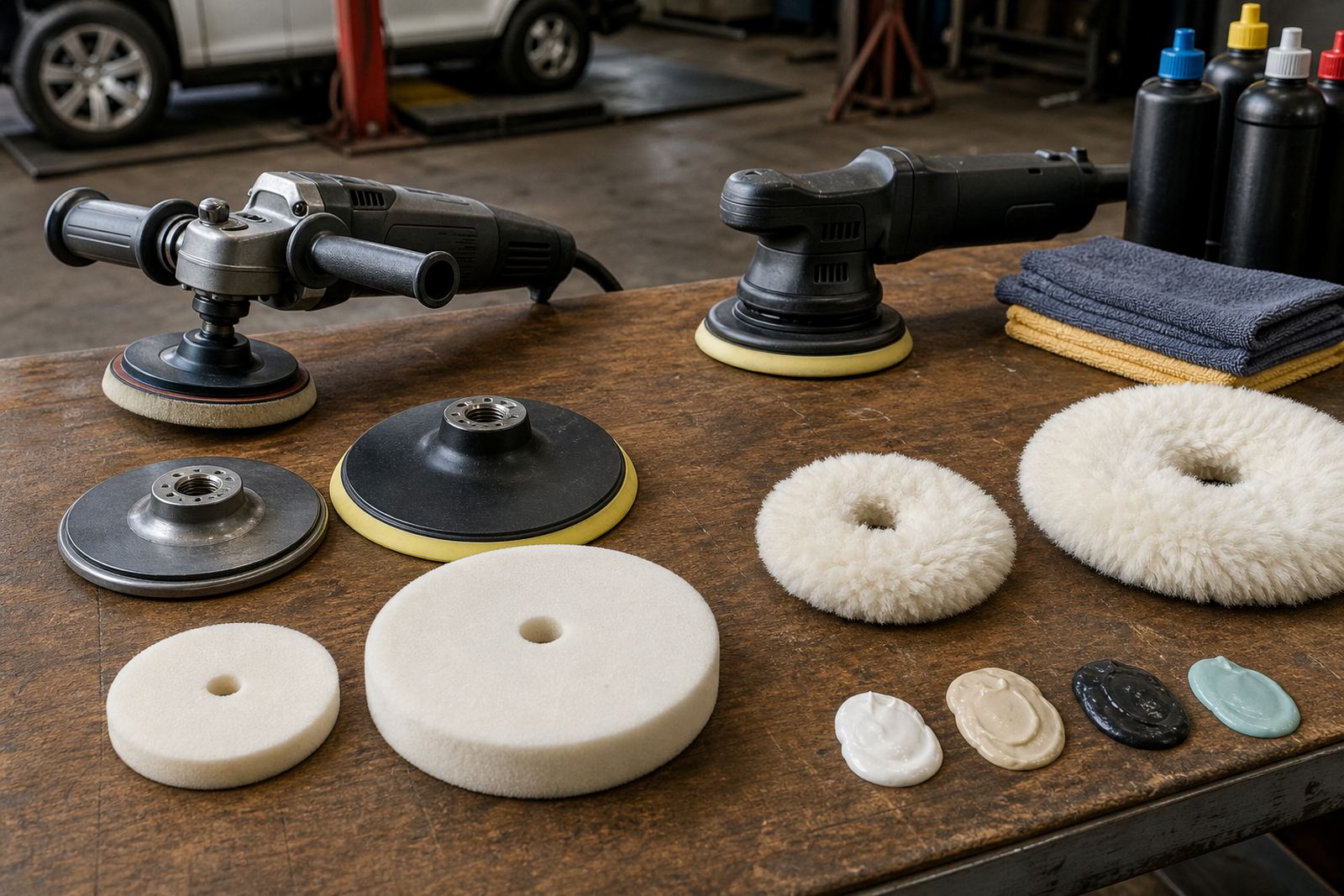
Choose machines that feel balanced in the hand and can run steadily for longer sessions. Rotary polishers are suited to faster correction on metal and harder surfaces when used with care. Dual-action polishers are better for safer paint finishing, reducing the risk of heat build-up and holograms when the operator is still learning.
- One rotary polisher for metal work and controlled cutting
- One dual-action polisher for paint correction and final finishing
- Backing plates in the common sizes used by your pads
- Extension leads and cable management for safe movement around the bay
- Clean storage for machines so cords do not get damaged between jobs
Keep spares for the small parts that go missing in a busy shop.
Pads, Buffs And Compounds That Cover The Basics
The best starter kits use a small, sensible range of pads and compounds rather than too many options. For paint, that usually means cutting, polishing and finishing pads matched to the level of correction required. For metal, use buffs that suit the finish target and the compound type, because one setup will not work equally well on aluminium, stainless steel and mild steel.
- Cutting pads for heavier marks and oxidation
- Polishing pads for refining the finish
- Finishing pads for final gloss and clarity
- Buffs for metal work where a wheel style or stitched wheel is needed
- Compounds for cutting, refining and final shine
Keep each pad type clearly marked so operators do not mix them up. A pad used with coarse compound should not be dragged straight into a final finishing stage without cleaning, otherwise the previous abrasive can spoil the result.
Safety Gear And Dust Control For Workshop Setups
Polishing creates fine residue, sling and airborne dust, so PPE is not optional. A starter kit should include eye protection, gloves suitable for grip, hearing protection where machines run for long periods, and a proper respirator for dusty or heavily oxidised work. On metal jobs, especially in older workshops or on rusted parts, dust control matters as much as the finish.
Set up a clean working zone with good lighting and enough space to move around the panel or part. Use extraction or local dust control where possible, and keep solvent use controlled and away from sparks. In coastal areas like Durban, humidity can affect dried compounds and storage, while in Gauteng dust settles quickly if cloths and pads are left uncovered.
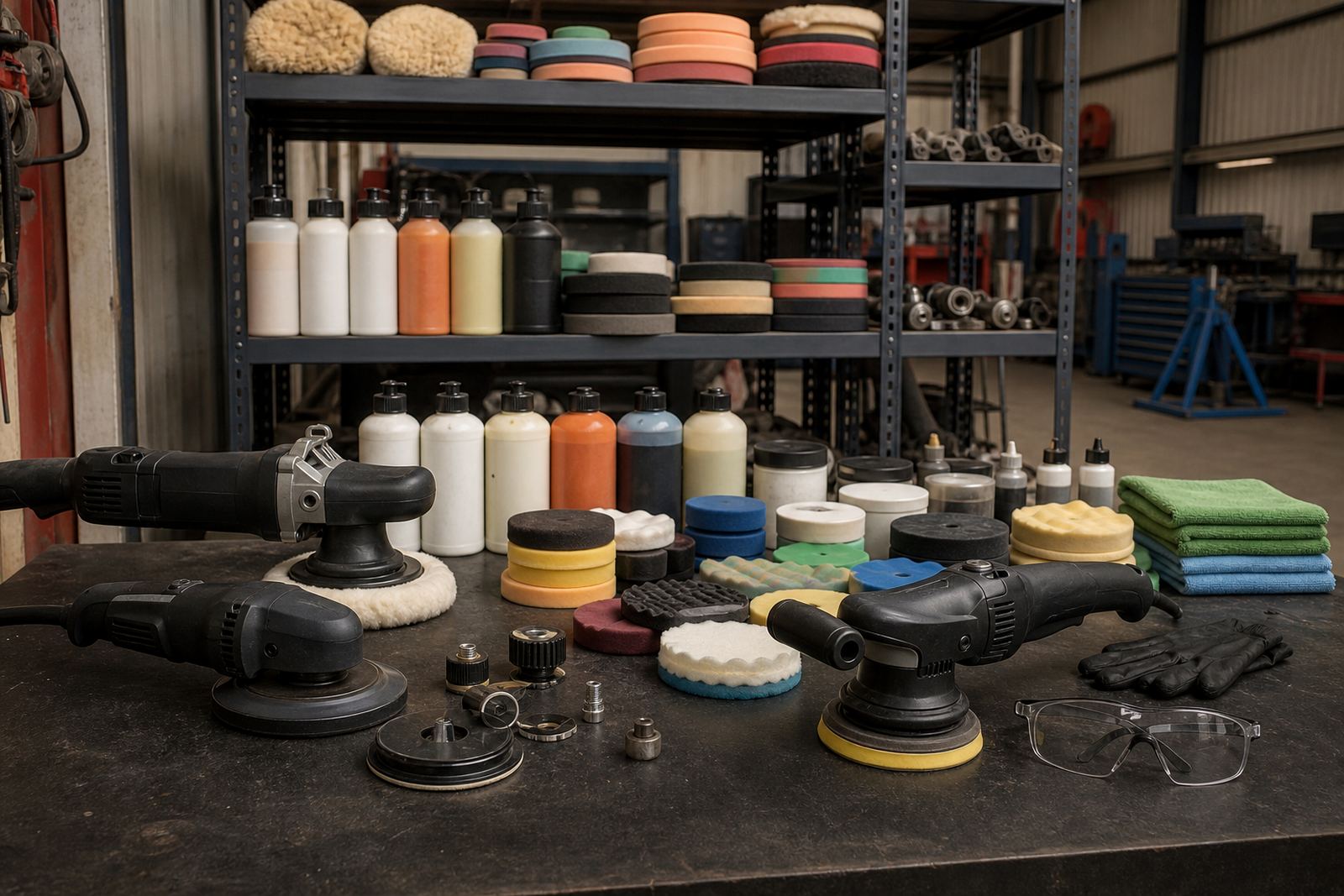
- Safety glasses or a face shield
- Respirator suitable for fine dust and polishing residue
- Gloves with good grip but no loose cuffs
- Ear protection for longer machine use
- Clean rags and separate cloths for compound removal
How To Set Up the Bench and Mixing Area
Keep the kit easy to reach and simple to restock. A practical bench setup has a place for machines, pads, compounds, cloths, inspection lights and labels. Separate the clean side from the used side so contaminated pads do not find their way back into a fresh job.
For workshops in Germiston, Johannesburg, Pretoria and the East Rand, a compact layout works well in smaller units, while larger premises in Cape Town, Durban or Bloemfontein may want separate bays for cutting and finishing. Mark shelves clearly and store liquids upright. If your team works on-site as well, keep a mobile case with the basics ready for demos or callouts, it saves time and reduces forgotten items.
Training Steps That Make The Kit Pay Off
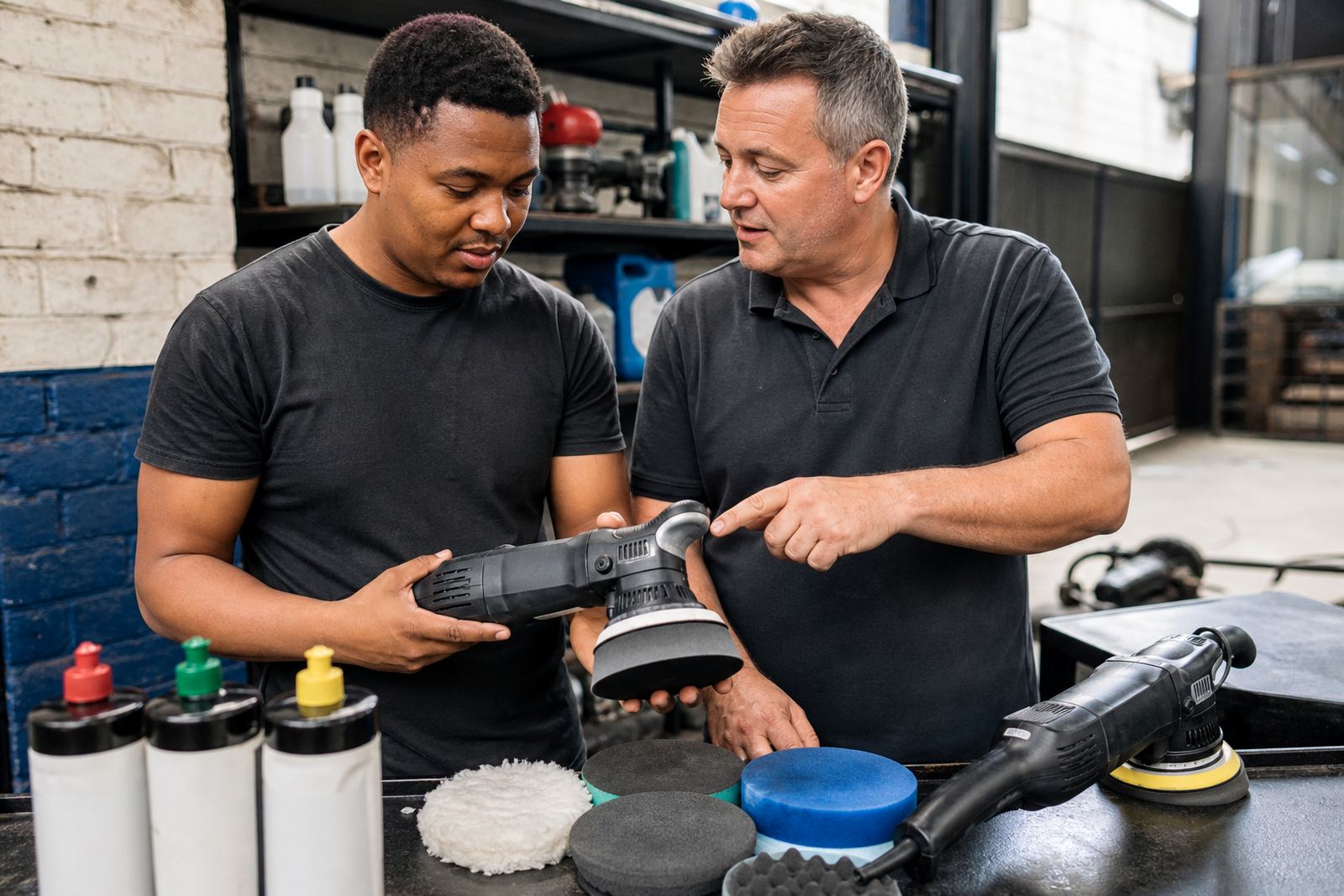
Good equipment only helps when people know how to use it. A starter kit should be paired with basic training so staff understand machine speed, pad pressure, compound choice and the difference between cutting and finishing. That applies to both metal polishing and paint correction, where too much pressure or the wrong pad can leave marks that take longer to remove.
Build your training around simple steps that are easy to repeat:
- Inspect the surface and identify the defect level
- Select the machine, pad and compound for that stage
- Test a small area before working the full panel
- Work in sections and clean pads regularly
- Check the finish under strong light before moving on
- Store equipment dry and report wear before the next job
When staff follow the same sequence every time, the finish becomes more consistent and the kit lasts longer. That matters for workshops that handle regular finishing work and need dependable results without wasted material.